
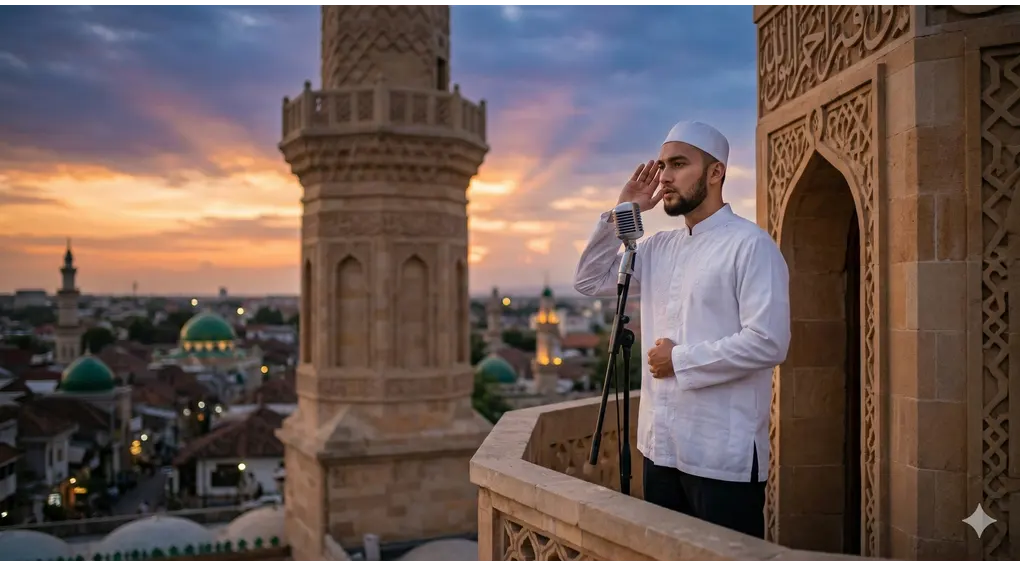
The resonance of the adhan (call to prayer) five times a day serves as a majestic proclamation of Islamic identity and devotion. The individual entrusted with this noble task occupies a distinguished spiritual station. However, questions often arise among the laity and mosque administrators regarding the specific conditions of a Muazzin and the essential criteria for a valid call.
In technical terms, a Muazzin is the individual who announces the arrival of prayer times to the community. This role is a vital component in the understanding of the adhan and iqamah, serving as a divine summons for Muslims to establish their worship. Because the validity of the congregation’s prayer timing relies upon this call, the requirements for this position are governed by strict standards within Islamic jurisprudence.
This article provides a comprehensive analysis of these requirements, primarily referencing the classical text Asna al-Matalib Sharh Rawd al-Talib by the eminent Shafi’i scholar, Shaykh al-Islam Zakariyya al-Ansari.
Mandatory Requirements for a Valid Adhan
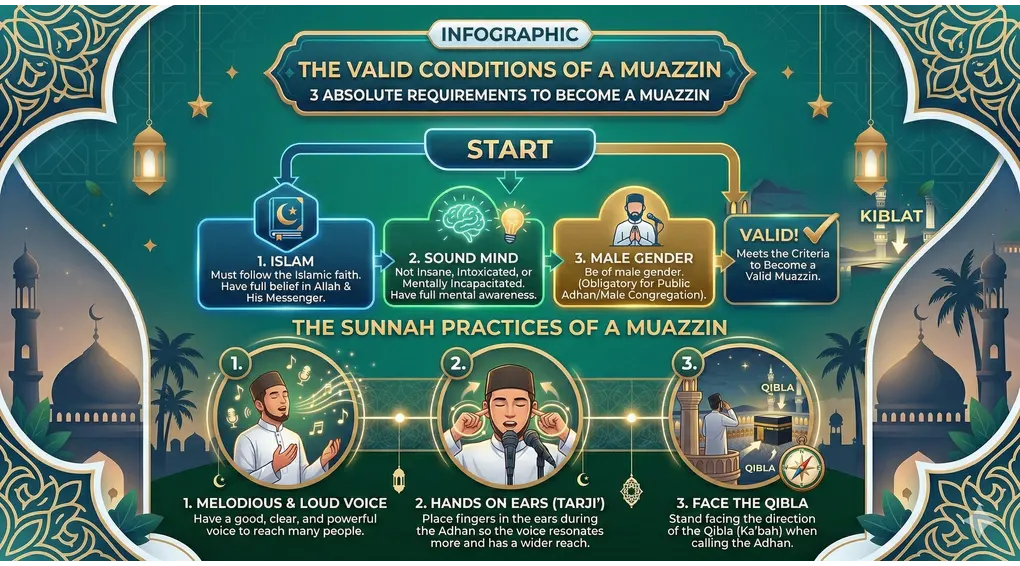
Diagram outlining the foundational requirements for a Muazzin: Islam, Sanity, and Gender.For the call to prayer to be legally valid and to discharge the communal Sunnah obligation (sunnah kifayah) within a community, certain absolute criteria must be met. If these conditions of a Muazzin are neglected, the adhan is considered invalid.
1. Adherence to the Islamic Faith
The foundational requirement is that the Muazzin must be a Muslim. As the adhan is a specialized act of worship, it cannot be performed by a non-Muslim. In the book Asna al-Matalib, it is stated:
فصل: في صفة المؤذن (ويشترط كونه مسلما) فلا يصح من كافر لعدم أهليته للعبادة
“Section: Regarding the traits of the Muazzin. (It is stipulated that he be a Muslim); thus, the call is not valid from a disbeliever due to their lack of eligibility for worship.”
A notable discussion involves a non-Muslim who recites the adhan. While the utterance of the two testimonies of faith within the call signifies their entry into Islam, the adhan itself must be repeated. This is because it was initiated while they were not yet a Muslim, emphasizing the importance of the testimony of faith and a firm faith in Allah.
2. Possession of Sound Sanity (Aql)
The Muazzin must be of sound mind. Consequently, the call is invalid if performed by an individual experiencing insanity or severe intoxication.
قوله: (عاقلا) فلا يصح من غيره لعدم أهليته للعبادة
“(Of sound mind); thus it is not valid from someone else due to their lack of eligibility for worship.”
Shaykh Zakariyya al-Ansari provides a nuance regarding intoxication. If a person is in the early stages of intoxication (nashwah), but retains consciousness and intention, the call may be valid, though the act of intoxication remains forbidden.
قوله: (ولا يصح أذان سكران) … (إلا في أول نشوته)
“(And the adhan of a drunkard is not valid) … (except in the early stages of his intoxication).”
3. Being Male




For a general congregation that includes men, the Muazzin must be male. This includes adult men, discerning children (mumayyiz), or bondmen.
قوله: (ذكرا) ولو عبدا أو صبيا فلا يصح أذان غيره للرجال
“(Male), even if a bondman or a young boy; thus the adhan of others for men is not valid.”
Women’s adhan is not valid for a male congregation to avoid potential discord (fitnah). Women may only perform the adhan for an exclusively female congregation as a form of private remembrance (dhikr), but not as a public proclamation of the syiar.
Disliked Actions (Makruh) for a Muazzin
While certain factors do not invalidate the adhan, they are discouraged (makruh) because they detract from the dignity of the office:
- Fasiq (Transgressors) and Children: It is disliked for a fasiq (one who openly commits major sins) or a child who has not reached puberty to call the adhan. This is because the community relies on the Muazzin’s integrity for the definition of prayer times.
- Unassisted Blindness: A blind person may call the adhan, but it is makruh if they do so alone without a sighted person to confirm the entry of the prayer time.
- State of Ritual Impurity: Ideally, a Muazzin should be in a state of purity. Calling the adhan without the meaning of wudhu is disliked. The reference for this is the saying of the Prophet ﷺ: “I disliked mentioning Allah except in a state of purity.”
Sunnah Criteria for the Ideal Muazzin
To achieve the full reward, the conditions of a Muazzin should encompass the following Sunnah characteristics:
1. Loud and Melodious Voice:
A Muazzin should possess a powerful and beautiful voice to reach a wider audience. This is based on the Prophet’s SAW command to Abdullah bin Zaid:
«ألقه على بلال فإنه أندى منك صوتا»
“Teach it to Bilal, for truly he has a louder voice than you.”
2. Trustworthiness and Integrity:
The Muazzin should be a person of upright character, as the community trusts them for the essence of fasting and prayer times.
3. Elevation:
Traditionally, calling the adhan from a high place ensures the sound carries.
4. Physical Poise:
Inserting the index fingers into the ears is Sunnah to help project the voice powerfully.
5. Dignified Appearance:
While covering the awrah is a requirement for the valid conditions of prayer, it is also an ethical necessity for the Muazzin. Interestingly, Asna al-Matalib mentions:
قوله: (ويجزئ الجنب) أذانه وإقامته (وإن كان في المسجد ومكشوف العورة)
“The adhan and iqamah of the one in major impurity are valid, even if he is in the mosque and his awrah is exposed.” However, this remains forbidden from an ethical and mosque-sanctity standpoint.
Frequently Asked Questions (FAQ)
Can a woman call the Adhan for her family?
If the family includes adult males, the male should call the adhan. A woman may call it softly for an exclusively female group.
Is the Adhan valid if the Muazzin loses his Wudhu during the call?
Yes, it remains valid. Scholars suggest he should complete the call rather than interrupt it, so as not to appear as if he is playing with the ritual.
What is the legal status of an intoxicated Muazzin?
If he is completely unaware, the adhan is invalid. If he is in the very early stage of intoxication but remains coherent, the call is technically valid but the act is sinful.
Conclusion
The role of a Muazzin is a profound amana (trust) over the timekeeping of the Muslim community. By understanding the mandatory conditions of a Muazzin—from faith and sanity to the Sunnah ideals of a melodious voice—we can ensure the sanctity of the adhan is maintained. Following the guidelines found in classical Shafi’i texts ensures our communal worship remains grounded in the Prophetic tradition.
Reference
Zakariyā al-Anṣārī, Asnā al-Maṭālib fī Sharḥ Rawḍ al-Ṭālib, dengan ḥāsyiyah oleh Aḥmad al-Ramlī, disunting oleh Muḥammad az-Zuhrī al-Ghamrāwī (Kairo: al-Maṭbaʿah al-Maymānīyah, 1313 H; repr. Dār al-Kitāb al-Islāmī), juz 1, hlm. 128-129.


