

Observing the fast is not merely about enduring hunger and thirst. For many individuals, the most formidable challenge lies in the ability to control their desires and carnal lust (shahwah). Questions frequently arise, particularly among young married couples: “To what extent is physical intimacy permissible during the day?”, “Does unintentionally looking at the opposite sex and ejaculating break the fast?”, or “What is the ruling on kissing one’s spouse while fasting?”
These doubts are entirely natural. We certainly do not want an entire day of worship to be rendered futile due to our ignorance of Islamic jurisprudence (fiqh). Within the Shafi’i school of thought, the boundaries regarding these matters are delineated with meticulous precision.
We will dissect these regulations by referring directly to the classical text Asna al-Matalib Sharh Rawd al-Talib (Vol. 1, pp. 414-418) by Shaykh Zakariyya al-Ansari. He draws definitive lines between what is permissible (mubah), disliked (makruh), and strictly forbidden (haram) regarding sexual activities while fasting.
1. The Ruling on Marital Intercourse (Jima’)
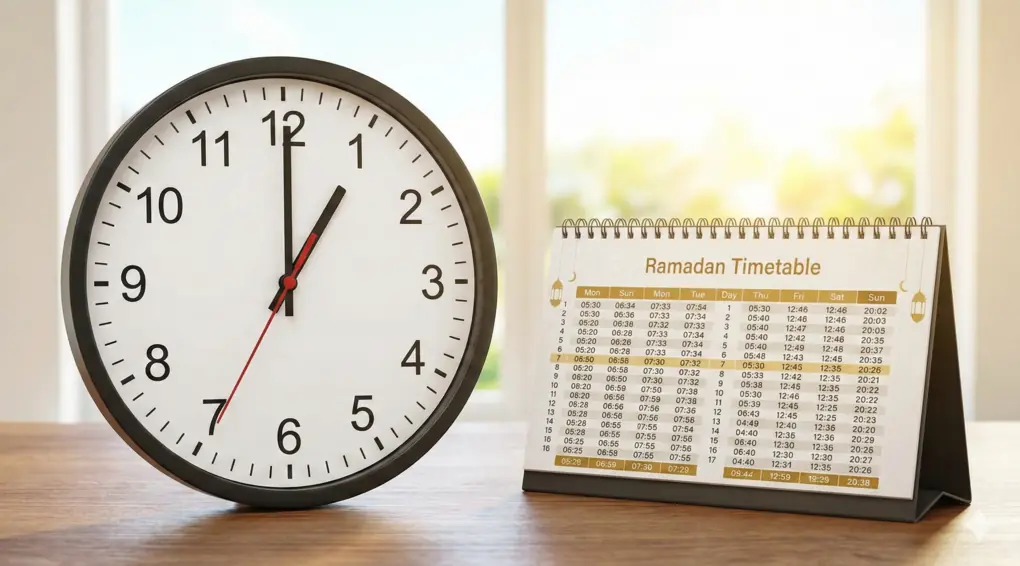
Let us commence with the action that carries the heaviest consequences: sexual intercourse (jima’) during the daylight hours of Ramadan.
The scholars are in unanimous agreement (Ijma’) that intentionally engaging in sexual intercourse while fasting is an absolute nullifier of the fast. There is zero compromise on this matter, regardless of whether ejaculation occurs or not. As long as the two private parts meet (penetration), the fast is immediately broken.
In Asna al-Matalib, it is stated:
فصل: (ويفطر) الصائم… (بالجماع) ولو بغير إنزال (عمدا) بالإجماع
“Section: And the fasting person’s fast is invalidated… by intercourse (jima’), even without ejaculation, (done intentionally) by scholarly consensus.”
A Specific Case: Dawn Breaking During Intercourse
There is a unique situation addressed by Shaykh Zakariyya. What happens if a husband and wife are engaging in intimacy at the end of the night, and suddenly dawn breaks (the Fajr Adhan is called)?
The ruling depends entirely on their immediate response at that exact second:
- If they withdraw immediately (stop): The fast is Valid. Even if seminal fluid is discharged after withdrawal, it is considered a remnant of a previously lawful act.
- If they continue (intentionally): The fast is Invalidated.
The reference explicitly states:
قوله: (وكذا مجامع علم بالفجر حين طلع فنزع) في الحال وقصد بالنزع ترك الجماع فإنه يصح صومه
“Meaning: Similarly, a person engaging in intercourse who realizes dawn has broken, and withdraws immediately, intending by the withdrawal to cease the intercourse, his fast is valid.”
If a person recklessly continues despite knowing Fajr has entered, their fast is not only invalidated, but they are also subject to a severe expiation (Kaffarah). According to the detailed rulings on intercourse at dawn during fasting, this penalty involves freeing a slave; if unable, fasting for two consecutive months; and if still unable, feeding 60 poor individuals.
2. The Issue of Masturbation (Istimna’) and Physical Touch
Next, what is the ruling on seminal discharge without intercourse? The jurisprudential term for this is Istimna’ (masturbation). The definition of istimna’ in this context encompasses two methods:
- The forbidden method: Using one’s own hand (which is prohibited even outside of fasting hours).
- The non-forbidden method: Using the spouse’s hand (which is lawful to do at night, but invalidates the fast during the day).
The ruling is crystal clear: It Invalidates the Fast if done intentionally and results in ejaculation.
Shaykh Zakariyya elucidates:
قوله: (والاستمناء) وهو إخراج المني بغير جماع محرما كان كإخراجه بيده أو غير محرم كإخراجه بيد زوجته… (ولو بلمس وقبلة) بلا حائل
“Meaning: (And invalidation by istimna’) which is the extraction of semen without intercourse, whether it is forbidden, such as extracting it with his own hand, or not forbidden, such as extracting it with his wife’s hand… (even if through touch and a kiss) without a barrier.”
The critical point here is physical touch (mubasharah). If you kiss, embrace, or have skin-to-skin contact with your spouse accompanied by lust, resulting in ejaculation, your fast is broken. This is because the physical contact acts as the direct trigger for the ejaculation.
3. Does Ejaculation Without Touch Invalidate the Fast?
This is a section that is frequently misunderstood. Many assume that any form of seminal discharge automatically breaks the fast. However, Asna al-Matalib provides vital exceptions.
Your fast is NOT INVALIDATED if ejaculation is caused by:
- Wet Dreams (Ihtilam): Because it occurs during sleep and is entirely beyond human control.
- Merely Thinking (Fikr): Daydreaming or fantasizing about sexual matters until ejaculation occurs.
- Merely Looking (Nadhar): Repeatedly looking at something that arouses desire (e.g., looking at a woman or an image) until ejaculation occurs, provided there is zero physical touch.
The original reference states:
قوله: (لا) بالاستمناء بنحو (فكر و) لا (نظر ولا ضم) للمرأة أو نحوها إلى نفسه (بحائل)
“Meaning: (No) invalidation by istimna’ through means like (thinking, and) neither by (looking, nor by embracing) a woman or similar to himself (with a barrier).”
Why is the fast not broken? Because there is no mubasharah (direct skin-to-skin contact). Its legal position is akin to a wet dream. Nevertheless, for a fasting person, it is highly emphasized to guard their thoughts and gaze so the spiritual reward of the fast is not diminished, even if the fast remains legally valid from a fiqh perspective.
4. The Ruling on Kissing the Spouse While Fasting

Is it permissible to kiss your spouse while fasting? The answer is not black and white; rather, it is highly conditional.
The default ruling is Permissible (Mubah), but with a strict caveat: The individual must be absolutely certain they can control their lust to prevent it from escalating to intercourse or ejaculation.
Even though it is permissible, Shaykh Zakariyya emphasizes that abstaining from it is superior (Awla). The rationale is to block the avenues to sin (sadd al-dhari’ah), as a kiss can rapidly ignite a much stronger physiological response.
قوله: (والتقبيل) في الفم أو غيره… (مباح إن لم يحرك شهوته)… (وتركه أولى)
“Meaning: (And kissing) on the mouth or elsewhere… (is permissible if it does not stir his lust)… (and leaving it is superior).”
When Does it Become Haram? If a person knows they lack self-control, or if kissing typically triggers ejaculation or inevitably leads to intercourse for them, then the ruling on kissing their spouse becomes Haram (Forbidden). For a more nuanced view, you can read our specific guide on the ruling of kissing one’s wife during Ramadan fasting.
Age Differentiation (Youth vs. The Elderly)
There is a fascinating narration from Aisha (may Allah be pleased with her) quoted in this text, stating that the Prophet Muhammad ﷺ granted a concession to the elderly to kiss their spouses but forbade the youth.
وروى البيهقي بإسناد صحيح عن عائشة أنه «- صلى الله عليه وسلم – رخص في القبلة للشيخ وهو صائم ونهى عنها الشباب وقال الشيخ يملك إربه والشاب يفسد صومه» ففهمنا من التعليل أنه دائر مع تحريك الشهوة بالمعنى المذكور
The reason is logical:
وقال الشيخ يملك إربه والشاب يفسد صومه
“Meaning: The elderly man controls his desire, while the youth ruins his fast.”
Thus, the ultimate metric is the capacity for self-control. Newlywed youths typically experience surges of lust that are significantly harder to manage compared to the elderly.
Summary Table: Rulings on Lust During Fasting
To facilitate easier comprehension, here is a summary of the rulings based on the specific activity:
| Activity | Fasting Status | Explanatory Notes |
| Intercourse (Intentional) | Invalid | Obligatory to pay Kaffarah (severe penalty). |
| Masturbation (Own Hand) | Invalid | If ejaculation occurs. |
| Masturbation (Spouse’s Hand) | Invalid | If ejaculation occurs (during daylight hours). |
| Wet Dream | Valid (Not Broken) | Because it is unintentional/occurs during sleep. |
| Ejaculation via Daydreaming | Valid (Not Broken) | Because there is no physical touch. |
| Ejaculation via Looking | Valid (Not Broken) | Because there is no physical touch. |
| Kissing Spouse (No Ejaculation) | Valid | Makruh/Khilaf al-Awla (best to avoid). |
| Kissing Spouse (Ejaculation) | Invalid | Because there is a physical triggering touch. |
FAQ: Questions About Sexuality During Fasting
Here are some frequently asked questions regarding this topic:
If I wake up and find my garments wet (a wet dream), must I break my fast?
No. Your fast remains completely valid. You should promptly perform the obligatory bath (ghusl al-janabah) and continue your fast until Maghrib. A wet dream is a physiological occurrence entirely beyond human control.
Does gazing at the ‘awrah (nakedness) of the opposite sex invalidate the fast?
From the strict legal perspective of nullifying the fast (fiqh), it does not invalidate it, even if it leads to ejaculation, provided there is zero physical contact. However, such an act destroys the spiritual reward of the fast and is a sin. The fast is valid in terms of dropping the obligation, but it is empty of reward in the sight of Allah.
What if pre-seminal fluid (madhi) is discharged during intimacy, not semen (mani)?
The discharge of madhi does not invalidate the fast according to the Shafi’i school, unlike mani. However, madhi is physically impure (najis), so you must clean it and renew your wudu.
I accidentally had skin contact with my wife and spontaneously ejaculated due to extreme sensitivity; is my fast broken?
If the touch was genuinely accidental (without the intention of intimacy) or occurred without prior lust, and ejaculation happened suddenly, there is leniency. However, if the touch was intentional (such as a lingering hug), even without the intention to ejaculate, the fast is broken because it falls under intentional mubasharah (physical contact).
Conclusion
Understanding the fiqh of fasting concerning carnal desires is absolutely crucial. Islam does not obliterate human desire; rather, it beautifully regulates it to the appropriate times. The nights of Ramadan are lawful times for marital intimacy (Ar-Rafath), while the daylight hours are strictly reserved for restraint and spiritual elevation.
Maintaining a safe distance from the triggers of lust, such as kissing or consuming inappropriate media, is the most prudent step for a fasting individual. We ask Allah to safeguard all our fasts from that which corrupts them.
Wallahu a’lam bish-shawab.
For a broader discussion regarding other actions that invalidate the fast, such as eating, drinking, and medical treatments, please return to our primary article: Things that Invalidate the Fast or our specific guide on whether injections, IVs, or eye drops break the fast.
Reference
Zakariyā al-Anṣārī, Asnā al-Maṭālib fī Sharḥ Rawḍ al-Ṭālib, with a ḥāshiyah by Aḥmad al-Ramlī, edited by Muḥammad az-Zuhrī al-Ghamrāwī (Cairo: al-Maṭbaʿah al-Maymānīyah, 1313 H; repr. Dār al-Kitāb al-Islāmī), vol. 1, pp. 414-415.


