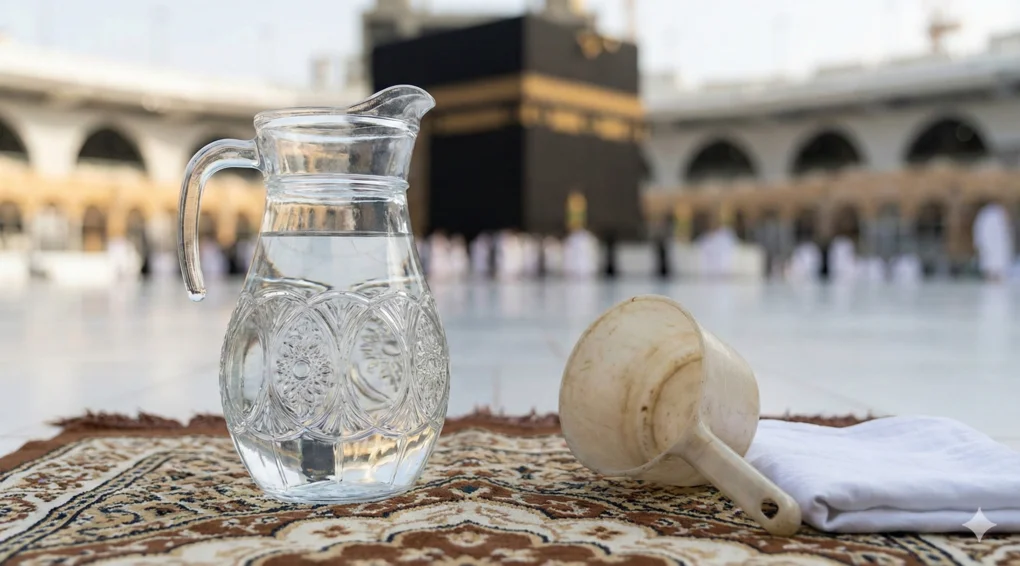
For Muslims, Zamzam is not merely ordinary water. It is profoundly blessed, carrying a rich historical connection to Prophet Isma’il, his mother Hajar, and the sacred precincts of Makkah. Due to its exalted status, believers observe strict etiquette when interacting with it, typically reserving it for drinking to seek healing and divine blessings.
However, a compelling jurisprudential question frequently arises: What if Zamzam is used for physical purification? More specifically, what is the Islamic legal ruling on purifying najis with Zamzam water? Does its nobility forbid its use for removing physical impurities, or does its classification as pure water render it legally acceptable?
This article explores this issue comprehensively, referencing the authoritative Shafi’i fiqh text Asnā al-Maṭālib Sharḥ Rawḍ al-Ṭālib by Shaykh al-Islam Zakariyya al-Ansari. Let us examine the scholarly explanations to ensure our acts of worship are both legally valid and ethically sound.
The Virtues and Nobility of Zamzam Water
Before examining the legal rulings, it is vital to understand how classical scholars view Zamzam. This water holds a remarkably high position; several scholars even argue that it is superior to the waters of the rivers in Paradise because it was historically chosen to wash the heart of the Prophet Muhammad ﷺ.
In Asnā al-Maṭālib (Vol. 1, p. 9), a highly valuable insight is mentioned regarding its virtue. Imam al-Bulqini, in his summary of the history of Makkah, posited that Zamzam water is superior to Al-Kawthar (the river in Paradise).
The underlying rationale is that Zamzam was the water divinely selected to wash the chest (heart) of the Prophet Muhammad ﷺ during the miraculous event of the splitting of his chest before the Isra’ and Mi’raj. Logically, the Prophet ﷺ would not have been washed with anything less than the absolute best and most virtuous of waters.
The original Arabic text citing Imam al-Bulqini reads:
قال البلقيني في مختصر تاريخ مكة ماء زمزم أفضل من الكوثر لأن به غسل صدر النبي – صلى الله عليه وسلم – ولو لم يكن يغسل إلا بأفضل المياه
“Al-Bulqini said in the summary of the history of Makkah: Zamzam water is superior to Al-Kawthar because the chest of the Prophet ﷺ was washed with it. And he would not have been washed except with the most virtuous of waters.”
Understanding this immense nobility serves as the foundation for discussing the legal rulings of using it to clean worldly impurities.
The Status of Zamzam Water for Wudu and Ghusl
In general Shafi’i jurisprudence, Zamzam is categorized as absolute water (māʾ muṭlaq). This classification means it is intrinsically pure and possesses the capacity to purify other things (ṭahūr).
Consequently, is it permissible to use Zamzam for standard ritual purification, such as performing Wudu (ablution) or Ghusl (obligatory bath)?
Asnā al-Maṭālib clarifies that using Zamzam for general ritual purification is not makruh (disliked). This is due to the absence of any established, authentic textual evidence prohibiting such usage. The text states:
قوله: (و) لا (ماء زمزم) لعدم ثبوت نهي فيه
“(And) it is not (makruh to use Zamzam water) due to the absence of an established prohibition regarding it.”
Therefore, if a person performs Wudu using Zamzam water in Al-Masjid al-Haram, their ablution is entirely valid and is not considered a disliked act. (As a side note, for broader applications of valid Wudu, such as the legal rulings on Wudu for amputees, the primary condition remains that the water used must be valid absolute water).
Furthermore, regarding its use for the deceased, you can explore the related juristic discourse in our guide on using cold water for washing the deceased.
The Specific Ruling: Purifying Najis with Zamzam Water
Here lies the core of our discussion. Although Zamzam is valid and permissible for Wudu, scholars distinctly differentiate the ruling when this noble water is utilized for purifying najis with Zamzam (izālat al-najāsah).
This distinction stems from a deep sense of reverence. Removing najis means using the water to clean something dirty, repulsive, or impure.
According to the authoritative references in Asnā al-Maṭālib, purifying najis with Zamzam water is considered Makruh (disliked/offensive). This view was explicitly articulated by Imam al-Mawardi. Furthermore, Imam al-Ruyani and other scholars strictly declared it makruh, particularly in the context of Istinja’ (cleaning oneself after relieving bodily waste).
The Arabic text delineating this ruling states:
نعم تكره إزالة النجاسة به كما قاله الماوردي، وصرح به الروياني، وغيره بالنسبة للاستنجاء
“Yes, removing najis with it (Zamzam) is makruh, as stated by al-Mawardi, and explicitly declared by al-Ruyani and others regarding Istinja’.”
Understanding the Status of “Makruh”
It is essential to understand what makruh entails in Islamic jurisprudence. If an act is makruh, it means it is highly preferable to avoid it. If a Muslim abstains from it for the sake of Allah, they are rewarded; however, if they perform it, they do not incur a sin.
Suppose an individual is in a desperate situation with no other liquids available except Zamzam, and they use it to wash najis from their body or clothes. Is the purification legally valid? Yes, it is valid. The impurity is legally considered removed because Zamzam retains its status as absolute water.
However, the act itself is deemed unethical and lacking in adab (proper etiquette) toward the nobility of the water. The scholars sought to preserve the honor of the water that washed the heart of the Prophet ﷺ, ensuring it is not degraded by being used to clean human waste, even though its physical properties are capable of purifying it.
Summary Table: Rulings on Using Zamzam Water

To facilitate a clearer understanding, the following table summarizes the legal rulings of using Zamzam water based on the Shafi’i texts discussed:
| Type of Usage | Legal Status (Hukm) | Brief Explanation |
| Drinking for Blessing/Healing | Sunnah / Recommended | Highly encouraged due to its immense nobility and prophetic tradition. |
| Wudu and Obligatory Ghusl | Permissible (Not Makruh) | Allowed because there is no established textual prohibition against it. |
| Removing Najis (e.g., Istinja’) | Makruh (Disliked) | Discouraged as a matter of adab to honor and revere the blessed water. |
Conclusion
Based on the detailed expositions from Asnā al-Maṭālib, we can conclude that Islam places a profound emphasis on adab (etiquette), even in our interaction with inanimate objects like water. Zamzam holds an exceptionally privileged position in our theology.
While it is technically pure and purifying (ṭahūr), utilizing it for repulsive matters—such as purifying najis with Zamzam or performing Istinja’—is legally ruled as makruh by eminent Shafi’i jurists like Imam al-Mawardi and Imam al-Ruyani. This ruling is solely an expression of profound reverence for this highly blessed water.
As a practical application of Islamic Fiqh, Muslims should always strive to use regular water for removing physical impurities and reserve Zamzam for drinking or more honorable acts of worship.
FAQ: Questions About the Use of Zamzam Water
Here are some frequently asked questions related to this topic based on the references that have been discussed.
Is a person’s prayer valid if their clothes were tainted with najis and subsequently washed with Zamzam water?
Yes, the prayer is completely valid. The clothing is legally considered pure because Zamzam is absolute water capable of removing the state of najis. However, the act of washing the impurity with Zamzam is what is considered makruh.
Why do some classical scholars state that Zamzam is superior to the water of Paradise (Al-Kawthar)?
As cited by Imam al-Bulqini, the reasoning is that Zamzam was the specific water chosen by Allah to wash the chest and heart of the Prophet Muhammad ﷺ. This divine selection indicates that it is the most virtuous of waters.
What is the difference between the ruling of using Zamzam for Wudu and using it for Istinja’ (cleaning after using the toilet)?
Using Zamzam for Wudu is permissible and not makruh because there is no established prohibition against using it for ritual purity. In contrast, using it for Istinja’ is makruh because it is considered a breach of proper etiquette to use such highly revered and blessed water to clean human excrement.
Hopefully this explanation is beneficial and increases our Islamic knowledge. And Allah knows best.
Reference
Zakariyā al-Anṣārī, Asnā al-Maṭālib fī Sharḥ Rawḍ al-Ṭālib, with a ḥāshiyah by Aḥmad al-Ramlī, edited by Muḥammad az-Zuhrī al-Ghamrāwī (Cairo: al-Maṭbaʿah al-Maymānīyah, 1313 H; repr. Dār al-Kitāb al-Islāmī), vol. 1, p. 9.


