
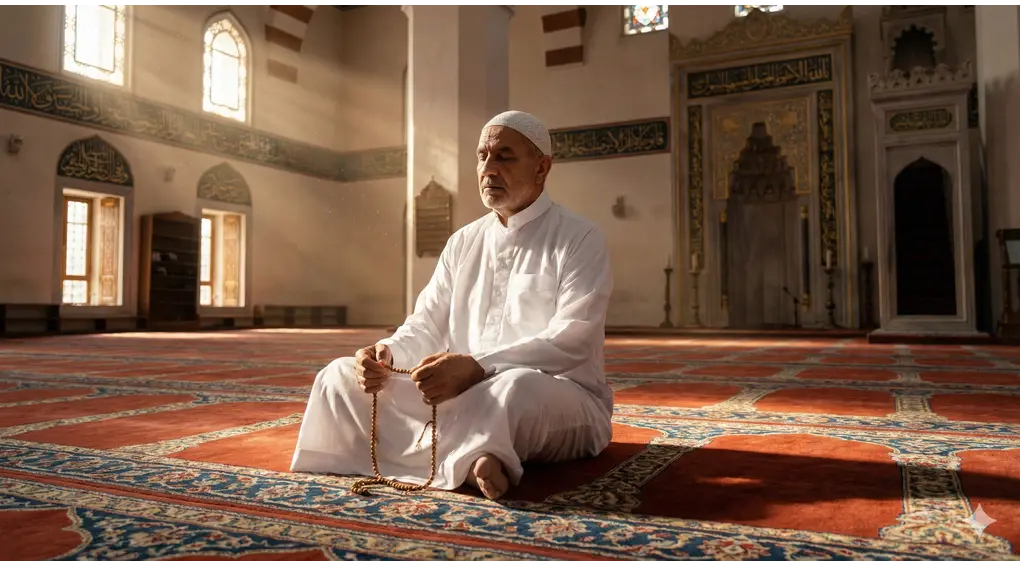
The worship of i’tikaf is originally established as a highly recommended sunnah (sunnah muakkadah). However, a servant of Allah may oblige this act upon themselves through a verbal commitment, known in Islamic jurisprudence as nadhr (a vow). Once an individual makes a vow to perform i’tikaf, its legal status shifts from sunnah to obligatory (wajib). Consequently, all rules regarding its execution become strictly bound to the intention and the specific words uttered by the person making the vow (al-naadhir).
By examining the classical text Asna al-Matalib Syarh Rawdh ath-Thalib, authored by Shaykh al-Islam Zakariyya al-Ansari, this study details the specific rules of i’tikaf nadhr, the regulations for combining it with fasting, and the juristic consequences if a person breaks their vow to perform it consecutively (tatabbu’). This writing serves as a specific extension of our main Complete Guide to the Fiqh of I’tikaf According to the Shafi’i School.
Combining Fasting and I’tikaf Nadhr

Islamic law allows a Muslim to unite two noble acts of worship within a single vow. A jurisprudential question arises when an individual mentions fasting and i’tikaf simultaneously in one sentence. Are they obliged to perform both at the exact same time?
Shaykh al-Islam Zakariyya al-Ansari clarifies this principle:
قوله: (فلو نذر أن يعتكف بصوم أو صائما وكذا عكسه)… (لزماه) أي الاعتكاف والصوم لأنه التزمهما (و) لزمه (الجمع بينهما) لأنه قربة فلزم بالنذر
“If someone makes a vow to perform i’tikaf by fasting, or to perform i’tikaf while fasting, or vice versa… then both become obligatory upon him (namely i’tikaf and fasting), because he has committed to them both. And it is obligatory for him to combine the two, because such a combination is an act of drawing near to Allah (qurbah), hence it becomes binding through the vow.”
Therefore, the ruling on combining fasting and i’tikaf nadhr is valid and binding. A person who utters this vow is not permitted to separate their execution—for instance, by fasting on Monday and performing i’tikaf on Tuesday. Both acts must merge into a single timeframe. This differs from a situation where someone merely vows an absolute fast; in that case, the standard pillars of worship apply, as detailed in the Valid Conditions and Pillars of I’tikaf in Detail.
Detailed Time Rules in I’tikaf Nadhr
The specific wording of the vow determines the exact timeframe that must be fulfilled. There are distinct legal consequences between vowing “one month,” “days,” or just “nights.”
1. Vowing for a Full Month: Are Nights Included?
If a Muslim vows to perform i’tikaf for one entire month, a question emerges: must they remain in i’tikaf during the nights as well?
فصل: (نذر اعتكاف شهر) مثلا (يتناول الليالي) منه لأنه عبارة عن الجميع (لا التتابع) له (لأنه لم يشرطه)
“Section: Vowing an i’tikaf of a month (for example), incorporates the nights from it, because the term represents the entirety (of days and nights). However, consecutive performance (tatabbu’) is not required for him, because he did not stipulate it.”
Based on this text, if the wording is “one month,” the nighttime is automatically included in the obligatory count. The individual may complete it intermittently, as long as the total days reach the number of days in that lunar month (twenty-nine or thirty days). If they leave the mosque for personal matters without a valid excuse, their worship remains valid, but the time spent outside the mosque is not counted. For a precise understanding of permissible actions inside the mosque, you may read The Etiquettes of I’tikaf: Eating, Sleeping, and Makruh Acts in the Mosque.
2. Excluding Nights Based on Wording
The ruling shifts if the person specifically utters the word “days” (ayyam).
قوله: (وإن قال) لله علي أن أعتكف (أيام الشهر أو شهرا نهارا لم تلزمه الليالي) لأنها لا تدخل في مسمى الأيام والشهر (حتى ينويها)
“And if he says: ‘I owe it to Allah to perform i’tikaf on the days of the month, or a month during the daytime,’ the nights do not become obligatory upon him, because nights are not included in the definition of ‘days’ and ‘month’ (when restricted to daytime), unless he intends them.”
Consequences of Breaking a Consecutive (Tatabbu’) Nadhr
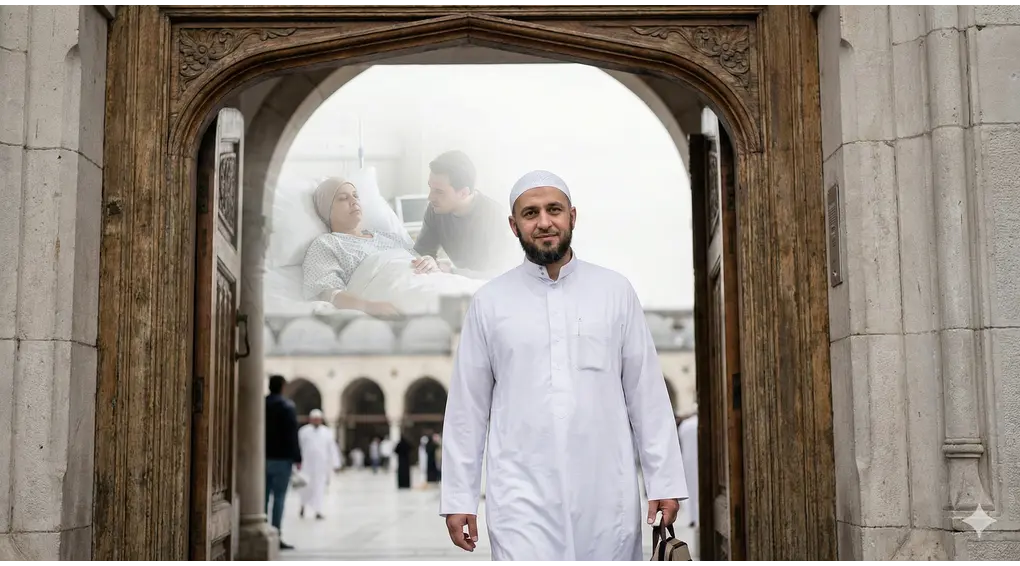
Tatabbu’ refers to the continuous, uninterrupted performance of i’tikaf from beginning to end. An individual is obliged to perform a consecutive i’tikaf if they explicitly state this condition in their vow, or if they vow a timeframe that inherently requires continuity (such as vowing “this current month of Ramadan”).
What occurs if someone breaks the continuity of this worship by returning home without an excuse, or nullifies it through sexual intercourse (jima’˓)? Must they restart (isti’naf) from the very beginning, or is it sufficient to merely make up (qadha) the ruined portion?
The Shafi’i fuqaha categorize these consequences based on the form of the vow:
First: A Vow for a Specific Time (Mu’ayyan)
If someone vows an i’tikaf for a highly specific time (for example, “I vow to perform i’tikaf during this specific month”), and then they break it midway, they are only obliged to make up (qadha) the exact days they ruined. They are not required to restart the entire period from the beginning.
قوله: (فلو نذر اعتكاف شهر معين تعين)… (فإن أفسد بعضه لم يستأنف) بل يجب قضاء ما أفسده فقط
“If he vows the i’tikaf of a specific month, it becomes determined… then if he ruins a part of it, he does not restart (isti’naf), rather he is only obligated to make up (qadha) what he ruined.”
Second: An Absolute Vow with a Condition of Tatabbu’
If the vow is absolute, without pointing to a specific calendar month (for example, “I vow to perform i’tikaf for seven consecutive days”), and the person breaks their worship without a valid sharia excuse, they must restart the count from day one.
قوله: (ولو نذر اعتكاف أيام وليال متتابعة صائما فجامع ليلا استأنفهما) لانتفاء الجمع
“And if he vows an i’tikaf of days and nights consecutively while fasting, and he engages in intercourse at night, he must restart both of them (the i’tikaf and the fasting from the first day), due to the nullification of the combination (jam’).”
To understand exactly which actions sever the state of tatabbu’, please review the detailed study at Things That Invalidate I’tikaf and the Rules of Leaving the Mosque. Specifically for Muslim women, if the continuity is broken due to the onset of menstruation, there is a distinct calculation explained in the article Rulings of I’tikaf Specifically for Women at Home.
Summary Table of I’tikaf Nadhr Rulings
| Wording of the Vow | Are Nights Included? | Is Tatabbu’ Required? | Consequence if Broken |
| “I’tikaf for one month” | Yes, included in the count | No, unless specifically intended | Valid, simply accumulate the days |
| “Days / Daytime” | No, unless intended | No | Valid, allowed to go home at night |
| “This month of Ramadan” | Yes | Yes (because the time is specific) | Perform qadha only for the ruined days |
| “3 consecutive days” | No (only the days) | Yes (because it is stipulated) | Invalidated, must restart from day 1 |
| “I’tikaf while fasting” | Depends on the fasting duration | Depends on the exact words | Both are invalidated if separated |
Frequently Asked Questions (FAQ) on I’tikaf Nadhr
If I make a vow to perform i’tikaf and fast, is it valid if I separate their timing?
It is not valid to separate them if you uttered them together in a single connected sentence, such as “I vow to perform i’tikaf in a state of fasting.” Combining the fasting and i’tikaf (al-jam’u bainahuma) becomes obligatory because you bound yourself to the simultaneous nature of that worship.
Am I obliged to sleep in the mosque if I vow to perform i’tikaf for “three days”?
You are not obliged. The word “days” (ayyam) in the Shafi’i school is calculated only from the break of dawn until sunset. The nights are not included in the obligation of the i’tikaf unless you harbor an intention in your heart to include them.
If I vow to perform i’tikaf for seven consecutive days, and I briefly leave the mosque to visit a sick neighbor, do I have to restart the count?
Leaving the mosque without an absolute dire necessity breaks the continuity (tatabbu’). Visiting the sick is not an absolute sharia excuse unless you laid down a condition of leniency (syarat khuruj) when you made the vow. Shaykh al-Islam states: (متى نذر اعتكافا متتابعا وشرط الخروج لخاص كعيادة المرضى… خرج له). If you stipulated during the vow that you would leave to visit the sick, the i’tikaf is not broken. However, without that prior condition, you are obliged to restart the count from the first day.
We hope this exposition provides precise fiqh understanding for the ummah, preserving the sincerity of ikhlaṣ, and protecting acts of worship from riyā’ and the neglect of sacred promises.
Reference
al-Anṣārī, Zakariyā. Asnā al-Maṭālib fī Sharḥ Rawḍ al-Ṭālib. With the ḥāshiyah (marginal notes) of Aḥmad al-Ramlī. Edited by Muḥammad az-Zuhrī al-Ghamrāwī. Cairo: al-Maṭbaʿah al-Maymānīyah, 1313 AH. Reprinted by Dār al-Kitāb al-Islāmī.


