
Believing in angels constitutes a fundamental pillar of Islamic theology (Aqidah). They are entirely obedient creations of Allah, fashioned from pure light (nur), and are entrusted with specific, critical duties to maintain the order of the universe and execute His divine will.
Knowing the names of angels in Islam and comprehending their specific functions helps us profoundly understand the majesty of Allah and the meticulous organization of His creation. This article explores the true essence of these celestial beings and details the primary angels that every Muslim must know, drawing upon the invaluable scholarly insights from the classical Shafi’i and Ash’ari text, Nur al-Zalam.
A solid grasp of this topic is essential for anyone seeking a complete understanding of the belief in angels, which directly fortifies one’s understanding of the pillars of faith.
The Nature and Characteristics of Angels According to Nur al-Zalam
To truly appreciate their roles, we must first delve into the fundamental nature of angels. The classical text Nur al-Zalam (a commentary on Aqidatul Awam) provides a precise theological description:
Original Arabic Text Excerpt:
وهم أجسام نورانية لطيفة بأرواح، قادرون على التشكل بأشكال مختلفة في أشكال حسنة، شأنهم الطاعة ومسكنهم السماوات غالباً، ومنهم من يسكن الأرض، صادقون فيما أخبروا به عن الله تعالى، يُسبِّحون الليل والنهار لا ينقطعون، ولا يعصون الله في الأمور التي قد أمرهم…
General Characteristics of Angels
From the scholarly excerpt above, we gain a vivid picture of their fundamental attributes. Angels are described as “subtle, luminous bodies possessing souls” (ajsam nuraniyyah latifah bi arwah). Allah (SWT) grants them the miraculous ability to assume various beautiful physical forms corresponding to their assigned duties.
The absolute core of angelic existence is obedience. Their defining characteristic is flawless submission (sha’nuhum al-ta’ah); they never rebel against Allah and flawlessly execute every divine command. Furthermore, they engage in continuous worship, glorifying Allah day and night without fatigue or interruption.
While the primary abode of angels is in the heavens, specific angels are assigned to govern affairs on earth. They are exceptionally truthful in everything they convey from Allah. Regarding their physical creation, Islamic theology asserts that while we know they are created from light, we are not obligated to comprehend the exact microscopic reality of their substance; the obligation lies in firmly believing in their existence.
The Mortality of Angels
A critical theological point clarified in Nur al-Zalam is that angels are not immortal; they too will experience death. They will perish when the Angel Israfil blows the Trumpet for the first time marking the end of the world. The only exceptions are the Bearers of the Throne (Hamalat al-Arsh) and the four leading angels, who will pass away shortly after the first blow. Before this apocalyptic event, no angel experiences death.
The total number of angels is unfathomably vast, a figure known exclusively to Allah (SWT) in its entirety. However, for those specific names of angels in Islam mentioned explicitly in the Qur’an and authentic Hadith, or those whose specific categories are identified, a Muslim is obligated to believe in them in detail.
Recognizing the 10 Primary Angels: Names and Duties
While their numbers are infinite, classical scholars highlight ten specific names of angels in Islam that every morally responsible Muslim (mukallaf) must know in detail. The author of the poem Aqidatul Awam, which Nur al-Zalam elucidates, summarizes them beautifully:
تفصيل عَشْرٍ مِنْهُمُ جِبْرِيلُ…مِيكَالُ إِسْرَافِيلُ عَزْرَائِيلُ مُنكَر نَكِيرٌ وَرَقِيبٌ وَكَذَا…عَتِيدُ مَالِكٌ وَرِضْوَانُ احْتَذَى
These lines identify the ten noble angels: Jibril, Mikail, Israfil, Azrail, Munkar, Nakir, Raqib, Atid, Malik, and Ridwan.
The Four Major Categories of Angels
Islamic scholars categorize these ten primary angels based on their overarching cosmic duties into four distinct groups:
- Al-Mutasharrifun: The angels who govern and manage the physical universe and natural phenomena.
- Al-Fatinun: The angels tasked with testing and interrogating humanity in the grave.
- Al-Hafizun: The guardian angels who protect humans and meticulously record their deeds (represented here by Raqib and Atid).
- Al-Khazinun: The keepers or wardens of the afterlife (represented by Malik and Ridwan).
Let us explore the profound duties of the angels from the Mutasharrifun and Fatinun categories in greater detail.
Detailed Duties of the Governing Angels (Al-Mutasharrifun)
There are four leading angels within this category, each holding immense responsibility over the cosmos and the administration of divine will.
Jibril (Gabriel): The Bearer of Revelation
Jibril is universally recognized as the leader of all angels. His paramount duty is serving as the divine messenger, delivering the revelation (Wahyu) and the words of Allah to the chosen Prophets and Messengers on earth. He is the ultimate bridge of communication that establishes our belief in Allah and His divine laws.
Mikail (Michael): The Distributor of Sustenance and Nature

Mikail is appointed by Allah to manage the natural world, specifically concerning sustenance (Rizq) and biological life. He is directly responsible for measuring the rainfall that nourishes the earth, managing the oceans and rivers, distributing provisions to all living creatures, and even playing a role in the formation of fetuses within the womb. When Muslims offer a prayer for rain during a drought, it is Mikail who is commanded by Allah to deliver the relief.
Israfil: The Blower of the Trumpet
Israfil holds a monumental duty tied to the eschatological end of times. He is tasked with guarding the Preserved Tablet (Lauh Mahfuzh) and, most crucially, blowing the Trumpet (Sur). This Trumpet is described as a construct of light containing receptacles matching the number of all living souls. Israfil will blow the Trumpet twice:
- The First Blow: This initiates the apocalypse. All life in the heavens and the earth will perish, save for seven creations Allah chooses to preserve: the Throne, the Footstool, the Preserved Tablet, the Divine Pen, Paradise, Hellfire, and the souls themselves.
- The Second Blow: Following a divine pause of forty years, Israfil will blow the Trumpet again to initiate the Resurrection. Every deceased creature will be revived, and their specific souls will return to their exact original bodies without error.
Azrail: The Angel of Death
Azrail is the angel designated to extract the souls of all living beings. According to the majority of orthodox scholars (Ahl al-Haqq), his jurisdiction covers every creature possessing a soul, from humans and jinn down to the smallest insects.
Classical narrations describe Azrail possessing a majestic, awe-inspiring, and potentially terrifying form, with his head reaching the highest heaven and his feet at the lowest earth. The entirety of creation is placed before him like a platter. Azrail commands countless angelic assistants who aid in retrieving souls. Notably, when approaching a righteous believer, Azrail adopts a gentle, beautiful appearance, contrasting sharply with the terrifying form he presents to the wicked or hypocritical.
The Examining Angels in the Grave (Al-Fatinun)
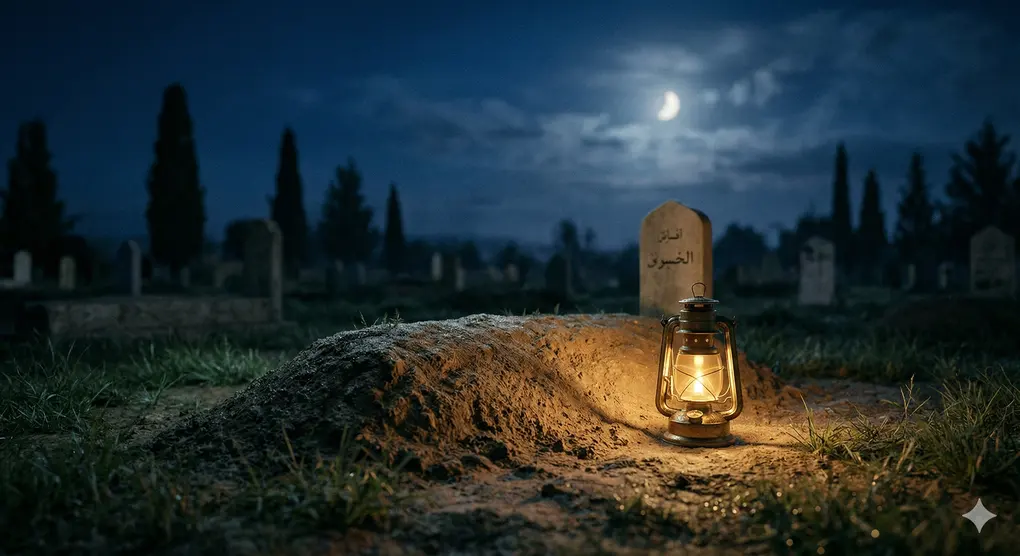
Once a person departs from this worldly life, they encounter the angels categorized as Al-Fatinun, marking the beginning of the afterlife’s trials.
Munkar and Nakir: Their Appearance and Task
Munkar and Nakir are the two formidable angels tasked with interrogating every human and jinn placed into the grave after the burial congregation departs. They question everyone who has received the message of Islam, whether they were believers, hypocrites, or disbelievers.
The classical texts describe their appearance as highly intimidating to signify the severity of the trial in the Barzakh (the realm of the grave). They are described as dark (or blue-black), with voices like roaring thunder and eyes like blinding lightning or blazing copper cauldrons. They carry immense iron hammers; it is said that if all mankind and jinn united, they could not lift them.
The Interrogation Process and the State of the Deceased
The interrogation commences once the burial is complete. Allah restores the soul to the deceased’s body—either entirely or partially, depending on various scholarly interpretations. The deceased enters a state between life and death, akin to a vivid sleep, possessing sufficient consciousness and intellect to comprehend and answer the questions.
Munkar and Nakir will question the deceased in their native tongue regarding the fundamental tenets of their faith:
- Who is your Lord?
- What is your religion?
- Who is your Prophet?
- What is your Qiblah?
- Who are your brethren?
- What is your guide (Imam)?
The Believer’s Outcome: A true believer, fortified by Allah, will answer these questions flawlessly, confirming Allah as their Lord, Islam as their religion, Muhammad (ﷺ) as their Prophet, the Kaaba as their Qiblah, fellow Muslims as their brethren, and the Qur’an as their guide. The angels will validate their answers and command them to sleep peacefully like a newlywed.
The Disbeliever’s Outcome: Conversely, disbelievers and hypocrites will be gripped by paralyzing terror and profound confusion, able only to stammer, “Alas, alas, I do not know.”
Other Essential Categories of Angels
Beyond the ten primary names, the broader list of angels in Islam includes specific categories mentioned in the Qur’an and Hadith:
- Hafazah / Katabah: The guardians and scribes. Raqib and Atid belong to this group. Raqib resides on the right to record righteous deeds, while Atid resides on the left to document sins.
- Bearers of the Throne (Hamalat al-Arsh): Extremely powerful angels tasked with carrying the Throne of Allah.
- The Keepers (Al-Khazinun): Malik serves as the stern warden of Hellfire, while Ridwan is the welcoming guardian of Paradise.
Conclusion
Understanding the names of angels in Islam and their respective cosmic duties is an indispensable component of a Muslim’s faith. They serve as profound evidence of Allah’s absolute power, precision, and majesty in governing the universe.
Internalizing this knowledge, as beautifully preserved in texts like Nur al-Zalam, solidifies our conviction in the unseen, the accountability of our deeds, and the reality of the afterlife. By keeping the angels in mind, a Muslim strives to live a life of piety, completing their holistic understanding of Islam and its pillars.
Frequently Asked Questions (FAQ)
Are angels considered male or female in Islam?
According to Sunni Islamic theology (Aqidah Aswaja), angels are genderless. They are entirely spiritual beings created from light. Ascribing gender to angels, particularly referring to them as females, was a pagan practice explicitly condemned in the Holy Qur’an.
Do angels have free will like human beings?
No, angels do not possess free will or base desires (hawa nafsu) in the way humans and jinn do. They are created with an inherent, absolute disposition to flawlessly obey Allah’s commands without hesitation or rebellion.
Why do we need angels to record our deeds if Allah is All-Knowing?
Allah is undoubtedly All-Knowing and does not “need” angels to record deeds. The presence of the recording angels (Raqib and Atid) serves to establish divine justice and provide indisputable, documented proof of a person’s actions on the Day of Judgment, leaving no room for human denial. It also instills a sense of accountability in the believer during their earthly life.
Academic References:
Al-Jawi, Muhammad bin Umar Nawawi. Nur al-Zalam Sharh Manzumah Aqidah al-Awam. 1st ed. (Dar al-Hawi, 1996), pp. 69-73.


