
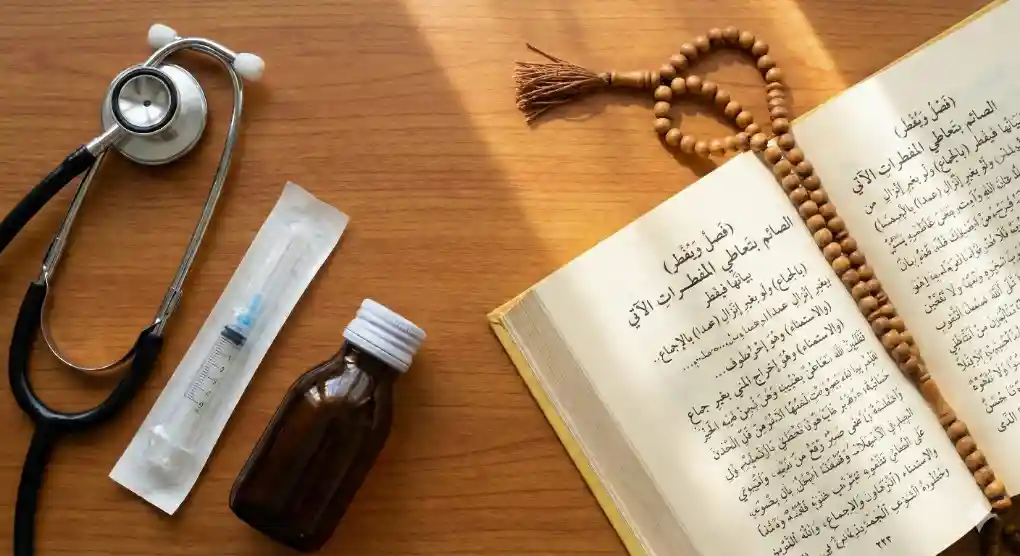
When the blessed month of Ramadan arrives, medical questions often arise that cause us to hesitate. “If I have a toothache and swallow medicine, my fast is obviously broken. But what if I get an injection?” or “Is it okay to use ear drops during the day?”
These doubts are actually rooted in a very fundamental Shafi’i fiqh principle: the rule of objects entering body cavities (jauf) and open passageways (manfadh). In the authoritative Shafi’i fiqh book, Asna al-Matalib Syarah Rawd at-Talib by Sheikh Zakariyya al-Anshari (Volume 1, pp. 414-418), the rules regarding this matter are explained in great detail. He distinguishes between orifices that “penetrate” into the body and those that are merely pores. Let us examine his explanation so that our fasting is peaceful and valid according to Islamic law, and finally answer the ultimate question: do injections break fasting?
1. Basic Principle: Physical Object (‘Ain) vs. Effect (Atsar)
Before discussing specific medical cases, we need to understand the general rule. Sheikh Zakariyya explains that fasting is invalidated if a physical object enters the body, not just its abstract effects.
What is meant by a Physical Object (‘Ain)?
A person’s fast is invalidated if a physical object (‘ain) enters the body cavity (jauf) through an open orifice (manfadh), done intentionally, and while aware that one is fasting. This object does not have to be food or drink. Even small objects that are not commonly consumed can invalidate the fast.
In Asna al-Matalib, it is stated:
فرع: (يفطر) الصائم أيضا (بوصول عين) وإن قلت كسمسمة ولم تؤكل عادة كحصاة (من الظاهر في منفذ) بفتح الفاء (مفتوح عن قصد)… (إلى ما يسمى جوفا)
Academic Translation: “And the fast of a person is invalidated by the arrival of an object (‘ain), even if it is as small as a sesame seed and not normally eaten, such as a pebble, from the outside through an intentionally opened passageway… into what is called a cavity (jauf).”
The Difference with Effects (Atsar)
Conversely, if only the effect or trace (atsar) enters, not the physical object itself, then the fast is NOT invalidated. A common example is smelling an aroma or tasting food (without swallowing the substance).
وخرج بالعين الأثر كوصول الريح بالشم إلى دماغه والطعم بالذوق إلى حلقه
Academic Translation: “Excluded from the word ‘object’ are effects/traces, such as the arrival of aroma to the brain through smell and taste to the throat through tasting.”
Therefore, smelling the aroma of cooking or tasting food on the tip of your tongue and then spitting it out (leaving only the residual taste) does not invalidate your fast.
2. Understanding Open Passageways (Manfadh) and Cavities (Jauf)
The key to this discussion is the concept of an Open Passageway. The fast is only invalidated if substances enter the body through its natural, open channels. Where are these passages located?
a. Ears and Nose




Be highly cautious with these two sensory organs. Inserting something into the ear or nose can invalidate fasting if it exceeds a certain anatomical limit.
- Nose: The boundary is the base of the nostrils or the back of the nasal cavity (Khaisyum). If water or medicine enters beyond this point, the fast is invalid because it is considered a cavity.
- Ears: If you put medicine or an object into your ear that reaches the inner part (ear canal), your fast is invalidated. The reason is that the ear has a passageway leading to the brain (khariithah ad-dimagh) or the skull.
The original text reads:
قوله: (فرع لو أدخل) الصائم (في أذنه… شيئا فوصل إلى الباطن أفطر)… لأنه نافذ إلى داخل قحف الرأس وهو جوف
Academic Translation: “If a fasting person puts something in his ear… and it reaches the inner part, then it is invalid… because it penetrates the skull and that is a cavity.”
b. Mouth and Throat
For the mouth, the boundary is the makhraj (place of articulation) of the Arabic letter Ha’ (ح). This part is called the outer boundary (zhahir).
- If phlegm or objects are still on the outer edge (mouth/tongue), they may be discarded and the fast remains intact.
- If the object passes through the throat (hulqum) into the stomach, then the fast is invalidated.
Understanding the boundaries between the zhahir (outer) and batin (inner) regions of the throat is crucial. This is highly relevant not only for medication but also for natural bodily functions. You must clearly understand the ruling on swallowing saliva and phlegm while fasting to maintain the validity of your worship.
c. Front and Back Passages (Qubul & Dubur)
Administering medication through the rectum (such as hemorrhoid suppositories or enemas) directly invalidates the fast.
قوله: (و) يفطر (بالحقنة) وهي الأدوية المعروفة أي بوصولها الجوف
3. Medical Cases: Do Injections Break Fasting?
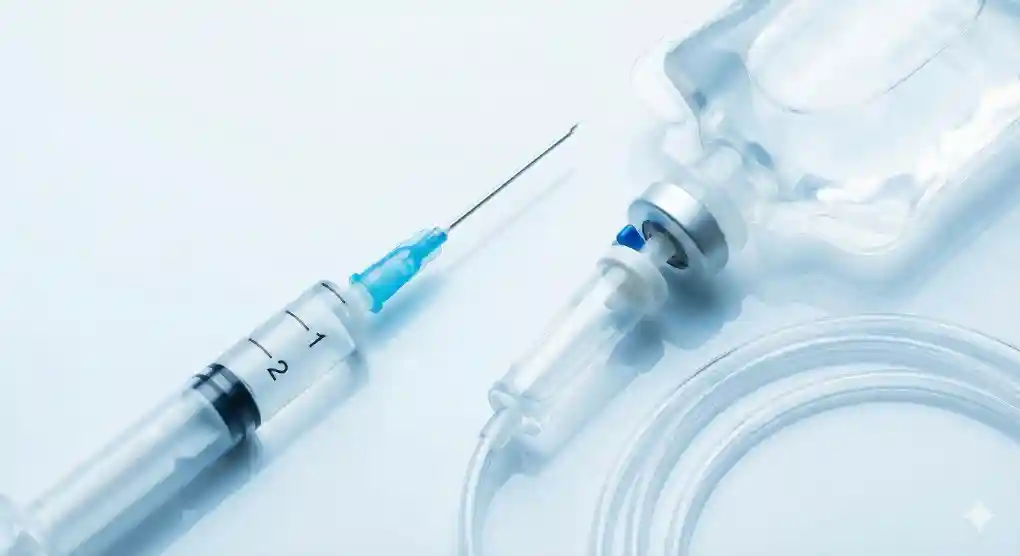
This is the most frequently asked question in the modern era. How does classic fiqh literature view modern medical procedures like intravenous therapy and intramuscular shots?
The Ruling on Injections and IV Infusions
The good news is that the majority of contemporary Shafi’i scholars, based on the foundational texts, rule that injections and infusions DO NOT invalidate fasting.
Why? Doesn’t the liquid enter the body? Yes, it does, but the liquid enters through the pores (masamm) or is injected through the veins/muscles, not through natural open orifices (manfadz maftuh). Sheikh Zakariyya provides a brilliant analogy regarding oil seeping into the body:
قوله: (وما) أي ولا بما (تشربته المسام)… (وإن وصل إلى الجوف) لأنه لم يصل في منفذ مفتوح فأشبه الانغماس في الماء
Academic Translation: “And it is not invalidated by what is absorbed by the pores… even if it reaches the cavity, because it does not enter through an open hole; it is like soaking in water.”
Thus, even though IV fluids enter and refresh the body, because the route is through a needle prick in the skin rather than the mouth, nose, or rectum, the fast remains valid.
The Ruling on Eye Drops (Kohl)
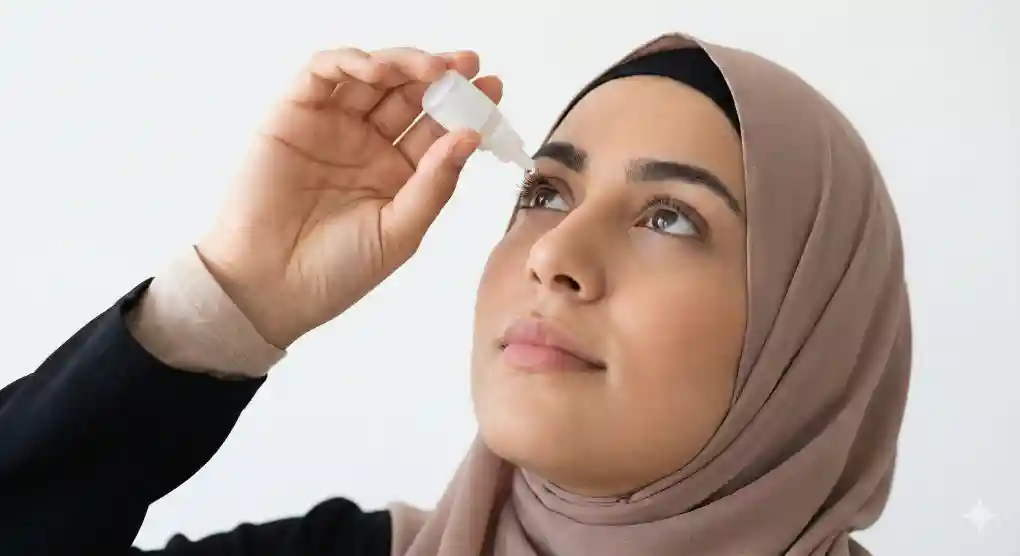
Using eye drops or medical eye ointment does NOT invalidate fasting, even though we sometimes feel the bitterness of the medicine at the back of our throat. The jurisprudential reason is that the eye is not an orifice that has a direct, open passageway to the stomach cavity (jauf).
قوله: (ولا) يفطر (بالكحل) أي بوصوله العين وإن وجد بحلقه منه طعما لأن العين ليست جوفا ولا منفذ منها للحلق
Academic Translation: “And it is not invalidated by the arrival of kohl into the eye… even if he feels its taste in his throat, because the eye is not a cavity and there is no passage from it to the throat.”
The Ruling on Treated Wounds
What if a person has a severe wound on the head or abdomen that requires medication?
- If the wound penetrates the membrane of the brain (Ma’mumah) or penetrates the abdominal cavity (Jaifah), and medicine is inserted there, the fast is invalid.
- If the wound is only in the flesh (such as a cut on the thigh or calf), even if it pierces deep into the bone marrow, the fast is not invalid, because the thigh is not considered a central body cavity.
4. Exceptions: Forgiven Items (Ma’fu)
Islam is a religion of ease and practicality. Not all things that enter the body automatically invalidate the fast if the conditions make them extremely difficult to avoid. The book Asna al-Matalib mentions several things that are forgiven (ma’fu):
- Road Dust & Flour Sifting: If you are on the road and accidentally inhale dust, or you are sifting flour and the fine powder is inhaled into your throat, your fast remains valid.
(ولا يفطر بغبار الطريق وغربلة الدقيق) لعدم قصده لهما ولعسر تجنبهما - Food Remnants Between Teeth: If small food remnants are trapped between the teeth, carried away by saliva, and swallowed naturally because they are difficult to separate, it is forgiven. However, if the food remnant is large and easily removable, it must be spat out.
- Accidental Swallowing of Mouthwash: The residual taste of water after rinsing (atsar) does not invalidate fasting. Even if a tiny amount of water is swallowed accidentally (not due to excessive or aggressive rinsing), it is forgiven.
Summary Table: Medical Treatments and Fasting
Here is a quick reference guide based on the detailed fiqh analysis above:
| Type of Medical Action | Fasting Status | Fiqh Justification (Asna al-Matalib) |
| Injection / IV Infusion | Valid (Not Invalid) | Enters through pores/skin, not an open orifice. |
| Eye Drops | Valid (Not Invalid) | The eye is not an open passageway to the cavity. |
| Ear Drops | Invalid | If the medicine penetrates the inner ear canal. |
| Nasal Drops | Invalid | If it passes the base of the nasal cavity (khaisyum). |
| Asthma Inhaler | Invalid (Caution) | Sprays a physical substance (‘ain) directly into the respiratory tract. |
| Rectal Suppositories | Invalid | The rectum is an open passage to the abdominal cavity. |
FAQ: Common Questions on Medical Treatments During Ramadan
I accidentally swallowed a small fly while yawning. Is my fast broken?
No, it is not invalid. This situation is analogous to the entry of road dust, which is considered difficult to avoid (ma’fu). There is absolutely no element of deliberate intent.
Does a medical nasal swab test invalidate fasting?
Based on the text stating, “If a person who is fasting puts something into their nose… and it reaches the inner part, then it is invalid,” a swab instrument that penetrates deep into the nasal cavity (khaisyum) has the high potential to invalidate the fast.
Is it permissible to apply medicated oils or heating balms on the skin?
It is perfectly permissible and does not invalidate the fast. The sensation of heat or cold felt inside the body is merely the effect of pore absorption (tasyarrub al-masam), not a physical object entering through a natural orifice.
Conclusion
Through this comprehensive analysis of the classic text Asna al-Matalib, we can appreciate that Islamic jurisprudence is immensely logical, precise, and highly detailed. To master the fiqh of Ramadan fasting, the key lies in understanding the definitions of the Cavity (Jauf) and the Open Orifice (Manfadh). As long as our medical treatments do not involve the intentional insertion of objects into these vital passageways, insha’Allah our fasting remains secure.
However, physical intake is not the only threat to a fast. Fasting can also be nullified by specific behavioral actions. Ensure you also comprehend the ruling on sexual intercourse while fasting so your worship is safeguarded from all angles. For a broader overview, please read our ultimate guide on things that invalidate fasting.
Finally, from the perspective of Tasawuf (Sufism), fasting is a moment of deep spiritual purification. Protecting the fast from the loss of its spiritual rewards due to inward sins is just as critical as protecting its physical pillars. Enhance this holy month by understanding the conditions for sincere repentance (taubat nasuha) according to Imam Nawawi.
May this explanation bring tranquility and enhance the solemnity of our worship. Always consult with knowledgeable scholars if you encounter a doubtful medical scenario.
Wallahu a’lam bish-shawab (And Allah knows best).
References
al-Anṣārī, Zakariyā. Asnā al-Maṭālib fī Sharḥ Rawḍ al-Ṭālib. With commentary by Aḥmad al-Ramlī. Edited by Muḥammad az-Zuhrī al-Ghamrāwī. Cairo: al-Maṭbaʿah al-Maymānīyah, 1313 AH. Reprinted by Dār al-Kitāb al-Islāmī.


