
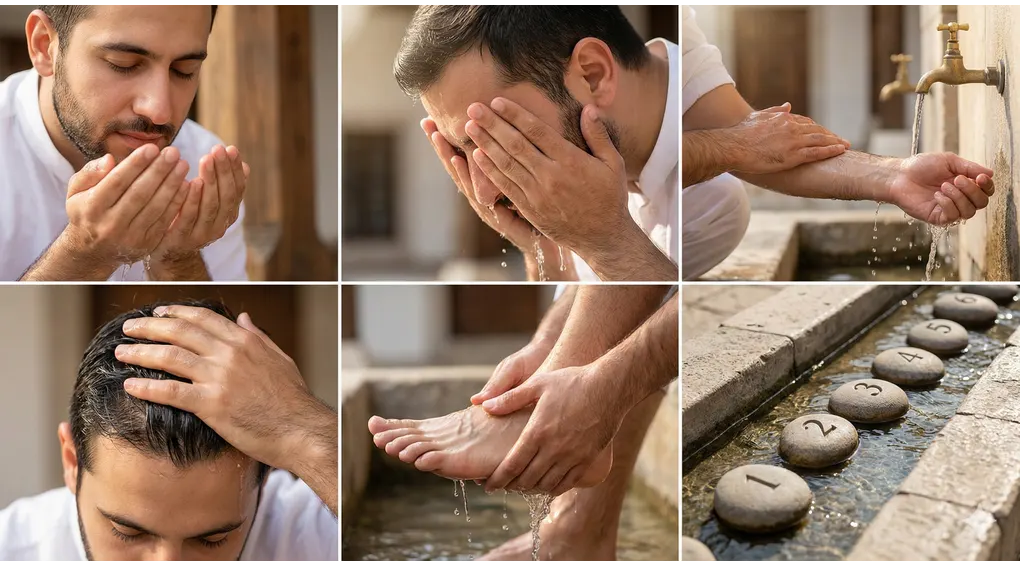
Wuḍūʾ (ablution) is the indispensable key to the validity of various fundamental acts of worship in Islam, such as prayer (ṣalāh), circumambulation of the Kaaba (ṭawāf), and touching the muṣḥaf of the Qur’an. Without a correctly performed wuḍūʾ, these acts of worship will not be accepted by Allah. A question frequently arises: how many obligatory acts (farḍ, plural furūḍ) are there in wuḍūʾ? Profoundly understanding the farḍ al-wuḍūʾ, or the pillars (arkān, singular rukn) of wuḍūʾ, is a fundamental necessity for every Muslim. This article will thoroughly explore the answer, commencing from the intention (niyyah) to the precise methodology, based upon the scholarly explanations found in the esteemed Kitāb al-Fiqh al-Manhajī.
The Essence of Wuḍūʾ and the Importance of Farḍ al-Wuḍūʾ
Linguistically, the definition of wudhu (wuḍūʾ) means cleanliness or beauty. Terminologically, wuḍūʾ is the specific use of pure water on designated bodily members in a particular manner prescribed by the Shari’ah. Wuḍūʾ is not merely a physical cleansing from visible dirt; rather, it is a ritual purification from minor ritual impurity (ḥadath aṣghar), which acts as a spiritual barrier between a servant and their worship of faith in Allah.
Farḍ al-wuḍūʾ constitutes a sequence of absolute prerequisites that are obligatory to fulfill during the process of ablution. If one asks about the position of farḍ al-wuḍūʾ, it is analogous to a supporting pillar. Much like constructing a house, the pillars (arkān) of wuḍūʾ are its foundational columns. If a single column is missing, the house collapses. Similarly, in wuḍūʾ—if one of its obligatory acts is omitted, the wuḍūʾ is rendered invalid.
It is important to note that in various fiqh texts, farḍ al-wuḍūʾ is also referred to as the pillars (arkān) of wuḍūʾ. Understanding farḍ al-wuḍūʾ is critical because it serves as the primary condition for the wuḍūʾ to be declared valid, thereby ensuring the validity of the prayer. Just as in building a house, the pillars of wuḍūʾ are its supporting columns. If even one column is missing or does not stand firm, the house will not be perfect. Likewise with wuḍūʾ—if one of its obligatory acts is missed or not performed correctly, the wuḍūʾ is invalid and must be repeated. This understanding is crucial to grasping the broader concept of fiqh.
The primary foundation for the legislation of farḍ al-wuḍūʾ is found in the Qur’an, Surah Al-Ma’idah, verse 6:
“O you who have believed, when you rise to [perform] prayer, wash your faces and your forearms to the elbows and wipe over your heads and wash your feet to the ankles.” (QS. Al-Ma’idah: 6)
This verse explicitly mentions the bodily members that are obligatory to be washed and wiped during wuḍūʾ. Furthermore, there are other obligatory acts of wuḍūʾ deduced from other evidences and the practice (Sunnah) of the Messenger of Allah ﷺ.
How Many Furūḍ al-Wuḍūʾ Are There? The Six Obligatory Acts You Must Know
Many inquire about the number of furūḍ al-wuḍūʾ (obligatory acts of ablution) according to the Shafi’i school of thought. The answer is unequivocal: There are 6 (six) furūḍ al-wuḍūʾ. Below is the complete detailed list if you are asked to mention the farḍ al-wuḍūʾ in sequential order:
- Intention (Niyyah)
- Washing the Face
- Washing Both Hands up to the Elbows
- Wiping a Part of the Head
- Washing Both Feet up to the Ankles
- Order (Tartīb)
Let us discuss each one in detail so that you can mention the farḍ al-wuḍūʾ with profound understanding.
1. Intention (Niyyah) for Wuḍūʾ
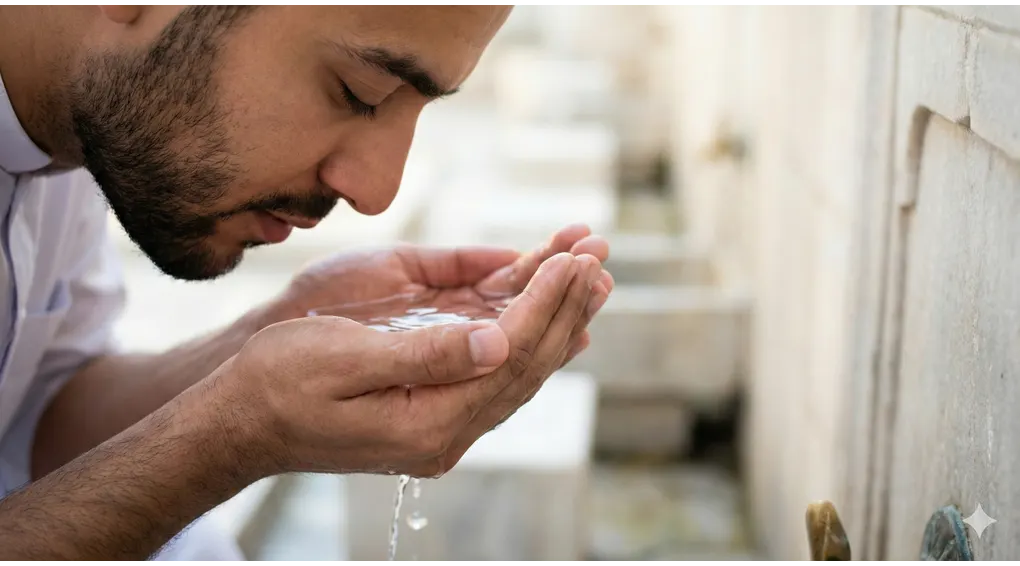
Intention is the first and foremost pillar (rukn) of wuḍūʾ. Why is the intention for wuḍūʾ so critically important? Because wuḍūʾ is an act of worship. It differentiates between ordinary mundane cleaning and cleansing undertaken for the sake of worship. Without intention, the act of cleaning merely becomes a daily habit, not an act of worship that yields reward. A deeper understanding of intention is essential here.
The Messenger of Allah ﷺ said: “Actions are but by intentions, and every man shall have only that which he intended.” (Hadith narrated by Bukhari: 1, and Muslim: 1907)
This Hadith asserts that all acts of worship are invalid and will not be rewarded by Allah unless they are intended correctly and sincerely.
- Reciting the Intention for Wuḍūʾ: The locus of the intention is in the heart. This means it suffices to present the purpose of performing wuḍūʾ within the heart. However, it is recommended (sunnah) to verbally articulate the intention as a reinforcement of the intention in the heart.
- The Correct Way to Intend for Wuḍūʾ: You can intend in your heart, “I intend the obligatory wuḍūʾ,” or “I intend to remove the ritual impurity,” or “I intend to be permitted to pray.”
- Transliteration, Arabic, and Translation of the Wuḍūʾ Intention:
- Arabic Text: نَوَيْتُ الْوُضُوْءَ لِرَفْعِ الْحَدَثِ الْاَصْغَرِ فَرْضًا لِلّٰهِ تَعَالَى
- Academic Transliteration: “Nawaytu al-wuḍūʾa li-rafʿi al-ḥadathi al-aṣghari farḍan li-Llāhi taʿālā.“
- Translation: “I intend to perform wuḍūʾ to remove the minor ritual impurity, an obligation for the sake of Allah the Exalted.”
- The Time for the Intention: The precise time for the intention to perform wuḍūʾ is at the moment one begins to wash the very first part of the face, because washing the face is the initial part of the sequence of farḍ al-wuḍūʾ. This is part of the 13 conditions for a valid wudhu.
2. Washing the Entire Face
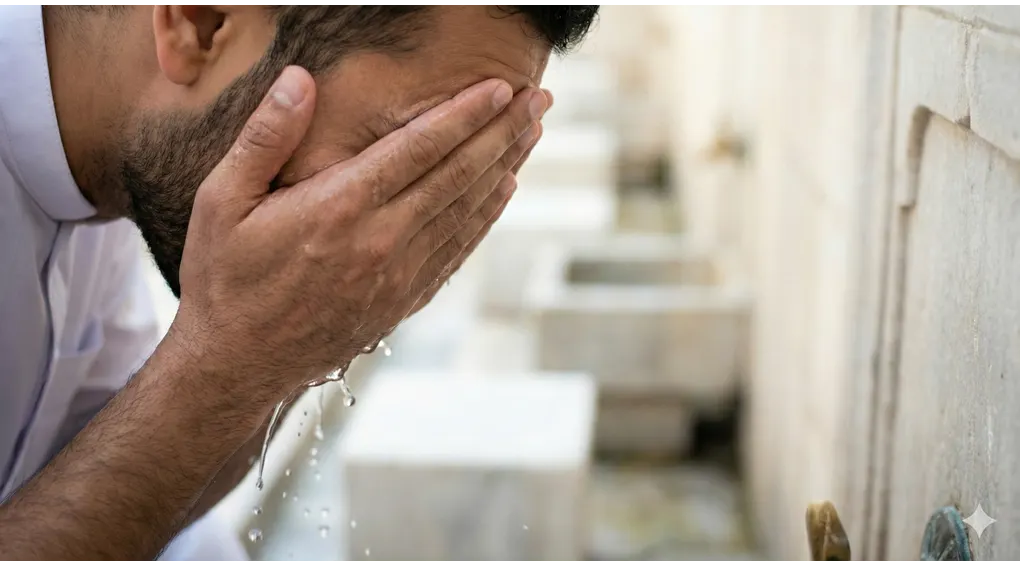
Washing the entire face from the hairline to the chin and from ear to ear is one of the pillars (arkān) of wuḍūʾ that is obligatory to be performed perfectly.
After the intention, the second pillar of wuḍūʾ is washing the entire face. This is in accordance with the decree of Allah SWT: “(wash) your faces.”
The boundaries of the face that are obligatory to be washed:
- Vertically: From the normal hairline on the forehead down to the bottom of the chin.
- Horizontally: From the right earlobe to the left earlobe.
Every part that grows on the face, such as eyebrows, mustache, and beard, is obligatory to be washed down to the skin beneath it, unless the beard is very thick (the skin beneath it is not visible). In this condition, it suffices to wash the outer part only. The water used must also meet the criteria for types of water valid for purification.
3. Washing Both Hands Up to the Elbows




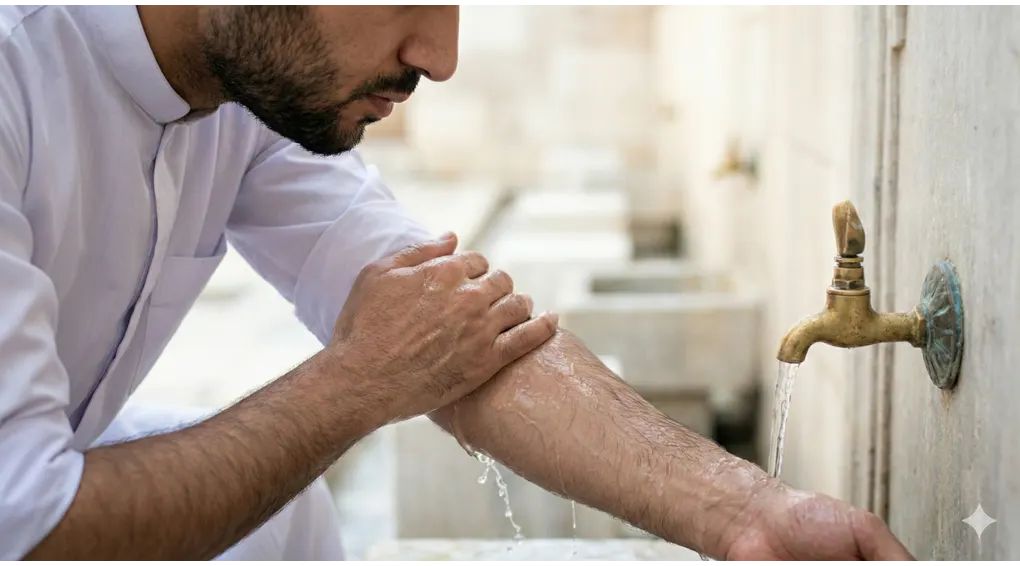
When washing the hands, ensure the water wets up to and including the elbows (isbāgh al-wuḍūʾ) so that this pillar of wuḍūʾ is fulfilled perfectly.
Farḍ al-wuḍūʾ has strict rules of engagement, including regarding the hands. This command is also clear in the Qur’an: “and your forearms to the elbows.”
The elbow (al-mirfaq, plural al-marāfiq) is the joint connecting the forearm with the upper arm. The word “ilā” (up to) in this verse is interpreted as “maʿa” (along with). Therefore, we are obligated to wash the hand encompassing the elbow, and even slightly exceeding it, as exemplified by the Messenger of Allah ﷺ.
It is crucial to ensure the entire part of the hand is washed with water, without exception. If there is dirt under the nails or a ring that prevents water from reaching the skin, then the wuḍūʾ is invalid. Just as when we wash clothes, if there is a folded part that is not touched by soap and water, then the clothing is not perfectly clean. Similarly with wuḍūʾ, every part of the limb that is obligatory to be washed must be thoroughly wetted by water.
This is reinforced by the Hadith of the Prophet ﷺ who saw the heels of some companions that were not touched by water during wuḍūʾ. He said, “Woe to the heels from the fire of Hell, perfect your wuḍūʾ!” (Narrated by Bukhari and Muslim). Another Hadith also recounts a man who left a small part on his foot unwashed, and the Prophet ﷺ ordered him to return and rectify his wuḍūʾ.
4. Wiping a Part of the Head
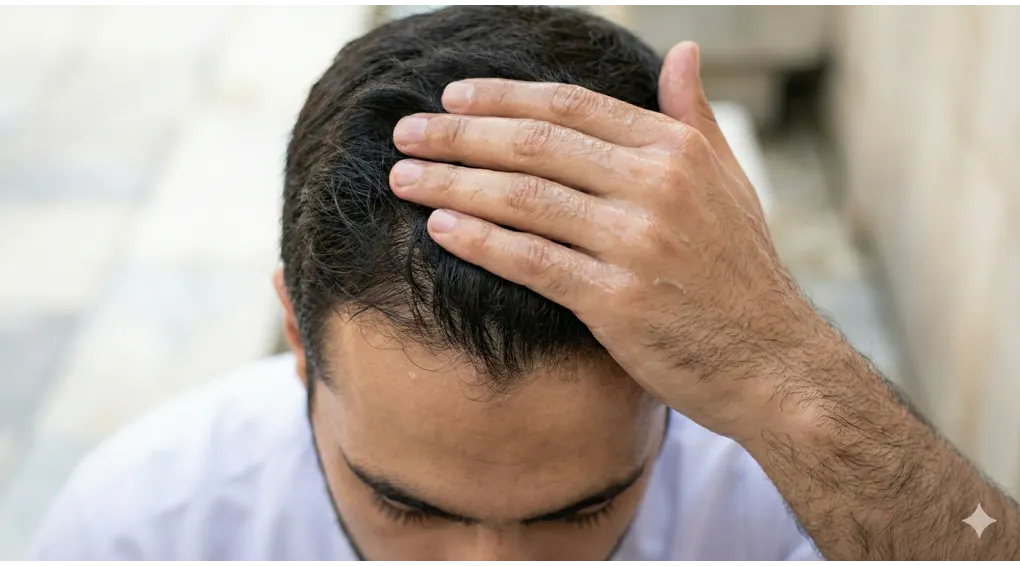
The fourth pillar is wiping a part of the head. It suffices to wipe a small portion of the hair growing within the boundaries of the head with a hand wetted with water. This is based on the decree of Allah SWT: “and wipe over your heads.”
It is sufficient to wipe a small part of the head, even if it is only a strand or two of hair, provided that the hair is still within the boundaries of the head. An example of this practice is wiping the forelock (the front part of the head). The Messenger of Allah ﷺ once wiped his forelock and over his turban. (Narrated by Muslim).
This indicates that wiping a part is sufficient to fulfill the farḍ of wuḍūʾ. Furthermore, if someone washes their entire or part of their head as a substitute for wiping, it is also permissible.
5. Washing Both Feet Up to the Ankles
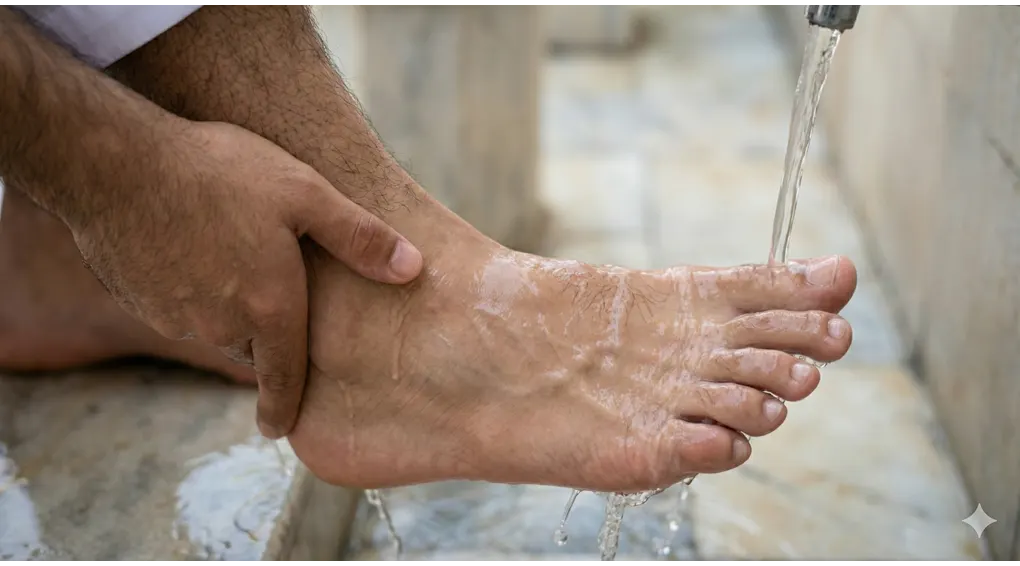
The fifth farḍ al-wuḍūʾ is washing the feet up to the ankles. Pay close attention to the heels and between the toes so that no part remains dry, which could render the wuḍūʾ invalid.
The next farḍ al-wuḍūʾ is washing both feet along with the ankles. The Qur’anic verse explicitly mentions: “and your feet to the ankles.”
The ankle (al-kaʿb, dual al-kaʿbān) is the protruding bone on the right and left sides of the joint between the calf and the foot. Similar to the elbows, the word “ilā” (up to) here means “maʿa” (along with), meaning we are obligated to wash the foot encompassing the ankle, and even slightly exceeding it.
Just like the hands, it is important to ensure the entire part of the foot is washed with water, with nothing missed, even if it is the size of a fingernail or the area under thin hair on the foot. This is for the perfection of our wuḍūʾ.
6. Order (Tartīb)
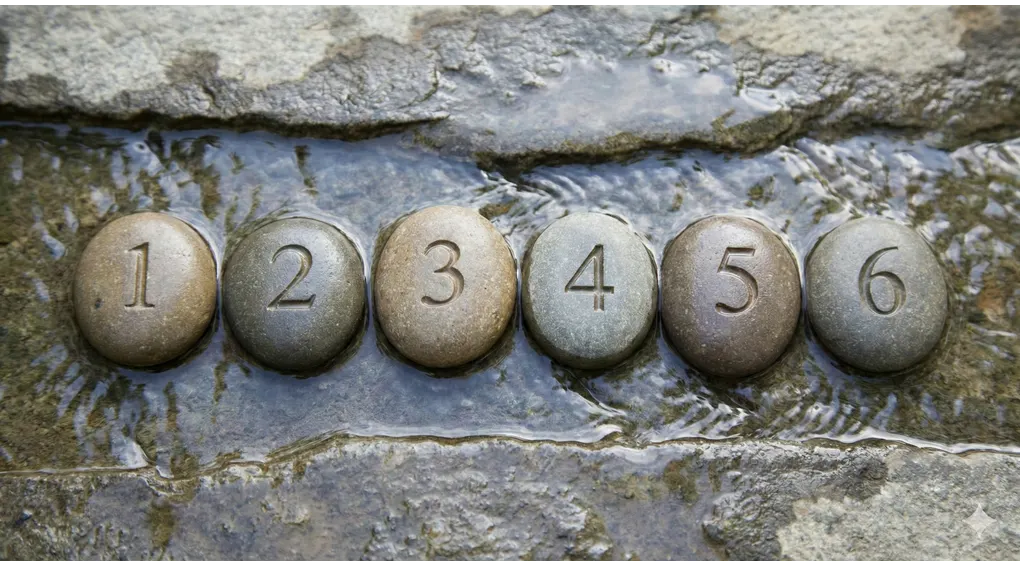
If asked to mention the farḍ al-wuḍūʾ, order is key. The final pillar of wuḍūʾ is tartīb (order). This means you are obligated to perform steps 1 through 5 in sequential order; you are not permitted to skip around (e.g., washing feet before the face).
The obligation of tartīb is derived from the sequence of the Qur’anic verse that mentions the limbs of wuḍūʾ in order. Additionally, the practice of the Messenger of Allah ﷺ was also always sequential. There is no narration stating that he performed wuḍūʾ out of order, although he sometimes varied the number of washings.
This shows that order is an inseparable part of a perfect wuḍūʾ. Like a cooking recipe, if the steps are not followed in sequence, the result will not be as expected. By understanding and executing these six furūḍ al-wuḍūʾ, in shāʾ Allāh, our wuḍūʾ will be valid and the worship we perform, such as prayer (ṣalāh), will be accepted by Allah SWT. This is part of the greater wisdom of purification.
Conclusion
Thus, if the question arises as to how many farḍ al-wuḍūʾ there are and to mention them, you can now answer definitively: there are six, namely intention (niyyah), washing the face, washing the hands, wiping the head, washing the feet, and order (tartīb). By maintaining these six pillars, in shāʾ Allāh, our worship will be valid and accepted.
FAQ
Why is intention (niyyah) considered the first farḍ of wuḍūʾ?
Intention differentiates wuḍūʾ as an act of worship from ordinary cleansing. Without the specific intention for wuḍūʾ, the act does not count as ritual purification required for prayers.
What happens if I forget to wash a small part of my arm, like under a ring?
If any part of the obligatory limbs remains dry, such as the area under a tight ring, the wuḍūʾ is invalid. You must ensure water reaches all parts of the skin on the obligatory limbs.
Can I wash my feet before my face during wuḍūʾ?
No, according to the Shafi’i school, maintaining the correct order (tartīb) is a farḍ act. You must perform the actions in the sequence specified in the Qur’an and practiced by the Prophet ﷺ: face, hands, head, then feet.
Reference
Muṣṭafā al-Khin, Muṣṭafā al-Bughā, and ʿAlī al-Sharbajī, al-Fiqh al-Manhajī ‘alā Madhhab al-Imām al-Shāfi‘ī, vol. 1 (Damascus: Dār al-Qalam, 1992), pp. 53-56.


