
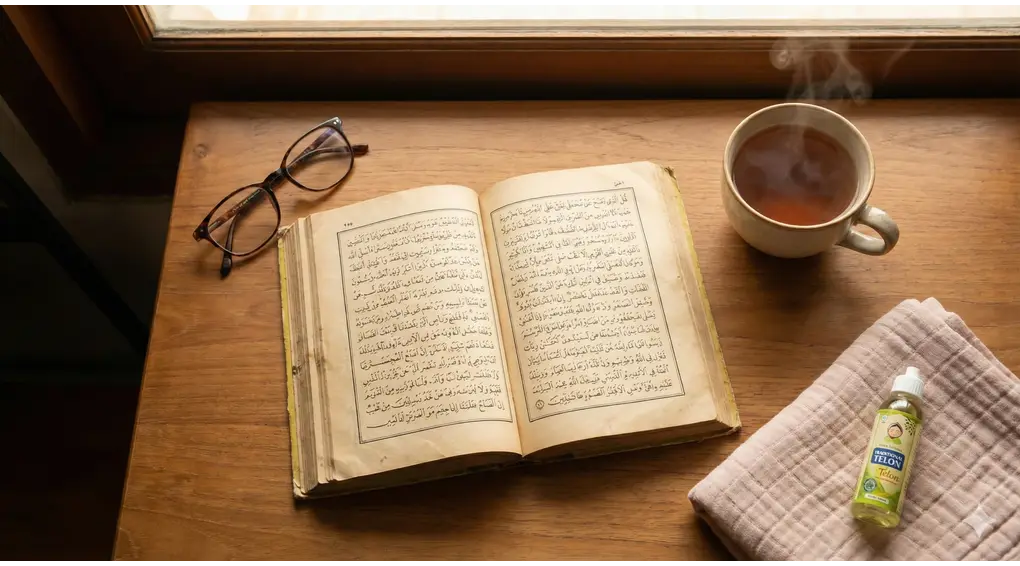
For students of Islamic jurisprudence, the book Fathul Mu’in by Shaykh Zainuddin Al-Malibari is a foundational and deeply respected reference. However, its concise prose (ijaz) often requires careful interpretation, especially when applying its rulings to daily domestic life.
One of the most common anxieties for young mothers revolves around the fiqh of baby vomit. Many seek a comprehensive thaharah guide for nursing mothers to understand the ritual purity of their bodies when nursing a baby who frequently spits up. Are you obligated to wash your breast every single time? Or does Islamic law provide a dispensation (rukhsah)?
Let us dissect the original text of Fathul Mu’in and its authoritative commentary, I’anah at-Talibin, to answer this question comprehensively, scientifically, and practically.
Original Text and Translation from Fathul Mu’in
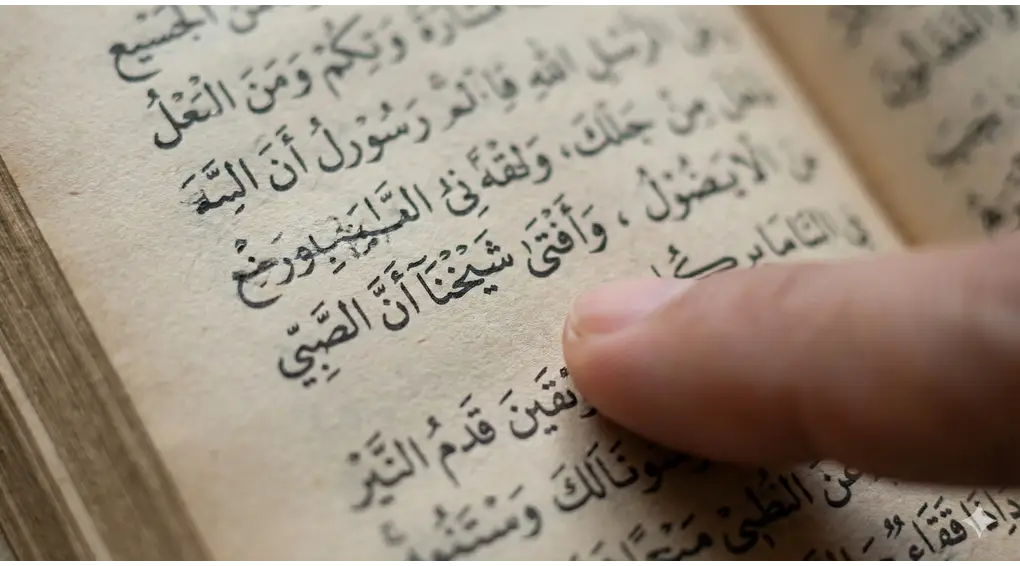
In the chapter concerning impurities (najis), Shaykh Zainuddin Al-Malibari cites a pivotal fatwa. Below is the original text (ibarah) that serves as the legal basis for the dispensation granted to nursing mothers:
وأفتى شيخنا أن الصبي إذا ابتلي بتتابع القئ عفي عن ثدي أمه الداخل في فيه، لا عن مقبله أو مماسه
Translation:
And our teacher (Ibn Hajar al-Haytami) ruled: If a baby is afflicted with frequent vomiting, then the impurity of the mother’s nipple that enters the baby’s mouth is forgiven, but the impurity of the part that is kissed or touched by the baby is not forgiven.
Unpacking the Fatwa of Ibn Hajar
To avoid any misconceptions, we must analyze the critical components of this text step-by-step.
1. Who is “Our Shaykh”?
In the context of Fathul Mu’in, the term “Our Shaykh” (Syaikhuna) refers to Shaykh Ibn Hajar Al-Haytami. He was a prominent scholar of the Shafi’i school whose legal verdicts (fatwas) serve as a primary, relied-upon reference (mu’tamad) for Muslims globally, particularly in Southeast Asia.
2. The Condition of “Tatabu’ al-Qay’i” (Frequent Vomiting)
Pay close attention to the phrase idza ubtuliya bitatābu’il qay’i (if tested with continuous vomiting).
The words ubtuliya (tested) and tatabu’ (consecutive/frequent) indicate that this legal dispensation applies specifically to recurring conditions. If a baby vomits only once in a blue moon, the fundamental ruling remains: it is a standard impurity that must be washed.
However, reality dictates that almost all infants go through a phase of frequent spitting up. This continuous cycle creates a state of hardship (masyaqqah). If a mother were forced to wash her breast every 15 minutes due to minor spit-up, it would cause severe distress. Here, Islamic law steps in to provide facility and ease.
3. Boundaries of the Excused Area



This point is crucial. The fatwa strictly limits the excused impurities to a very specific anatomical area: Tsadyi ummihi ad-dakhili fi fihi (The mother’s nipple that enters his mouth).
Why only this specific part? Because this is the area of absolute necessity (hajat) that cannot be avoided during the breastfeeding process.
4. Strict Warning: Excludes Kissing and Touching
Ibn Hajar establishes a firm boundary with the phrase: “La ‘an muqabbilihi aw mumassihi”. We must be precise in our Arabic morphology here. The words Muqabbil and Mumass are active participles (Isim Fa’il), denoting the actor.
- Muqabbil (The Kisser): This dispensation DOES NOT apply to someone who kisses the baby. Parents naturally want to kiss their child’s face. However, if you (as the muqabbil) kiss a baby’s mouth that still retains traces of vomit, your lips become ritually impure (najis) and must be washed. Kissing is an act of affection, not a sheer necessity like nursing, so it does not receive the same legal tolerance.
- Mumass (The Toucher): Similarly, the ruling DOES NOT apply to someone who touches the impurity. If your hand (as the mumass) intentionally touches the remnants of vomit around the baby’s mouth (for example, wiping it without water), your hand becomes impure and must be purified.
Conclusion: The dispensation solely covers the interaction of “the mother’s breast meeting the baby’s mouth.” Any other interaction, such as “lips meeting the baby’s mouth” (kissing) or “hands meeting the impurity” (touching), reverts to the original ruling: it is impure and requires purification. It is important to note that vomit is a medium impurity, unlike a light impurity (najis mukhaffafah), meaning it requires standard washing with water if it falls outside the excused parameters.
Deeper Insights from I’anah at-Talibin

Understanding the exact boundaries of excused impurities allows a mother to perform her prayers peacefully, free from excessive doubt (was-was).
For a more profound understanding, we turn to the commentary (syarah) of Fathul Mu’in, titled I’anah at-Talibin, authored by Sayyid Bakri Syatha. In Volume 1, page 102, he quotes the original source of Ibn Hajar’s fatwa:
وسئل رضي الله عنه: هل يعفى عما يصيب ثدي المرضعة من ريق الرضيع المتنجس بقئ أو ابتلاع نجاسة أم لا؟ فأجاب رضي الله عنه: ويعفى عن فم الصغير وإن تحققت نجاسته.
Meaning:
“He (Ibn Hajar) was asked: ‘Is the impurity excused when it affects the breast of a nursing mother from the saliva of an infant that has become impure (mutanajjis) due to vomiting or swallowing an impure substance?’ He replied: ‘And it is excused regarding the mouth of the small child, even if its impurity is absolutely certain.'”
Expanding the Context: The Mouth of a Child
This explanation highlights that the core of the dispensation lies in the status of the “small child’s mouth.” The text further references the legal reasoning of Imam Ibn ash-Shalah and the confirmation by Imam az-Zarkashi, who analogized the mouth of an infant to the mouth of those lacking mental capacity (majanin).
Why? Because neither possesses the rational ability (‘aql) to guard their mouths against impurities. This demonstrates the profoundly humane and logical nature of Islamic jurisprudence.
Summary Table of Islamic Rulings on Baby Impurities
For easier reference, here is a comparison table based on the above references:
| Situation | Affected Body Part | Islamic Ruling | Explanation |
| Baby nurses after vomiting | Mother’s Breast / Nipple | Excused (Ma’fu) | Granted due to urgent necessity (hajat). |
| Mother kisses baby after vomiting | Mother’s Lips / Face | Impure (Najis) | Requires washing; the mother acts as the kisser (muqabbil). |
| Mother touches baby’s vomit | Mother’s Hand | Impure (Najis) | Requires washing; the mother acts as the toucher (mumass). |
| Normal baby saliva (no vomit) | Clothes / Skin | Pure (Suci) | Saliva is inherently pure in its original state. |
FAQ: Common Questions on the Fiqh of Baby Vomit
What does “Tatabu'” mean in this context?
Tatabu’ translates to consecutive, continuous, or frequent. This is the primary condition for the dispensation. If the baby spits up very rarely, the ruling reverts to the original law, meaning the impurity must be washed.
Does this ruling apply to baby bottles?
The specific text in Fathul Mu’in explicitly mentions tsadyi ummihi (the mother’s breast). Therefore, the direct physical necessity applies to the mother’s body, though maintaining general hygiene with bottles remains highly recommended.
What if I am in doubt about whether the baby’s mouth is impure?
The text in I’anah at-Talibin states wa in tahaqqaqat najasatuhu (even if its impurity is absolutely certain). This means the dispensation works even when you are 100% sure it is impure. However, if you are merely doubting (syak) whether the baby vomited or not, you must return to the foundational legal maxim: certainty is not overruled by doubt, meaning you assume it is pure
Conclusion
Studying the nuances of Fathul Mu’in reveals that Islamic jurisprudence is not only meticulously detailed but also profoundly compassionate. The fatwa issued by Shaykh Ibn Hajar Al-Haytami stands as a testament that the Sharia is designed to support, not complicate, the noble role of motherhood.
For mothers currently in their breastfeeding journey, hold firmly to this established ruling so you may perform your prayers with tranquility, free from intrusive doubts. The breast exposed to a vomiting baby’s mouth is excused, but always remember to wash your hands and lips if you touch or kiss the remnants.
May this brief exploration of our classical texts bring benefit and ease. Let us continually send abundant salawat upon the Prophet Muhammad ﷺ so that our knowledge yields blessings. Wallahu a’lam bis-sawab (And Allah knows best).
Referensi
Abu Bakr (known as al-Bakri) Uthman ibn Muhammad Shatta ad-Dimyaati ash-Shafi’i, I’anat al–Ṭālibīn ʿalā Ḥall Alfāẓ Fatḥ al-Muʿīn (Ḥāshiyah ʿalā Fatḥ al-Muʿīn bi-Sharḥ Qurrat al-ʿAyn bi-Muhimmat ad-Dīn), 1st ed. (Beirut: Dār al-Fikr, 1997), 1:102.


