

Belief in angels is a fundamental theological pillar within Islamic teachings. This conviction forms an inseparable part of a Muslim’s creed. Understanding the belief in angels goes far beyond merely acknowledging their existence; it involves recognizing their inherent nature, specific roles, and exalted status within Islamic theology (Aqidah).
By grasping this concept, a Muslim perfects their understanding the meaning and number of the pillars of faith. This article provides an academic and comprehensive exploration of the meaning of faith in angels, drawing from classical Islamic sources and authoritative texts (Kitab Turath).
What Does Belief in Angels Truly Mean?
In Islam, the belief in angels constitutes a firm and unwavering conviction in their existence as unseen (ghayb) creations of Allah (SWT). It includes the complete acknowledgment that they are noble servants, traditionally understood to be created from light (nur), who consistently and perfectly obey His commands.
As the second pillar, following the belief in Allah, this conviction derives directly from the Holy Quran and the Prophetic Sunnah. Without acknowledging the existence of angels, a person’s faith is considered legally invalid in Islam.
Classical Islamic creedal texts extensively explain this foundational concept. One notable example is the book Irsyad al-‘Ibad by Sheikh Zainuddin al-Malibari, which states:
Original Arabic Text:
واعلم أن الإيمان بالله اعتقاد أنه واحد لا نظير له في ذاته وصفاته ولا شريك له في الألوهية وهي استحقاق العبادة، وأنه قديم لا ابتداء لوجوده، وباقٍ لا انتهاء لأبديته، وبالملائكة اعتقاد أنهم مكرمون لا يعصون الله ما أمرهم، ويفعلون ما يؤمرون صادقون فيما أخبروا به
Translation:
“Know that faith in Allah is the belief that He is One, having no equal in His Essence and Attributes, and He has no partner in divinity (Uluhiyah), which is the absolute right to be worshipped. And that He is Pre-eternal (Qadim), having no beginning to His existence, and Everlasting (Baqi’), having no end to His eternity. And (faith) in the Angels is the belief that they are honored creations; they do not disobey Allah in what He commands them, they do exactly what they are commanded, and they are truthful in what they convey.”
This scholarly excerpt affirms that having faith in angels requires recognizing them as honored beings characterized by absolute obedience and flawless truthfulness.
Quranic Evidence for the Belief in Angels
The divine command to believe in angels appears throughout the Quran. A primary evidence is the statement of Allah (SWT) in Surah An-Nisa, verse 136:
يَا أَيُّهَا الَّذِينَ آمَنُوا آمِنُوا بِاللَّهِ وَرَسُولِهِ وَالْكِتَابِ الَّذِي نَزَّلَ عَلَىٰ رَسُولِهِ وَالْكِتَابِ الَّذِي أَنْزَلَ مِنْ قَبْلُ ۚ وَمَنْ يَكْفُرْ بِاللَّهِ وَمَلَائِكَتِهِ وَكُتُبِهِ وَرُسُلِهِ وَالْيَوْمِ الْآخِرِ فَقَدْ ضَلَّ ضَلَالًا بَعِيدًا
“O you who have believed, believe in Allah and His Messenger and the Book that He sent down upon His Messenger and the Scripture which He sent down before. And whoever disbelieves in Allah, His angels, His books, His messengers, and the Last Day has certainly gone far astray.” (QS. An-Nisa: 136).
Similarly, Allah states in Surah Al-Baqarah, verse 285:
آمَنَ الرَّسُولُ بِمَا أُنْزِلَ إِلَيْهِ مِنْ رَبِّهِ وَالْمُؤْمِنُونَ ۚ كُلٌّ آمَنَ بِاللَّهِ وَمَلَائِكَتِهِ وَكُتُبِهِ وَرُسُلِهِ لَا نُفَرِّقُ بَيْنَ أَحَدٍ مِنْ رُسُلِهِ ۚ وَقَالُوا سَمِعْنَا وَأَطَعْنَا ۖ غُفْرَانَكَ رَبَّنَا وَإِلَيْكَ الْمَصِيرُ
“The Messenger has believed in what was revealed to him from his Lord, and [so have] the believers. All of them have believed in Allah and His angels and His books and His messengers, [saying], ‘We make no distinction between any of His messengers.’ And they say, ‘We hear and we obey. [We seek] Your forgiveness, our Lord, and to You is the [final] destination.'” (QS. Al-Baqarah: 285).
These verses explicitly declare that believing in angels, alongside the revealed holy books and belief in the Last Day, is an obligatory characteristic of true believers.
The Nature and Characteristics of Angels in Islam
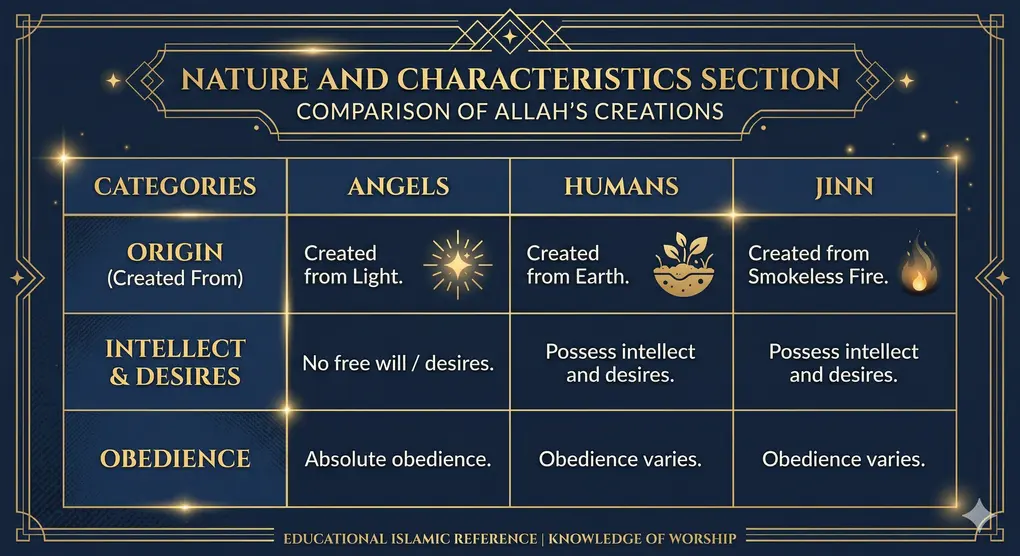
A vital aspect of understanding this pillar is recognizing the fundamental nature of angels. They are vastly different from humans and Jinn. The classical commentary Nur al-Zalam by Sheikh Nawawi al-Bantani (a commentary on Aqidatul Awam) provides a meticulous breakdown of their traits:
Original Arabic Text Excerpt:
والمَلَكُ الذي بلا أَبٍ وَأُمْ…لا أَكْلَ لا شُرْبَ ولا نومَ لهمْ أي يجب على كل مكلف أن يعتقد أن الملائكة عليهم السلام خلقهم الله من غير واسطة أب ولا أم، فليسوا رجالاً ولا نساءً ولا خناثى… وهم غير الجن لا رجال ولا نساء، ولا يأكلون ولا يشربون، ولا ينامون ولا يتناكحون، ولا يتوالدون…
Translation:
“And the angel who is without father and mother… there is no eating, drinking, or sleeping for them. Meaning, it is obligatory upon every morally responsible person (mukallaf) to believe that the Angels (peace be upon them) were created by Allah without the intermediary of a father or a mother. Therefore, they are neither men, nor women, nor intersex (khunsa). Whoever believes they are male is an innovator and a sinner… and whoever believes they are female has committed disbelief by scholarly consensus… They are distinct from Jinn; they are neither male nor female, they do not eat, they do not drink, they do not sleep, they do not marry, and they do not reproduce…”
From this authoritative Shafi’i text, we can extract several core characteristics of angels:
- Created Without Parents: They do not undergo biological reproduction like humans or Jinn.
- Genderless Beings: They are neither male nor female. The Quran explicitly condemns the pagan Arab belief that angels were the “daughters of Allah” (QS. Az-Zukhruf: 19).
- No Physical Needs: They do not require food, drink, sleep, or marital relations.
- Devoid of Base Desires: Unlike humans who possess free will and worldly desires (hawa nafsu), angels possess intellect but are created with an inherent, unwavering obedience to Allah.
The Roles and Functions of Angels
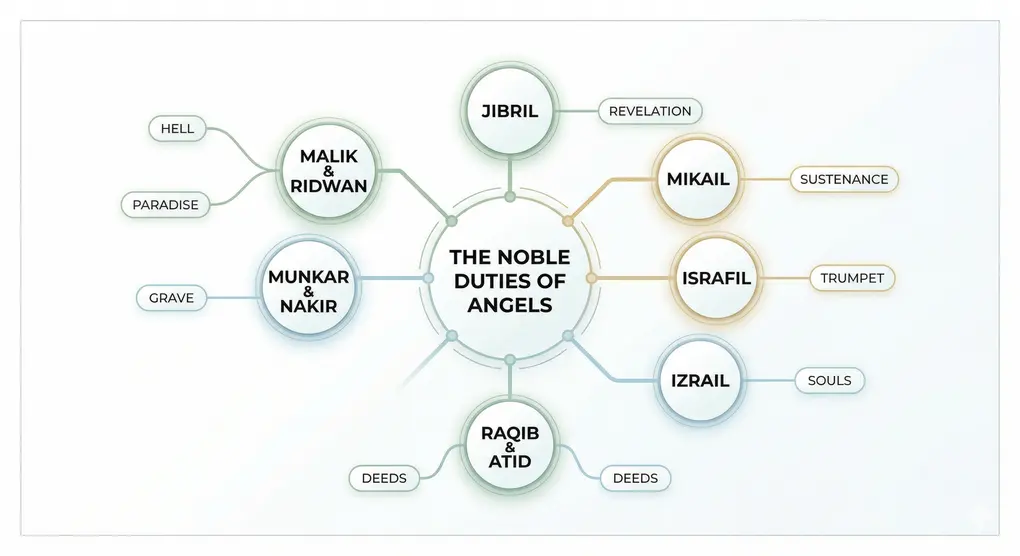
Allah (SWT) assigns various noble duties to His angels to manage the affairs of the universe. To truly fulfill this pillar of faith, a Muslim must familiarize themselves with the names of angels and their specific functions:
- Jibril (Gabriel): Tasked with delivering divine revelation to the Prophets and Messengers.
- Mikail (Michael): Responsible for distributing sustenance (rizq) and managing the rain.
- Israfil: Tasked with blowing the Trumpet to signal the Day of Resurrection.
- Izrail: The Angel of Death, responsible for extracting souls.
- Raqib and Atid: The honorable scribes who meticulously record the good and bad deeds of humanity.
- Munkar and Nakir: Tasked with questioning the deceased in the grave.
- Malik and Ridwan: The respective guardians of Hellfire and Paradise.
Furthermore, as mentioned in Nur al-Zalam, angels also serve as intercessors for the believers and will reside in Paradise alongside humanity by the grace of Allah.
The Impact of Belief in Angels on Daily Life
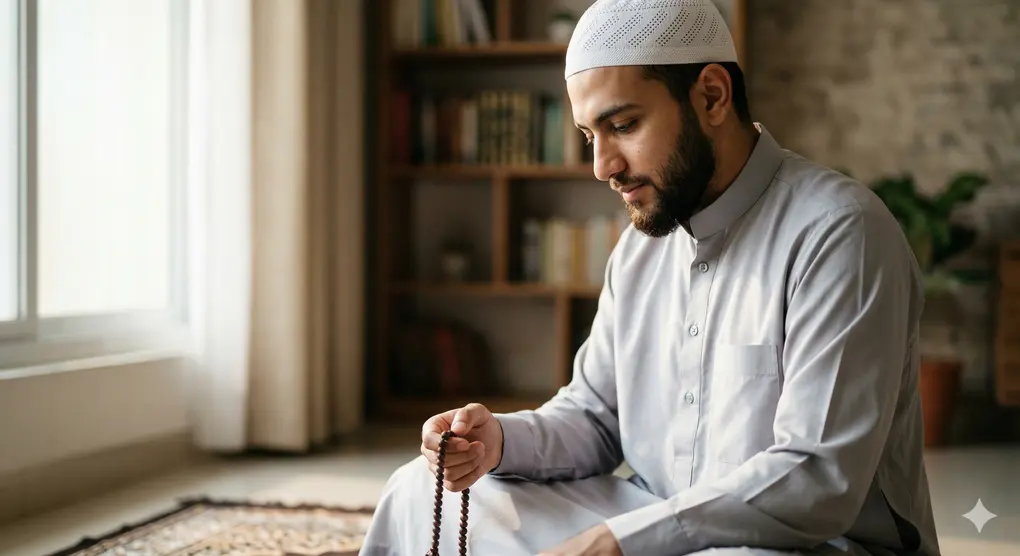
Belief in angels is not a mere theoretical concept; it exerts a profound psychological and moral influence on a Muslim’s daily life, directly tying into the broader meaning of Islam and its pillars.
Practical implementations of this belief include:
- Heightened Self-Awareness: Knowing that Raqib and Atid continuously record our actions deters a believer from committing sins and encourages righteous deeds.
- Deepened Gratitude: Recognizing that Mikail actively distributes Allah’s provisions fosters immense gratitude for daily sustenance.
- Spiritual Tranquility: Trusting that Allah deploys guardian angels brings peace of mind in times of distress.
- Preparation for the Hereafter: Remembering the inevitable arrival of Izrail, Munkar, and Nakir keeps a believer focused on preparing for the eternal life.
Conclusion: The Wisdom Behind This Pillar of Faith
The belief in angels is absolutely foundational. It validates one’s faith and magnifies the concept of Tawhid (the Oneness of Allah) by demonstrating Allah’s supreme majesty in creating such magnificent, unseen beings to execute His divine will.
By comprehensively understanding this subject, Muslims secure their grasp on the six pillars of faith. This belief instills a balanced sense of hope and reverence, urging believers to strive for moral excellence, knowing that noble, unseen companions bear witness to their every deed.
Frequently Asked Questions (FAQ)
Are angels male or female in Islamic theology?
According to the consensus of Islamic scholars (Ijma), angels are genderless. They are entirely spiritual beings created from light. Ascribing a gender to angels, particularly referring to them as females, is strictly condemned in the Quran.
Do angels have free will like human beings?
While angels possess immense intellect and understanding, they do not possess the base desires (hawa nafsu) or the capacity for disobedience that humans and Jinn have. They are created with an absolute, inherent disposition to obey Allah’s commands flawlessly.
Why do we need to believe in angels if we already believe in Allah?
Believing in angels is a direct command from Allah in the Quran. It tests a believer’s faith in the unseen (ghayb). Furthermore, acknowledging angels helps us comprehend how Allah administers the universe and delivers His revelations, thereby deepening our awe of His infinite power.
Academic References:
- Al-Jawi, Muhammad bin Umar Nawawi. Nur al-Zalam Sharh Manzumah Aqidah al-Awam. (Dar al-Hawi, 1996).
- Al-Malibari, Zainuddin bin Abd al-Aziz. Irsyad al-‘Ibad ila Sabil ar-Rashad.


