

Faith in Allah (Iman billah) constitutes the paramount pillar within Islamic doctrine, forming the very bedrock of a Muslim’s existence. As the first pillar of Iman (Rukun Iman), faith in Allah not only dictates the direction of worship but also profoundly shapes one’s entire worldview and approach to daily life. With unwavering faith, a Muslim can attain inner tranquility, discover life’s true purpose, and forge a deep, meaningful connection with the Creator. This article will delve into the scholarly definition of faith in Allah, its scriptural evidences, the distinguishing characteristics of true believers, its immense benefits, and practical methods to strengthen this essential faith.
The Scholarly Definition of Faith in Allah
What exactly is faith in Allah? In its simplest terms, faith in Allah is the absolute conviction rooted within the heart that Allah is the One and Only God, the Creator of the universe, who possesses perfect and divine attributes. In the esteemed classical text Kāsyifat al-Sajā (page 19), the concept of Iman is elucidated as follows:
فالإيمان لغة مطلق التصديق سواء كان بما جاء به النبي أو بغيره، وشرعاً التصديق بجميع ما جاء به النبي صلى الله عليه وسلّم مما علم من الدين بالضرورة لا مطلقاً، ومعنى التصديق هو حديث النفس التابع للجزم سواء كان الجزم عن دليل ويسمى معرفة أو عن تقليد، ومعنى حديث النفس أن تقول تلك النفس أي القلب: رضيت بما جاء به النبي صلى الله عليه وسلّم.
Translation: “Iman linguistically means absolute affirmation, whether of what the Prophet brought or otherwise. Whereas legally (according to Shari’ah), Iman is the affirmation of everything that the Prophet (peace and blessings be upon him) brought which is necessarily known to be part of the religion, not absolutely.
The meaning of affirmation is the soul’s discourse that follows decisive certainty, whether that certainty arises from evidence (called ma’rifah) or from uncritical imitation (taqlid). The meaning of the soul’s discourse is that the soul, i.e., the heart, says: ‘I am pleased with what the Prophet (peace and blessings be upon him) brought.'”
The true meaning of faith in Allah encompasses the firm conviction that Allah possesses sublime attributes such as existence, eternity, distinction from creation, Oneness, omnipotence, omniscience, hearing, sight, and speech. The essence of faith in Allah is to accept the Oneness of Allah (Tawhid) with full contentment in the heart, as explained in the aforementioned classical text. This foundational belief naturally leads to the acceptance of other core tenets, such as the existence of His divine messengers. For a deeper understanding of these fundamental beliefs, you can explore the definition and number of pillars of faith.
Scriptural Evidence for Faith in Allah
The scriptural evidence for faith in Allah is abundantly found within the Qur’an and the Hadith. One of the primary verses serving as textual proof (dalil naqli) for faith in Allah is:
“Say: ‘He is Allah, the One. Allah, the Eternal Refuge.'” (QS. Al-Ikhlas: 1-2)
From the Hadith, the Messenger of Allah (peace and blessings be upon him) said:
“Iman is that you believe in Allah, His angels, His books, His messengers, the Last Day, and you believe in divine decree, both its good and its bad.” (Narrated by Muslim)
These verses and hadiths unequivocally emphasize that faith in Allah is the primary foundation of a Muslim’s belief system. This belief forms the basis upon which other tenets, such as the belief in unseen beings, rest. To learn more about these beings, you can read about the meaning of faith in angels.
The Pillars of Iman and the Position of Faith in Allah
Faith in Allah is the first pillar of Iman out of the six pillars of Iman in Islam. The six pillars include faith in Allah, His angels, His books, His messengers, the Last Day, and divine decree (Qadar). As the primary pillar of faith, belief in Allah serves as the foundation that connects a Muslim with the other pillars. Without faith in Allah, the other pillars of faith would hold no true significance.
Characteristics of True Believers in Allah

The characteristics of those who truly believe in Allah can be observed through their daily attitudes and behaviors, such as:
- Pronouncing the Shahada: Verbally acknowledging that there is no god worthy of worship except Allah.
- Tawakkul (Reliance): Surrendering oneself to Allah in every matter.
- Gratitude (Shukr): Always being grateful for Allah’s blessings, both in times of ease and hardship.
- Righteous Deeds (Amal Saleh): Performing good deeds, such as prayer, charity, and helping others.
- Maintaining Noble Character (Akhlaq): Such as honesty, patience, and humility.
- Avoiding Inappropriate Questions about Allah: Such as “where,” “how,” “when,” and “how many,” as explained in Kāsyifat al-Sajā:
فائدة: من ترك أربع كلمات كمل إيمانه أين وكيف ومتى وكم فإن قال لك قائل: أين الله؟ فجوابه ليس في مكان ولا يمر عليه زمان. وإن قال لك: كيف الله؟ فقل: ليس كمثله شيء. وإن قال لك: متى الله؟ فقل له: أول بلا ابتداء وآخر بلا انتهاء. وإن قال لك قائل: كم الله؟ فقل له: واحد لا من قلة قل هو الله أحد
Translation: “Benefit: Whoever abandons four words perfects their Iman: ‘where,’ ‘how,’ ‘when,’ and ‘how many.’ If someone asks you: ‘Where is Allah?’ The answer is: He is not in a place and time does not pass over Him. If they ask you: ‘How is Allah?’ Say: ‘There is nothing whatsoever like unto Him.’ If they ask you: ‘When did Allah exist?’ Say to them: ‘He is the First without beginning and the Last without end.’ If someone asks you: ‘How many is Allah?’ Say to them: ‘One, not few in number, Say: He is Allah, the One.'”
Benefits of Faith in Allah
The benefits of faith in Allah are immense, both in this world and in the Hereafter. Some of them include:
- Inner Tranquility: Faith provides a sense of peace due to the conviction that Allah always manages everything perfectly.
- Strength to Face Trials: With tawakkul, a Muslim is able to face life’s challenges with patience.
- Allah’s Pleasure (Ridha): Strong faith brings a Muslim closer to Allah’s mercy and blessings.
- A Meaningful Life: Faith provides a clear purpose in life, which is to worship Allah.
Practical Ways to Strengthen Faith in Allah
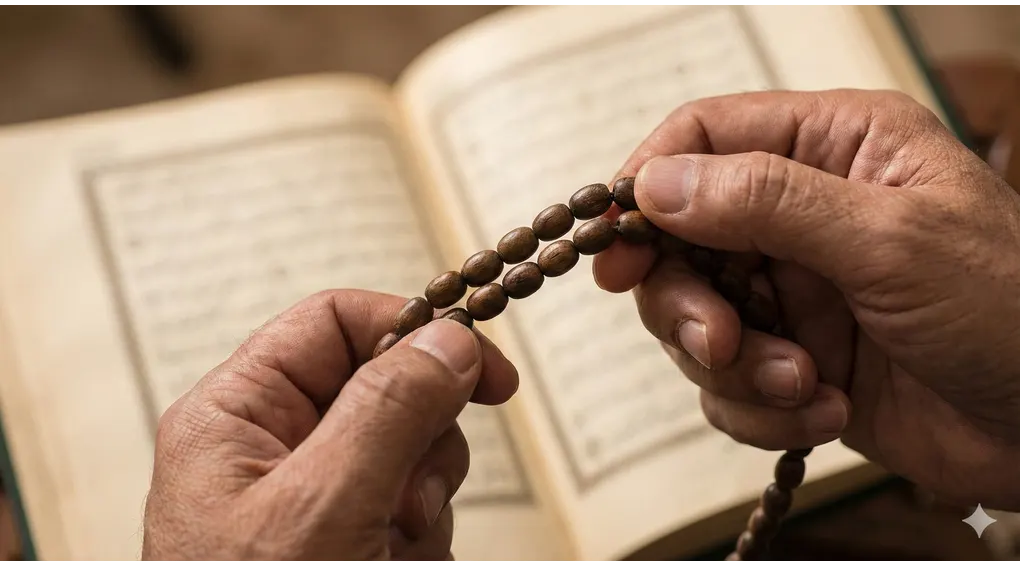
Strengthening faith in Allah can be achieved through the following practical steps:
- Increasing Remembrance (Dhikr): Remembering Allah through dhikr, such as reciting “Subhanallah,” “Alhamdulillah,” and “Allahu Akbar,” can strengthen the heart.
- Praying Regularly (Dua): Supplication (dua) is a means to seek guidance and strength of faith from Allah.
- Performing Righteous Deeds: Good deeds, such as praying on time and helping others, reinforce faith.
- Studying Allah’s Attributes: Understanding Allah’s attributes, such as the Most Gracious and the Most Merciful, brings the heart closer to Him.
- Increasing Tawakkul and Gratitude: Trusting that Allah is the best of planners and being grateful for all His blessings.
Conclusion
Faith in Allah is the core of a Muslim’s belief. As the first pillar of Iman, this faith encompasses the conviction in Allah’s Oneness, His perfect attributes, and the teachings brought by Prophet Muhammad (peace and blessings be upon him). By understanding the definition of faith in Allah, studying its scriptural evidences, emulating the characteristics of true believers, and applying methods to increase faith, a Muslim can live a life full of meaning and tranquility. Let us strengthen our faith through dhikr, dua, tawakkul, gratitude, and righteous deeds to attain Allah’s pleasure.
FAQ
What is the simple definition of faith in Allah?
Simply put, faith in Allah is the complete conviction in the heart that Allah is the One True God, Creator of the universe, possessing perfect attributes.
Why is faith in Allah called the first pillar of Iman?
It is the first pillar because it is the foundation upon which all other beliefs and acts of worship in Islam rest. Without it, other beliefs have no basis.
How can one strengthen their faith in Allah in daily life?
Faith can be strengthened through regular prayer (dua), constant remembrance of Allah (dhikr), performing righteous deeds, and practicing gratitude and reliance (tawakkul) on Allah.
Reference
Muḥammad bin ʿUmar Nawawī al-Jāwī, Kāsyifat al-Sajā fī Syarḥ Safīnat al-Najā (al-Maktabah al-Syāmilah al-Dzahabiyyah), pp. 19–21.


