

The tradition of gathering to break the fast with family or friends always colors the beauty of the holy month of Ramadan. This practice of feasting goes beyond the routine of merely eating. Sharing iftar meals is a means of worship with high value when the doer frames the intention with ikhlas (sincerity) and avoids the trait of riya’ (showing off).
For an invited guest, attending a breaking-of-the-fast feast requires the application of noble social etiquette. Islamic Sharia has meticulously arranged the adab (etiquette) of breaking the fast together, regulating how a servant expresses gratitude for blessings while honoring the host. Referring to the complete Ramadan fasting duas and dhikr guide according to Imam An-Nawawi in Kitab Al-Adzkar, there is a very magnificent verbal guidance for.
This article outlines the fiqh laws, the history of transmission, and the recitation of prayers after eating at another person’s place when breaking the fast, in order to maintain our station of obedience to Allah ﷻ.
Maintaining Proper Etiquette After a Tiring Fast
A believer who is fasting is constantly in a Ḥāl (spiritual state) overseen by Allah ﷻ. After a day of striving to educate the soul by controlling anger while fasting and understanding the meaning of Inni Shaim, the moment of breaking the fast at another person’s home becomes the next test.. This test is how the guest behaves politely, does not criticize the food, and prays for goodness for the homeowner.
When the Maghrib Adhān is called, the primary Sunnah is to hasten to break the fast. After moistening the throat with food and reciting the authentic supplication for breaking the fast, a guest is highly recommended to recite a special prayer for the host as a form of gratitude.
Authentic Narrative: Visiting the Home of Sa’ad bin Ubadah
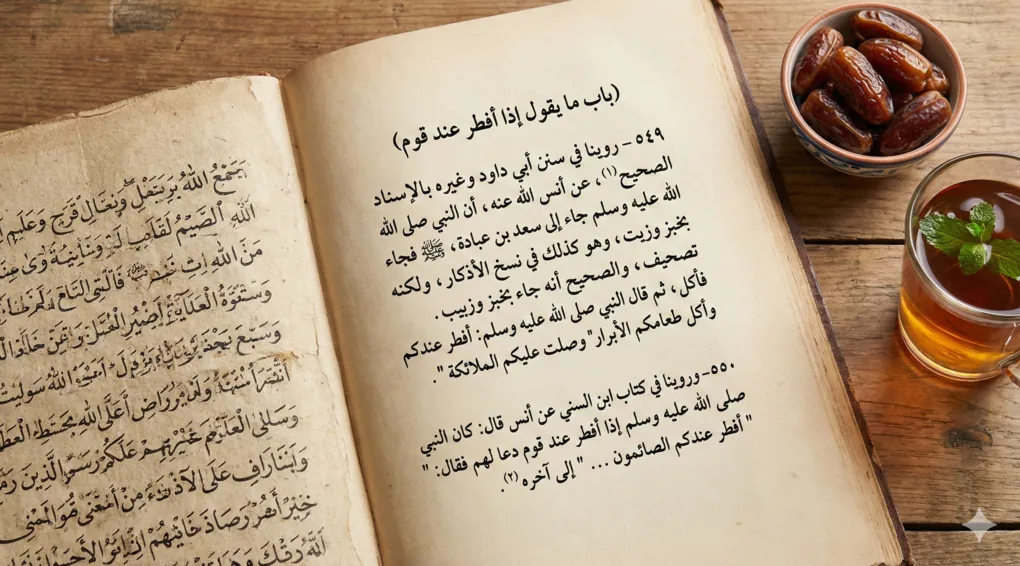
The legal basis regarding the prayer for the fasting person breaking their fast is clearly stated in Kitab Al-Adzkar in Hadith No. 549. Imam An-Nawawi quoted a narration from Sunan Abu Dawud and other hadith books with a sahih (authentic) chain of narrators.
The companion Anas bin Malik radhiyallahu ‘anhu narrated a noble event when the Prophet Muhammad ﷺ graciously visited the home of one of the leaders of the companions, namely Sa’ad bin Ubadah radhiyallahu ‘anhu.
At the feast, Sa’ad bin Ubadah served the favorite food of the Arab people at that time. After the Messenger of God ﷺ ate the dish, he raised his face and prayed for Sa’ad with beautiful words.
Academic Correction (Tashif) by Imam An-Nawawi
There is a very valuable scholarly note from Imam An-Nawawi regarding the text of this ḥadīth. He corrected errors common in copies that frequently occurred in manuscripts copied in the past.
He wrote:
فجاء بخبز وزيت، وهو كذلك في نسخ الأذكار، ولكنه تصحيف، والصحيح أنه جاء بخبز وزبيب
“So he (Sa’ad) brought bread and olive oil. This is written in the manuscripts of Al-Adzkar, but this is a scribal error (tashif); the correct version is that he brought bread and raisins/dried grapes (zabib).”
This linguistic correction demonstrates the rigor of the Islamic scholarly tradition in preserving historical authenticity. The food served by Sa’ad bin Ubadah was bread and raisins, a sweet dish that is highly recommended as a way to begin breaking the fast in order to replenishing vitality.
The Prayer for the Host Breaking the Fast
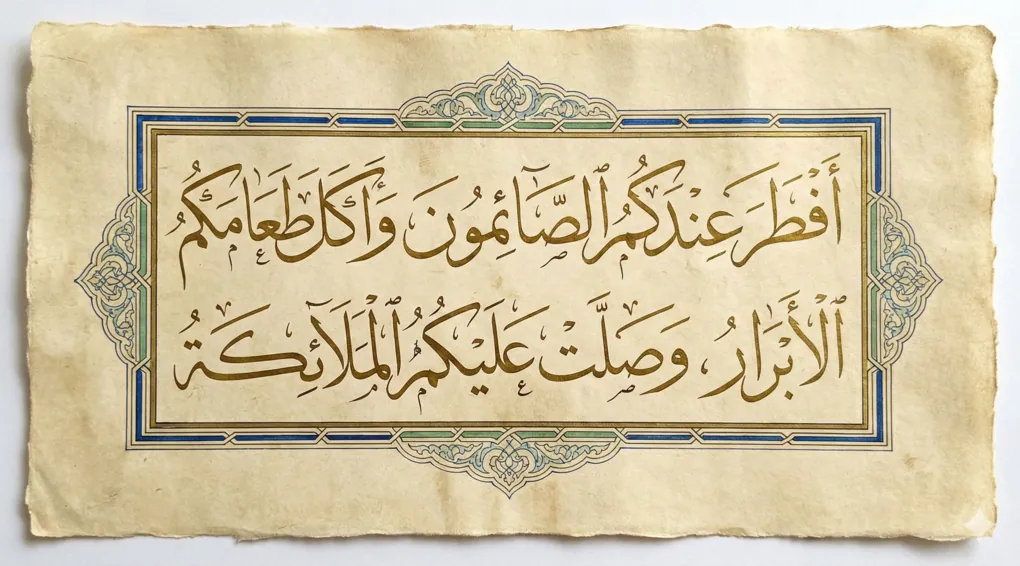
After finishing his meal, the Prophet ﷺ reciprocated the generosity of Sa’ad bin Ubadah with three forms of supplication for goodness. The same ḥadīth (No. 549) records the wording of the supplication:
أَفْطَرَ عِنْدَكُمُ الصَّائِمُونَ، وَأَكَلَ طَعَامَكُمُ الأَبْرَارُ، وَصَلَّتْ عَلَيْكُمُ الْمَلَائِكَةُ
Afṭara ʻindakumuṣ-ṣā’imūna, wa akala ṭaʻāmakumul-abrāru, wa ṣallat ʻalaykumul-malā’ikah.
Meaning: Those who fast have broken their fast with you, the righteous (abrar) have eaten of your food, and the angels have sent blessings (prayers for forgiveness) upon you.
The practice of reciting this prayer is also strengthened by the Hadith No. 550 from the book Ibnu Sinni. The companion Anas radhiyallahu ‘anhu affirmed that this routine was always maintained by the Prophet ﷺ: “The Prophet ﷺ when breaking his fast in the presence of a people, would pray for them by saying: Afthara ‘indakumush shaa-imuun…”
The Spiritual Significance of Breaking the Fast Together
The prayer taught by the Messenger of Allah ﷺ above carries a profound spiritual (Sufi) dimension. There are three great virtues requested by the guest for the host:
- Afthara ‘indakumush shaa-imuun: A prayer that the house will always be blessed because it is often visited by pious people who love to fast. The homeowner will receive the reward of fasting from their guests without diminishing the guest’s reward in the slightest.
- Akala tha’aamakumul abrar: Testimony that the food served is ḥalāl and ṭayyib, so that the food becomes a source of strength for the people of Abrar (those who perform many good deeds) to continue to obey Allah ﷻ.
- Wa shallat ‘alaikumul malaa-ikah: A supplication that the angels ask for Tawbah Naṣūḥā (sincere repentance) and bestow blessings upon the host who has sacrificed their wealth to entertain their brother.
Summary Table of Etiquette for Breaking the Fast Together
For a Muslim, aligning intention and action when breaking the fast together is highly recommended. The following table presents basic etiquette for guests and hosts based on Sharia guidance.
| Status | Etiquette of the Heart & Actions | Etiquette of Speech (Supplication) |
| Host | Serving ḥalāl food with ikhlaṣ (sincerity), avoiding extravagance that leads to heedlessness. | Inviting guests to break their fast warmly, responding to guests’ supplications with “Āmīn.” |
| Guest | Not demanding luxurious dishes, immediately breaking the fast upon the Adhān, eating from the dish closest to them. | Reciting “Dzahabadz zhama-u…” when breaking the fast, then reciting “Afthara ‘indakum…” after finishing the meal. |
FAQ: Etiquette and Prayers After Eating at Someone’s Home
When exactly is the prayer “Afthara ‘indakumush shaa-imuun” recited?
This supplication is recommended to be recited immediately after a guest has finished consuming the iftar meal served by the host, whether before or after performing the Maghrib prayer.
Is it permissible to recite this supplication aloud?
It is highly recommended to recite it aloud (jahr), with the intention of bringing joy (idkhal as-surur) and praying for them directly.
Is this prayer only valid during the month of Ramadan?
The wording of “those who are fasting” makes this supplication very specific to the moment of breaking the fast. However, if you are hosted for a voluntary fast (such as Monday-Thursday or Ayyamul Bidh), this wording remains the primary Sunnah to practice.
Conclusion
Attending a breaking-the-fast gathering should be an occasion to strengthen brotherhood in a rewarding manner. By practicing the etiquette of visiting and reciting prayers for the host according to the Sunnah of the Prophet ﷺ, we not only fill our empty stomachs, but also fill the pages of our good deeds. May Allah ﷻ grant us the ability to revive these verbal Sunnahs among society. Wallahu a’lam bish-shawab.
Reference
Yaḥyā ibn Sharaf al-Nawawī, al-Adhkār, ed. ʿAbd al-Qādir al-Arnaʾūṭ (Beirut: Dār al-Fikr, 1994), 191.


