

The worship of fasting is a spiritual journey that begins as we recite the prayer for seeing the new crescent moon; this will feel even more meaningful when concluded with gratitude at Maghrib. Noble character demands that we emulate the Messenger of Allah ﷺ in moistening the tongue with prayer, giving thanks for sustenance, and asking for His blessings at the opportune time of breaking the fast.
The moment of breaking the fast is not merely a transition from hunger to fullness, but rather a phase of worship in itself, rich with proper etiquette. After a servant strives to purify their heart during the day through ways to restrain anger while fasting and maintaining ethical speech, they finally arrive at happiness as the sun sets.
Regarding the recitation of the breaking of the fast prayer, Muslims often encounter a variety of wording variations within the community. Differences in the habit of reciting this prayer sometimes raise confusion about which recitation is most in accordance with the guidance of the Prophet Muhammad ﷺ.
Referring to the authoritative book Kitab Al-Adhkar by Al-Imam Yahya bin Syaraf An-Nawawi rahimahullah, this writing dissects various fasting-breaking prayers, explores the status of its narrations, and clarifies the proper pronunciation to ensure our sincere intentions are always framed by ikhlash (sincerity) and avoid misunderstandings.
The Secret of the Most Auspicious Time to Break the Fast
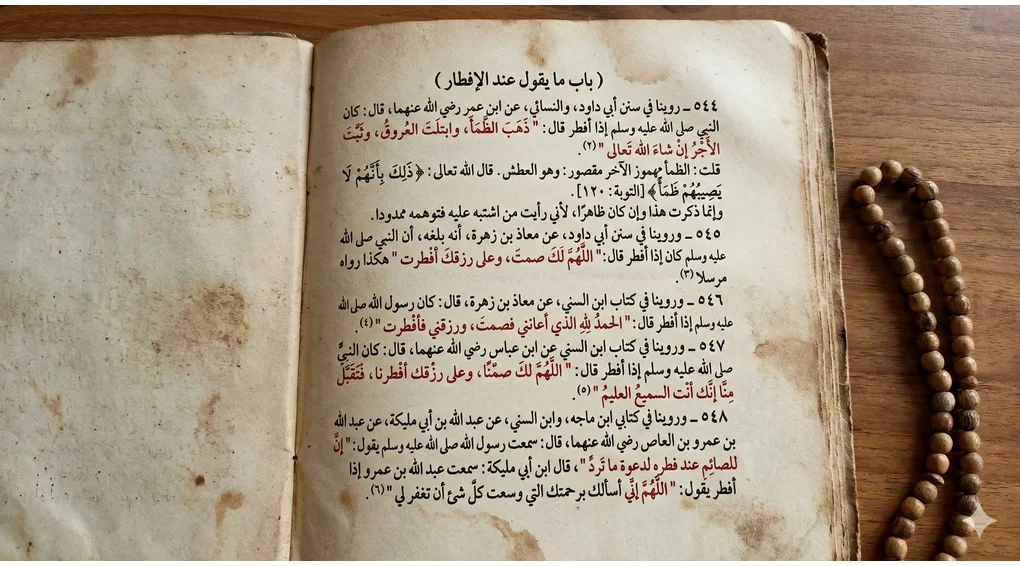
Before uttering special supplications for breaking the fast, a believer needs to realize that the moments leading up to and during breaking the fast are a very sacred time. At this transitional moment, a servant is in a state of a very tender heart, close to the mercy of their Creator.
Imam An-Nawawi quotes Hadith number 548 from Kitab Ibnu Majah and Ibnu Sunni, from the companion Abdullah bin Amr bin Al-Ash radhiyallahu ‘anhuma, who narrated that the Messenger of Allah ﷺ said:
إن للصائم عند فطره لدعوة ما ترد
“Indeed, for the one who is fasting, when he breaks his fast, he has a prayer that is not rejected.”
Based on this evidence, the time of breaking the fast is a golden opportunity to offer supplications, reflect on one’s weaknesses, and renew a pledge of taubatan nasuha (sincere repentance). The companion Abdullah bin Amr himself exemplified a very beautiful supplication for forgiveness when breaking the fast:
اللهم إني أسألك برحمتك التي وسعت كل شئ أن تغفر لي
Allāhumma innī as’aluka biraḥmatikal-latī wasiʻat kulla syai’in an taghfira lī.
Meaning: O Allah, indeed I ask You by Your encompassing mercy to forgive me.
Authentic Fast-Breaking Prayer and Pronunciation Correction (Dzahabadz Zhama-u)
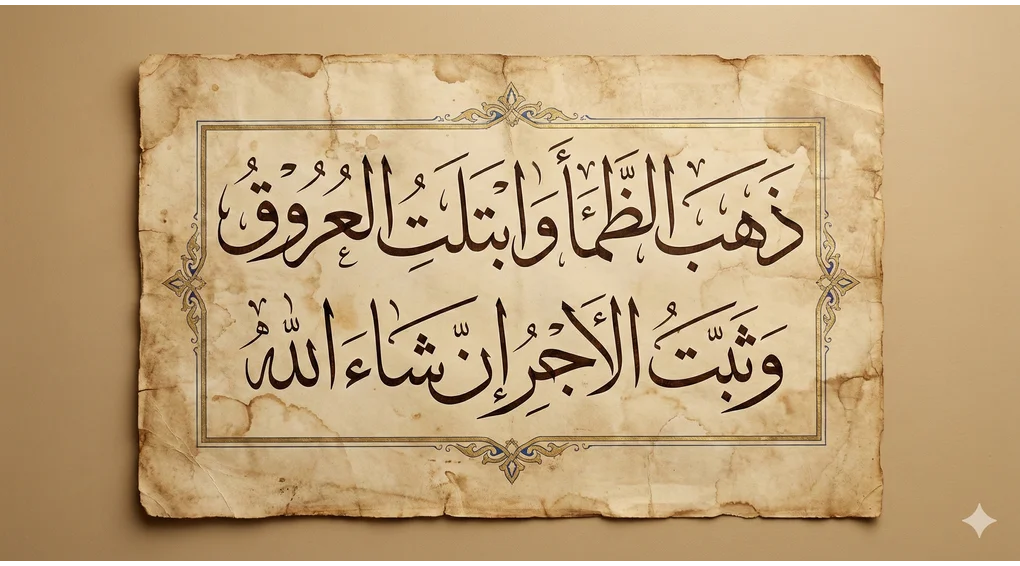
Among the various supplications taught, there is one wording whose authenticity is agreed upon by hadith experts. Imam An-Nawawi included it in Hadith No. 544 from Sunan Abu Dawud and An-Nasa’i, based on the narration of Ibn Umar radhiyallahu ‘anhuma. When the Prophet ﷺ broke his fast, he would say:
ذَهَبَ الظَّمَأُ، وَابْتَلَّتِ الْعُرُوقُ، وَثَبَتَ الأَجْرُ إِنْ شَاءَ اللَّهُ تَعَالَى
Dhahaba aẓ-ẓama’u, wabtallatil-‘urūqu, wa thabatal-ajru in shā’Allāhu taʻālā
Meaning: Thirst has been quenched, the veins have been moistened, and the reward is established, by the grace of Allah Ta’ala.
Linguistic Notes on Islamic Jurisprudence from Imam An-Nawawi As a meticulous scholar, Imam An-Nawawi did not merely quote texts, but provided guidance on Arabic grammar so that the community would not stumble in pronunciation errors. Many people are mistaken in pronouncing the word “Az-Zhama-u” ( الظمأ ) by prolonging the reading on the mim and hamzah at the end.
He explained firmly: “The word Az-Zhama’ with the hamzah at the end being short (maqshur) means thirst.” To strengthen his grammatical argument, he quoted the word of Allah ﷻ in Surah At-Taubah verse 120:
( ذلك بأنهم لا يصيبهم ظمأ )
“That was because they were not afflicted by thirst (zhama’)…”
Imam An-Nawawi added, “I mention this despite it being obvious, because I have seen people confused about it and think it is pronounced with a lengthening (mamdud).” This explanation guides us to pronounce “zhama-u” clearly without excessive prolongation.
The Status of the Well-Known Supplication: Allahumma Laka Shumtu
The prayer “Allahumma laka shumtu” has become ingrained in the tradition of Muslims around the world. In Kitab Al-Adhkar, Hadith No. 545 from Sunan Abu Dawud, there is a narration from Mu’adz bin Zuhrah:
اللَّهُمَّ لَكَ صُمْتُ، وَعَلَى رِزْقِكَ أَفْطَرْتُ
Allāhumma laka ṣumtu, wa ʻalā rizqika afṭartu.
Meaning: O Allah, for You I fast, and with Your provision I break my fast.
Imam An-Nawawi honestly and objectively stated the status of this narration: “Thus it is narrated as mursal.” A mursal hadith means its chain of transmission is broken at the level of the Companion, as Mu’adh bin Zuhrah was a Tabi’in. However, the inclusion of this supplication in Kitab Al-Adhkar provides strong fiqh legitimacy.
Scholars agree that this prayer has a straightforward meaning and reflects the perfect etiquette of obedience. The phrase “For You I fast” is a manifestation of sincerity, avoiding the trap of ostentation, while the phrase “With Your provision I break my fast” is an expression of a servant’s acknowledgement of his Creator’s blessings. Practicing it is highly recommended as a variation of devotional remembrance.
Other Variations of the Fast-Breaking Prayer
The treasury of Islamic literature is very rich. For those who desire different readings to increase devotion and ward off futur (a feeling of weariness in worship), there is supporting narration from Kitab Ibnu Sunni.
1. Hadith No. 546 (From Mu’adz bin Zuhrah):
الْحَمْدُ لِلَّهِ الَّذِي أَعَانَنِي فَصُمْتُ، وَرَزَقَنِي فَأَفْطَرْتُ
Alḥamdulillāhil-ladhī aʻānanī faṣumtu, wa razaqanī fa’afṭartu.
Meaning: All praise is due to Allah who has aided me in fasting, and provided me with sustenance to break my fast.
2. Hadith No. 547 (From Ibn Abbas radhiyallahu ‘anhuma):
اللَّهُمَّ لَكَ صُمْنَا، وَعَلَى رِزْقِكَ أَفْطَرْنَا، فَتَقَبَّلْ مِنَّا إِنَّكَ أَنْتَ السَّمِيعُ الْعَلِيمُ
Allāhumma laka ṣumnā, wa ʻalā rizqika afṭarnā, fataqabbal minnā innaka antas-Samīʻul-ʻAlīm.
Meaning: O Allah, for You we fast, and with Your provision we break our fast, so accept it from us, indeed You are All-Hearing and All-Knowing.
FAQ: Frequently Asked Questions About the Breaking Fast Prayer
What is the most virtuous supplication to recite when breaking the fast?
Based on the strength of the chain of narrators, the supplication “Dzahabadz zhama-u…” is the most authentic and highly recommended.
Is it wrong if I only recite “Allahumma laka sumtu”?
That is correct. Even though it is classified as mursal, this supplication was still recorded by Imam An-Nawawi in Al-Adhkar. Its meaning is very correct in terms of tawhid. Many scholars recommend combining both: reciting “Allahumma laka sumtu” before or while starting to eat, then reciting “Dzahabadz zhama-u” after water moistens the throat.
How is the word “Zhama-u” pronounced correctly?
According to the linguistic correction of Imam An-Nawawi, the word “Zhama-u” is pronounced short (maqshur) at the end. Do not prolong the sound like “Zhamaaa-u”.
What is the most appropriate time to perform a personal supplication prayer?
A moment before food enters the mouth or when the Adhān for Maghrib is being called. According to a ḥadīth narrated by Abdullah bin Amr, this moment is a time of acceptance where the supplication of those who are fasting will not be rejected by Allah ﷻ.
Conclusion
The polemic regarding the selection of a valid (ṣaḥīḥ) or weak (mursal) breaking fast prayer does not need to cause division. Kitab Al-Adhkar has presented enlightening knowledge, providing space for the community to practice various guidance that has a basis in narration.
Noble character demands that we emulate the Messenger of Allah ﷺ and his companions in moistening the tongue with supplication, giving thanks for sustenance, and seeking His blessings at the opportune time of breaking the fast. Furthermore, if you are invited to break your fast with others, it is highly recommended to observe the proper etiquette and prayers for Iftar gatherings.
And Allah knows best.
Reference
Yaḥyā ibn Sharaf al-Nawawī, al-Adhkār, ed. ʿAbd al-Qādir al-Arnaʾūṭ (Beirut: Dār al-Fikr, 1994), 190.


