
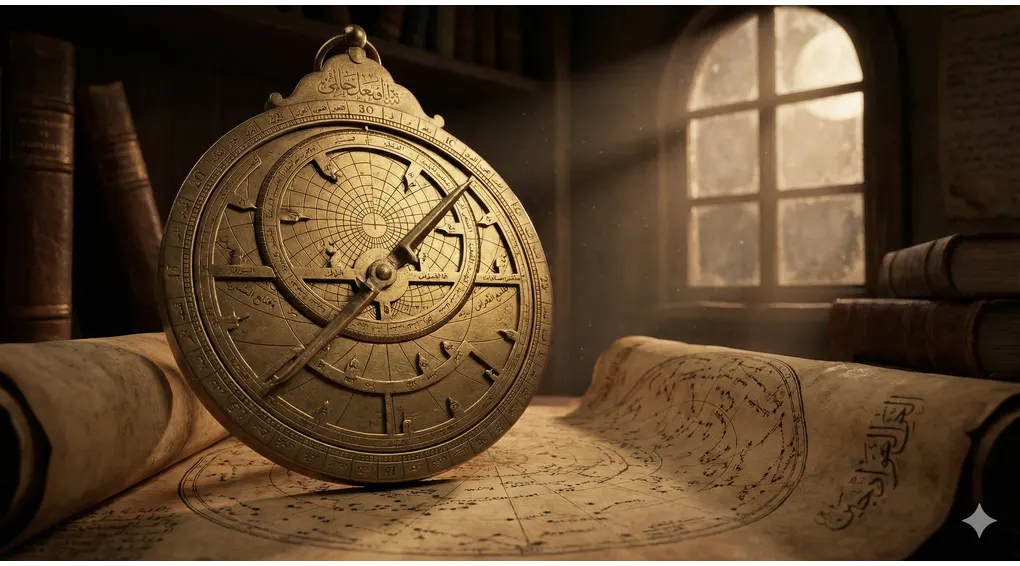
For Muslims, the Islamic new year is not merely about fireworks or loud celebrations. There is a profound significance behind the system of time we use. However, we often forget how the history of the Hijri calendar actually began. Was it the Prophet Muhammad ﷺ who created it? Or the companions?
By definition, the Hijri calendar is a dating system used by Muslims to determine dates and months related to essential acts of worship, such as understanding the meaning of fasting in Ramadan, performing Hajj, and celebrating the two Eids. Because it is fundamentally based on the lunar cycle, the Hijri calendar is also known as the Qamariyah calendar.
However, did you know that this sophisticated system originated from a practical administrative challenge in the past? Let’s delve into the story thoroughly.
Background: A Document Without a Year
Many people assume this system was standardized during the lifetime of the Prophet Muhammad ﷺ. In reality, during the time of the Prophet ﷺ and Caliph Abu Bakr, Muslims did not yet have an official numerical year count. They commonly named years after major, defining events that occurred, such as “The Year of the Elephant” (‘Am al-Fil) or “The Year Permission to Fight was Granted.”
The history of the Hijri calendar officially began during the caliphate of Umar bin al-Khattab. Sheikh Nawawi al-Bantani, in his renowned book Nur al-Zhalam, recounts an intriguing anecdote that triggered the birth of this calendar.
Read also: Saturday or Sunday? Revealing the First Day of the Week According to Islamic Teachings
One day, Umar bin al-Khattab radhiyallahu ‘anhu received a written document (similar to a promissory note) that was simply due in “the month of Sha’ban.” A significant problem arose when Umar read the letter. He profoundly asked:
“Is it the Sha’ban that has passed, or the Sha’ban that is to come?”
This simple yet critical question opened the eyes of the leaders at that time. Without specific year numbers, state affairs, debts, and civil rights could descend into chaos, as documents became entirely open to multiple interpretations. From this pivotal moment, Umar ordered the creation of a definitive time reference so that there would be no more confusion in administrative matters.
The Caliph Who Established the Hijri Calendar Was Umar bin al-Khattab
If anyone asks who created the Hijri calendar or who its primary initiator was, the answer is Umar bin al-Khattab. However, Umar did not work alone, nor did he unilaterally impose his will as the “inventor” of the system.
Umar gathered the senior companions for a comprehensive consultation (shura). This demonstrates that the establishment of this time system was the magnificent result of collective consensus (Ijmā’ of the Companions)—not a direct divine revelation, but rather an exercise of intelligent reasoning (Ijtihād) for the ultimate benefit of the community.
Therefore, while the caliph who formally established the Hijri calendar was Umar bin al-Khattab, the process involved lengthy and thoughtful discussions with prominent figures such as Uthman bin Affan and Ali bin Abi Thalib.
Why is the Hijri Calendar Calculated from the Event of the Hijrah?



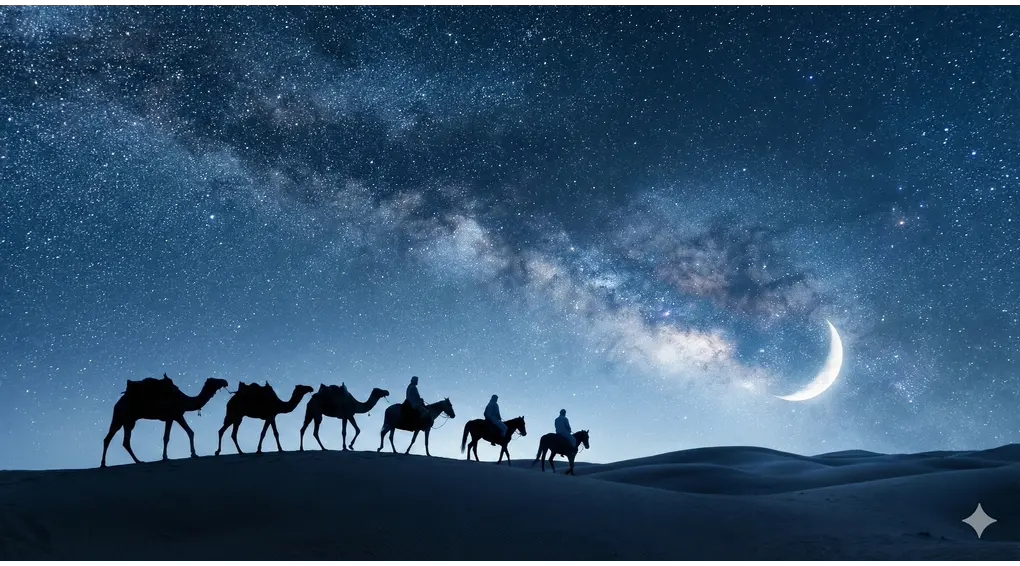
During the consultation, various proposals emerged regarding when the “Year One” should begin. Ultimately, the companions agreed that the Hijri calendar should be calculated starting from the momentous event of the Prophet’s ﷺ Hijrah (migration) from Mecca to Medina. Why not his birth or his passing?
The reasons are deeply philosophical and political. The birth of the Prophet ﷺ, at that specific time, did not immediately alter the socio-political landscape. The death of the Prophet ﷺ was a moment of profound collective grief. In stark contrast, the Hijrah served as a clear, definitive dividing line between truth (haq) and falsehood (batil). It marked the genesis of an independent, sovereign Islamic civilization in Medina. This is precisely why this moment is considered the most worthy milestone to be the zero point of the Ummah’s history.
Furthermore, they agreed to set the first month of the year to Muharram, marking a fresh start after the pilgrims returned from Hajj. Understanding the virtues of the month of Muharram further highlights the wisdom behind this decision.
The Lunar Basis of the Hijri Calendar
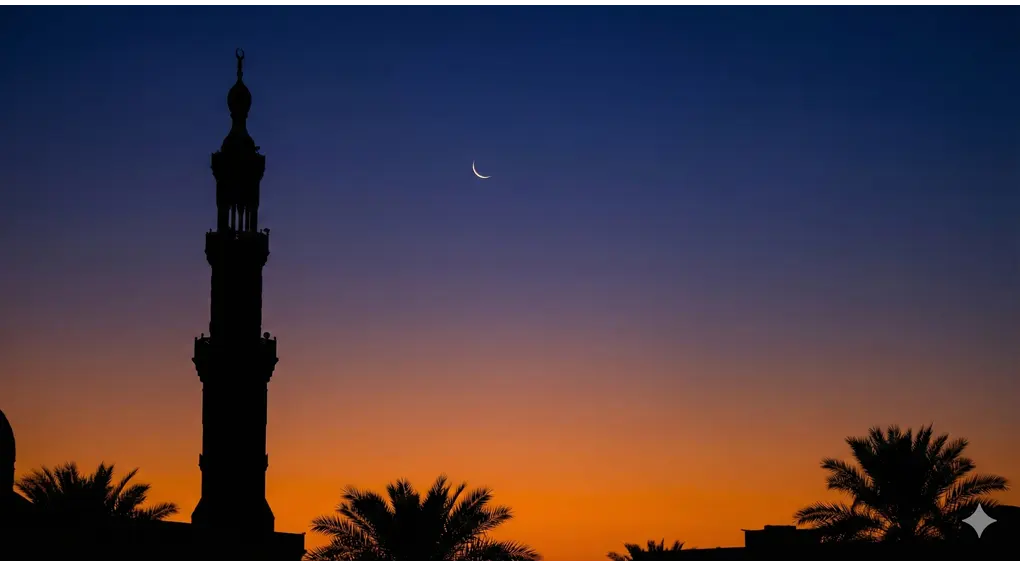
Unlike the Gregorian calendar, which relies on the sun (solar), the calculation of the Hijri calendar is based entirely on the revolution of the moon around the earth.
There is a fascinating point derived from Sheikh Nawawi’s explanation in Nur al-Zhalam regarding why the Islamic day begins at sunset (Maghrib), rather than at midnight like the Common Era system.
The Arabs at that time were generally an ummi people (unlettered and not reliant on the complex astronomical calculations of the Romans or Persians). They relied on natural signs explicitly visible to the naked eye. The initial marker for the beginning of a new month was the physical sighting of the new crescent moon (hilal).
When does the hilal appear? Naturally, at night. Since the primary time marker becomes visible at night, the night is automatically considered the beginning of the new day. This simple, nature-based logic is still applied today; the change of the Islamic date occurs the moment the rules and history of the Adhan for Maghrib prayer resonate.
The Varying Number of Days in the Hijri Calendar
The implication of strictly following the lunar cycle is that the duration of the Hijri year differs significantly from the Gregorian year.
In the Hijri calendar, the total number of days is approximately 354 or 355 days in a year. Within a single month, the number of days is not fixed at 30 or 31, but rather alternates between 29 or 30 days, entirely dependent on the physical sighting of the new moon.
This makes the Hijri year approximately 11 days shorter than the solar Gregorian year. This beautiful cycle explains why the month of Ramadan and Eid al-Fitr always “advance” each year against the Gregorian calendar, allowing Muslims across the globe to experience the profound blessings of fasting in every possible season throughout their lifetimes.
Original Text from the Book Nur al-Zhalam
As a form of academic trust (amanah ‘ilmiyyah), here is the original Arabic text and its translation from the book Nur al-Zhalam by the great Indonesian scholar, Sheikh Nawawi al-Bantani, which serves as the primary reference for this historical account:
نص الكتاب: ثم أَمَرَ بوضع التاريخ , واتفقت الصحابة على ابتداء التاريخ من هجرة النبي ﷺ إلى المدينة , وجعلوا أول السنة المحرم , ويصير أول التاريخ الليلَ لأن الليل عند العرب سابق النهار ; لأنهم أمّيون لا يحسنون الكتابة ولم يعرفوا حساب غيرهم من الأمم , فتمسكوا بظهور الهلال , وإنما يظهر بالليل فجعلوه ابتداء التاريخ , والأحسن ذكر الأقل ماضياً كان أو باقياً . انتهى .
Translation: “Then he (‘Umar) ordered the establishment of dating. The Companions agreed to begin the dating from the event of the Prophet’s ﷺ Hijrah (migration) to Madinah, and they made the month of Muharram the beginning of the year. The calculation of dates begins at night, because for the Arabs, night precedes the day. This is because they were an ummi people (unlettered), not skilled in writing, and did not know the calculation methods of other nations. Therefore, they firmly adhered to the appearance of the crescent moon. And because the crescent moon only appears at night, they made it the beginning of the date. As for what is better (in stating the date) is to mention the smaller number of days, whether those that have passed or those that remain.”
Reflections on the Use of the Hijri Calendar
Understanding this history makes us profoundly aware that the Hijri calendar is not merely numbers printed on a wall. It was an intelligent, divinely inspired solution to real societal problems faced by the early generations. More importantly, it stands as an enduring symbol of the independence and unique identity of Islamic civilization.
Even though we may rely more frequently on the Gregorian calendar in our daily professional lives, familiarizing ourselves with the history of the Hijri calendar helps us deeply appreciate the timing of our worship. We come to realize that every time we gaze at the crescent moon in the sky, we are looking at the exact same gigantic “clock” that Umar bin al-Khattab and the noble companions looked at when establishing the time for this enduring civilization.
Hopefully, this historical explanation regarding the origins of the calendar and the brilliant Caliph who established it will enrich our historical insight and strengthen our Islamic identity.
Reference
Muhammad bin Umar Nawawi al-Jawi, Nuruzh Zhalam Syarah Manzhumah Aqidah al-Awwam, ed. 1 (Beirut: Dar al-Hawi, 1996), p. 176.


