
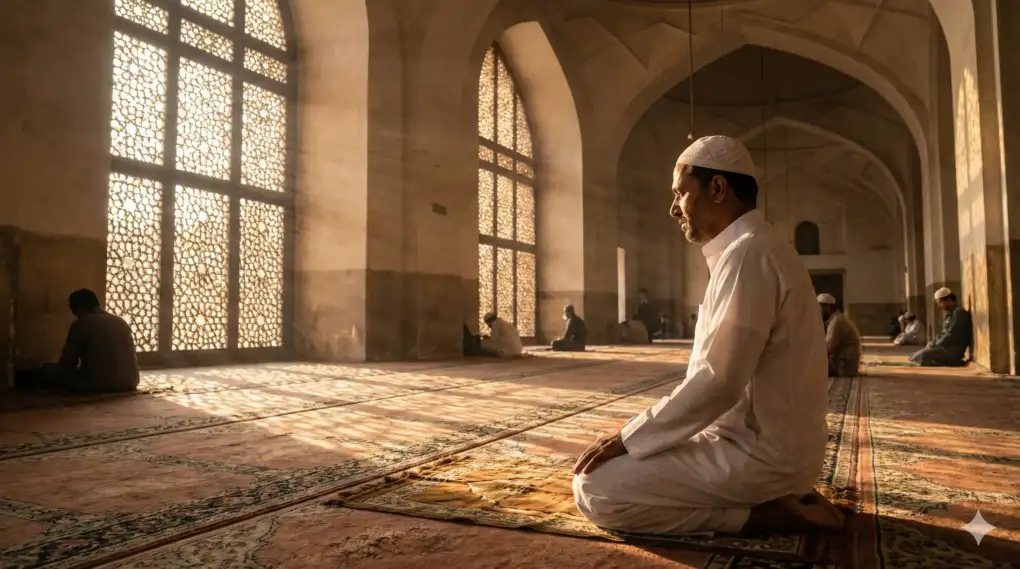
Have you ever experienced that profoundly serene moment right before concluding your prayer? While the index finger is still raised during the final tashahhud, just seconds before turning the face for the taslim (salutation), there is a golden window of time that many worshippers inadvertently overlook. In classical Islamic jurisprudence (fiqh), scholars unanimously agree that this brief period is one of the most optimal moments for supplication.
Reciting a dua before salam is not merely a supplementary ritual; it is a sacred opportunity for intimate converse (munajat) with Allah SWT before returning to worldly affairs. In this article, we will thoroughly examine the supplications recited before the taslim, exploring their legal rulings, the authentic texts transmitted from the Prophet ﷺ, and the proper etiquette regarding their duration, grounded in the classical Shafi’i text, Asna al-Matalib.
Why Must We Recite a Dua Before Salam?
One might logically ask: if we have already supplicated during our prostration (sujud), why is there an additional emphasis on supplication at the end of the fundamental meaning of Salah?
The answer is profound yet simple: the Messenger of Allah ﷺ explicitly recommended it. In an authentic narration recorded by Imam Muslim, which is extensively cited in Asna al-Matalib, it is stated that once a worshipper completes the tashahhud, they are granted the liberty to choose any supplication they desire.
“If any of you sits in the prayer (for tashahhud), let him say, ‘At-Tahiyyaatu lillaah…’ until the end, then let him choose whatever supplication he wishes or prefers.” (Sahih Muslim)
Therefore, the moment following the final tashahhud is a period of spiritual freedom for the servant. You are permitted to ask for the goodness of both this world and the Hereafter. However, theologians of Ahlus Sunnah wal Jama’ah (Aswaja) remind us of spiritual priorities: seeking salvation in the Hereafter supersedes worldly matters, though requesting worldly needs (such as provision or a righteous spouse) remains entirely permissible. This holistic approach to supplication reflects the true wisdom behind obligatory prayers.
Highly Recommended Dua Before Salam According to the Sunnah
While it is permissible to make dua in Arabic for any lawful matter, utilizing the transmitted supplications (dua ma’thur) taught by the Prophet ﷺ inherently carries greater blessings. Below are the most highly recommended texts to recite after the final tashahhud:
1. Protection from Four Trials (Including the Dajjal)
Seeking refuge from the Antichrist (Dajjal) before concluding the prayer is one of the most heavily emphasized prophetic practices. Due to the severe magnitude of the tribulations at the end of times, implementing this dua is highly encouraged.
اللَّهُمَّ إِنِّي أَعُوذُ بِكَ مِنْ عَذَابِ الْقَبْرِ وَمِنْ عَذَابِ النَّارِ وَمِنْ فِتْنَةِ الْمَحْيَا وَالْمَمَاتِ وَمِنْ فِتْنَةِ الْمَسِيحِ الدَّجَّالِ
Transliteration: Allahumma inni a’udhu bika min ‘adhabi al-qabr, wa min ‘adhabi an-nar, wa min fitnati al-mahya wal-mamat, wa min fitnati al-masihi ad-dajjal.
Meaning: “O Allah, I seek refuge in You from the torment of the grave, the torment of the Fire, the trials of life and death, and from the trials of the false Messiah (Al-Masih Ad-Dajjal).”
2. Supplication for Forgiveness and Mercy
The Prophet ﷺ specifically taught this supplication to his closest companion, Abu Bakr As-Siddiq (may Allah be pleased with him). If you are seeking a profoundly touching dua that acknowledges human frailty, this is the paramount choice.
Arabic:
اللَّهُمَّ إِنِّي ظَلَمْتُ نَفْسِي ظُلْمًا كَثِيرًا وَلَا يَغْفِرُ الذُّنُوبَ إِلَّا أَنْتَ فَاغْفِرْ لِي مَغْفِرَةً مِنْ عِنْدِكَ وَارْحَمْنِي إِنَّكَ أَنْتَ الْغَفُورُ الرَّحِيمُ
Transliteration: Allahumma inni zalamtu nafsi zulman kathiran, wa la yaghfiru adh-dhunuba illa anta, faghfir li maghfiratan min ‘indika warhamni, innaka anta al-ghafuru ar-rahim.
Meaning: “O Allah, indeed I have wronged myself with much wrongdoing, and no one forgives sins except You. So forgive me with a forgiveness from You and have mercy upon me. Indeed, You are the Most Forgiving, the Most Merciful.”
3. Seeking Refuge from Sins and Debt



Believers often feel constrained by the heavy burdens of mounting debts or accumulated sins. The Prophet ﷺ provided a specific remedy for this anxiety:
Arabic:
اللَّهُمَّ إِنِّي أَعُوذُ بِكَ مِنَ الْمَأْثَمِ وَالْمَغْرَمِ
Transliteration: Allahumma inni a’udhu bika mina al-ma’thami wal-maghram.
Meaning: “O Allah, I seek refuge in You from committing sin and being overwhelmed by debt.”
4. The All-Encompassing Supplication (Sapu Jagat)
Is it permissible to recite the Sapu Jagat (all-encompassing) dua here? Absolutely. It is one of the most concise yet comprehensively meaningful supplications one can utter. To understand its profound weight, one can explore the virtues of the all-encompassing prayer.
Arabic:
رَبَّنَا آتِنَا فِي الدُّنْيَا حَسَنَةً وَفِي الْآخِرَةِ حَسَنَةً وَقِنَا عَذَابَ النَّارِ
Transliteration: Rabbana atina fi ad-dunya hasanatan wa fi al-akhirati hasanatan wa qina ‘adhaba an-nar.
Meaning: “Our Lord, give us in this world [that which is] good and in the Hereafter [that which is] good and protect us from the punishment of the Fire.”
Etiquette and Duration: Is Prolonging the Dua Allowed?
A common area of confusion arises regarding the duration of this practice. Are we permitted to endlessly prolong our dua before salam? According to the authoritative explanations by Shaykh al-Islam Zakariyya al-Ansari, there are specific jurisprudential guidelines that ensure our prayer remains harmonious.
Guidelines for the Imam
For an Imam leading a congregation, it is considered disliked (makruh) to prolong the supplication beyond the standard length of the tashahhud and the salawat upon the Prophet, unless he has the explicit prior consent of the congregation. The primary duty of the Imam is to facilitate the prayer without causing undue hardship to the followers. Prolonging the silent moments can cause the congregation to doubt how many pillars of prayer exist or if the Imam has forgotten a step. The Imam should restrict himself to the foundational prophetic supplications.
Guidelines for the Individual Worshipper (Munfarid)
Conversely, this is where the individual worshipper experiences vast spiritual expansiveness. Just as meticulous care is taken to perfect the concept of purification (Thaharah) before praying, one should take care to perfect the end of the prayer.
If you are praying alone (munfarid), the strongest opinion within the Shafi’i school—as unequivocally stated by Imam al-Shafi’i in Al-Umm and reiterated by Imam al-Nawawi in Al-Majmu’—is that you may prolong the supplication for as long as you desire. You may continuously repeat the refuge from the Dajjal, beg forgiveness for your parents, or present highly specific personal needs. As long as the length does not cause you to forget your prayer cycle (rak’ah), you are encouraged to immerse yourself in this intimate dialogue with the Creator. In fact, Imam al-Shafi’i noted that if a person praying alone makes a supplication that is too brief (shorter than the tashahhud itself), it is considered less preferable.
Classical Reference Text (Asna al-Matalib)
In adherence to academic integrity, the following is the original Arabic text from Asna al-Matalib (Vol. 1, pp. 166), which serves as the jurisprudential anchor for this article:
(ويستحب الدعاء بعدها) أي بعد الصلاة عليه وعلى آله في التشهد الأخير (بما شاء) مما يتعلق بالآخرة والدنيا نحو اللهم ارزقني جارية حسناء لخبر «إذا قعد أحدكم في الصلاة فليقرأ التحيات لله إلى آخرها ثم ليتخير من المسألة ما شاء, أو أحب» رواه مسلم وروى البخاري «ثم ليتخير من الدعاء أعجبه». إليه فيدعو به (والدعاء) (بما يتعلق بالآخرة أفضل) مما يتعلق بالدنيا لأنه المقصود الأعظم (والدعاء المأثور) بالمثلثة أي المنقول عن النبي صلى الله عليه وسلم (أفضل) من غيره ومنه اللهم اغفر لي ما قدمت وما أخرت وما أسررت وما أعلنت وما أسرفت وما أنت أعلم به مني أنت المقدم وأنت المؤخر لا إله إلا أنت
ومنه اللهم إني أعوذ بك من عذاب القبر ومن عذاب النار ومن فتنة المحيا, والممات ومن فتنة المسيح الدجال ومنه اللهم إني أعوذ بك من المأثم, والمغرم ومنه إني ظلمت نفسي ظلما كثيرا ولا يغفر الذنوب إلا أنت فاغفر لي مغفرة من عندك وارحمني إنك أنت الغفور الرحيم
(وليكن) دعاؤه (أقل من التشهد, والصلاة على النبي صلى الله عليه وسلم)؛ لأنه تبع لهما والذي في المنهاج كأصله يسن أن لا يزيد عليهما, فإن زاد لم يضر (ولكن) (يكره للإمام تطويله) بغير رضا المأمومين … وما شمله كلامه كأصله من أن المنفرد يستحب أن يكون دعاؤه أقل من التشهد, والصلاة على النبي صلى الله عليه وسلم خلاف ما في كتب المذهب فإن الذي فيها أنه يطيل ما أراد ما لم يخف وقوعه به في سهو جزم به خلائق لا يحصون ونص عليه في الأم وقال, فإن لم يزد على التشهد, والصلاة على النبي صلى الله عليه وسلم كرهت ذلك, وقد جزم بذلك النووي في مجموعه فإنه ذكر النص ولم يخالفه نبه على ذلك في المهمات1
Conclusion
The fleeting moments prior to the taslim are invaluable spiritual assets within our daily worship. Do not let them slip away by hastily turning your head to the right and left. Dedicate time to recite a dua before salam, seeking divine shielding from the multifaceted trials of this world and the Hereafter. By consistently implementing these prophetic supplications, we elevate the spiritual quality of our prayers, ensuring our pleas ascend to the heavens with greater efficacy.
Frequently Asked Questions (FAQ)
Is the dua before salam obligatory?
No, reciting a supplication after the final tashahhud and before the taslim is considered a highly recommended Sunnah (prophetic tradition) in the Shafi’i school, not an obligatory pillar (rukn).
Can I make dua in my native language before the salam?
In the Shafi’i madhhab, it is strictly required to make supplications in Arabic during the prayer. If one does not know Arabic, they should stick to the transmitted Arabic texts. Supplicating in a language other than Arabic while in the state of prayer can invalidate the prayer.
What is the absolute best dua to recite at this moment?
While you can choose any valid supplication, scholars agree that the “Four Protections” dua—seeking refuge from the grave, the hellfire, the trials of life and death, and the Dajjal—is the most emphasized by the Prophet Muhammad ﷺ.
Reference
- Zakariyā al-Anṣārī, Asnā al-Maṭālib fī Sharḥ Rawḍ al-Ṭālib, with a ḥāshiyah by Aḥmad al-Ramlī, edited by Muḥammad al-Zuhrī al-Ghamrāwī (Cairo: al-Maṭbaʿah al-Maymānīyah, 1313 AH; reprinted by Dār al-Kitāb al-Islāmī), 1:166. ↩︎


