
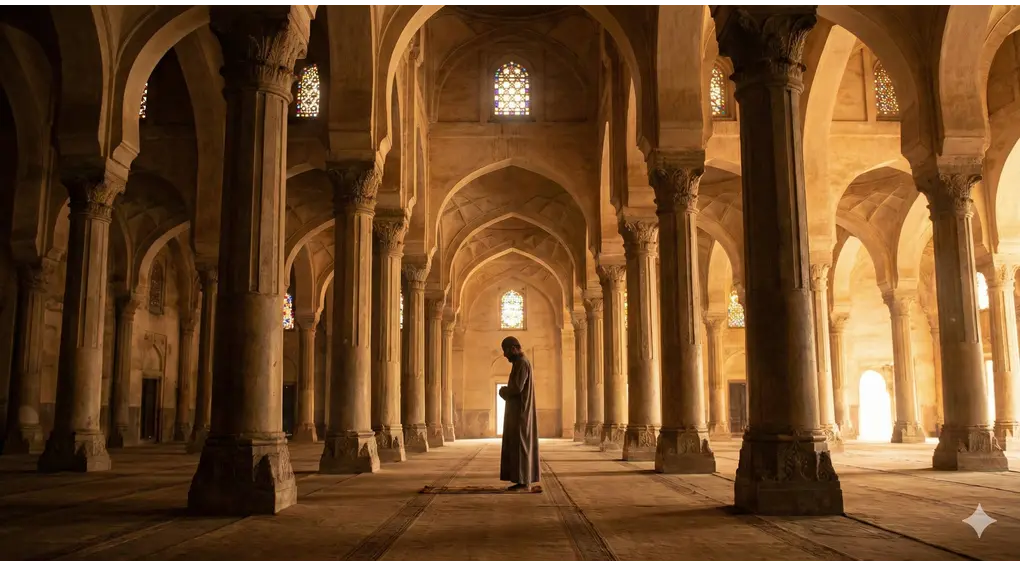
For Muslims, understanding the definition of Salah (prayer) is not merely about a daily routine; it is about upholding the central pillar of the religion. For this act of worship to be valid and accepted by Allah SWT, we are obligated to comprehend its conditions and pillars (Rukun). A question frequently asked by both laypeople and beginner students of knowledge is: exactly how many pillars of prayer are there?
Are there 13 pillars, or perhaps 17? This confusion is entirely normal because there is a variance in the counting methodology among the classical scholars of the Shafi’i school of thought.
Fundamentally, the pillars (Rukun) of Salah are the core components that make up the prayer itself. If even one pillar is omitted—whether intentionally or out of forgetfulness—the prayer is rendered invalid. This differs from Sunnah acts, where omitting them does not invalidate the prayer. To perfect our worship, let us thoroughly examine the complete sequence of the pillars of prayer.
Why is There a Difference in the Number of Pillars?
Before we delve into the practical sequence, we must clarify the numerical difference. In the literature of Shafi’i Islamic jurisprudence (fiqh), you will encounter varying numbers: some state 13, 17, or even 18 pillars. This difference is purely a matter of counting and categorization (khilaf lafzhi), not a difference in the actual physical practice.
1. The View of 13 Pillars
This is the mu’tamad (strongly relied upon) opinion utilized by Imam al-Nawawi in his seminal work, Al-Minhaj. Scholars who hold this view combine Tuma’ninah (a brief moment of stillness/tranquility) into a single unit with the physical movement itself. Thus, bowing (Ruku’) and the stillness within it are counted as one single pillar. Because of this grouping, the total number is smaller (13 pillars).
2. The View of 17 Pillars
This opinion is widely popular, especially in Southeast Asia, as it is taught in the foundational text Safinat al-Naja. In this method, Tuma’ninah is separated from the main physical movement and counted as an independent pillar. Therefore, bowing is one pillar, and the stillness during the bow is another separate pillar.
3. The View of 18 Pillars (Based on Fath al-Qarib)




There is also a view stating there are 18 pillars. This is based on the book Fath al-Qarib authored by Sheikh Ibn Qasim al-Ghazi. He added the “Intention to Exit the Prayer” (Niyatul Khuruj) at the moment of the Salam as its own distinct pillar, although this opinion is considered weak by the majority of verifying scholars (Muhaqqiqun).
(Despite the different numbers, the physical practice remains exactly the same. All scholars agree that the movements, mandatory recitations, and stillness must absolutely be performed).
The Complete Explanation and Sequence of the Pillars of Prayer
Below is the detailed explanation of the sequence of the pillars of prayer. This breakdown follows the 17 to 18 pillars format so that every single movement and pause can be understood in profound detail.
1. The Intention (An-Niyyah)
The first pillar is the intention, and its rightful place is in the heart. Verbally uttering it (like saying Ushalli…) is considered Sunnah to assist the heart’s focus. For an obligatory prayer, you must fulfill the specific levels of intention in prayer, which include three main aspects:
- Qasd al-Fi’l: Deliberately intending to perform the prayer.
- Ta’yin: Specifying the prayer (e.g., Fajr, Dhuhr).
- Fardhiyyah: Acknowledging its obligatory status.
2. Standing for Those Who Are Able
It is obligatory to stand upright during an obligatory (Fard) prayer if one has the physical capability. If illness or physical limitations prevent this, Islam provides the concession to pray while sitting or lying down.
3. The Opening Takbir (Takbiratul Ihram)
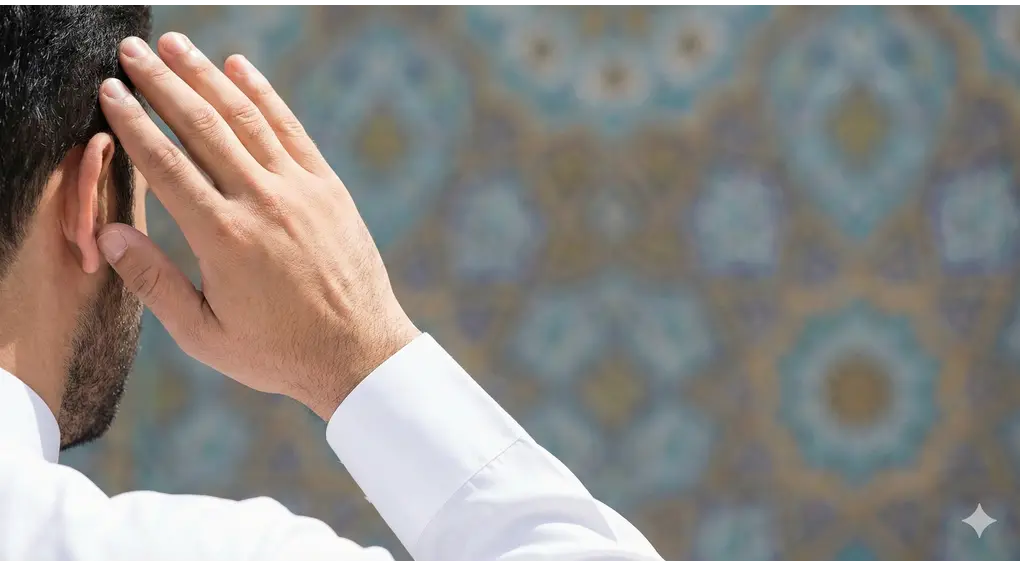
The first physical pillar is pronouncing the meaning of Takbiratul Ihram. It is mandatory to utter the specific phrase “Allahu Akbar”. The prayer is invalid if replaced with another phrase (such as “Ar-Rahmanu Akbar”). As the tongue utters the Takbir, the heart must simultaneously be present with the intention (Pillar 1).
4. Reciting Surah Al-Fatihah
This is a crucial verbal pillar (Qauli). The Prophet ﷺ stated that there is no prayer for the one who does not recite Al-Fatihah. The conditions for its valid recitation include: reciting Bismillahirrahmanirrahim as its first verse, maintaining the correct Tajweed and pronunciation, and reciting it continuously (Muwalat) without long, unnatural pauses.
5. Bowing (Ruku’)
Executing how to perform Ruku correctly by bending the back. The minimum boundary is that the palms can touch the knees. The most perfect position is keeping the back and neck straight and level like a board.
6. Stillness (Tuma’ninah) in Ruku’
Remaining motionless and tranquil for a brief moment after assuming the perfect bowing position, approximately for the duration of saying “Subhanallah”.
7. Rising from Ruku’ (I’tidal)
Standing back up straight, separating oneself from the bowing position, to fulfill the 7th pillar: standing in I’tidal and Tuma’ninah. The body must return to its original standing posture.
8. Stillness (Tuma’ninah) in I’tidal
Remaining completely still for a brief moment while in the standing I’tidal position.
9. Prostration (Sujud)
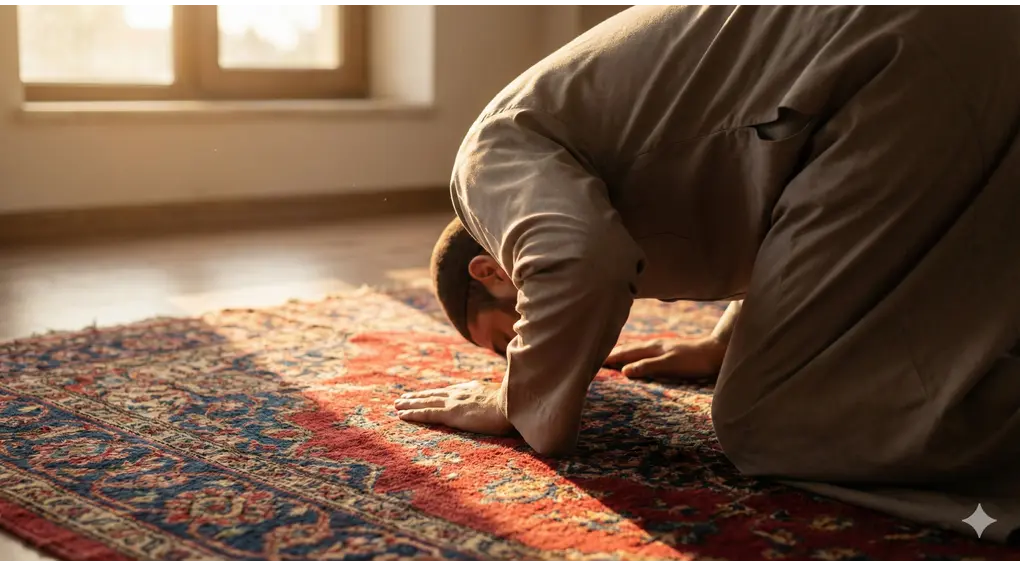
Prostration is performed twice in a single rak’ah. It is vital to observe the correct way to perform Sujud, where seven body parts must firmly touch the prayer mat: the bare forehead, both palms, both knees, and the inner tips of the toes of both feet.
10. Stillness (Tuma’ninah) in Sujud
Remaining tranquil in the prostration position until all body parts are firmly settled in place.
11. Sitting Between the Two Prostrations
Rising from the first prostration to sit (the Iftirash sitting). It is not permissible to prolong this sitting beyond normal limits, as it functions merely as a short transitional pillar.
12. Stillness (Tuma’ninah) in the Sitting
Remaining still for a brief moment while sitting between the two prostrations.
13. The Final Sitting (Tasyahud Akhir)
Sitting (in the Tawarruk position) in the final rak’ah, which serves as the designated place for reciting the final Tasyahud, the Salawat, and the Salam.
14. Reciting the Final Tasyahud
Reciting the Tahiyat. The absolute minimum is saying: “At-Tahiyyatu lillah, Salamun ‘alaika ayyuhan-nabiyyu… “ to completion.
15. Sending Salawat upon Prophet Muhammad ﷺ
Reciting blessings upon the Prophet after the final Tasyahud during the last sitting. The minimum phrasing is: “Allahumma shalli ‘ala Muhammad”.
16. The First Salam
Saying the greeting “Assalamu’alaikum” while turning the head to the right. This first Salam is mandatory (a pillar), while turning to the left for the second Salam is an esteemed Sunnah. (Note: right before this first Salam, it is a highly recommended Sunnah to recite the dua before salam in prayer to seek refuge from four major trials).
17. Sequence (Tartib)
Performing the entire series of pillars listed above in their exact, disciplined chronological order. The prayer is invalid if the sequence is jumbled (for example, prostrating before bowing).
(The 18th Addition based on Fath al-Qarib: The Intention to Exit the Prayer or Niyatul Khuruj, which is formulated in the heart simultaneously with the utterance of the first Salam).
Conclusion
Debating how many pillars of prayer exist can spark confusion if we only fixate on the numerical value. However, the fundamental principle remains exactly the same: Obligatory and voluntary prayers must be performed sequentially, with absolute tranquility (Tuma’ninah), and must fulfill all the rules of recitation and physical movements.
Whether you adhere to the methodology counting 13, 17, or 18 pillars, ensure your prayer is performed with Khushu’ (deep reverence) and is never rushed. May this jurisprudential explanation be beneficial and elevate the quality of our daily prayers.
Footnotes & Classical References:
- The explanation of the 17 pillars by separating the tuma’ninah is detailed in the commentary of Safinat al-Naja:
فَصْلٌ : أَرْكَانُ الصَّلَاةِ سَبْعَةَ عَشَرَ : المعنى : أَنَّ الأجزاء التي تتركب منها ما هيَّةُ الصَّلاةِ سبعةَ عَشَرَ بعد الطَّمَأْنِينات الأربع أركاناً… والمعتمد ما في « المنهاج » و « المحرر » وأكثر الكتب : مِنْ أَنَّهَا ثلاثةَ عَشَرَ بجعل الطمأنينات هيئة تابعة للركن ، وعلى كل : فلا بد منها ؛ فالخلاف لفظي.
(Aḥmad bin ‘Umar al-Syāṭirī, Nayl al-Rajā fī Syarḥ Safīnat al-Najā, Jeddah: Dār al-Minhāj, n.d., p. 153).
- The detailed breakdown of the 18 pillars based on Fath al-Qarib:
فصل في أركان الصلاة… (وأركان الصلاة ثمانية عشر ركنا): أحدها (النية)… (و) الثاني (القيام مع القدرة)… (و) الثالث (تكبيرة الإحرام)… (و) الرابع (قراءة الفاتحة)… (و) الخامس (الركوع)… (و) السادس (الطمأنينة)… (و) السابع (الرفع)… (و) الثامن (الطمأنينة فيه)… (و) التاسع (السجود)… (و) العاشر (الطمأنينة فيه)… (و) الحادي عشر (الجلوس بين السجدتين)… (و) الثاني عشر (الطمأنينة فيه)… (و) الثالث عشر (الجلوس الأخير)… (و) الرابع عشر (التشهد فيه)… (و) الخامس عشر (الصلاة على النبي – صلى الله عليه وسلم – فيه)… (و) السادس عشر (التسليمة الأولى)… (و) السابع عشر (نية الخروج من الصلاة)… (و) الثامن عشر (ترتيب الأركان).
(Muḥammad ibn Qāsim al-Ghazzī, Fatḥ al-Qarīb al-Mujīb fī Sharḥ Alfāẓ al-Taqrīb, ed. Bassām ʿAbd al-Wahhāb al-Jābī, 1st ed., vol. 1, Beirut: Dār Ibn Ḥazm, 2005, pp. 75-79).


