
A prayer can be invalidated by something that looks trivial. Two letters slipping out, a burst of laughter, or scratching three times in a row is enough to make the prayer need repeating. On the other hand, some things are often thought to break the prayer when they do not, such as smiling, staying silent for a long time, or moving a finger.
This article goes through the things that invalidate the prayer one by one, together with their exceptions. It relies on three books of the Shafi’i madhhab: Kashifat al-Saja by Shaykh Nawawi al-Jawi (a commentary on the text Safinat al-Naja), Fath al-Jawad by Ibn Hajar al-Haytami, and Tarshih al-Mustafidin by Sayyid Alawi al-Saqqaf.
Before getting to the invalidators, it helps to understand how the prayer itself is built, through our complete guide to obligatory prayer in the Shafi’i madhhab, the conditions for a valid prayer, and the pillars of prayer. An invalidator is basically one of those conditions or pillars breaking down partway through.
Fourteen, or Even More
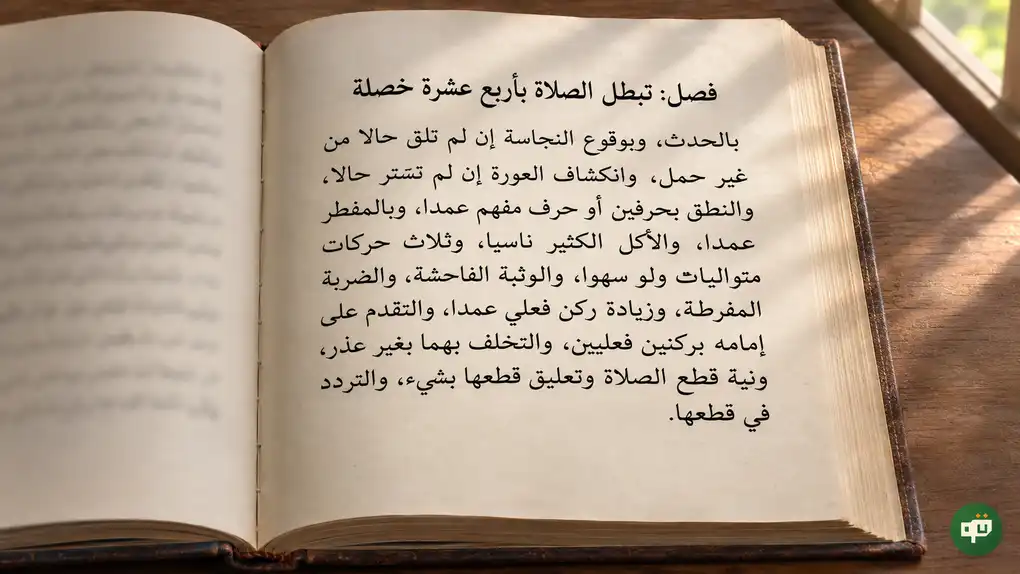
The text of Safinat al-Naja lists fourteen things. Shaykh Nawawi al-Jawi points out straight away that the real number is higher:
تَبْطُلُ الصَّلَاةُ بِأَرْبَعَ عَشْرَةَ خِصْلَةً ، بَلْ بِأَكْثَرَ مِنْ ذَلِكَ ، وَالْخِصْلَةُ بِكَسْرِ الْخَاءِ : النَّوْعُ .
“The prayer is invalidated by fourteen things, or rather by more than that. Khislah (with a kasrah on the kha’) means a kind.”[1]
He also quotes al-Sharqawi on the difference between two terms that often get mixed up, mufsid and mubtil:
وَالْفَرْقُ بَيْنَ الْمُفْسِدِ وَالْمُبْطِلِ أَنَّ الْمُفْسِدَ مَا يَطْرَأُ بَعْدَ الِانْعِقَادِ ، وَهُوَ الْمُرَادُ هُنَا ؛ وَالْمُبْطِلَ مَا يَمْنَعُهُ .
“The difference between mufsid and mubtil: a mufsid is something that occurs after the prayer has validly begun, and that is what is meant here. A mubtil is something that prevents it from beginning validly at all.”[1]
So the subject here is what spoils the prayer after the opening takbir (takbirat al-ihram). The fourteen things in Safinat al-Naja are:
- Hadath (ritual impurity).
- Contact with impurity (najis) that is not excused.
- Exposure of the awrah.
- Deliberately uttering two letters, or one letter that has meaning.
- Deliberately taking in something that breaks the fast.
- Eating a large amount, even forgetfully.
- Three consecutive movements, even forgetfully.
- A leap.
- An excessive blow.
- Deliberately adding a physical pillar (rukn fi’li).
- Getting ahead of or falling behind the imam by two physical pillars without an excuse.
- Intending to cut off the prayer.
- Making the cutting off of the prayer conditional on something.
- Wavering between cutting off the prayer and continuing it.
Invalidators Related to the Conditions of Prayer

1. Hadath
Hadath invalidates the prayer in every case, including when it is not deliberate:
أَحَدُهَا : بِالْحَدَثِ ، وَلَوْ بِلَا قَصْدٍ أَوْ أُكْرِهَ عَلَيْهِ ، كَأَنْ عُصِرَ بَطْنُهُ فَخَرَجَ
“The first: hadath, even without intending it or under compulsion, such as his stomach being pressed so that something comes out.”[1]
The evidence is the hadith cited by Shaykh Nawawi:
لِلْخَبَرِ الصَّحِيْحِ : « إِذَا فَسَا أَحَدُكُمْ فِيْ صَلَاتِهِ فَلْيَنْصَرِفْ وَلْيَتَوَضَّأْ وَلْيُعِدْ صَلَاتَهُ »
“Because of the authentic hadith: ‘If one of you passes wind in his prayer, let him leave, perform wudu, and repeat his prayer.'”[1]
Ibn Hajar al-Haytami states the same for both minor and major hadath, in obligatory and voluntary prayers alike.[2] What counts as hadath is covered in our article on the things that invalidate wudu.
There is an exception for a person whose hadath is continuous (salis), such as someone with urinary incontinence:
وَهَذَا الْكَلَامُ فِي السَّلِيْمِ ، أَمَّا السَّلِسُ ، فَلَا يُبْطِلُ صَلَاتَهُ إِلَّا حَدَثُهُ الْغَيْرُ الدَّائِمِ ، بِخِلَافِ الدَّائِمِ ، فَإِنَّهُ لَا يُبْطِلُهَا .
“This applies to a healthy person. As for the salis, his prayer is invalidated only by a hadath other than his continuous one. The continuous hadath does not invalidate it.”[1]
There is also a piece of etiquette that few people know. Someone who loses his wudu in the middle of a congregational prayer is recommended to hold his nose as he leaves the row:
وَيُسَنُّ لِمَنْ أَحْدَثَ فِيْ صَلَاتِهِ أَنْ يَأْخُذَ بِأَنْفِهِ ثُمَّ يَنْصَرِفَ ، مُوْهِمًا أَنَّهُ رَعَفَ سَتْرًا عَلَى نَفْسِهِ ، لِئَلَّا يَخُوْضَ النَّاسُ فِيْهِ فَيَأْثَمُوْا
“It is recommended for someone who loses his wudu in his prayer to hold his nose and then leave, giving the impression that he has a nosebleed, to cover his own situation, so that people do not talk about him and fall into sin.”[1]
2. Contact with Impurity That Is Not Excused
The second is impurity (najis) that is not excused, whether it lands on the clothes or the body:
وَثَانِيْهَا : بِوُقُوْعِ النَّجَاسَةِ الَّتِيْ لَا يُعْفَى عَنْهَا ، وَسَوَاءٌ وَقَعَتْ عَلَى ثَوْبِهِ
“The second: contact with impurity that is not excused, whether it falls on his clothes…”[1]
The prayer is not invalidated if the impurity is thrown off at once:
إِنْ لَمْ تُلْقَ حَالًّا ، أَيْ : قَبْلَ مُضِيِّ أَقَلِّ الطُّمَأْنِيْنَةِ .
“(It invalidates) if it is not thrown off immediately, that is, before the shortest span of tuma’ninah has passed.”[3]
The way it is removed also matters. The impurity must not be removed in a way that makes him carry it:
فَإِنْ تَرَتَّبَ عَلَى إِزَالَتِهَا حَمْلٌ ، كَأَنْ نَحَّاهَا بِنَحْوِ عُوْدٍ أَوْ جَرَّ الثَّوْبَ وَلَوْ قَبَضَ مَوْضِعًا طَاهِرًا مِنْهُ ضَرَّ
“If removing it results in carrying it, such as pushing it aside with something like a stick, or pulling the (soiled) garment even while holding a clean part of it, the prayer is spoiled.”[3]
Tarshih al-Mustafidin explains the correct way:
أي: بأن يلقي الثَّوب فيما إذا كان النَّجس رطبًا، وأن ينفضه فيما إذا كان يابسًا، من غير أن يباشر النَّجس بيده أو كُمِّه أو عود؛ وإلَّا بطلت.
“That is, by dropping the garment if the impurity is wet, and shaking it off if it is dry, without touching the impurity with his hand, his sleeve, or a stick. Otherwise, the prayer is invalid.”[4]
What if he did not know the impurity was there? Ibn Hajar al-Haytami says the prayer is still invalid:
قوله: ( وإن جهل ) وجوده أو كونه مبطلاً
“Even if he did not know it was there, or did not know that it invalidates.”[5]
The reason is that being free of impurity is a condition, and a condition does not fall away through ignorance or forgetfulness.[5]
3. Exposure of the Awrah
The third is exposure of the awrah, in whole or in part:
وَثَالِثُهَا : انْكِشَافُ الْعَوْرَةِ ، أَيْ : كُلِّهَا أَوْ بَعْضِهَا مِمَّا يَجِبُ سَتْرُهُ لِأَجْلِ الصَّلَاةِ .
“The third: exposure of the awrah, that is, all or part of what must be covered for the prayer.”[6]
If the wind uncovers it and he covers it again at once, the prayer remains valid:
إِنْ لَمْ تُسْتَرْ حَالًّا ، وَإِنْ صَلَّى فِي الْخَلْوَةِ ، فَإِنْ كَشَفَهَا رِيْحٌ فَلَا تَبْطُلُ صَلَاتُهُ إِنْ سَتَرَهَا حَالًّا
“(It invalidates) if it is not covered immediately, even if he is praying alone. If the wind uncovers it, his prayer is not invalidated as long as he covers it immediately.”[6]
But if the wind keeps doing it until he needs many consecutive movements to cover himself, the prayer is invalid.[6] Forgetting and then covering at once does not invalidate it either.[6]
What if an animal or a small child uncovers the awrah? Here the books differ.
Author’s note (a comparison between the books, not a quotation from them): Kashifat al-Saja limits the concession to the wind only. Anything other than the wind, even an animal or a person, discerning or not, still invalidates the prayer even if he covers himself at once:
وَخَرَجَ بِ « الرِّيْحِ » غَيْرُهُ ، وَلَوْ بَهِيْمَةً ، كَقِرْدٍ أَوْ آدَمِيٍّ ، سَوَاءٌ كَانَ مُمَيِّزًا أَمْ مَأْذُوْنًا لَهُ أَمْ لَا ، فَيَضُرُّ كَشْفُهُ وَإِنْ سَتَرَهَا حَالًّا
“Anything other than the wind is excluded, even an animal such as a monkey, or a human, whether discerning or given permission or not. Its uncovering spoils the prayer even if he covers it immediately.”[6]
Meanwhile the gloss in Tarshih al-Mustafidin treats an animal and a child below the age of discernment like the wind:
أي: أو حيوان أو آدميٌّ غير مميِّز.
“That is, (the wind), or an animal, or a human who is not yet discerning.”[4]
For those who want to be careful, the position of Kashifat al-Saja is the safer one. The limits of the awrah for men and women are discussed in our article on the conditions for a valid prayer.
Invalidators Involving Speech
4. Uttering Two Letters, or One Letter That Has Meaning
This is the invalidator that happens most often. The measure is not a sentence but two consecutive letters:
وَرَابِعُهَا : النُّطْقُ بِحَرْفَيْنِ ، أَيْ : مُتَوَالِيَيْنِ ، وَإِنْ لَمْ يُفْهِمَا ، كَعَنْ وَمِنْ
“The fourth: uttering two consecutive letters, even if they convey no meaning, such as ‘an and min.”[6]
Ibn Hajar al-Haytami explains why two letters are the measure:
قوله: ( و ) تبطل الصلاة أيضاً ( بحرفين ) إن تواليا فيما يظهر قياساً على ما يأتي في الأفعال ( من كلامنا ) معشر الآدميين في تحاورنا لنهيه صلى الله عليه وسلم عنه وهما أقل ما ينبني منه الكلام
“The prayer is also invalidated by two letters, if they are consecutive according to the apparent view, by analogy with the actions discussed later, from our speech as human beings in conversation, because the Prophet ﷺ forbade it. Two letters are the least from which speech can be formed.”[7]
It invalidates even if the speech is for the benefit of the prayer:
أَوْ كَانَا لِمَصْلَحَةِ الصَّلَاةِ ، كَقَوْلِهِ لِإِمَامِهِ : قُمْ
“Or even if the two letters are for the benefit of the prayer, such as saying to his imam: ‘Qum (stand up)!'”[8]
A single letter also invalidates once it carries meaning:
أَوْ حَرْفٍ مُفْهِمٍ ، كَقِ ، وَعِ ، وَفِ ، وَشِ
“Or one letter that conveys meaning, such as qi, ‘i, fi, and shi.”[8]
In Arabic these letters are commands: qi (protect), ‘i (understand), fi (fulfil). The same goes for a single letter that is lengthened:
وَمِثْلُ ذَلِكَ حَرْفٌ مَمْدُودٌ وَإِنْ لَمْ يُفْهِمْ ، إِذِ الْمَدَّةُ أَلِفٌ أَوْ وَاوٌ أَوْ يَاءٌ ، فَالْمَمْدُودُ فِي الْحَقِيقَةِ حَرْفَانِ .
“Likewise a lengthened letter, even if it conveys no meaning, because the lengthening is an alif, a waw, or a ya’. So a lengthened letter is in reality two letters.”[9]
The condition for invalidation is that it is deliberate, and this includes someone under compulsion:
ثُمَّ قَيَّدَ الْمُصَنِّفُ ذَلِكَ بِقَوْلِهِ : عَمْدًا ، أَيْ : حَالَ كَوْنِ النَّاطِقِ عَامِدًا ، وَلَوْ كَانَ مُكْرَهًا مَعَ الْعِلْمِ بِالتَّحْرِيمِ وَتَذَكَّرَ كَوْنَهُ فِي الصَّلَاةِ
“Then the author of the text qualified this with the word ‘deliberately’, meaning the speaker does it on purpose, even if he is under compulsion, as long as he knows it is forbidden and remembers that he is in prayer.”[9]
Clearing the Throat, Laughing, Crying, and Coughing
These reflex sounds are treated as speech if they produce two letters:
أَوْ كَانَا فِيْ تَنَحْنُحٍ وَنَحْوِهِ ، كَضَحِكٍ ، وَبُكَاءٍ وَلَوْ مِنْ خَوْفِ الْآخِرَةِ ، وَأَنِيْنٍ وَلَوْ مِنْ شِدَّةِ مَرَضٍ ، وَنَفْخٍ بِأَنْفٍ أَوْ فَمٍ وَسُعَالٍ وَعُطَاسٍ ، فَالْبُطْلَانُ فِيْهَا مِنْ جِهَةِ الْكَلَامِ ؛ وَلَوْ غَلَبَهُ الضَّحِكُ لَمْ تَبْطُلْ صَلَاتُهُ إِلَّا إِنْ كَثُرَ ، فَيُغْتَفَرُ الْيَسِيْرُ لِلْغَلَبَةِ .
“Or if the two letters come out while clearing the throat and the like, such as laughing, crying even out of fear of the Hereafter, groaning even from severe illness, blowing through the nose or mouth, coughing, and sneezing. The invalidation here is on account of speech. If laughter overcomes him, his prayer is not invalidated unless it is a lot. A little is excused because it overpowered him.”[8]
So even crying out of fear of Allah can invalidate the prayer if it is deliberate and produces two letters. What is excused is what cannot be held back and is little. Smiling does not invalidate the prayer at all:
وَخَرَجَ بِ « الضَّحِكِ » التَّبَسُّمُ ، فَلَا تَبْطُلُ الصَّلَاةُ بِهِ
“Smiling is excluded from laughter. The prayer is not invalidated by it.”[8]
Clearing the throat has its own details. Tarshih al-Mustafidin says it is allowed if without it he cannot recite an obligatory recitation:
وَتَبْطُلُ بِحَرْفَيْنِ (وَلَوْ) ظَهَرَا (فِي تَنَحْنُحٍ لِغَيْرِ تَعَذُّرِ قِرَاءَةٍ وَاجِبَةٍ) كَفَاتِحَةٍ، وَمِثْلُهَا كُلُّ وَاجِبٍ قَوْلِيٍّ كَتَشَهُّدٍ أَخِيْرٍ وَصَلَاةٍ فِيْهِ
“The prayer is invalidated by two letters even if they appear while clearing the throat, when it is not because an obligatory recitation such as al-Fatihah has become difficult. Like al-Fatihah is every spoken obligation, such as the final tashahhud and the salawat in it.”[10]
For sunnah recitations, that reason does not apply:
وَخَرَجَ بِقَوْلِي: «لِغَيْرِ تَعَذُّرِ قِرَاءَةٍ وَاجِبَةٍ» مَا إِذَا ظَهَرَ حَرْفَانِ فِي تَنَحْنُحٍ لِتَعَذُّرِ قِرَاءَةٍ مَسْنُوْنَةٍ كَالسُّوْرَةِ أَوِ الْقُنُوْتِ أَوِ الْجَهْرِ بِالْفَاتِحَةِ، فَتَبْطُلُ.
“Excluded by my words ‘not because an obligatory recitation has become difficult’ is the case where two letters appear while clearing the throat because a sunnah recitation has become difficult, such as the surah, the qunut, or reciting al-Fatihah aloud. Then the prayer is invalid.”[11]
What if the imam clears his throat and two letters can be heard? The follower does not have to separate from him:
وَلَوْ تَنَحْنَحَ إِمَامُهُ فَبَانَ مِنْهُ حَرْفَانِ لَمْ تَجِبْ مُفَارَقَتُهُ ، لِأَنَّ الظَّاهِرَ تَحَرُّزُهُ عَنِ الْمُبْطِلِ ، إِلَّا إِنْ دَلَّتْ قَرِيْنَةُ حَالٍ عَلَى عَدَمِ عُذْرِهِ ، فَتَجِبُ مُفَارَقَتُهُ .
“If his imam clears his throat and two letters become clear from him, the follower does not have to separate from him, because the apparent case is that the imam guards against invalidators. Unless the circumstances indicate that the imam has no excuse, in which case he must separate from him.”[8]
A person with a persistent cough also receives a concession:
وَلَوِ ابْتُلِيَ شَخْصٌ بِنَحْوِ سُعَالٍ دَائِمٍ بِحَيْثُ لَمْ يَخْلُ زَمَنٌ مِنَ الْوَقْتِ يَسَعُ الصَّلَاةَ بِلَا سُعَالٍ مُبْطِلٍ ، فَالَّذِيْ يَظْهَرُ الْعَفْوُ عَنْهُ ، وَلَا قَضَاءَ عَلَيْهِ لَوْ شُفِيَ .
“If a person is afflicted with something like a constant cough, such that no part of the prayer time is long enough to pray without an invalidating cough, the apparent view is that it is excused, and he does not have to make up the prayer if he recovers.”[8]
Speaking Out of Forgetfulness or Ignorance
Speech that is not deliberate, such as words that slip out, forgetting that one is in prayer, or not knowing the ruling, is excused as long as it is little. Kashifat al-Saja sets the limit at six words:
فَإِنْ كَانَ مَا أَتَى بِهِ كَلَامًا قَلِيلًا عُرْفًا وَضُبِطَ بِسِتِّ كَلِمَاتٍ عُرْفِيَّةٍ فَأَقَلَّ لَمْ يَضُرَّ
“If what he said is a small amount of speech by custom, defined as six customary words or fewer, it does not spoil the prayer.”[9]
More than that invalidates the prayer:
وَإِنْ كَانَ كَثِيرًا عُرْفًا ، وَضُبِطَ بِأَكْثَرَ مِنْ سِتِّ كَلِمَاتٍ عُرْفِيَّةٍ ؛ ضَرَّ ، لِأَنَّهُ يَقْطَعُ نَظْمَ الصَّلَاةِ
“If it is a lot by custom, defined as more than six customary words, it spoils the prayer, because it breaks the order of the prayer.”[9]
The evidence for this concession is the incident in which the Prophet ﷺ gave salam after two rak’ahs:
لِأَنَّهُ صلى الله عليه وسلم لَمَّا سَلَّمَ مِنْ رَكْعَتَيْنِ تَكَلَّمَ بِقَلِيْلٍ مُعْتَقِدًا الْفَرَاغَ، وَأَجَابُوْهُ بِهِ مُجَوِّزِيْنَ النَّسْخَ، ثُمَّ بَنَى هُوَ وَهُمْ عَلَيْهَا
“Because when the Prophet ﷺ gave salam after two rak’ahs, he spoke a little, believing the prayer was finished. The Companions answered him with a little speech too, thinking the ruling might have been abrogated. Then he and they continued that prayer.”[12]
Author’s note (a comparison between the books, not a quotation from them): the limit of “a little” is expressed differently. Kashifat al-Saja says six words or fewer. The main text of Tarshih al-Mustafidin gives the example of two or three words:
قوله: (وَ) لَا بِيَسِيْرِ (كَلَامٍ) عُرْفًا كَالْكَلِمَتَيْنِ وَالثَّلَاثِ
“And it is not invalidated by a small amount of speech by custom, such as two or three words.”[13]
Its gloss then quotes al-Qalyubi, who supports the limit of six words:
والمعتمد عدم البطلان بالسِّتَّة ودونها، والبطلان بما زاد عليها
“The relied-upon view: it is not invalidated by six words or fewer, and it is invalidated by more than that.”[12]
Two common situations need attention. First, someone who thinks his prayer has already been invalidated by a little forgetful speech, and then deliberately speaks a lot, is no longer excused:
وَلَوْ ظَنَّ بُطْلَانَهَا بِكَلَامِهِ الْقَلِيْلِ سَهْوًا فَتَكَلَّمَ كَثِيْرًا؛ لَمْ يُعْذَرْ.
“If he thinks his prayer was invalidated by his small forgetful speech and then speaks a lot, he is not excused.”[12]
Second, the person excused is the one who does not know it is forbidden, not the one who knows it is forbidden but does not know it invalidates the prayer:
وخرج بجهل حرمة ما لو علمها وجهل الإبطال فإنه يبطل لأن حقه حينئذ الكف
“Excluded from ignorance of its prohibition is someone who knows it is forbidden but does not know that it invalidates. His prayer is invalid, because what he should have done then was hold back.”[14]
Who counts as ignorant is also limited: someone who has recently entered Islam or who lives far from scholars.[9] If speaking in prayer calls for sujud sahwi, the details are in sujud sahwi: causes, timing, and method.
Dhikr, Supplication, and Speech That Does Not Invalidate
Not all speech invalidates the prayer. Dhikr and supplication are allowed, unless they are addressed to a created being with the word “you”:
وَخَرَجَ بِ « النُّطْقِ الْمُبْطِلِ » الذِّكْرُ وَالدُّعَاءُ ، فَلَا تَبْطُلُ بِهِمَا الصَّلَاةُ إِلَّا أَنْ يُخَاطِبَ بِهِمَا غَيْرَ اللَّهِ وَرَسُولِهِ ، كَقَوْلِهِ لِعَاطِسٍ أَوْ لِمَيِّتٍ : « يَرْحَمُكَ اللَّهُ » ؛ بِخِلَافِ : « يَرْحَمُهُ اللَّهُ » فَلَا تَبْطُلُ ، لِانْتِفَاءِ الْخِطَابِ
“Excluded from invalidating speech are dhikr and supplication. The prayer is not invalidated by them, unless he addresses them to someone other than Allah and His Messenger, such as saying to someone who sneezes or to a deceased person: ‘Yarhamuk Allah (may Allah have mercy on you).’ This differs from ‘Yarhamuh Allah (may Allah have mercy on him)’, which does not invalidate because there is no direct address.”[15]
So if someone sneezes next to you while you are praying, do not answer “yarhamuk Allah”. The person who sneezes is recommended to praise Allah in a voice only he can hear:
وَيُسَنُّ لِمَنْ عَطَسَ أَنْ يَحْمَدَ اللَّهَ وَيُسْمِعَ نَفْسَهُ .
“It is recommended for someone who sneezes to praise Allah and to make himself hear it.”[15]
Returning a greeting of salam during prayer is done with a gesture:
وَيُسَنُّ لِمُصَلٍّ سُلِّمَ عَلَيْهِ الرَّدُّ بِالإِشَارَةِ بِالْيَدِ أَوِ الرَّأْسِ وَلَوْ نَاطِقًا، ثُمَّ بَعْدَ الْفَرَاغِ مِنْهَا بِاللَّفْظِ
“It is recommended for a person in prayer who is greeted with salam to reply with a gesture of the hand or head, even if he is able to speak, and then after finishing the prayer to reply in words.”[13]
Staying silent for a long time during the prayer does not invalidate it:
وَلَا تَبْطُلُ الصَّلَاةُ بِسُكُوتٍ طَوِيلٍ ، وَلَوْ بِلَا عُذْرٍ .
“The prayer is not invalidated by a long silence, even without an excuse.”[15]
What about a call from one’s parents? Kashifat al-Saja states:
وَتَحْرُمُ إِجَابَةُ الْوَالِدَيْنِ فِي الْفَرْضِ ، وَتَجُوزُ فِي النَّفْلِ ، وَهِيَ أَفْضَلُ مِنْهُ إِنْ شَقَّ عَلَيْهِمَا عَدَمُهَا ، وَتَبْطُلُ الصَّلَاةُ بِهَا مُطْلَقًا .
“Answering one’s parents is forbidden in an obligatory prayer and permitted in a voluntary one. Answering is better than continuing the voluntary prayer if not answering would be hard on them. The prayer is invalidated by answering in every case.”[15]
The gloss in Tarshih al-Mustafidin, quoting Bushra al-Karim, is firmer regarding voluntary prayer:
وتجب إجابة الأبوين في نفل إن تأذَّيا بعدمها وتبطل، وتحرم في فرض وتبطل.
“Answering one’s parents is obligatory in a voluntary prayer if they would be hurt by not being answered, and the prayer is invalidated. It is forbidden in an obligatory prayer, and the prayer is invalidated.”[16]
This differs from answering a call from the Prophet ﷺ, which does not invalidate the prayer:
وَيُعْذَرُ فِي إِجَابَةِ نَبِيِّنَا بِالْقَوْلِ
“And he is excused for answering our Prophet with words.”[9]
A Verse or Dhikr Used to Let Someone Know Something
Some people recite a verse to signal something to another person. For example, reciting “udkhuluha bi-salamin aminin” to invite a guest in. The ruling depends on the intention:
مِنْ غَيْرِ قُرْآنٍ أَوْ ذِكْرٍ أَوْ دُعَاءٍ وَلَمْ يَقْصِدْ بِهَا مُجَرَّدَ التَّفْهِيْمِ كَقَوْلِهِ لِمَنِ اسْتَأْذَنُوْهُ فِي الدُّخُوْلِ: {ادْخُلُوْهَا بِسَلَامٍ ءَامِنِيْنَ ٤٦} [الحجر: ٤٦]، فَإِنْ قَصَدَ الْقِرَاءَةَ أَوِ الذِّكْرَ وَحْدَهُ أَوْ مَعَ التَّنْبِيْهِ: لَمْ تَبْطُلْ، وَكَذَا إِنْ أَطْلَقَ عَلَى مَا قَالَهُ جَمْعٌ مُتَقَدِّمُوْنَ، لَكِنِ الَّذِي فِي «التَّحْقِيْقِ» [ص ٢٣٩] وَ«الدَّقَائِقِ» [ص ٤٥] الْبُطْلَانُ، وَهُوَ الْمُعْتَمَدُ.
“(The two letters are) not from the Qur’an, dhikr, or supplication, and he does not intend merely to inform, such as saying to people who ask his permission to enter: ‘Enter it in peace and security’ (al-Hijr: 46). If he intends recitation or dhikr alone, or together with alerting someone, the prayer is not invalidated. The same applies if he has no particular intention, according to a group of earlier scholars. However, what is stated in al-Tahqiq and al-Daqa’iq is that it is invalidated, and that is the relied-upon view.”[17]
These four cases also apply to a follower who corrects the imam with a recitation, and to the muballigh (the one who relays the imam’s takbir):
وَتَأْتِي هَذِهِ الصُّوَرُ الأَرْبَعَةُ فِي الْفَتْحِ عَلَى الإِمَامِ بِالْقُرْآنِ أَوِ الذِّكْرِ، وَفِي الْجَهْرِ بِتَكْبِيْرِ الانْتِقَالِ مِنَ الإِمَامِ وَالْمُبَلِّغِ.
“These four cases also apply to prompting the imam with the Qur’an or dhikr, and to the imam and the muballigh saying the transitional takbir aloud.”[10]
In other words, the imam and the muballigh should intend their takbir as dhikr, not merely as a signal to move. The gloss in Tarshih al-Mustafidin adds a concession for those who do not know:
وعلى كلِّ حال لا تبطل به صلاة الجاهل؛ لأنَّه خفيٌّ.
“In any case, the prayer of someone who does not know is not invalidated by it, because this matter is subtle.”[10]
Alerting the Imam: Tasbih and Clapping
If the imam forgets something, or there is some other need, a man says tasbih and anyone other than a man claps:
وَسُنَّ لِرَجُلٍ تَسْبِيحٌ ، وَلِغَيْرِهِ تَصْفِيقٌ بِضَرْبِ بَطْنِ كَفٍّ أَوْ ظَهْرِهَا عَلَى ظَهْرِ كَفٍّ أُخْرَى
“It is recommended for a man to say tasbih, and for anyone else to clap by striking the palm or the back of one hand against the back of the other hand.”[15]
The intention behind the tasbih decides whether the prayer stays valid:
وَيُعْتَبَرُ فِي التَّسْبِيحِ أَنْ يَقْصِدَ بِهِ الذِّكْرَ وَحْدَهُ أَوْ مَعَ الْإِعْلَامِ ، فَإِنْ أَطْلَقَ أَوْ قَصَدَ الْإِعْلَامَ فَقَطْ بَطَلَتْ صَلَاتُهُ .
“In the tasbih it is required that he intend it as dhikr alone, or as dhikr together with informing. If he has no intention, or intends only to inform, his prayer is invalid.”[18]
Clapping does not require an intention of dhikr:
وَلَا يَضُرُّ فِي التَّصْفِيقِ قَصْدُ الْإِعْلَامِ
“In clapping, intending to inform does not spoil the prayer.”[18]
Ibn Hajar al-Haytami adds that what invalidates is clapping for play. Clapping to inform does not invalidate, even palm against palm:
أما التصفية لغير اللعب كالإعلام فلا يضر وإن كانت بضرب الراحتين كما قاله الماوردي
“As for clapping that is not for play, such as to inform, it does not spoil the prayer, even if it is by striking the two palms together, as al-Mawardi said.”[19]
Invalidators Involving Eating and Drinking
5. Deliberately Taking In Something That Breaks the Fast
وَخَامِسُهَا : بِالْمُفْطِرِ ، أَيْ : لِلصَّائِمِ ، عَمْدًا ؛ لِتَلَاعُبِهِ
“The fifth: something that breaks the fast of a fasting person, when done deliberately, because he is trifling with the prayer.”[18]
The amount does not have to be large, and there does not have to be any movement of the mouth:
قوله: ( و ) تبطل ( بمفطر ) وصل لجوفه كباطن أذنه وإن قل ولو بلا حركة فم إذ هي وحدها فعل يبطل كثيره
“The prayer is invalidated by something that breaks the fast and reaches his inner body, such as the inside of his ear, even if it is little and even without moving the mouth, since mouth movement on its own is an action that invalidates when it is a lot.”[20]
Shaykh Nawawi al-Jawi gives a rule that is easy to remember:
وَالْحَاصِلُ أَنَّ كُلَّ مَا أَبْطَلَ الصَّوْمَ أَبْطَلَ الصَّلَاةَ إِلَّا الْأَكْلَ الْكَثِيرَ سَهْوًا ، فَيُبْطِلُهَا دُونَهُ
“In short, everything that invalidates the fast invalidates the prayer, except eating a lot forgetfully. That invalidates the prayer but not the fast.”[18]
The details of what breaks the fast can be read in our article on the things that invalidate the fast. Tarshih al-Mustafidin gives a few everyday examples:
فَلَوِ ابْتَلَعَ نُخَامَةً نَزَلَتْ مِنْ رَأْسِهِ لِحَدِّ الظَّاهِرِ مِنْ فَمِهِ، أَوْ رِيْقًا مُتَنَجِّسًا بِنَحْوِ دَمِ لِثَتِهِ وَإِنِ ابْيَضَّ، أَوْ مُتَغَيِّرًا بِحُمْرَةِ نَحْوِ تَنْبُلٍ؛ بَطَلَتْ.
“If he swallows phlegm that has come down from his head to the outer part of his mouth, or saliva made impure by something like blood from his gums even if it has turned white, or saliva changed by the red of something like betel, the prayer is invalid.”[21]
6. Eating a Large Amount, Even Forgetfully
وَسَادِسُهَا بِالْأَكْلِ الْكَثِيرِ نَاسِيًا ، أَيْ : لِلصَّلَاةِ ، وَجَاهِلًا مَعْذُورًا
“The sixth: eating a lot, even while forgetting that he is in prayer, or being excusably ignorant of the ruling.”[18]
Eating a little out of forgetfulness or ignorance does not invalidate the prayer:
أَمَّا إِذَا أَكَلَ قَلِيلًا ، نَاسِيًا لِلصَّلَاةِ ، أَوْ جَاهِلًا تَحْرِيمَ ذَلِكَ ، فَلَا تَبْطُلُ صَلَاتُهُ ؛
“But if he eats a little while forgetting that he is in prayer, or not knowing it is forbidden, his prayer is not invalidated.”[18]
Someone under compulsion, on the other hand, receives no concession, even for a little:
بِخِلَافِ الْمُكْرَهِ ، فَتَبْطُلُ صَلَاتُهُ لِنُدْرَةِ الْإِكْرَاهِ فِيهَا .
“Unlike someone under compulsion: his prayer is invalidated, because compulsion during prayer is rare.”[22]
Tarshih al-Mustafidin adds situations that cannot be avoided, such as food remains between the teeth:
أَمَّا الأُكْلُ الْقَلِيْلُ عُرْفًا – وَلَا يَتَقَيَّدُ بِنَحْوِ سِمْسِمَةٍ – مِنْ نَاسٍ أَوْ جَاهِلٍ مَعْذُوْرٍ، وَمِنْ مَغْلُوْبٍ – كَأَنْ نَزَلَتْ نُخَامَتُهُ لِحَدِّ الظَّاهِرِ وَعَجَزَ عَنْ مَجِّهَا، أَوْ جَرَى رِيْقُهُ بِطَعَامٍ بَيْنَ أَسْنَانِهِ وَقَدْ عَجَزَ عَنْ تَمْيِيْزِهِ وَمَجِّهِ -: فَلَا يَضُرُّ؛ لِلْعُذْرِ.
“As for food that is little by custom, and it is not limited to the size of a sesame seed, from someone who forgets or is excusably ignorant, or from someone overcome, such as when his phlegm comes down to the outer part of the mouth and he cannot spit it out, or his saliva carries food from between his teeth and he cannot separate it and spit it out, it does not spoil the prayer because of the excuse.”[23]
Invalidators Involving Movement
7. Three Consecutive Movements
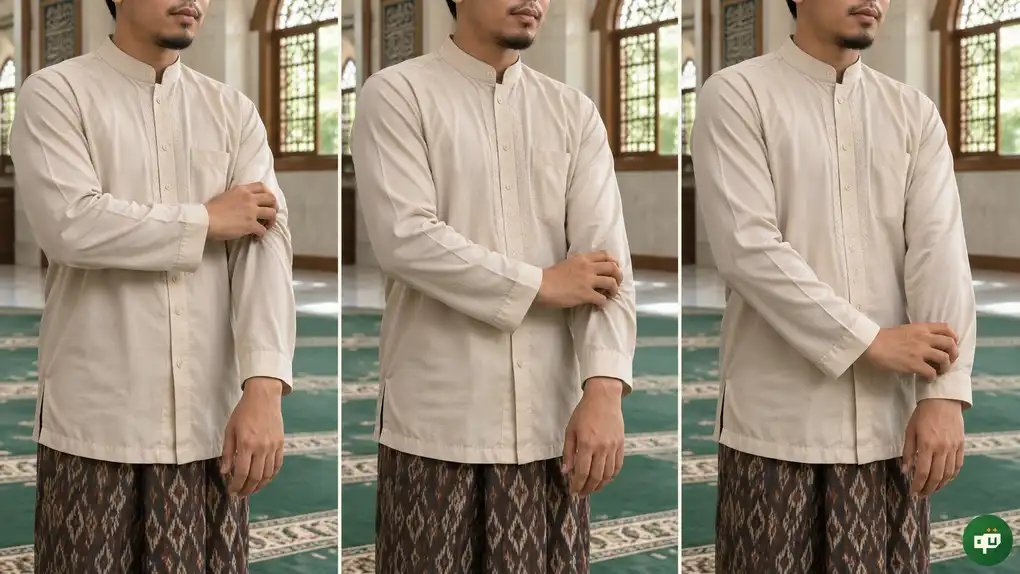
The measure for movements that invalidate the prayer is three in a row, even with different parts of the body:
وَسَابِعُهَا : بِثَلَاثِ حَرَكَاتٍ مُتَوَالِيَاتٍ ، أَيْ : يَقِينًا ، وَلَوْ بِأَعْضَاءٍ مُتَعَدِّدَةٍ ، كَأَنْ حَرَّكَ رَأْسَهُ وَيَدَيْهِ ، وَذَهَابُ الرِّجْلِ وَعَوْدُهَا يُعَدُّ مَرَّتَيْنِ مُطْلَقًا ، سَوَاءٌ حَصَلَ اتِّصَالٌ أَمْ لَا ، بِخِلَافِ ذَهَابِ الْيَدِ وَعَوْدِهَا عَلَى الِاتِّصَالِ ، فَإِنَّهُ يُعَدُّ مَرَّةً وَاحِدَةً
“The seventh: three consecutive movements, known with certainty, even with several limbs, such as moving his head and both hands. A foot going forward and coming back counts as two in every case, whether continuous or not. This differs from a hand going out and coming back continuously, which counts as one.”[22]
The reason hands and feet differ:
وَالْفَرْقُ بَيْنَ الْيَدِ وَالرِّجْلِ أَنَّ الرِّجْلَ عَادَتُهَا السُّكُونُ بِخِلَافِ الْيَدِ .
“The difference between the hand and the foot is that the foot is normally still, unlike the hand.”[22]
These movements invalidate the prayer even when done forgetfully:
وَلَوْ سَهْوًا ، أَيْ : سَوَاءٌ كَانَ عَمْدًا أَوْ سَهْوًا ، لِتَلَاعُبِهِ ، مَعَ أَنَّهُ لَا مَشَقَّةَ فِي الِاحْتِرَازِ عَنْهُ .
“Even forgetfully, meaning whether deliberate or forgetful, because he is trifling with the prayer, while guarding against it is not difficult.”[22]
Ibn Hajar al-Haytami confirms that what counts as “a lot” is referred to custom, and gives examples:
ومرجع الكثرة العرف فالكثير عرفاً ( كثلاث خطا ) بضم الخاء وإن كانت بقدر خطوة مغتفرة وثلاث مضغات وتحريك رأسه ويديه ولو معاً
“What counts as a lot is referred to custom. What is a lot by custom is like three steps, even if together they only cover the width of one excused step, three chews, and moving his head and both hands, even at the same time.”[19]
Movements that are spread out and not consecutive do not invalidate the prayer, even if there are many:
قوله: ( أو كثر ) حال كونه ( ولاء ) عرفاً في غير شدة الخوف بخلاف القليل والكثير المتفرق بحيث يعدّ كل منقطعاً عما قبله لأنه صلى الله عليه وسلم حمل أمامة فكان إذا سجد وضعها وإذا قام حملها .
“Or if the action is a lot and consecutive by custom, outside the prayer of extreme fear. This differs from what is little, and from what is a lot but spread out so that each one counts as cut off from the one before. For the Prophet ﷺ once carried Umamah: when he prostrated he put her down, and when he stood he picked her up.”[19]
Two movements do not invalidate the prayer, unless they are done for play:
أَمَّا الْحَرَكَةُ الْقَلِيلَةُ ، كَحَرَكَتَيْنِ ، فَلَا تَبْطُلُ الصَّلَاةُ بِهَا ، سَوَاءٌ كَانَ عَمْدًا أَوْ سَهْوًا ، مَا لَمْ يَقْصِدْ بِهَا اللَّعِبَ
“As for a small amount of movement, such as two movements, the prayer is not invalidated by it, whether deliberate or forgetful, as long as he does not intend it as play.”[22]
Intending three movements and then doing just one already invalidates the prayer:
وَلَوْ نَوَى ثَلَاثَةَ أَفْعَالِ وِلَاءً وَفَعَلَ وَاحِدًا مِنْهَا ضَرَّ ، لِأَنَّهُ قَصَدَ الْمُبْطِلَ وَشَرَعَ فِيهِ
“If he intends three consecutive actions and does one of them, the prayer is spoiled, because he intended an invalidator and began it.”[24]
If he is unsure whether a movement was little or a lot, the prayer is not invalidated:
وَلَوْ شَكَّ فِي فِعْلٍ أَقَلِيْلٌ هُوَ أَوْ كَثِيْرٌ؟ فَلَا بُطْلَانَ.
“If he is unsure about an action, whether it was little or a lot, there is no invalidation.”[25]
There is one unusual case. If someone in prayer is carried by another person who walks three steps, the prayer of the one carried is not invalidated:
وَلَوْ حَمَلَ شَخْصٌ مُصَلِّيًا وَمَشَى بِهِ ثَلَاثَ خَطَوَاتٍ مُتَوَالِيَاتٍ لَمْ تَبْطُلْ صَلَاةُ الْمَحْمُولِ ، لِأَنَّ الْخَطَوَاتِ لَا تُنْسَبُ لَهُ
“If someone carries a person who is praying and walks three consecutive steps with him, the prayer of the one carried is not invalidated, because the steps are not attributed to him.”[24]
Light Movements That Do Not Invalidate
Movements of small body parts are not counted, even if they are many and consecutive, but they are disliked (makruh):
قوله: (لَا) تَبْطُلُ (بِحَرَكَاتٍ خَفِيْفَةٍ) وَإِنْ كَثُرَتْ وَتَوَالَتْ، بَلْ تُكْرَهُ، (كَتَحْرِيْكِ) إِصْبَعٍ أَوْ (أَصَابِعَ) فِي حَكٍّ أَوْ سُبْحَةٍ مَعَ قَرَارِ كَفِّهِ، (أَوْ جَفْنٍ) أَوْ شَفَةٍ أَوْ ذَكَرٍ أَوْ لِسَانٍ
“The prayer is not invalidated by light movements, even if they are many and consecutive, though they are disliked, such as moving a finger or fingers to scratch or to turn prayer beads while the palm stays still, or moving an eyelid, a lip, the private part, or the tongue.”[25]
Note the condition “while the palm stays still”. Scratching by moving the whole palm three times in a row still invalidates the prayer, except for someone whose itching cannot be endured:
وَخَرَجَ بِـ «الْأَصَابِعِ» الْكَفُّ، فَتَحْرِيْكُهَا ثَلَاثًا وِلَاءً مُبْطِلٌ، إِلَّا أَنْ يَكُوْنَ بِهِ جَرَبٌ لَا يَصْبِرُ مَعَهُ عَادَةً عَلَى عَدَمِ الْحَكِّ؛ فَلَا تَبْطُلُ لِلضَّرُوْرَةِ
“The palm is excluded from ‘fingers’. Moving it three times in a row invalidates the prayer, unless he has scabies such that people normally cannot bear not to scratch. Then the prayer is not invalidated, because of necessity.”[17]
From this, Ibn Hajar al-Haytami derives a rule for people with movements they cannot control, such as a tremor:
قَالَ شَيْخُنَا: وَيُؤْخَذُ مِنْهُ أَنَّ مَنِ ابْتُلِيَ بِحَرَكَةٍ اضْطِرَارِيَّةٍ يَنْشَأُ عَنْهَا عَمَلٌ كَثِيْرٌ سُوْمِحَ فِيْهِ
“Our teacher said: from this it is taken that someone afflicted with an involuntary movement that results in a lot of action is excused for it.”[17]
8. A Leap
وَثَامِنُهَا : الْوَثْبَةُ الْفَاحِشَةُ ، أَيْ : بِالنَّطَّةِ الَّتِي تُجَاوِزُ الْحَدَّ ، وَكَذَا تَحْرِيكُ كُلِّ الْبَدَنِ أَوْ أَكْثَرِهِ وَلَوْ مِنْ غَيْرِ نَقْلِ قَدَمَيْهِ .
“The eighth: a gross leap, meaning a jump that goes beyond the limit. Likewise moving the whole body or most of it, even without moving the feet.”[26]
A leap invalidates the prayer even if it happens only once:
وَتَبْطُلُ بِالْوَثْبَةِ وَإِنْ لَمْ تَتَعَدَّدْ.
“The prayer is invalidated by a leap even if it is not repeated.”[25]
9. An Excessive Blow
وَتَاسِعُهَا : بِ الضَّرْبَةِ الْمُفْرِطَةِ ، بِسُكُونِ الْفَاءِ ، وَهُوَ : اسْمُ فَاعِلٍ مِنْ أَفْرَطَ ، أَيْ : مُجَاوَزَةُ الْحَدِّ .
“The ninth: an excessive blow (mufritah, with a sukun on the fa’), the active participle of afrata, meaning to go beyond the limit.”[27]
Ibn Hajar al-Haytami gathers the leap, the excessive blow, and playful movements under one rule. All of them invalidate the prayer even if done only once, because they are so glaring:
قوله: ( و ) تبطل ( بفعل ) زائد من غير جنس أفعالها إن صدر ممن علم بتحريمه أو جهله ولم يعذر وقد ( فحش ) وإن لم يتعدد ( كوثبة وتصفيقة ) وإن لم تكن بضرب الراحتين وخطوة ولو غير مفرطة ( للعب ) وضربة مفرطة
“The prayer is invalidated by an extra action not of the kind of its own actions, if it comes from someone who knows it is forbidden, or does not know but is not excused, and it is gross even if not repeated, such as a leap, a clap even if not by striking the two palms, and a step even if not excessive, when done for play, and an excessive blow.”[14]
Invalidators That Disrupt the Order of the Prayer
10. Deliberately Adding a Physical Pillar
وَعَاشِرُهَا : بِ زِيَادَةِ رُكْنٍ فِعْلِيٍّ عَمْدًا ، وَإِنْ لَمْ يَطْمَئِنَّ ، لِتَلَاعُبِهِ
“The tenth: deliberately adding a physical pillar, even without tuma’ninah in it, because he is trifling with the prayer.”[27]
For example, deliberately bowing twice or prostrating three times in one rak’ah. Shaykh Nawawi al-Jawi sets out six qualifications:
قَوْلُهُ : « فِعْلِيٍّ » قَيْدٌ أَوَّلُ ، وَقَوْلُهُ : « عَمْدًا » قَيْدٌ ثَانٍ ؛ وَيُزَادُ عَلَى ذَلِكَ قَيْدٌ ثَالِثٌ ، وَهُوَ : أَنْ لَا يَكُونَ خَفِيفًا عُهِدَ فِي الصَّلَاةِ ؛ وَقَيْدٌ رَابِعٌ ، وَهُوَ : أَنْ يَكُونَ عَالِمًا بِالتَّحْرِيمِ ؛ وَقَيْدٌ خَامِسٌ وَسَادِسٌ ، وَهُمَا : كَوْنُ الزِّيَادَةِ لِغَيْرِ الْمُتَابَعَةِ وَلِغَيْرِ عُذْرٍ .
“The word ‘physical’ is the first qualification, and ‘deliberately’ is the second. A third is added: that it is not something light that is known in the prayer. A fourth: that he knows it is forbidden. A fifth and sixth: that the addition is not for following the imam and not because of an excuse.”[27]
What these mean:
- Physical: adding a spoken pillar, such as repeating al-Fatihah, does not invalidate the prayer.[28]
- Not something light that is known in prayer: sitting briefly for the length of the sitting of rest does not invalidate.[27] Deliberately sitting before bowing, which is not known in the prayer, does invalidate.[20]
- Not for following the imam: a follower who bows or prostrates ahead of the imam and then returns to the imam is not invalidated.[27]
- Not because of an excuse: for example, rising from prostration to the level of bowing out of shock, or going down from standing to the level of bowing to kill a snake.[27]
Author’s note (a comparison between the books, not a quotation from them): there is a difference of opinion about leaning forward from a sitting position to adjust into tawarruk or iftirash. Kashifat al-Saja quotes al-Sharqawi that it does not invalidate the prayer:
وَمِثْلُ الْجُلُوسِ الِانْحِنَاءُ إِلَى حَدِّ الرَّاكِعِ مِنْ قُعُودٍ لِيَتَوَرَّكَ فِي أَثْنَاءِ التَّشَهُّدِ الْأَخِيرِ ، أَوْ لِيَفْتَرِشَ فِي الْأَوَّلِ . أَفَادَهُ الشَّرْقَاوِيُّ .
“Like the sitting (that does not invalidate) is leaning forward from sitting to the level of bowing in order to sit in tawarruk during the final tashahhud, or in iftirash during the first. Al-Sharqawi stated this.”[27]
Tarshih al-Mustafidin, however, quotes Ibn Hajar al-Haytami that it does invalidate:
وَمِنْهُ – كَمَا قَالَ شَيْخُنَا -: أَنْ يَنْحَنِيَ الْجَالِسُ إِلَى أَنْ تُحَاذِيَ جَبْهَتُهُ مَا أَمَامَ رُكْبَتَيْهِ وَلَوْ لِتَحْصِيْلِ تَوَرُّكِهِ أَوِ افْتِرَاشِهِ الْمَنْدُوْبِ؛ لِأَنَّ الْمُبْطِلَ لَا يُغْتَفَرُ لِلْمَنْدُوْبِ
“Among the invalidators, as our teacher said: that a seated person leans forward until his forehead is level with what is in front of his knees, even to get into the recommended tawarruk or iftirash, because an invalidator is not excused for the sake of something recommended.”[23]
The gloss in Tarshih al-Mustafidin then mentions that al-Jamal al-Ramli and al-Qalyubi hold that it does not invalidate:
اعتمده «حج»؛ وخالف الجمال الرَّمليُّ والْقَلْيُوْبِيُّ فيه، فاعتمد عدم الضَّرر بذلك، قال «م ر»: إلَّا إن قصد به زيادة ركوع
“Ibn Hajar relied on this. Al-Jamal al-Ramli and al-Qalyubi disagreed and relied on the view that it does no harm. Al-Ramli said: unless he intends by it to add a bowing.”[23]
The safe way: adjust your sitting position without leaning forward to the level of bowing. If an extra pillar is added out of forgetfulness, the prayer is not invalidated and sujud sahwi is enough to make up for it, as explained in sujud sahwi: causes, timing, and method.
11. Getting Ahead of or Falling Behind the Imam by Two Physical Pillars
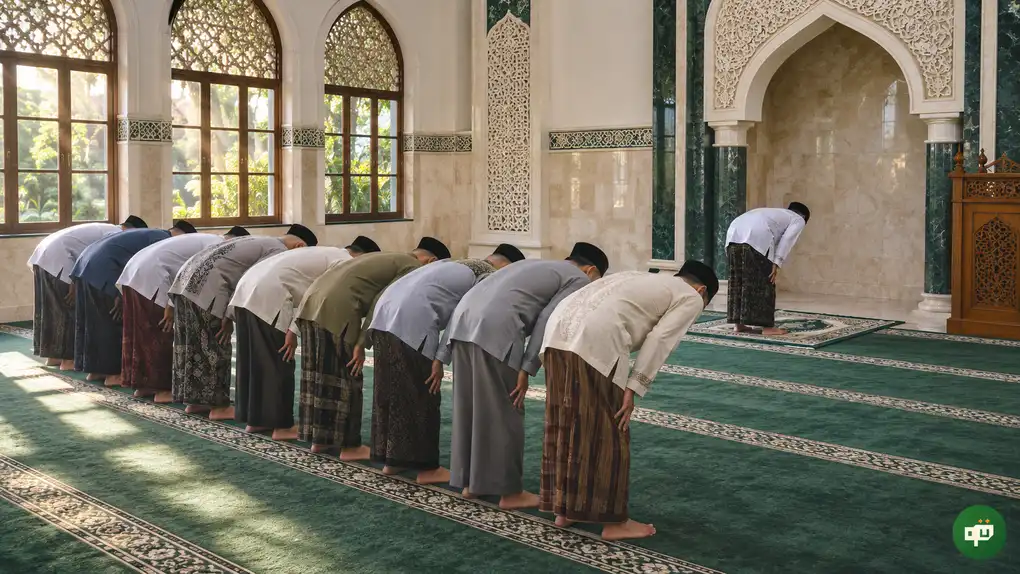
This one applies only to the follower. Getting ahead of the imam by two physical pillars invalidates the prayer:
وَحَادِيَ عَشَرِهَا : التَّقَدُّمُ ، أَيْ : السَّبْقُ ، عَلَى إِمَامِهِ بِرُكْنَيْنِ فِعْلِيَّيْنِ ، سَوَاءٌ كَانَا طَوِيلَيْنِ أَمْ لَا
“The eleventh: getting ahead, that is, preceding his imam by two physical pillars, whether they are long pillars or not.”[29]
Getting ahead by less than two pillars does not invalidate the prayer, but it is forbidden:
أَمَّا تَقَدُّمُهُ بِأَقَلَّ مِنْهُمَا فَلَيْسَ مُبْطِلًا ، وَإِنْ حَرُمَ
“As for getting ahead by less than two, it does not invalidate, even though it is forbidden.”[30]
Shaykh Nawawi al-Jawi also quotes Ibn Hajar al-Haytami’s breakdown:
لَكِنْ قَالَ ابْنُ حَجَرٍ فِي « الْمَنْهَجِ الْقَوِيمِ » : التَّقَدُّمُ بِبَعْضِ رُكْنٍ كَهَذَا الْمِثَالِ مَكْرُوهٌ ، أَمَّا التَّقَدُّمُ بِرُكْنٍ فِعْلِيٍّ تَامٍّ فَحَرَامٌ ، كَأَنْ رَكَعَ وَرَفَعَ وَالْإِمَامُ قَائِمٌ .
“However, Ibn Hajar said in al-Minhaj al-Qawim: getting ahead by part of a pillar, as in this example (bowing before the imam but not yet rising to i’tidal), is disliked. Getting ahead by one complete physical pillar is forbidden, such as bowing and rising while the imam is still standing.”[30]
The same applies to falling behind the imam by two complete physical pillars without an excuse:
وَالتَّخَلُّفُ بِهِمَا ، أَيْ : بِرُكْنَيْنِ فِعْلِيَّيْنِ تَامَّيْنِ وَلَوْ غَيْرَ طَوِيلَيْنِ
“And falling behind by them, that is, by two complete physical pillars, even if they are not long ones.”[30]
For example, the imam has bowed, risen to i’tidal, and gone down to prostrate, while the follower is still standing.[30]
The excuse for getting ahead is only one of two things: forgetfulness or ignorance. The prayer is not invalidated, but that rak’ah does not count:
فَالْعُذْرُ فِي التَّقَدُّمِ هُوَ النِّسْيَانُ أَوِ الْجَهْلُ فَقَطْ ، فَإِنْ تَقَدَّمَ عَلَى إِمَامِهِ بِهِمَا نَاسِيًا أَوْ جَاهِلًا لَمْ تَبْطُلْ صَلَاتُهُ ، لَكِنْ لَا يُعْتَدُّ بِتِلْكَ الرَّكْعَةِ مَا لَمْ يَعُدْ بَعْدَ التَّذَكُّرِ أَوِ التَّعَلُّمِ ، فَيَأْتِي بَعْدَ سَلَامِ إِمَامِهِ بِرَكْعَةٍ .
“The excuse for getting ahead is only forgetfulness or ignorance. If he gets ahead of his imam by two pillars forgetfully or out of ignorance, his prayer is not invalidated. But that rak’ah does not count unless he goes back after remembering or learning. So after his imam’s salam, he adds one rak’ah.”[30]
The excuses for falling behind are more numerous:
وَالْعُذْرُ فِي التَّخَلُّفِ إِحْدَى عَشْرَةَ صُورَةً .
“The excuse for falling behind takes eleven forms.”[30]
According to Kashifat al-Saja, the eleven forms are:[31]
- His recitation is slow by nature, not because of severe waswasah.
- After the imam bows, and before he himself bows, he knows or doubts that he has not recited al-Fatihah.
- He forgot to recite al-Fatihah until the imam bowed.
- A muwafiq follower who is busy with sunnah recitations, such as the opening supplication (du’a al-iftitah) and the ta’awwudh, or who stays silent.
- He waits for the imam’s pause after al-Fatihah, but the imam bows straight away, or the imam recites something so short that the follower cannot finish al-Fatihah.
- He falls asleep while sitting for the first tashahhud and only wakes when the imam is bowing.
- He mistakes the imam’s takbir for standing up as the takbir for the tashahhud, and so he sits.
- He completes the first tashahhud after the imam has stood up.
- He forgets that he is a follower, or forgets that he is in prayer.
- He is unsure whether he is a masbuq or a muwafiq follower.
- He lengthens the second prostration until the imam bows.
In these cases he may fall behind by up to three long pillars (the bowing and the two prostrations).[32] If the imam has already bowed in the next rak’ah while the follower has not finished al-Fatihah, and he does not intend to separate from the imam, his prayer is invalid:
وَإِنْ شَرَعَ الْإِمَامُ فِي الْخَامِسِ ، وَهُوَ الرُّكُوعُ ، قَبْلَ أَنْ يُتِمَّ الْمَأْمُومُ قِرَاءَتَهُ وَلَمْ يَنْوِ الْمُفَارَقَةَ بَطَلَتْ صَلَاتُهُ .
“If the imam has begun the fifth, which is the bowing, before the follower has finished his recitation, and he has not intended to separate, his prayer is invalid.”[33]
Invalidators Related to the Intention
The intention of prayer must stay firm from beginning to end. The last three items in Safinat al-Naja undermine that firmness. The intention itself is explained in our article on the levels of intention in prayer.
12. Intending to Cut Off the Prayer
وَثَانِيَ عَشَرِهَا : بِ نِيَّةِ قَطْعِ الصَّلَاةِ ، كَأَنْ يَنْوِيَ فِي الرَّكْعَةِ الْأُولَى الْخُرُوجَ مِنْهَا فِي الثَّانِيَةِ ، فَيَضُرُّ ذَلِكَ
“The twelfth: intending to cut off the prayer, such as intending in the first rak’ah to leave it in the second. That spoils the prayer.”[33]
The prayer is invalidated at that very moment, even though what he intends will only happen later. This differs from intending to do an invalidator, such as intending to take three steps. That only invalidates the prayer once he starts doing it:
وَخَرَجَ بِ « نِيَّةِ الْقَطْعِ » نِيَّةُ فِعْلِ الْمُبْطِلِ ، فَلَا تَبْطُلُ بِهَا صَلَاتُهُ حَتَّى يَشْرَعَ فِيهِ
“Excluded from intending to cut off is intending to do an invalidator. His prayer is not invalidated by it until he begins it.”[33]
Ibn Hajar al-Haytami notes that this intention to cut off invalidates the prayer in particular, but not fasting, i’tikaf, hajj, or wudu:
والفرق أنها أضيق باباً من الأربعة فكان تأثيرها باختلاف النية أشد
“The difference is that the prayer is narrower in its rules than these four, so a wavering intention affects it more strongly.”[34]
13. Making the Cutting Off of the Prayer Conditional on Something
وَثَالِثَ عَشَرِهَا : بِ تَعْلِيقِ قَطْعِهَا بِشَيْءٍ ، وَإِنْ لَمْ يَحْصُلْ وَلَوْ مُحَالًا عَادِيًّا كَعَدَمِ قَطْعِ السِّكِّينِ لَا عَقْلِيًّا
“The thirteenth: making the cutting off of the prayer conditional on something, even if that thing does not happen, and even if it is impossible by normal experience, such as a knife not cutting, but not something rationally impossible.”[33]
For example, someone says to himself: “If so-and-so comes, I will stop my prayer.” The prayer is invalidated at once, even if so-and-so never comes. Tarshih al-Mustafidin gives climbing up to the sky as an example of something impossible by normal experience.[35]
14. Wavering Between Cutting Off and Continuing
وَرَابِعَ عَشَرِهَا : التَّرَدُّدُ فِي قَطْعِهَا ، وَمِثْلُهُ التَّرَدُّدُ فِي الِاسْتِمْرَارِ فِيهَا ،
“The fourteenth: wavering over cutting it off. Like it is wavering over continuing in it.”[33]
This does not mean a thought that passes through the mind. That kind of waswasah does not count:
وَالْمُرَادُ بِالتَّرَدُّدِ أَنْ يَطْرَأَ شَكٌّ مُنَاقِضٌ لِلْجَزْمِ ، وَلَا عِبْرَةَ بِمَا يَجْرِي فِي الْفِكْرِ ، فَإِنَّ ذَلِكَ مِمَّا يُبْتَلَى بِهِ الْمُوَسْوَسُ
“What is meant by wavering is that a doubt arises which contradicts firm resolve. What merely runs through the mind is of no account, for that is something the person afflicted with waswasah is tested with.”[36]
Tarshih al-Mustafidin says the same:
وَلَا مُؤَاخَذَةَ بِوِسْوَاسٍ قَهْرِيٍّ فِي الصَّلَاةِ كَالْإِيْمَانِ وَغَيْرِهِ.
“There is no accountability for involuntary waswasah in prayer, just as in matters of faith and others.”[37]
Other Invalidators Beyond the Fourteen
Shaykh Nawawi al-Jawi closes the chapter by mentioning additional invalidators:
فَرْعٌ : بَقِيَ مِنْ مُفْسِدَاتِ الصَّلَاةِ أَشْيَاءُ :
“A subsidiary point: a few more things remain that spoil the prayer.”[36]
Doubt About the Intention of Prayer
Doubting whether one made the intention, or whether one intended Zuhr or Asr, invalidates the prayer if it is accompanied by a pillar or lasts a long time:
مِنْهَا : فِعْلُ رُكْنٍ مِنْ أَرْكَانِهَا مَعَ الشَّكِّ فِي النِّيَّةِ
“Among them: doing one of its pillars while in doubt about the intention.”[36]
وَمِنْهَا طُولُ زَمَنٍ مَعَ الشَّكِّ فِي النِّيَّةِ ، وَإِنْ لَمْ يَفْعَلْ رُكْنًا ، وَضَابِطُ طُولِهِ أَنْ يَكُونَ بِقَدْرِ مَا يَسَعُ رُكْنًا وَلَوْ قَصِيرًا
“Among them also: a long time passing while in doubt about the intention, even if he has not done a pillar. The measure of ‘long’ is the time it takes to do a pillar, even a short one.”[36]
If the doubt is only a flash that disappears before a long time passes and before he does a pillar, the prayer remains valid.[36]
Deliberately Leaving Out or Bringing Forward a Pillar
وَمِنْهَا تَرْكُ رُكْنٍ وَلَوْ قَوْلِيًّا عَمْدًا
“Among them: deliberately leaving out a pillar, even a spoken one.”[28]
وَمِنْهَا تَقْدِيْمُ ٱلرُّكْنِ ٱلْفِعْلِيِّ عَمْدًا عَلَى غَيْرِهِ ، كَأَنْ سَجَدَ قَبْلَ رُكُوْعِهِ ، أَوْ رَكَعَ قَبْلَ قِرَاءَتِهِ ٱلْفَاتِحَةَ
“Among them: deliberately putting a physical pillar before another, such as prostrating before bowing, or bowing before reciting al-Fatihah.”[28]
Bringing forward a spoken pillar other than the salam, such as reciting the tashahhud before prostrating, does not invalidate the prayer. The recitation simply does not count and must be repeated in its proper place.[28]
Lengthening a Short Pillar
I’tidal and the sitting between the two prostrations are short pillars. Deliberately lengthening them invalidates the prayer:
وَمِنْهَا تَطْوِيْلُ رُكْنٍ قَصِيْرٍ عَمْدًا ، بِأَنْ يَزِيْدَ فِيْ ٱلِٱعْتِدَالِ عَلَى ٱلدُّعَاءِ ٱلْوَارِدِ فِيْهِ بِقَدْرِ ٱلْفَاتِحَةِ ، وَفِيْ ٱلْجُلُوْسِ بَيْنَ ٱلسَّجْدَتَيْنِ عَلَى ٱلدُّعَاءِ ٱلْوَارِدِ فِيْهِ بِقَدْرِ ٱلتَّشَهُّدِ
“Among them: deliberately lengthening a short pillar, by staying in i’tidal beyond its transmitted supplication for the length of al-Fatihah, and in the sitting between the two prostrations beyond its supplication for the length of the tashahhud.”[38]
Exceptions are the i’tidal of the last rak’ah, such as for qunut nazilah, and the sitting between the two prostrations in the tasbih prayer.[38] Ibn Hajar al-Haytami adds that lengthening them forgetfully does not invalidate the prayer.[39] The details of these two pillars are in our article on i’tidal and tuma’ninah.
Returning to the First Tashahhud After Standing Fully Upright
An imam or someone praying alone who forgets the first tashahhud and has already stood fully upright may not go back to sit. If he goes back deliberately, knowing it is forbidden, his prayer is invalid:
فتعمد القعود حينئذ مع علم تحريمه مبطل للصلاة سواء المنفرد والإمام
“Deliberately sitting (back down) at that point, while knowing it is forbidden, invalidates the prayer, whether for someone praying alone or for the imam.”[20]
If he goes back out of forgetfulness or ignorance, the prayer is not invalidated, and he must stand up at once when he remembers.[40] The rules for the follower in this situation are discussed under sujud sahwi for the imam, follower, and masbuq.
Regarding a Particular Pillar as Sunnah
قوله: ( و ) تبطل ( بظن ) أو اعتقاد ( فرض ) بعينه من فروضها ( نفلاً ) لتلاعبه
“The prayer is invalidated by thinking or believing that a particular one of its obligatory parts is sunnah, because he is trifling with it.”[39]
Ordinary people are given a concession:
لَا إِنِ اعْتَقَدَ الْعَامِّيُّ نَفْلًا مِنْ أَفْعَالِهَا فَرْضًا، أَوْ عَلِمَ أَنَّ فِيْهَا فَرْضًا وَنَفْلًا وَلَمْ يُمَيِّزْ بَيْنَهُمَا وَلَا قَصَدَ بِفَرْضٍ مُعَيَّنٍ النَّفْلِيَّةَ، وَلَا إِنِ اعْتَقَدَ أَنَّ الْكُلَّ فُرُوْضٌ.
“It is not invalidated if an ordinary person believes a sunnah act of the prayer to be obligatory, or knows that it contains obligatory and sunnah parts but cannot tell them apart and does not intend a particular obligatory part as sunnah, or if he believes all of it is obligatory.”[4]
Other Invalidators Mentioned in the Book
Kashifat al-Saja also lists the following additional invalidators:[41]
- Apostasy, even if only in form, as can happen with a child.
- Following an imam who cannot validly be followed, because he is a disbeliever, is in a state of hadath, or for another reason.
- Finding a garment that is far away while the awrah is exposed, so that fetching it takes many movements or the exposure lasts a long time.
- Part of the foot that should be covered by the khuff becoming visible.
- The period for wiping over the khuff running out during the prayer.
- Not facing the qiblah in a prayer that requires it, outside the prayer of extreme fear and voluntary prayer while travelling.
Sudden Events That Do Not Invalidate
Ibn Hajar al-Haytami formulates a rule: something that happens suddenly without any negligence on the part of the person praying, and is removed at once, does not invalidate the prayer. Examples are a ship turning away from the qiblah and him turning back at once, a bird dropping on his clothes that he shakes off at once, or the wind uncovering his awrah and him covering it at once:
أو كشفته ريح فأعاده كذلك فيغتفر هذا العارض لعذره
“Or the wind uncovers his awrah and he puts it back in the same way (at once). This sudden event is excused because he has an excuse.”[42]
It is different when there is negligence on his part:
إما مع تقصير كأن تسبب في وقوع خبث عليه أو كشف عورة نفسه فتبطل مطلقاً كما لو تخرق خفه أو انقضت مدة مسحه
“But if there is negligence, such as causing impurity to fall on himself or uncovering his own awrah, the prayer is invalidated in every case, just as when his khuff tears or the period for wiping it runs out.”[42]
What if someone tells you there is impurity on your clothes, or that you said something? The ruling differs:
فَرْعٌ: لَوْ أَخْبَرَهُ عَدْلُ رِوَايَةٍ بِنَحْوِ نَجَسٍ أَوْ كَشْفِ عَوْرَةٍ مُبْطِلٍ؛ لَزِمَهُ قَبُوْلُهُ، أَوْ بِنَحْوِ كَلَامٍ مُبْطِلٍ؛ فَلَا.
“A subsidiary point: if a person who is trustworthy in narration informs him of impurity or an exposure of the awrah that invalidates, he must accept it. If he informs him of invalidating speech, he does not have to.”[43]
The reason is that one’s own actions are not referred to someone else.[43]
FAQ About the Things That Invalidate the Prayer
Does coughing during prayer invalidate it?
A cough that cannot be held back and is little does not invalidate the prayer. A deliberate cough that produces two letters does. Someone whose cough is constant with no break is excused and does not have to make up the prayer.[8]
How many movements invalidate the prayer?
Three large consecutive movements invalidate the prayer, even if done forgetfully.
Two movements do not invalidate it, unless done for play.
Moving the fingers, eyelids, lips, and tongue does not invalidate it even if done a lot, but it is disliked.[44]
Does laughing invalidate the prayer?
Laughing that deliberately produces two letters invalidates the prayer. If it cannot be held back and is little, it is excused. Smiling does not invalidate the prayer at all.[8]
Is the prayer invalid if I speak because I forgot I was praying?
Not if it is little. Kashifat al-Saja sets the limit at six words or fewer. If it is more, the prayer is invalid.[9]
Can I say “yarhamuk Allah” during prayer?
No, because it is an address to a created being and it invalidates the prayer. Saying “yarhamuh Allah” does not invalidate it.[15]
Does swallowing food remains from between the teeth invalidate the prayer?
No, if he cannot separate them and spit them out. If he swallows them deliberately, the prayer is invalid.[45]
Does waswasah in prayer invalidate it?
No. What invalidates the prayer is real wavering over cutting it off or continuing it, not a whisper that merely passes through the mind.[46]
Footnotes
1 : Nawawi al-Jawi, Kashifat al-Saja, Vol. 1, p. 304. ↩
2 : Ibn Hajar al-Haytami, Fath al-Jawad, Vol. 1, p. 214. ↩
3 : Nawawi al-Jawi, Kashifat al-Saja, Vol. 1, p. 305. ↩
4 : Alawi al-Saqqaf, Tarshih al-Mustafidin, Vol. 1, p. 366. ↩
5 : Ibn Hajar al-Haytami, Fath al-Jawad, Vol. 1, p. 215. ↩
6 : Nawawi al-Jawi, Kashifat al-Saja, Vol. 1, p. 306. ↩
7 : Ibn Hajar al-Haytami, Fath al-Jawad, Vol. 1, p. 222. ↩
8 : Nawawi al-Jawi, Kashifat al-Saja, Vol. 1, p. 307. ↩
9 : Ibid., p. 308. ↩
10 : Alawi al-Saqqaf, Tarshih al-Mustafidin, Vol. 1, p. 358. ↩
11 : Ibid., p. 359. ↩
12 : Ibid., p. 363. ↩
13 : Ibid., p. 362. ↩
14 : Ibn Hajar al-Haytami, Fath al-Jawad, Vol. 1, p. 225. ↩
15 : Nawawi al-Jawi, Kashifat al-Saja, Vol. 1, p. 309. ↩
16 : Alawi al-Saqqaf, Tarshih al-Mustafidin, Vol. 1, p. 361. ↩
17 : Ibid., p. 357. ↩
18 : Nawawi al-Jawi, Kashifat al-Saja, Vol. 1, p. 310. ↩
19 : Ibn Hajar al-Haytami, Fath al-Jawad, Vol. 1, p. 226. ↩
20 : Ibid., p. 229. ↩
21 : Alawi al-Saqqaf, Tarshih al-Mustafidin, Vol. 1, p. 364. ↩
22 : Nawawi al-Jawi, Kashifat al-Saja, Vol. 1, p. 311. ↩
23 : Alawi al-Saqqaf, Tarshih al-Mustafidin, Vol. 1, p. 365. ↩
24 : Nawawi al-Jawi, Kashifat al-Saja, Vol. 1, p. 312. ↩
25 : Alawi al-Saqqaf, Tarshih al-Mustafidin, Vol. 1, p. 356. ↩
26 : Nawawi al-Jawi, Kashifat al-Saja, Vol. 1, p. 314. ↩
27 : Ibid., p. 315. ↩
28 : Ibid., p. 323. ↩
29 : Ibid., p. 316. ↩
30 : Ibid., p. 317. ↩
31 : Ibid., p. 317–319. ↩
32 : Ibid., p. 319. ↩
33 : Ibid., p. 320. ↩
34 : Ibn Hajar al-Haytami, Fath al-Jawad, Vol. 1, p. 232. ↩
35 : Alawi al-Saqqaf, Tarshih al-Mustafidin, Vol. 1, p. 353. ↩
36 : Nawawi al-Jawi, Kashifat al-Saja, Vol. 1, p. 321. ↩
37 : Alawi al-Saqqaf, Tarshih al-Mustafidin, Vol. 1, p. 354. ↩
38 : Nawawi al-Jawi, Kashifat al-Saja, Vol. 1, p. 324. ↩
39 : Ibn Hajar al-Haytami, Fath al-Jawad, Vol. 1, p. 231. ↩
40 : Ibid., p. 230. ↩
41 : Nawawi al-Jawi, Kashifat al-Saja, Vol. 1, p. 323–325. ↩
42 : Ibn Hajar al-Haytami, Fath al-Jawad, Vol. 1, p. 233. ↩
43 : Alawi al-Saqqaf, Tarshih al-Mustafidin, Vol. 1, p. 367. ↩
44 : Nawawi al-Jawi, Kashifat al-Saja, Vol. 1, p. 311; Alawi al-Saqqaf, Tarshih al-Mustafidin, Vol. 1, p. 356. ↩
45 : Alawi al-Saqqaf, Tarshih al-Mustafidin, Vol. 1, p. 364–365. ↩
46 : Nawawi al-Jawi, Kashifat al-Saja, Vol. 1, p. 321; Alawi al-Saqqaf, Tarshih al-Mustafidin, Vol. 1, p. 354. ↩
- Ibn Ḥajar al-Haytamī, Shihāb al-Dīn Abū al-ʿAbbās Aḥmad ibn Muḥammad ibn ʿAlī. Fatḥ al-Jawwād bi-Sharḥ al-Irshād ʿalā Matn al-Irshād. Edited by ʿAbd al-Laṭīf Ḥasan ʿAbd al-Raḥmān. Beirut: Dār al-Kutub al-ʿIlmiyyah, 1st ed., 1426 AH/2005 CE. 3 vols.
- Al-Bantanī, Muḥammad Nawawī ibn ʿUmar al-Jāwī al-Shāfiʿī. Kāshifat al-Sajā Sharḥ Safīnat al-Najā fīmā Yajibu ʿalā al-ʿAbd li-Mawlāhu ʿalā Madhhab al-Imām al-Shāfiʿī. Edited by Bassām ʿAbd al-Wahhāb al-Jābī. Beirut: Dār al-Jaffān wa al-Jābī and Dār Ibn Ḥazm, 1st ed., 1432 AH/2011 CE.
- Al-Saqqāf, ʿAlawī ibn Aḥmad. Tarshīḥ al-Mustafīdīn ʿalā Fatḥ al-Muʿīn bi-Sharḥ Qurrat al-ʿAyn bi-Muhimmāt al-Dīn. Edited by ʿAmmār Bassām Saḥātī. Damascus: Dār al-Baṣāʾir al-Dimashqiyyah and Dār al-Miʿrāj, n.d.


