Salah or Fasting: Which is the Best Physical Worship According to Fiqh?

Illustration comparing prayer and fasting as acts of worship in Islamic jurisprudence, symbolized by a balance scale with the Quran and dates.

Have you ever wondered, when you have free time, whether it is better to perform more voluntary prayers or observe more voluntary fasting? When seeking closeness to Allah, many believers wonder what constitutes the best physical worship. This question frequently arises in the minds of those who wish to elevate their spiritual rank but feel … Read more

Sexual Intercourse During Ramadan: Fiqh Ruling & Kaffarah (Asna al-Matalib)

An analog wall clock shows the time for **Fajr** in front of a window with soft bluish dawn light, with an open fiqh book and prayer beads resting on a wooden table.

In the Islamic Jurisprudence (Fiqh) and Spirituality, fasting (al-Ṣawm) is not merely abstaining from food and drink. Its essence is al-Imsāk, a strict mechanism of self-control from everything that invalidates it, including biological desires. Among the many things that invalidate a fast, the legal ruling regarding sexual intercourse while fasting or having sexual relations during … Read more

Asr Prayer Time Guide: Shafi’i Fiqh Explanation (Asna al-Matalib)

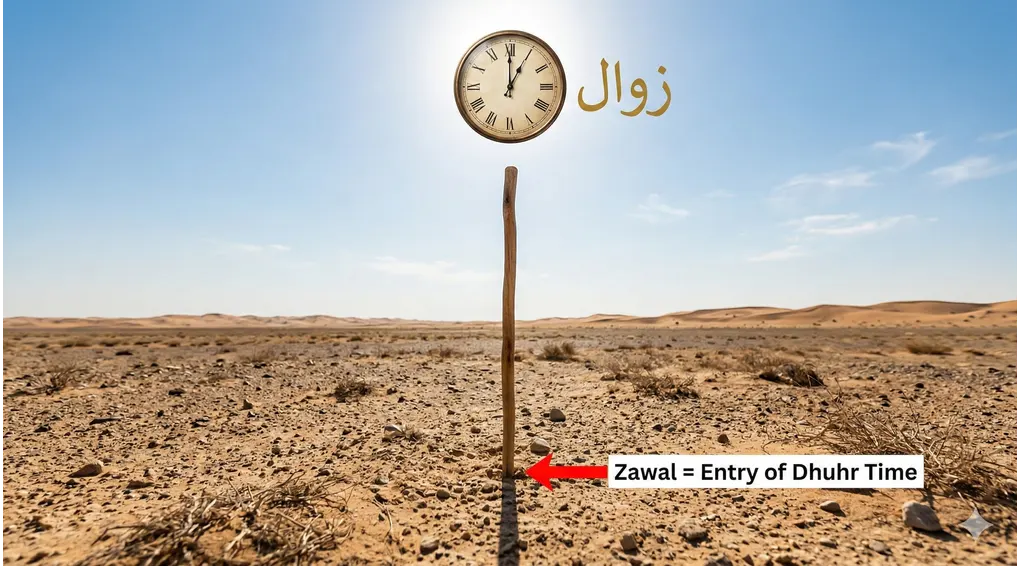
A Muslim man in traditional attire is performing the ṣalāh in the courtyard of an ancient mosque at sunset, with a shadow-indicating staff, an ancient book inscribed with " أسنى المطالب " (Asna al-Matalib), and a sundial before him.

For Muslims, knowing the time limits of prayer is not merely a matter of looking at a digital clock or hearing the Adhān from an application. Understanding the signs of nature, such as the movement of the sun and the length of shadows, is a fundamental and highly valuable science. Specifically within the Shafi’i School … Read more

The End of Maghrib Time: Asna al-Matalib’s Explanation on Shafaq Ahmar

Illustration showing the final time limit of Maghrib prayer based on the disappearance of the red twilight (syafaq ahmar).

Have you ever felt anxious while performing the Maghrib prayer, fearing that the time was running out? A common assumption circulates within society that the Maghrib time is incredibly narrow—only sufficient for the Adhan and Iqamah, ablution (wudu), performing five rak’ahs of prayer, and eating a quick bite. Once completed, the time is supposedly over. … Read more

The Fiqh of Salam: Rulings on Saying, Replying, and the Rules of Engagement on WhatsApp

A smiling Muslim woman holding a smartphone displaying a message notification reading **“Assalamualaikum.”** This image illustrates a discussion on the Islamic ruling of responding to greetings (*salam*) on WhatsApp and social media platforms.

Have you ever felt conflicted when a WhatsApp notification chimes, displaying a message that reads “Assalamualaikum”? A quiet voice in your head might wonder whether you should reply with typed text, a voice note, or if simply answering silently in your heart is sufficient. Or perhaps you have found yourself in the perplexing situation where … Read more

Fajr Prayer Time: Understanding Fajar Shadiq vs Fajar Kadzib in Shafi’i Fiqh

A Muslim woman performing the **Fajr prayer** in her bedroom at dawn, with an alarm clock on the table showing 5:00 a.m., illustrating the time limit for the prayer.

Many Muslims are still confused about determining the exact time for Fajr prayer. In fact, knowing with absolute certainty that the prayer time has commenced is one of the essential valid conditions (shurut as-sihhah) that must be fulfilled before an individual establishes any obligatory prayer. For those who wish to study the detailed requirements of … Read more

The Etiquette of the Sick and the Obligation of Repentance Before Death According to Asna al-Matalib

Hands of a patient holding prayer beads (tasbih), praying for forgiveness.

Illness frequently arrives without an invitation. For many individuals, sickness is merely a physical disruption that severely hinders daily activities. However, within the profound theological framework of Islam, illness is a “love letter” from Allah, simultaneously serving as a critical early warning for us to prepare for our ultimate destination. When the physical body begins … Read more

The Signs of Death and How to Perform Talqin for the Dying According to Shafi’i Fiqh

A close-up photo of a child gently holding the hand of a parent who is in the final moments of life on a bed, accompanied by prayer beads and the Qur’an, depicting a calm atmosphere of spiritual companionship.

Witnessing a beloved family member lying weak on the threshold of death is an excruciatingly heavy moment. The heart feels suffocated, the mind becomes disoriented, and panic frequently ensues. We anxiously wonder, “Is this the final moment?” and “What exactly must I do to assist them?” In Islamic terminology, this highly critical transitional phase is … Read more

The Complete Guide to Islamic Funeral Rites (Tajhiz al-Janazah) According to Shafi’i Fiqh

Complete Guide to Caring for the Deceased: A wooden funeral bier covered with a green cloth embroidered with golden Arabic calligraphy reading “Laa ilaha illallah Muhammad Rasulullah,” placed in a calm room with soft natural sunlight, symbolizing the sacred process of tajhiz al-janazah (preparing the deceased for burial).

Death is an absolute certainty that will inevitably approach every living creature. In Islam, the profound respect afforded to a human being does not terminate the moment the soul departs from the physical body. The body of a Muslim possesses an inherent sanctity and honor (hurmah) that must be meticulously preserved by the living. This … Read more

4 Crucial Things to Do Immediately After a Person Dies (First Aid for the Deceased)

A quiet atmosphere in a bedroom, with the deceased already covered in a long batik cloth from head to toe, illustrating the initial preparations for caring for the body before it is washed.

The profound moment after the final breath ceases is simultaneously the most silent and the most disorienting time for a family. Tears may shatter the silence, yet beneath that intense grief, a monumental responsibility awaits. Frequently, out of sheer panic, families simply abandon the deceased’s body until the professional funeral preparers arrive. However, there is … Read more