Shafi’i Fiqh Analysis: The Rule of Substances (Al-‘Ain) Entering Body Cavities While Fasting

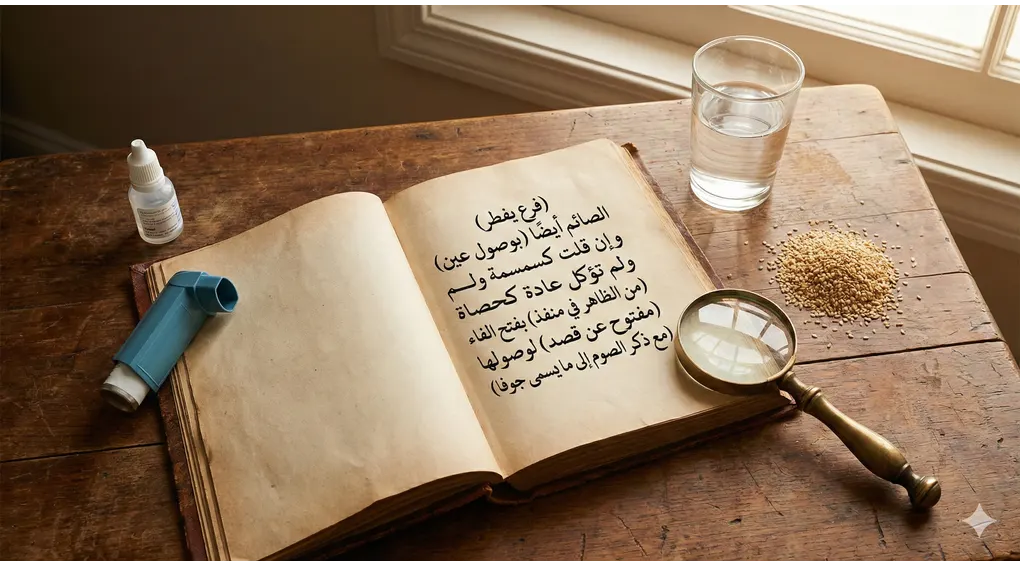
A scholarly flat lay photograph featuring an open classical Arabic Fiqh book relating to fasting rules, alongside modern medical items like eye drops and an inhaler, a glass of water, seeds, and a magnifying glass on a wooden table.

The act of fasting (al-ṣawm) is a tangible manifestation of al-imsāk, which constitutes total restraint from all things that invalidate the fast from the break of dawn until sunset. This noble act of worship must, of course, be preceded by a sincere and correct intention for Ramadan fasting. In the scholarly tradition of the Shafi’i … Read more

Rules, Conditions, and Method of Ghusl in Shafi’i Fiqh (Kaifiyah al-Ghusl)

An open classical fiqh manuscript showing Arabic text on water quantity for ghusl, next to a copper pitcher, miswak, and perfume bottle on a wooden table.An open classical fiqh manuscript showing Arabic text on water quantity for ghusl, next to a copper pitcher, miswak, and perfume bottle on a wooden table.

Purity is the foundational pillar in the establishment of worship within Islamic law. Understanding the profound meaning of thaharah is not merely a physical routine, but rather a theological gateway for a servant to commune with the Creator. When a person is in a state of major ritual impurity (hadath akbar), the binding obligation is … Read more

The Mandatory Pillars of Ghusl: 2 Obligatory Conditions in Shafi’i Fiqh

An open antique Arabic manuscript discussing Ghusl pillars next to a traditional copper pitcher and a bowl of clear water on a wooden table.

Within Islamic teachings, elevating oneself from a state of major ritual impurity (hadath akbar) through the process of Thaharah (purification) is an absolute necessity before a servant stands before Allah in prayer. This practice of purification, known academically as Ghusl or the major ritual bath, possesses a highly precise jurisprudential framework. Frequently, Muslims find themselves … Read more

The Difference Between Mani, Madhi, and Wadi: A Guide to Islamic Purity in Shafi’i Fiqh

difference between mani madhi and wadi: A traditional copper jug pouring clear, fresh water into a white marble basin, accompanied by clean white towels, olive soap, and a miswak stick on a wooden surface, symbolizing preparation for Islamic ritual purification.

Maintaining physical and spiritual purity from ritual impurity (hadath) is a fundamental foundation for every Muslim before performing acts of worship. Often, individuals experience confusion when noticing the discharge of fluids from their private parts. The common question arises: does every discharged fluid necessitate a major ritual bath (ghusl)? To resolve this issue, we must … Read more

5 Causes of Ghusl in Shafi’i Fiqh: A Complete Guide

Clear water flowing from brass taps into a large marble basin inside a steamy traditional Islamic hammam, illuminated by natural sunlight through geometric window screens.

Physical and spiritual purity is an absolute prerequisite for performing prescribed (mahdhah) acts of worship in Islam. Within the discourse of Islamic jurisprudence, understanding the fundamental concept of purification (thaharah) from major ritual impurities occupies a central position. This article specifically examines the causes of ghusl (obligatory bath), also known as Mujibat al-Ghusl, based on … Read more

Complete Guide to Ghusl Janabah: Intention, Method, and Causes in Shafi’i Fiqh

A person's hands holding a ceramic bowl filled with clear water and floating white flower petals, under a gentle stream from a faucet and bright window light.

Spiritual and physical purity stands as a fundamental pillar in the performance of Islamic worship. Understanding the profound meaning of thaharah (purification) is the essential first step for every Muslim. One primary method of purifying oneself from major ritual impurity (hadats akbar) is through major ablution, widely known as Ghusl Janabah or mandi wajib. This … Read more

The Ruling and Number of Rak’ahs in Tarawih Prayer: A Shafi’i Fiqh Perspective

Ribuan jamaah pria berbaris rapi melaksanakan shalat Tarawih berjamaah di dalam interior masjid agung yang megah dengan cahaya keemasan pada malam Ramadhan.

The holy month of Ramadan consistently brings forth magnificent night worship. One of the most prominent acts is Qiyam al-Lail, which is widely recognized as the Tarawih prayer. In Islamic jurisprudence, particularly within the Shafi’i school of thought, the rules governing this worship are comprehensively detailed. The primary goal is to preserve the quality of … Read more

The Complete Guide to Sunnah Prayers Shafi’i Fiqh: Procedures, Virtues, and Evidence

A Muslim in deep prostration during sunnah prayer in a grand mosque at dawn, symbolizing the essence of voluntary worship.

Prayer (salah) holds the highest and most noble position among physical acts of worship in Islamic law, second only to the declaration of faith (Shahadah). For Muslims seeking to perfect their daily worship, understanding the Sunnah prayers Shafi’i fiqh is profoundly essential. In the extensive literature of Shafi’i jurisprudence, specifically as expounded by Shaykh al-Islam … Read more

The Complete Guide to Salatul Hajah (Prayer of Need): Intention, Dua & Steps

A lone Muslim kneeling in supplication on a prayer mat inside a mosque courtyard during the last third of the night, representing Salatul Hajah.

Every human being undoubtedly experiences desires and faces challenges. Sometimes, physical effort alone feels insufficient without knocking on the doors of heaven. This is where the profound significance of Salatul Hajah (The Prayer of Need) comes into play. For those seeking a way out of a difficult situation or yearning for a specific blessing, this … Read more

Rules of I’tikaf Nadhr & Consecutive Worship (Shafi’i Fiqh)

A Muslim man sitting devoutly in a sunlit mosque, symbolizing the solemn intention of making an i'tikaf nadhr (vow).

The worship of i’tikaf is originally established as a highly recommended sunnah (sunnah muakkadah). However, a servant of Allah may oblige this act upon themselves through a verbal commitment, known in Islamic jurisprudence as nadhr (a vow). Once an individual makes a vow to perform i’tikaf, its legal status shifts from sunnah to obligatory (wajib). … Read more