Pray First or Eat First? A Complete Explanation from the Shafi’i School

Jam dinding waktu Maghrib di samping piring makan di meja kayu — ilustrasi pertanyaan shalat dulu atau makan dulu

The Maghrib adhan has just been called. On the dining table, a warm meal is already served. Your stomach is hungry. Almost everyone has experienced a situation like this. Then arises a seemingly simple question that often causes confusion: should you pray first or eat first? This question is not about wanting to belittle the … Read more

The Complete Guide to Aqiqah in the Shafi’i School: Rulings, Animals, Timing & Procedures

Discover the complete guide to performing aqiqah in Islam according to the Shafi'i school, an important sunnah for parents welcoming a newborn.

The birth of a child is an unparalleled blessing. Islam welcomes this moment not just with ordinary joy, but with a series of meaningful acts of worship that encompass gratitude, prayer, and love for others. That is aqiqah—a sunnah practiced since the time of the Prophet ﷺ, full of virtues, and holding deep wisdom. Unfortunately, … Read more

The Complete Guide to Qurban According to the Shafi’i School: Rulings, Conditions, Timings & Procedures

Arabic calligraphy featuring the word Al-Udhiyah (qurban) in Thuluth style with an Islamic ornament background in green and gold colors.

Eid al-Adha is not merely a festival. Behind the echoing takbir and the steaming aroma of meat lies a magnificent act of worship that requires careful fiqh understanding: qurban (udhiyah). This worship is not just about slaughtering an animal — it is a form of servitude that possesses highly specific conditions, timings, and procedures within … Read more

Why is Salat at the Beginning of Its Time More Virtuous? Proofs, Methods, and Exceptions

Illustration of a modestly dressed Muslim woman covering her awrah, preparing to perform the early prayer according to Shafi'i fiqh.

Is there a difference in reward between performing Salat at the beginning of its time compared to doing it in the middle or end of the time? The scholars of the Shafi’i madhhab have answered this question thoroughly in the book Asna al-Mathalib by Shaykh Zakariyya al-Anshari (Vol. 1, Pages 117–119). This article explains the … Read more

Complete Guide to Obligatory Prayer (Salah) in the Shafi’i Madhhab: Rulings, Times, and Validity

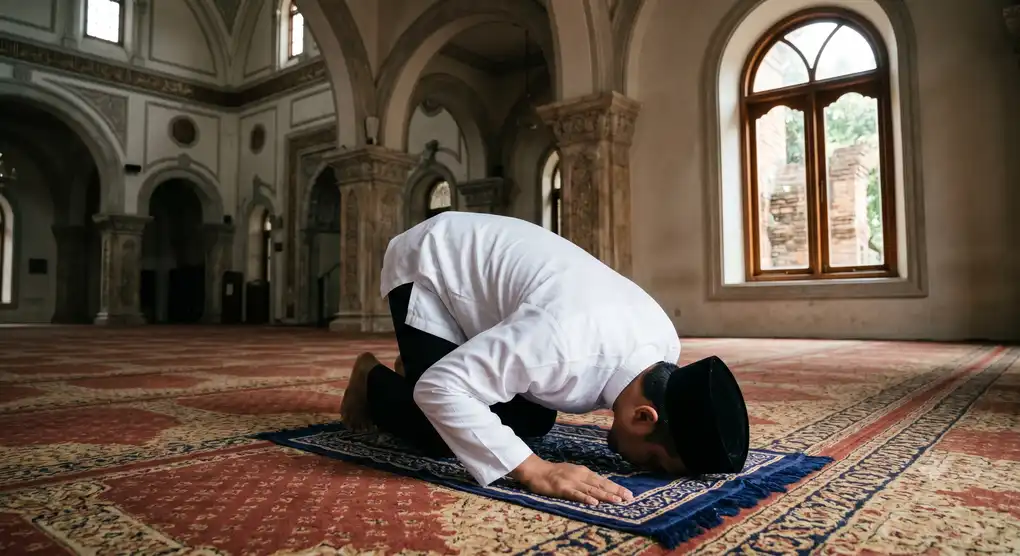
Illustration of a Muslim man establishing obligatory prayer devoutly inside a mosque environment, representing the practical guide to daily worship according to Islamic law.

Performing acts of worship in Islam must be based on correct knowledge. Understanding the basics of prayer is closely linked to seeking goodness from the Creator. Prayer (Salah) is the most magnificent pillar of Islam after the testimony of faith (Shahada). Every Muslim must understand the wisdom of obligatory prayers and how to perform them … Read more

Valid Ghusl Intention: Essential Conditions for an Accepted Ritual Bath

Classical fiqh book and pure water symbolizing the conditions for a valid ghusl intention.

You may have bathed, cleansed your entire body, and used abundant water, but is your purification legally valid according to Islamic law? There is a profound jurisprudential reality that many overlook: an individual can spend hours scrubbing their body until it is impeccably clean, yet their bath remains invalid if the primary foundational condition is … Read more

The Prophetic Sunnahs of Ghusl: A Complete Guide to the Correct Procedure

Aesthetic composition of a terracotta water vessel, towels, and misk bottle on a wooden table, prepared for purification.

Worship in Islam is not merely the discharge of obligations through mechanical movements, but a spiritual path to draw closer to the Creator. In the chapter of Thaharah (ritual purification) from major ritual impurity, the major bath (Ghusl) holds a highly esteemed position. When examining the fundamental meaning of thaharah according to classical scholars, you … Read more

When is Replying Not Obligatory? Exceptions to Answering Salam in Shafi’i Fiqh

exceptions to answering salam: A Muslimah wearing a neat hijab sitting in tahiyat reverently on a prayer mat, while a silhouette of someone greets salam from the doorway.

Imagine being deeply engrossed in your ritual prayer (salah), profoundly focused on every sacred verse, when someone suddenly enters the room and loudly offers a greeting of peace. Must you break your prayer to reply? In the magnificent framework of Islamic law, replying to a greeting is fundamentally an individual obligation (fard al-ayn) when addressed … Read more

Ghusl Intention Timing: The Correct Time to Make Niyyah in Shafi’i Fiqh

Illustration of a wooden table with Islamic fiqh books and a copper jug pouring pure water, symbolizing the ghusl intention.

The concept of purification (thaharah) in Islam is not merely an activity to cleanse the physical body from dust and dirt. Rather, it is a spiritual act of worship that leads a servant to commune with Allah Azza wa Jalla. One of the primary instruments distinguishing a customary daily bath from a ritual purification is … Read more

Zakat Obligation Evidences from the Quran and Hadith in Shafi’i Fiqh

Illustration of dinar and dirham coins on a carved wooden table symbolizing the obligation of wealth zakat in Islam.

The establishment of legal rulings in Islamic Shariah always rests on a solid foundation of arguments (ḥujjah). There is not a single obligatory act of worship for Muslims that does not possess clear textual roots from the primary sources of the religion. For those studying the core tenets of the faith, exploring the zakat obligation … Read more