The Meaning of Thaharah: Significance, Rulings, and Its Importance in Islam

A modestly dressed Muslim woman in a proper hijab sitting reverently, holding a Quran in a bright mosque.

Thaharah is a fundamental concept in Islamic teachings that is inextricably linked to cleanliness and purity. For Muslims, understanding the meaning of thaharah goes far beyond merely maintaining physical cleanliness; it comprehensively encompasses the purity of the heart and soul. Before delving deeper, it is essential to realize that this teaching is an inseparable part … Read more

The Procedures of Tasbīḥ and Awwābīn Prayers: Evidence, Scholarly Views, and Practice in Shāfiʿī Fiqh

An elegant still-life of an open classical Arabic fiqh manuscript on a prayer mat with coiled wooden beads, next to a mosque window at twilight, representing Shalat Tasbih and Awwabin.

The diverse array of supererogatory (nāfilah) acts of worship in Islamic law serves as the primary gateway for a spiritual seeker (sālik) to ascend to the station (maqām) of proximity to Allah the Exalted. These acts of worship possess a dual function: as a patch for the deficiencies in obligatory acts of worship and as … Read more

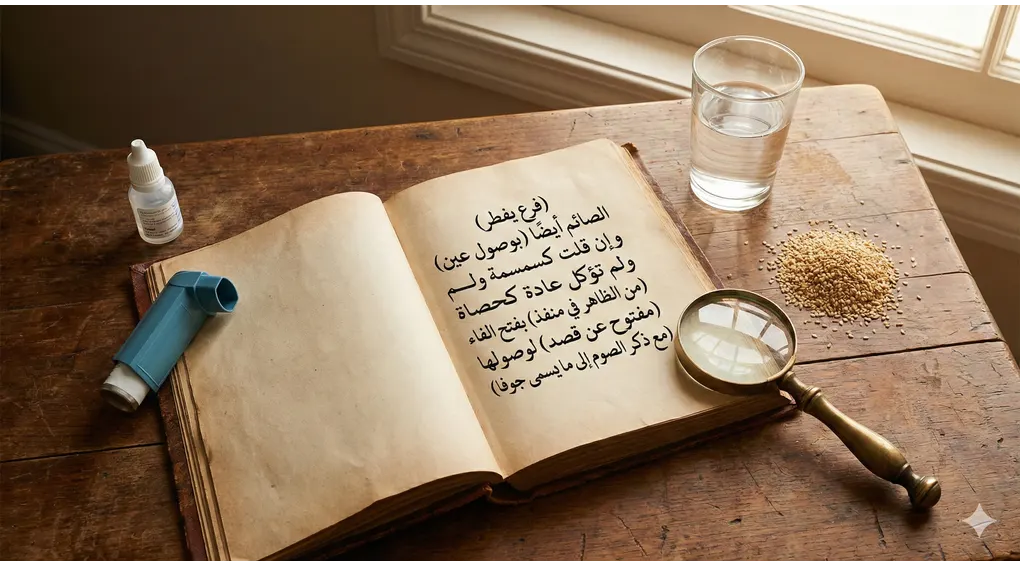
Shafi’i Fiqh Analysis: The Rule of Substances (Al-‘Ain) Entering Body Cavities While Fasting

A scholarly flat lay photograph featuring an open classical Arabic Fiqh book relating to fasting rules, alongside modern medical items like eye drops and an inhaler, a glass of water, seeds, and a magnifying glass on a wooden table.

The act of fasting (al-ṣawm) is a tangible manifestation of al-imsāk, which constitutes total restraint from all things that invalidate the fast from the break of dawn until sunset. This noble act of worship must, of course, be preceded by a sincere and correct intention for Ramadan fasting. In the scholarly tradition of the Shafi’i … Read more

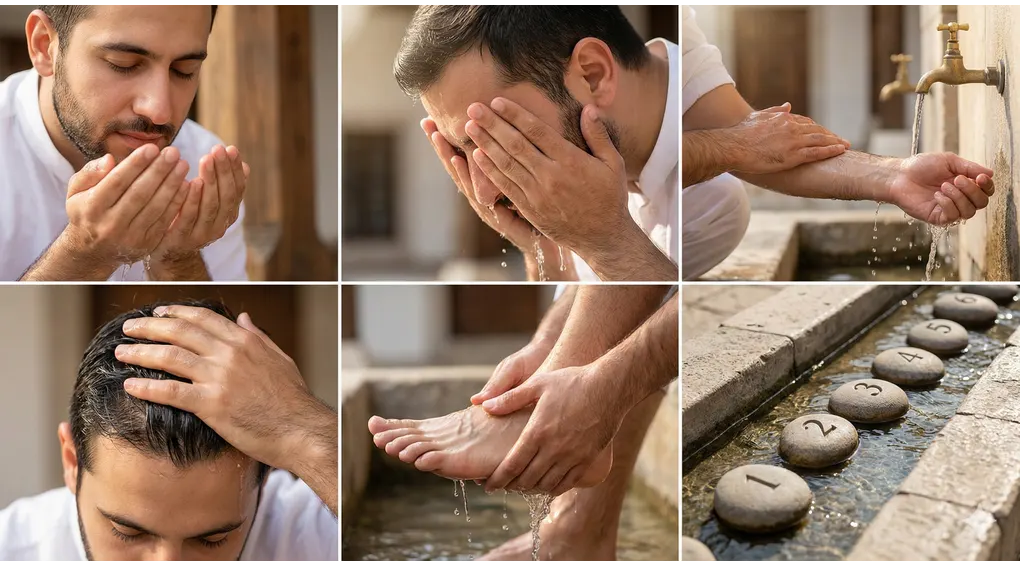
Farḍ al-Wuḍūʾ: The 6 Essential Pillars for Valid Worship We Must Understand

A six-panel photo collage illustrating the 6 fardu (obligatory pillars) of wudu in sequence: niyyah (top left), washing the face, washing arms, wiping the head, washing feet, and an illustration of tartib/order (bottom right).

Wuḍūʾ (ablution) is the indispensable key to the validity of various fundamental acts of worship in Islam, such as prayer (ṣalāh), circumambulation of the Kaaba (ṭawāf), and touching the muṣḥaf of the Qur’an. Without a correctly performed wuḍūʾ, these acts of worship will not be accepted by Allah. A question frequently arises: how many obligatory … Read more

The Meaning of Intention: The Soul of Every Action in Islam

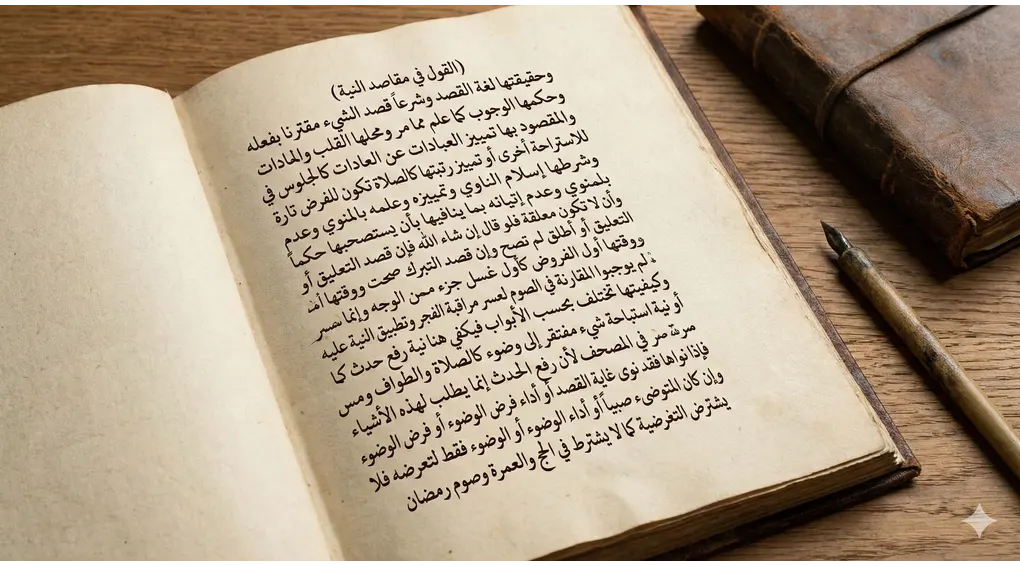
An open antique Islamic fiqh manuscript on a wooden table, displaying Arabic text explaining the linguistic and legal definitions of intention (niyyah).

In every step of life, whether visible to the world or hidden deep within the heart, there is one crucial element that determines its true weight and direction: intention (niyyah). The phrase “everything depends on intention” is not just a passing proverb; rather, it is a fundamental jurisprudential principle that underlines the essence of every … Read more

Rules, Conditions, and Method of Ghusl in Shafi’i Fiqh (Kaifiyah al-Ghusl)

An open classical fiqh manuscript showing Arabic text on water quantity for ghusl, next to a copper pitcher, miswak, and perfume bottle on a wooden table.An open classical fiqh manuscript showing Arabic text on water quantity for ghusl, next to a copper pitcher, miswak, and perfume bottle on a wooden table.

Purity is the foundational pillar in the establishment of worship within Islamic law. Understanding the profound meaning of thaharah is not merely a physical routine, but rather a theological gateway for a servant to commune with the Creator. When a person is in a state of major ritual impurity (hadath akbar), the binding obligation is … Read more

The Mandatory Pillars of Ghusl: 2 Obligatory Conditions in Shafi’i Fiqh

An open antique Arabic manuscript discussing Ghusl pillars next to a traditional copper pitcher and a bowl of clear water on a wooden table.

Within Islamic teachings, elevating oneself from a state of major ritual impurity (hadath akbar) through the process of Thaharah (purification) is an absolute necessity before a servant stands before Allah in prayer. This practice of purification, known academically as Ghusl or the major ritual bath, possesses a highly precise jurisprudential framework. Frequently, Muslims find themselves … Read more

A Complete Guide to Takbiratul Ihram in Shafi’i Fiqh: Meaning, Pronunciation, and 17 Essential Conditions

Silhouette of a Muslim man standing upright raising both hands performing takbiratul ihram inside a mosque illuminated by dramatic morning sunlight.

In the realm of Islamic worship, the initial step often determines the validity of the entire act. As previously explored in the article defining what is prayer (salah), the ritual prayer commences with the takbiratul ihram and concludes with the salam. If this foundational opening is flawed, the entire prayer sequence is considered null and … Read more

The Ruling and Number of Rak’ahs in Tarawih Prayer: A Shafi’i Fiqh Perspective

Ribuan jamaah pria berbaris rapi melaksanakan shalat Tarawih berjamaah di dalam interior masjid agung yang megah dengan cahaya keemasan pada malam Ramadhan.

The holy month of Ramadan consistently brings forth magnificent night worship. One of the most prominent acts is Qiyam al-Lail, which is widely recognized as the Tarawih prayer. In Islamic jurisprudence, particularly within the Shafi’i school of thought, the rules governing this worship are comprehensively detailed. The primary goal is to preserve the quality of … Read more

The Complete Guide to Sunnah Prayers Shafi’i Fiqh: Procedures, Virtues, and Evidence

A Muslim in deep prostration during sunnah prayer in a grand mosque at dawn, symbolizing the essence of voluntary worship.

Prayer (salah) holds the highest and most noble position among physical acts of worship in Islamic law, second only to the declaration of faith (Shahadah). For Muslims seeking to perfect their daily worship, understanding the Sunnah prayers Shafi’i fiqh is profoundly essential. In the extensive literature of Shafi’i jurisprudence, specifically as expounded by Shaykh al-Islam … Read more