Secret Spiritual Practices When Hearing the Adhan: Insights from I’anah at-Thalibin

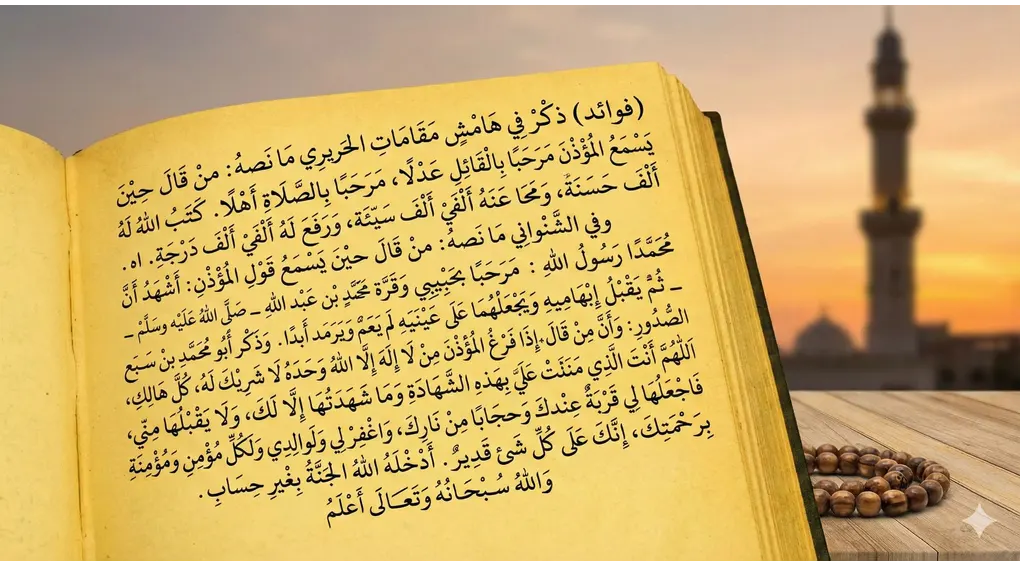
The book I‘ānat al-Ṭālibīn is open, discussing the recommended supplications recited upon hearing the call to prayer, set against the backdrop of a mosque minaret at dusk.

The resounding echo of the call to prayer is not merely a daily marker that prayer time has arrived. For Muslims who deeply comprehend the meaning of the Adhan and Iqamah, the moment it reverberates is a highly precious spiritual opportunity. During this time, the gates of heaven are opened, and Allah’s mercy descends, making … Read more

The True Meaning of Salawat and Its Ruling: The Key to Valid Prayer

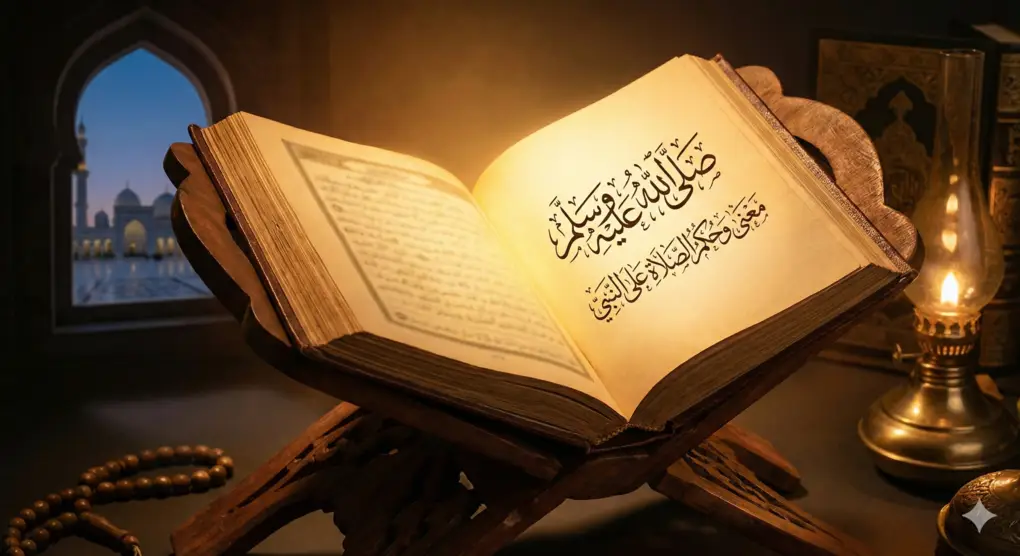
An illustration of an open classical Islamic manuscript glowing with light, displaying the Arabic calligraphy **“Ṣallallāhu ʿalayhi wa sallam”** and text explaining the meaning and ruling of sending blessings upon the Prophet, set against a reverent mosque atmosphere.

We frequently hear the call to send blessings, especially whenever the name of Prophet Muhammad ﷺ is mentioned. For some, this might be perceived as a mere verbal routine or lip service. However, have you ever considered that this invocation carries profound legal weight in Islamic jurisprudence? Understanding the true meaning of Salawat is not … Read more

The Complete Guide to Salat al-Hajat 12 Rakaat and the Powerful Dua According to Imam Al-Ghazali (Kitab Ihya’ Ulumuddin)

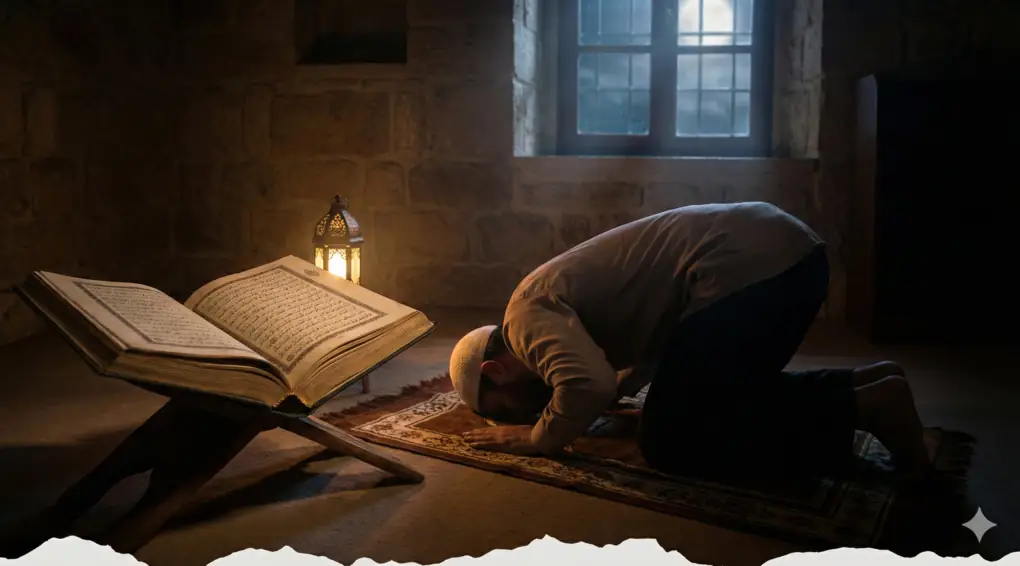
An illustration of performing **Ṣalāt al-Ḥājah** in a dimly lit room, showing a person in the position of prostration (*sujūd*) with an open book serving as a reference guide.

Have you ever felt as though every single door of opportunity has been slammed shut? Crushing financial burdens, deeply complicated family disputes, or a massive, desperately needed goal that remains entirely out of reach despite your absolute maximum effort. The sensation is undeniably exhausting and suffocating. As fragile human beings, it is entirely natural if … Read more

Isha Prayer Time Limit: Until Midnight or Fajr? Shafi‘i Fiqh Explanation

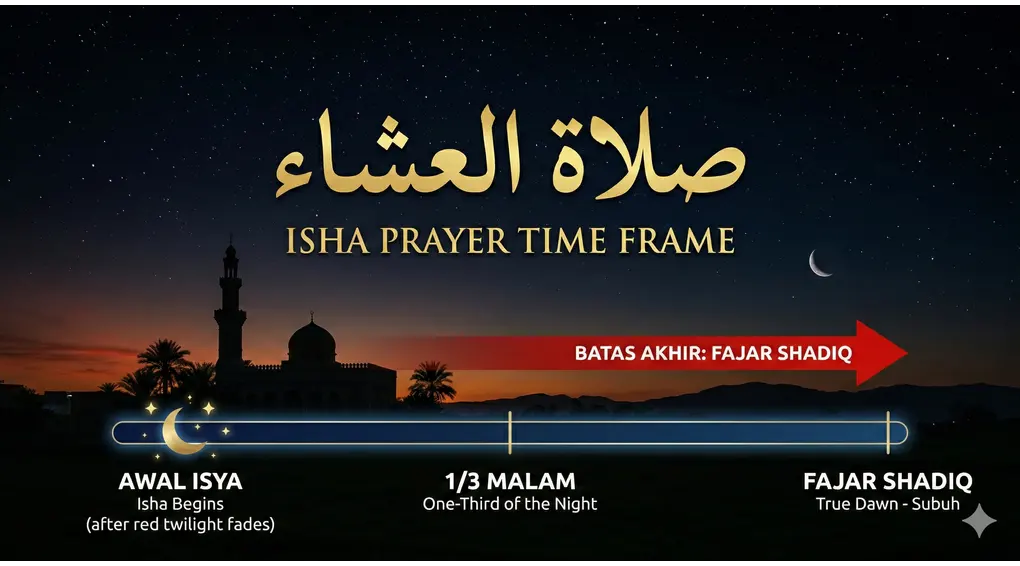
A horizontal timeline of Isha prayer times showing Isha beginning after sunset, the one-third mark of the night, and ending at Fajar Shadiq (True Dawn) under a starry night sky.

Have you ever returned from work late at night, exhausted, and accidentally fallen asleep before performing your Isha prayer? You wake up at 2:00 or 3:00 AM with a heavy heart, wondering: “Has the Isha prayer time limit passed? Is it still valid for me to pray now?” This common anxiety reflects a deep faith … Read more

Fajr Prayer Time: Understanding Fajar Shadiq vs Fajar Kadzib in Shafi’i Fiqh

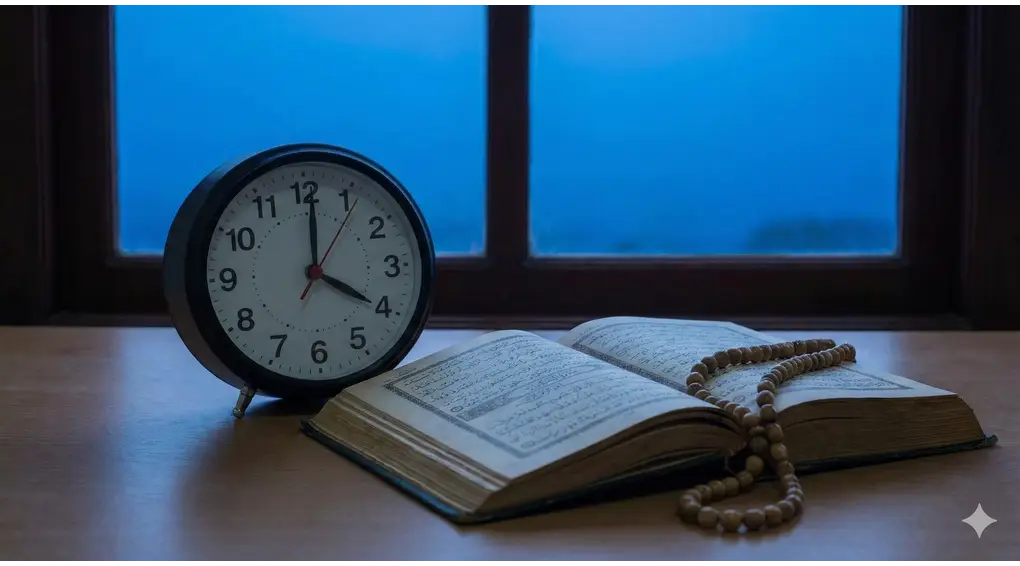
A Muslim woman performing the **Fajr prayer** in her bedroom at dawn, with an alarm clock on the table showing 5:00 a.m., illustrating the time limit for the prayer.

Many Muslims are still confused about determining the exact time for Fajr prayer. In fact, knowing with absolute certainty that the prayer time has commenced is one of the essential valid conditions (shurut as-sihhah) that must be fulfilled before an individual establishes any obligatory prayer. For those who wish to study the detailed requirements of … Read more

Signs of Puberty (Baligh) in Islam According to Safinatun Naja

An open copy of Kāshifatu al-Sajā, a commentary on Safīnat al-Najā, placed on a wooden table as a primary reference for the signs of puberty (baligh) in Islamic jurisprudence (fiqh).

For every Muslim parent, witnessing a child grow up is a profound blessing. However, there is one highly critical phase that frequently induces confusion: the transitional period from childhood to adulthood, or Akil Baligh (reaching the age of legal responsibility). Exactly when do obligatory acts of worship, such as prayer and fasting, become fully binding … Read more

Things That Invalidate Fasting: A Comprehensive Guide (Asna al-Matalib)

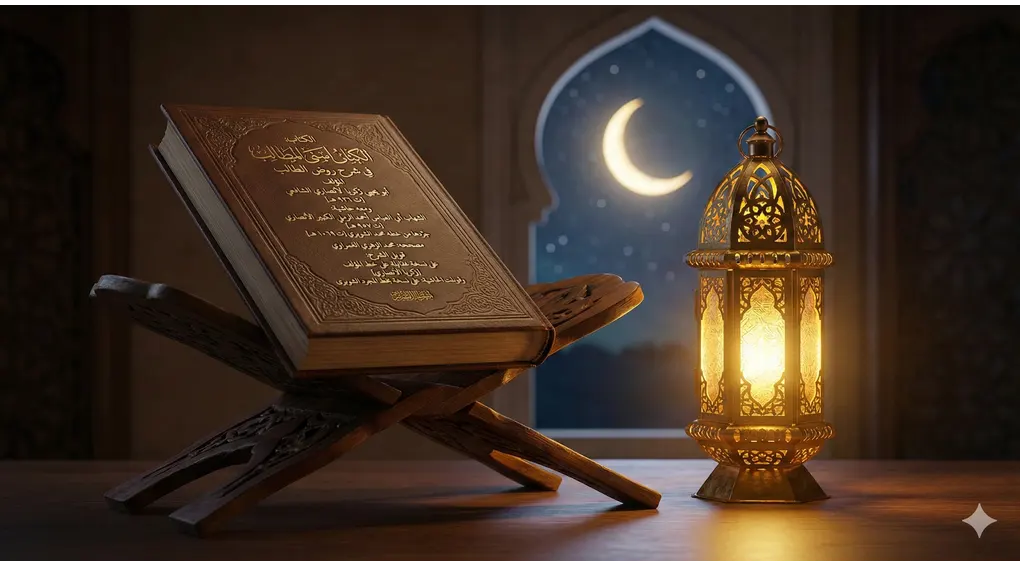
"An open classical book on a traditional carved wooden stand, reading glasses, a string of tasbih beads, and a lit vintage brass lantern on a rustic wooden table surface."

Observing the fast during the blessed month of Ramadan requires precise and profound knowledge. It is not merely about enduring hunger and thirst from the break of dawn until sunset; it fundamentally involves guarding oneself against all things that invalidate fasting (mufattirat). Frequently, doubts arise within the community: “Does picking my nose break the fast?”, … Read more

Do Injections & Ear Drops Break Fasting? A Shafi’i Medical Guide

A flat lay view on a wooden table, showing a stethoscope, a sterile syringe, a small brown medicine bottle, an open Arabic Fiqh book (Asna al-Matalib), and a string of prayer bead tasbih.

When the blessed month of Ramadan arrives, medical questions often arise that cause us to hesitate. “If I have a toothache and swallow medicine, my fast is obviously broken. But what if I get an injection?” or “Is it okay to use ear drops during the day?” These doubts are actually rooted in a very … Read more

Islamic Rulings on Swallowing Saliva While Fasting: A Shafi’i Perspective

Seorang pria Muslim sedang membersihkan mulut dengan siwak sambil bercermin, ilustrasi menjaga kebersihan mulut saat puasa.Seorang pria Muslim sedang membersihkan mulut dengan siwak sambil bercermin, ilustrasi menjaga kebersihan mulut saat puasa.

Have you ever woken up during the daytime in Ramadan with a mucus-filled throat due to a cold? Or perhaps, after rinsing your mouth for ablution, you doubted whether the leftover moisture could be swallowed? Issues surrounding the oral cavity and throat frequently cause confusion when we try to understand the true meaning of fasting. … Read more

The Virtues and Authentic Texts of the Dua Before Salam: A Complete Sunnah Guide

An illustration of a person in Salah sitting for the final Tashahhud, reciting the supplication (dua) just before the Taslim, according to the Sunnah.

Have you ever experienced that profoundly serene moment right before concluding your prayer? While the index finger is still raised during the final tashahhud, just seconds before turning the face for the taslim (salutation), there is a golden window of time that many worshippers inadvertently overlook. In classical Islamic jurisprudence (fiqh), scholars unanimously agree that … Read more