The Obligatory Conditions of Prayer: Islam, Baligh, Sanity, and Purity

Aesthetic photo of a Muslim family (father, mother, son, daughter) holding prayer mats and a Fiqh book in a modern mosque interior.

In studying the jurisprudence (fiqh) of worship, it is highly crucial for us to understand the applicable legal boundaries from the very beginning. Knowing the conditions that make prayer obligatory (syarat wajib shalat) serves as the foundation and the first step before we delve into the details of its execution. This discussion is an integral … Read more

The Ruling of Ibrad: Delaying Dhuhr Prayer During Scorching Heat, Sunnah or Not?

A scorching mosque courtyard at midday with lengthening wall shadows—illustrating the condition for ibrad in Dhuhr prayer.

In tropical regions like Indonesia, daytime temperatures can be scorching—precisely during Dhuhr time. Walking from home to the mosque under the blazing sun can cause physical exhaustion, heavy sweating, and difficulty focusing once in the prayer row (saf). Under these conditions, is it better to pray immediately or wait a moment for the heat to … Read more

What is the Difference Between Ada’ and Qadha’ Prayers? A Complete Explanation in the Shafi’i School

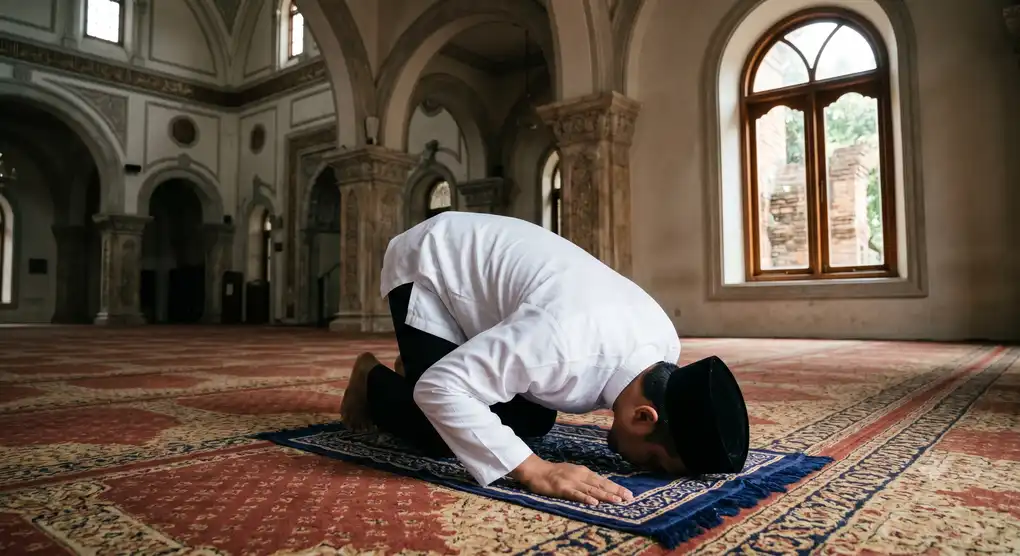
A Muslim man wearing a peci in prostration during prayer in a clean and brightly lit mosque

Ada’ prayer is a prayer performed within its prescribed time limit—from its commencement to its expiration. Qadha’ prayer, on the other hand, is a prayer performed after this time has expired. This distinction is not merely a technicality of execution. Behind it lie jurisprudential (fiqh) principles that determine whether a prayer is valid or not, … Read more

Is Posting Acts of Worship on Social Media Considered Riya? Here is the Answer

Neatly dressed Muslim solemnly reading the Quran without holding a phone

A Muslim posts a status: “Alhamdulillah, just finished Tahajjud prayer. Hope to remain istiqamah.” In the comments section, praise flows. In another corner, a Muslimah uploads a photo of a suhoor dining table complete with a morning prayer caption. Is this riya? Or dawah? Or something in between? This is not a new question. However, … Read more

The Complete Guide to Aqiqah in the Shafi’i School: Rulings, Animals, Timing & Procedures

Discover the complete guide to performing aqiqah in Islam according to the Shafi'i school, an important sunnah for parents welcoming a newborn.

The birth of a child is an unparalleled blessing. Islam welcomes this moment not just with ordinary joy, but with a series of meaningful acts of worship that encompass gratitude, prayer, and love for others. That is aqiqah—a sunnah practiced since the time of the Prophet ﷺ, full of virtues, and holding deep wisdom. Unfortunately, … Read more

Complete Guide to Obligatory Prayer (Salah) in the Shafi’i Madhhab: Rulings, Times, and Validity

Illustration of a Muslim man establishing obligatory prayer devoutly inside a mosque environment, representing the practical guide to daily worship according to Islamic law.

Performing acts of worship in Islam must be based on correct knowledge. Understanding the basics of prayer is closely linked to seeking goodness from the Creator. Prayer (Salah) is the most magnificent pillar of Islam after the testimony of faith (Shahada). Every Muslim must understand the wisdom of obligatory prayers and how to perform them … Read more

What is Riya: Meaning, Types, Examples, and Its Dangers in Islam

An illustration of a Muslim woman putting money into a charity box with two sides showing the difference between sincere intention for Allah and riya seeking social media likes.

A servant might appear steadfast in establishing prayer with lengthy recitations, generously giving large amounts of charity, and diligently attending religious gatherings every single day. However, this entire accumulation of deeds can instantly shatter and hold absolutely no weight in the sight of Allah ﷻ. This destruction occurs not because the individual violated the pillars … Read more

Niyyah and Ikhlas in Islam: A Complete Guide from Hadith to the Fiqh of Worship

Arabic calligraphy of innamal a'malu binniyat symbolizing niyyah and ikhlas in Islam

Understanding niyyah and ikhlas in Islam is the gateway to authentic worship. Intention (niyyah) and sincerity (ikhlas) form the twin pillars upon which the acceptance of every believer’s deed rests. For this reason, Imam an-Nawawi raḥimahullāh opens his celebrated Riyāḍ al-Ṣāliḥīn with the chapter titled Bāb al-Ikhlāṣ wa Iḥḍār al-Niyyah fī Jamīʿ al-Aʿmāl wa al-Aqwāl … Read more

Understanding the Meaning and Ruling on Qurban in Islam

Perfect white horned ram for Qurban sacrifice in a green pasture

Qurban, jurisprudentially known as Udhiyyah in Arabic, stands as one of the most profound annual acts of worship in Islam, observed during Eid al-Adha and the days of Tashriq. Coinciding with the culmination of the history of Hajj rites, this practice transcends the mere physical slaughtering of livestock; it serves as a profound medium to … Read more

The Meaning of Istinja: Foundation of Purity in Islam

Meaning of Istinja: Traditional copper water pitcher and white towel on a wooden table with Islamic geometric pattern background symbolizing purity in istinja.

Cleanliness is an integral pillar of Islamic teachings. One fundamental personal hygiene practice required of every Muslim is Istinja. While many are familiar with the term, what exactly is the meaning of Istinja? Why is this specific practice so heavily emphasized within the Sharia? This article explores the definition, linguistic roots, and spiritual significance of … Read more