Hadath: Definition, Types, and Causes

Deskripsi: Main featured image for a fiqh article explaining the definition of hadath and methods of purification in Islam according to the Shafi'i madhhab.

Every Muslim who is about to establish prayer must have asked: “Is my ablution still valid?” or “Am I currently in a state of ritual impurity (hadath)?” This question is not merely a technicality of ritual. It is the very foundation of all our worship. If someone prays while in a state of hadath, their … Read more
Are Dead Mosquitoes and Flea Blood Najis? A Shafi’i Fiqh Perspective

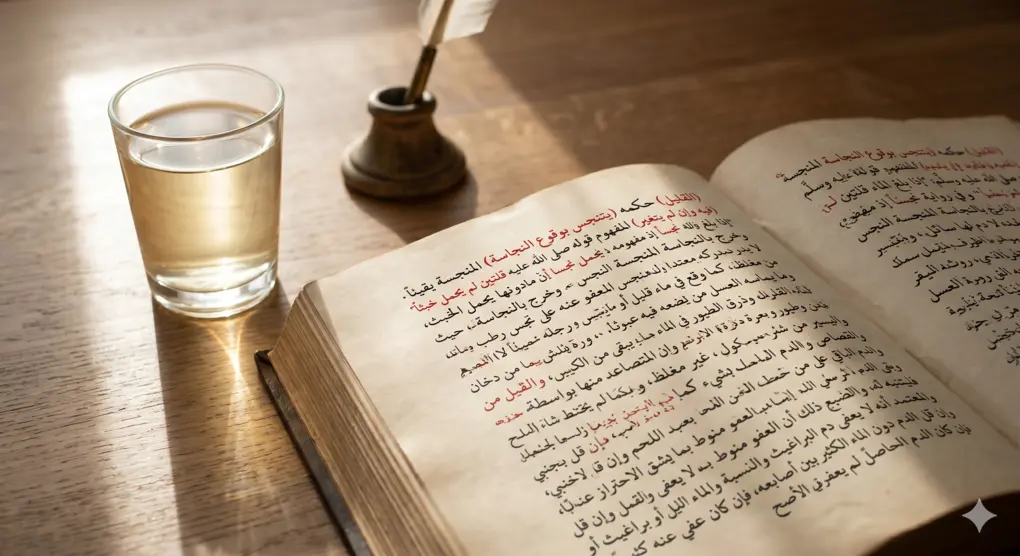
Opened classical Arabic Shafi'i fiqh kitab titled Kashifat as-Saja on a wooden desk with a clear tea water glass, displaying specific Arabic text about excused impurities in water and prayer garments.

Physical cleanliness and the purity of prayer spaces are absolute foundations for establishing daily prayers. Occasionally, we face trivial yet confusing situations. You might find a dead mosquito at the bottom of a drinking glass or accidentally crush a flea between your fingers until it bleeds. A fundamental question arises in the study of daily … Read more

The Meaning of Istinja: Foundation of Purity in Islam

Meaning of Istinja: Traditional copper water pitcher and white towel on a wooden table with Islamic geometric pattern background symbolizing purity in istinja.

Cleanliness is an integral pillar of Islamic teachings. One fundamental personal hygiene practice required of every Muslim is Istinja. While many are familiar with the term, what exactly is the meaning of Istinja? Why is this specific practice so heavily emphasized within the Sharia? This article explores the definition, linguistic roots, and spiritual significance of … Read more

Najis Mughallazah: Definition, Examples, and Complete Purification Guide

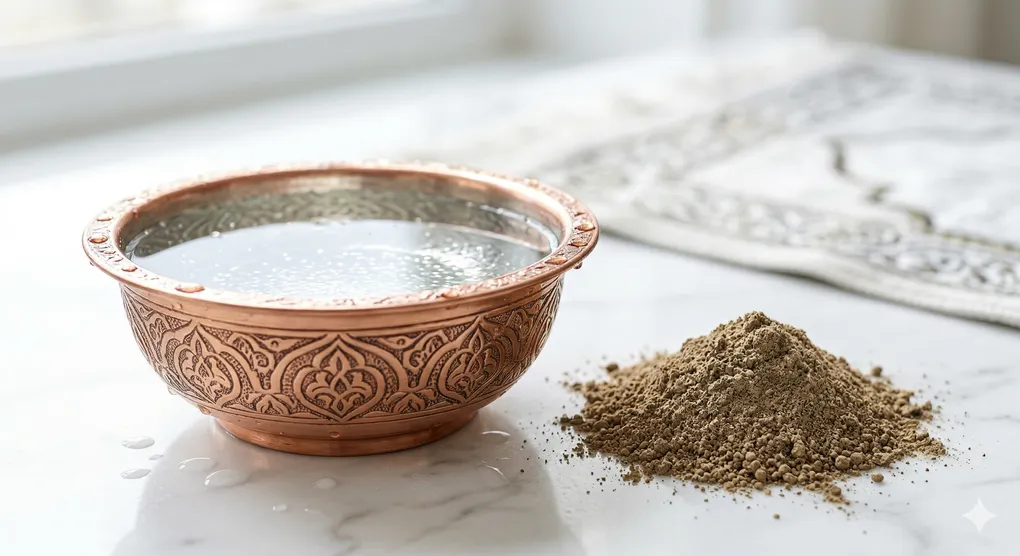
A copper bowl of absolute water next to pure earth for purifying najis mughallazah.

School-of-law note: This article presents the Shafi‘i school as explained in Asna al-Mathalib, with supporting references from Fath al-Qarib and Al-Iqna’. It does not compare rulings across the schools of law. Najis mughallazhah is the Shafi‘i term for a major ritual impurity connected to dogs, pigs, and the offspring of either one. An affected object … Read more

Understanding the Types of Najis in Islam and How to Purify Them

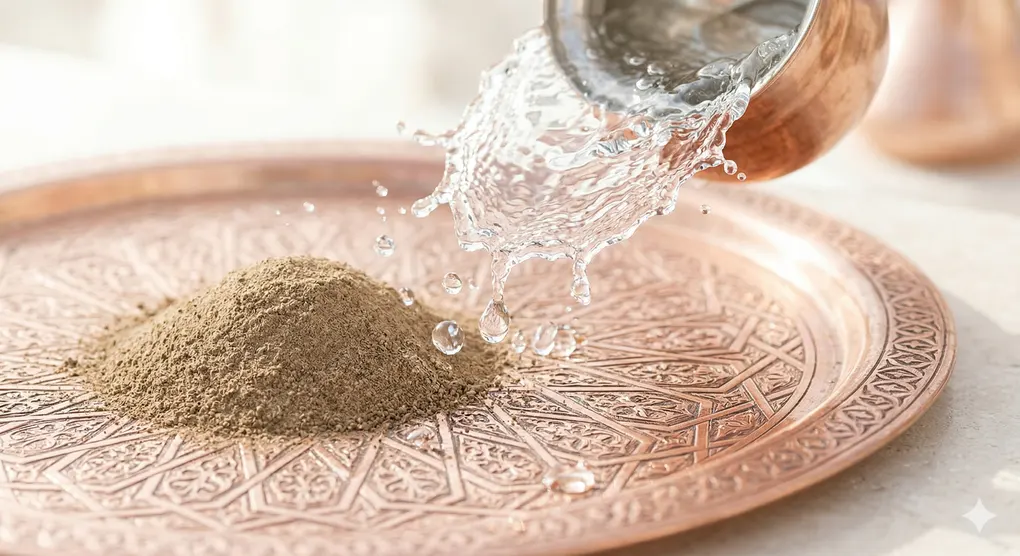
A splash of absolute water and pure earth on a copper tray serving as the primary media for Islamic purification from najis.

Prayer (salat) is the pillar of religion, but the standing of this pillar relies heavily on an absolute foundation: ritual purity. Ironically, in daily practice, many Muslims still mistakenly equate a merely “dirty” or “disgusting” object with “najis” (ritual impurity). Furthermore, quite a few are still confused about distinguishing between najis and hadas (ritual impurity … Read more

The Definition of Najis in Islam: A Comprehensive Guide to Impurities and Purification

Classical fiqh book on a wooden rehal alongside absolute water in a copper vessel for purifying najis.

The difference between hadath and najis should be clear before deciding whether a person needs wudu, an obligatory bath, or simply needs to wash clothing or a prayer space. Both belong to the subject of thaharah—ritual purification—but they differ in their nature, cause, location, and method of purification. In brief, hadath is a legal state … Read more

How to Handle and Purifying Well Water Contaminated by Najis: Insights from Asna al-Matalib

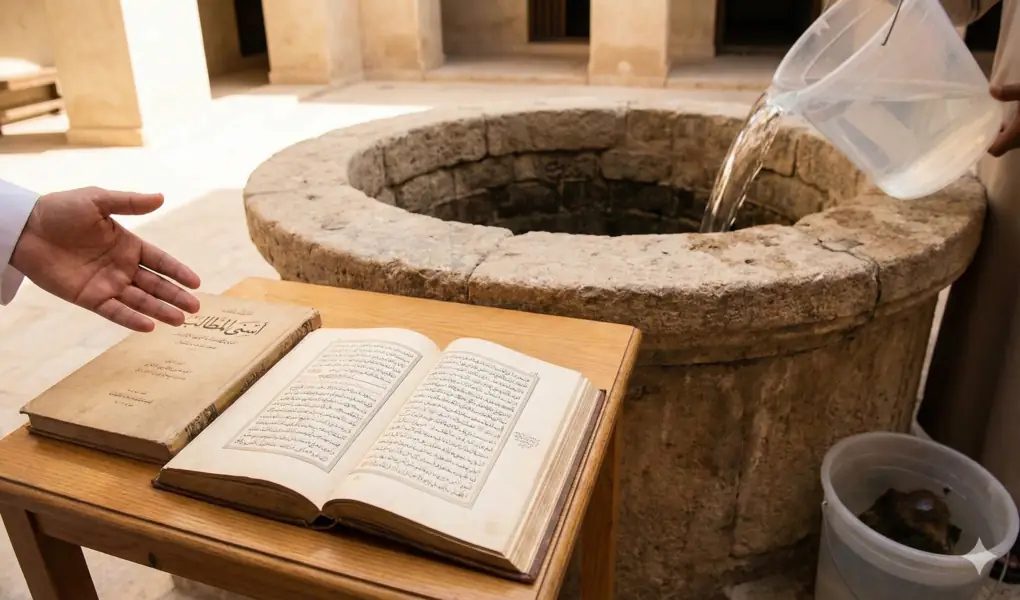
A man points to an open page of Asnā al-Maṭālib on a table beside an old stone well. In the background, someone is pouring clean water from a large bucket into the well, illustrating the process of purifying the water.

Have you ever experienced an unpleasant situation while preparing for ritual purification (thaharah)? For instance, while drawing water from a well, you suddenly find a dead lizard, a mouse, or other impurities (najis) inside. Doubt immediately creeps in. Is this water still valid for wudu (ablution)? Must the well be completely drained until it is … Read more

How to Purify Najis and Musta’mal Water: A Study of the Book Asna al-Mathalib

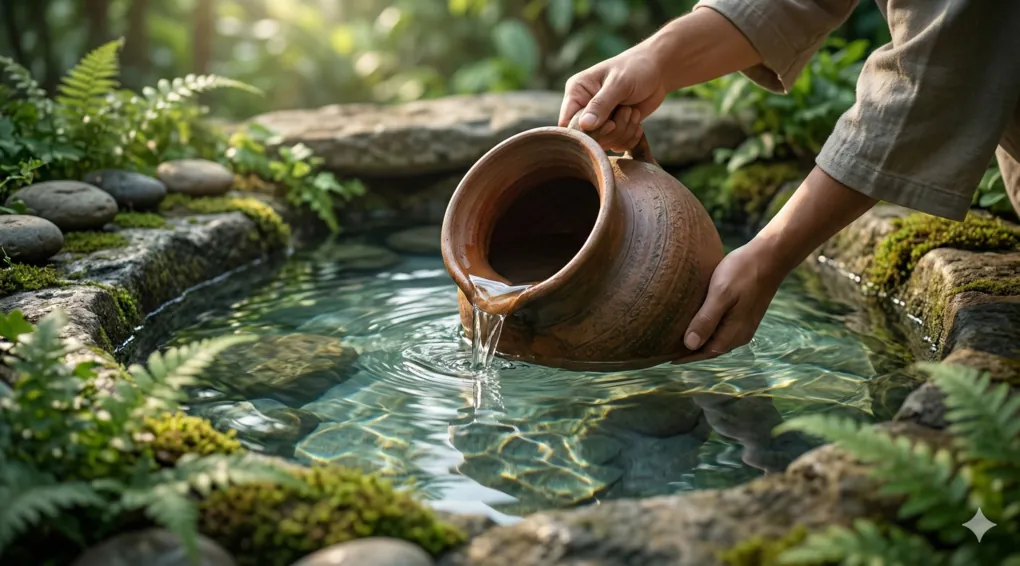
A traditional wide-mouthed clay pitcher (kendi) being gently submerged into a pristine, crystal-clear stone pool of water, with the water level inside the pitcher matching the pool outside. Natural sunlight refracts through the clear water.

Have you ever experienced the frustrating moment when an impure substance (najis) falls into your water bucket or bathtub? This is especially troubling when we desperately need that water. In the jurisprudence (fiqh) of the Shafi’i School, a small volume of water (less than two qullahs) is indeed highly sensitive. The moment it comes into … Read more

The Islamic Ruling on Cat Hair: Is It Najis During Prayer?

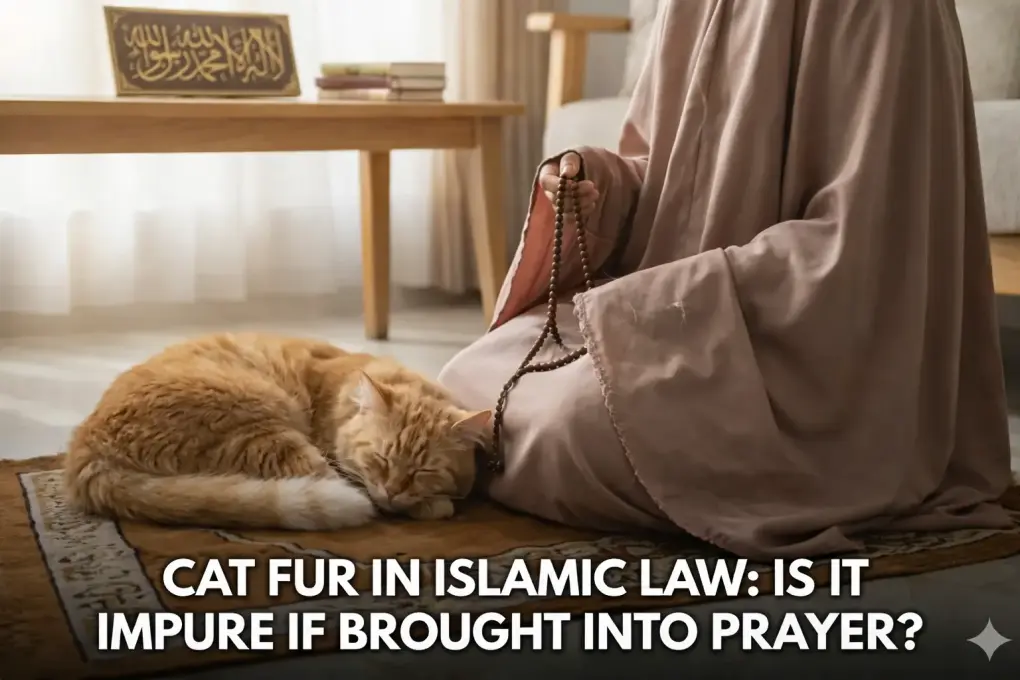
Illustration discussing the ruling of cat fur in Islamic law and whether it affects the validity of prayer.

For cat lovers or “paw parents,” playing with beloved pets is a moment of immense joy. However, there is one classic problem that frequently causes concern: shedding hair everywhere. You find it on the sofa, the bed, and often clinging to the clothes you intend to wear for worship. This condition naturally raises a significant … Read more

Understanding Najis Mukhaffafah: How to Purify Baby Boy Urine in Shafi’i Fiqh

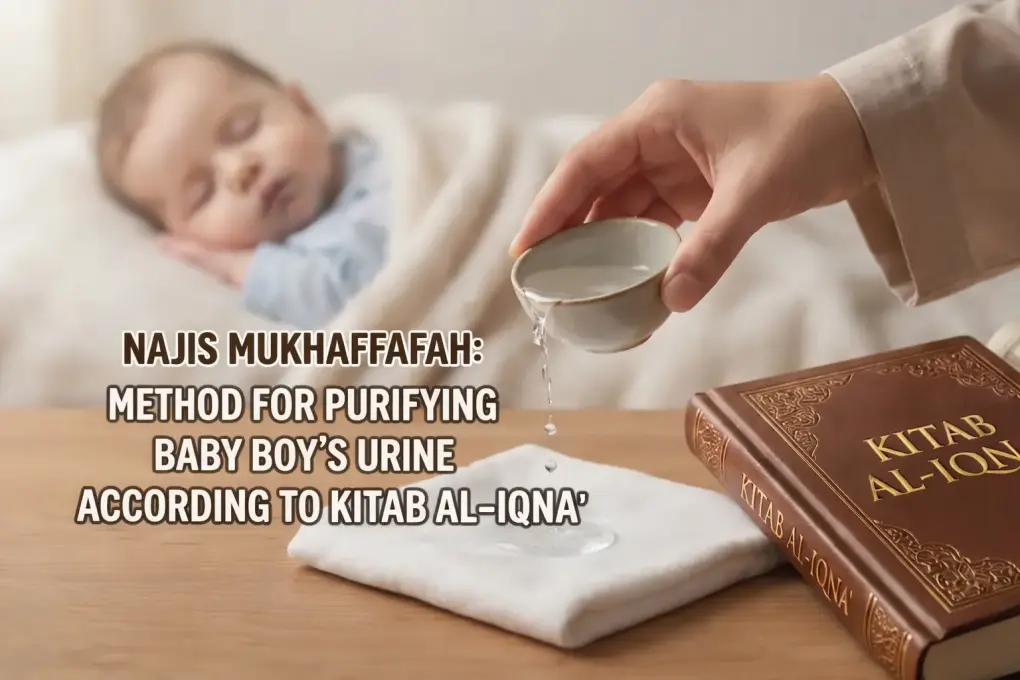
Illustration explaining how to purify baby boy urine according to Islamic jurisprudence (najis mukhaffafah).

Najis mukhaffafah is an impurity for which Shafi’i fiqh gives a lighter purification method. Its central example is the urine of a baby boy, but only when all of the stated conditions are met. This concession does not mean that the urine is pure before it is cleaned. It only changes the method of purification: … Read more