
Ḥayḍ, Nifās, and Istiḥāḍah: Women’s Rulings in Shāfiʿī Fiqh

A Muslim woman in a hijab sits at a study desk, writing in a "Women's Worship Calendar" notebook next to an open "Kitab Al-Fiqh" and a closed Quran.

Understanding the monthly cycle can sometimes feel like solving a puzzle, especially when bleeding appears outside the usual schedule. This guide to women’s fiqh explains the difference between ḥayḍ (menstrual bleeding), nifās (postnatal bleeding), and istiḥāḍah (irregular non-menstrual bleeding), so that worship can be performed calmly and without unnecessary doubt. Before going into detailed cases, … Read more
5 Causes of Ghusl in Shafi’i Fiqh: A Complete Guide

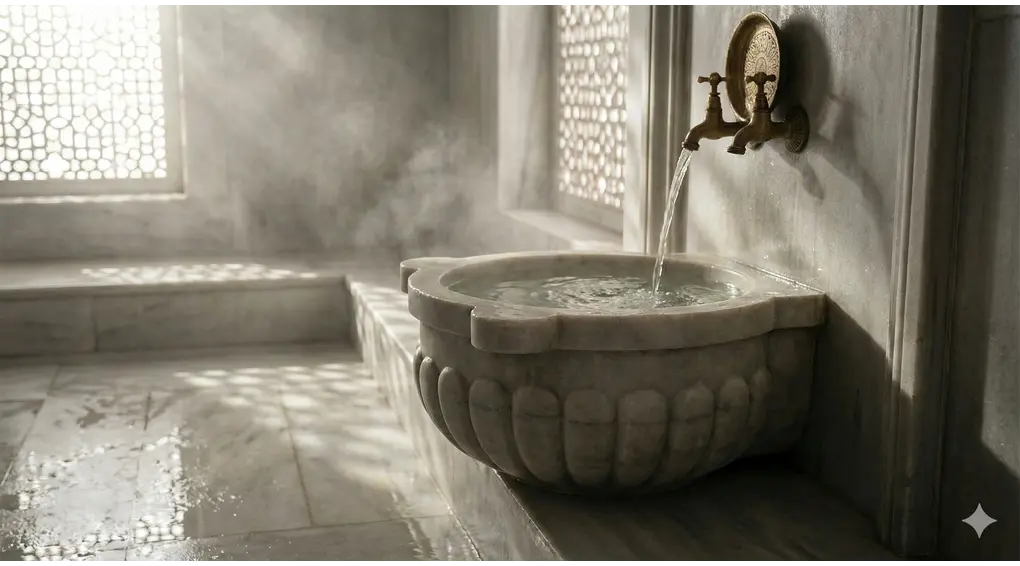
Clear water flowing from brass taps into a large marble basin inside a steamy traditional Islamic hammam, illuminated by natural sunlight through geometric window screens.

Physical and spiritual purity is an absolute prerequisite for performing prescribed (mahdhah) acts of worship in Islam. Within the discourse of Islamic jurisprudence, understanding the fundamental concept of purification (thaharah) from major ritual impurities occupies a central position. This article specifically examines the causes of ghusl (obligatory bath), also known as Mujibat al-Ghusl, based on … Read more