The Islamic Ruling on Joint Qurban: 7 People Sharing a Cow & One Goat for a Family

An illustration representing the practice of joint qurban for a cow, limited to a maximum of 7 people in Islam

The practice of joint qurban is very common in our communities. Usually, several people collect funds to buy a single sacrificial animal. This practice is frequently seen in mosques, neighborhoods, or schools. In Islamic jurisprudence (fiqh), this joint effort falls under the chapter of syirkah or shared ownership of funds and goods. Is Joint Qurban … Read more

Requirements for Sacrificial Animals: Types and Minimum Age According to the Shafi’i School of Thought

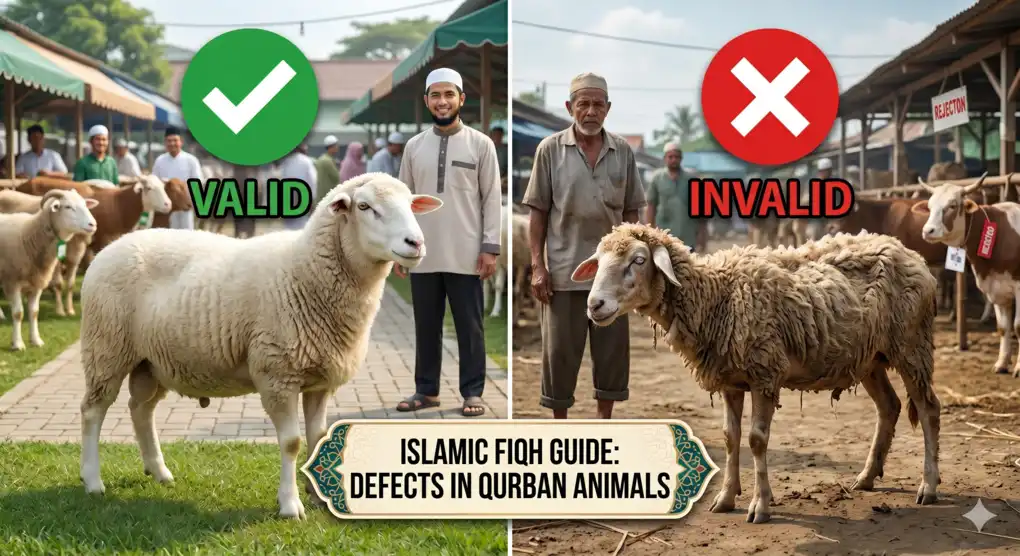
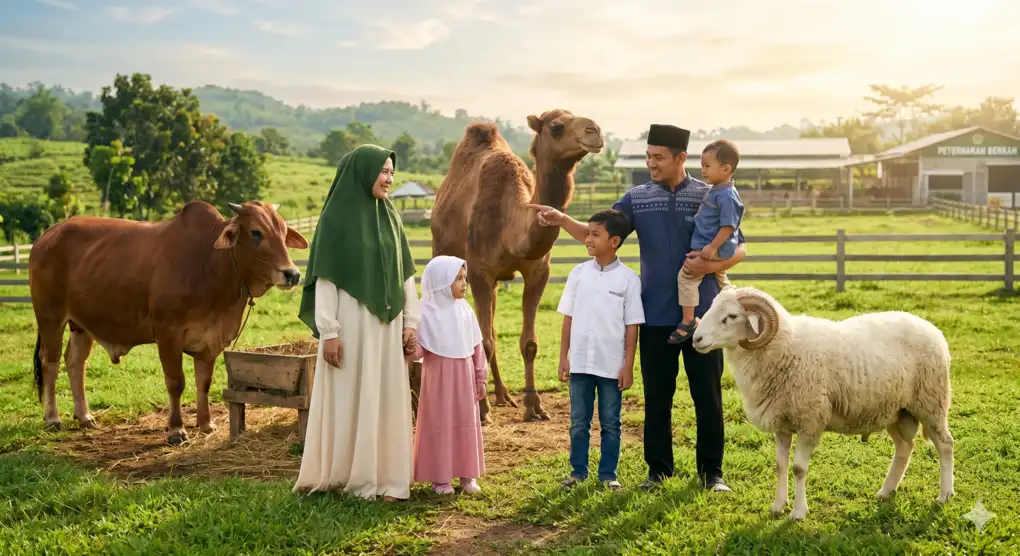
A cinematic illustration showing a Muslim family reviewing Qurban animals (cow, camel, and sheep) on a farm, representing the eligibility of livestock for sacrifice.

Approaching the sacred month of Dhu al-Hijjah, many Muslims frequently contemplate whether the ritual sacrifice is a binding obligation or a highly emphasized sunnah. Gaining a profound comprehension of the ruling of qurban in Islam is critically imperative to ensure that our worship aligns precisely with the parameters of the sacred law (sharia) and is … Read more

The Obligatory Conditions of Prayer: Islam, Baligh, Sanity, and Purity

Aesthetic photo of a Muslim family (father, mother, son, daughter) holding prayer mats and a Fiqh book in a modern mosque interior.

In studying the jurisprudence (fiqh) of worship, it is highly crucial for us to understand the applicable legal boundaries from the very beginning. Knowing the conditions that make prayer obligatory (syarat wajib shalat) serves as the foundation and the first step before we delve into the details of its execution. This discussion is an integral … Read more

5 Prohibited Times for Prayer in the Shafi’i Madhhab

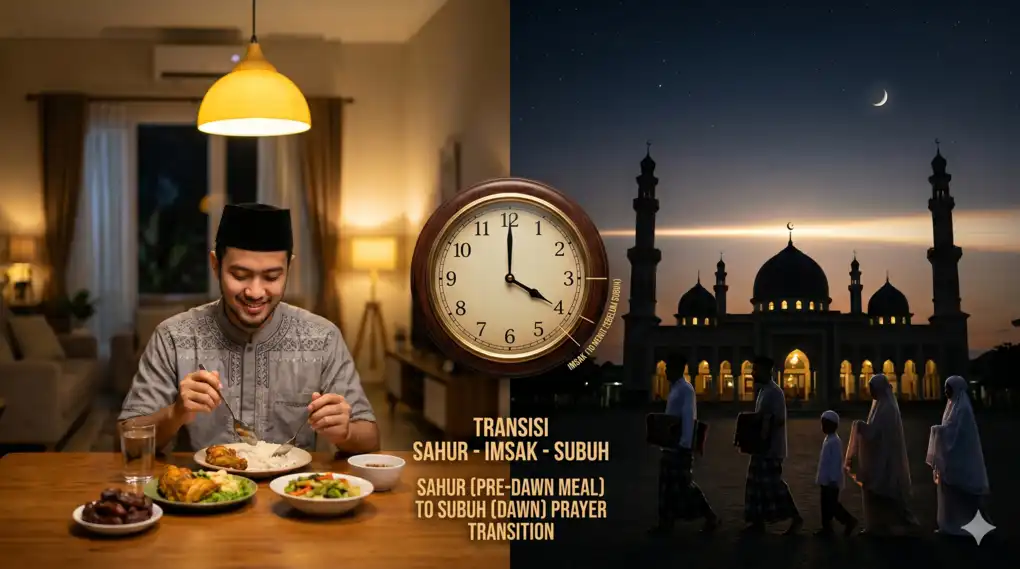
Classic analog clock in Islamic style in the foreground with a silhouette of a view of a traditional Indonesian mosque in the countryside at dusk.

Understanding the limits of the prohibited times for prayer is highly essential for every Muslim so that the prayers established are valid and rewarding. Often, we feel enthusiastic about multiplying our worship, but religion has regulated time discipline in great detail. For those of you who want to understand its complete structure from the beginning, … Read more

When Are Children Commanded and Disciplined for Prayer?

Illustration of a harmonious Islamic family, consisting of a father, mother, son, and daughter learning prayer movements on prayer mats in a living room with a calligraphy background.

Many Muslim parents often wonder: what is the ruling on prayer for children who have not yet reached puberty? In Islamic jurisprudence (fiqh) literature, a young child fundamentally has no obligation to establish the obligatory (fardhu) prayers. This is because they have not yet entered the legal phase of taklif—the burden of sharia obligations that … Read more

The Ruling of Ibrad: Delaying Dhuhr Prayer During Scorching Heat, Sunnah or Not?

A scorching mosque courtyard at midday with lengthening wall shadows—illustrating the condition for ibrad in Dhuhr prayer.

In tropical regions like Indonesia, daytime temperatures can be scorching—precisely during Dhuhr time. Walking from home to the mosque under the blazing sun can cause physical exhaustion, heavy sweating, and difficulty focusing once in the prayer row (saf). Under these conditions, is it better to pray immediately or wait a moment for the heat to … Read more

Menstruation During Prayer Time: What Obligations Remain?

A wall clock showing Dhuhr time as a visual representation of prayer time and the fiqh ruling of menstruation.

The time for Dhuhr prayer has commenced. Due to a brief errand, there was no time to perform ablution (wudu)—then menstruation suddenly begins. A question immediately arises: is the Dhuhr prayer simply waived? Or does an obligation to make it up (qada) remain after becoming pure? For a deep understanding of the meaning of prayer, … Read more

Reaching Puberty in the Middle of Prayer Time: Is Immediate Prayer Obligatory?

A visually appealing featured image illustrating the concept of time limits and constraints in Shafi'i jurisprudence regarding obligatory prayers.

Reaching the age of baligh (puberty) is a momentous milestone for a young Muslim. This phase automatically transforms an individual’s status into a mukallaf (a morally accountable person), who is directly bound by legal obligations under Islamic law (shari’ah). You might wonder about the specific rules of jurisprudence (fiqh) regarding this transitional period—particularly, what is … Read more

Proper Procedures for Slaughtering Qurban Animals: Nahr, Dzabh & Supplications According to the Shafi’i Madhhab

Illustration of the proper method of slaughtering a qurban goat or sheep according to the Shafi'i madhhab, showing the animal positioned on its left side.

Every year, as Eid al-Adha arrives, millions of Muslims worldwide execute the ritual sacrifice known as qurban (Udhiyah). However, many fail to recognize that the precise manner in which the sacrificial animal is slaughtered determines the validity of this profound act of worship—and fundamentally dictates whether the meat is legally lawful (halal) for human consumption. … Read more

What is the Difference Between Ada’ and Qadha’ Prayers? A Complete Explanation in the Shafi’i School

A Muslim man wearing a peci in prostration during prayer in a clean and brightly lit mosque

Ada’ prayer is a prayer performed within its prescribed time limit—from its commencement to its expiration. Qadha’ prayer, on the other hand, is a prayer performed after this time has expired. This distinction is not merely a technicality of execution. Behind it lie jurisprudential (fiqh) principles that determine whether a prayer is valid or not, … Read more