How to Perform I’tidal in Salah: A Complete Shafi’i Guide

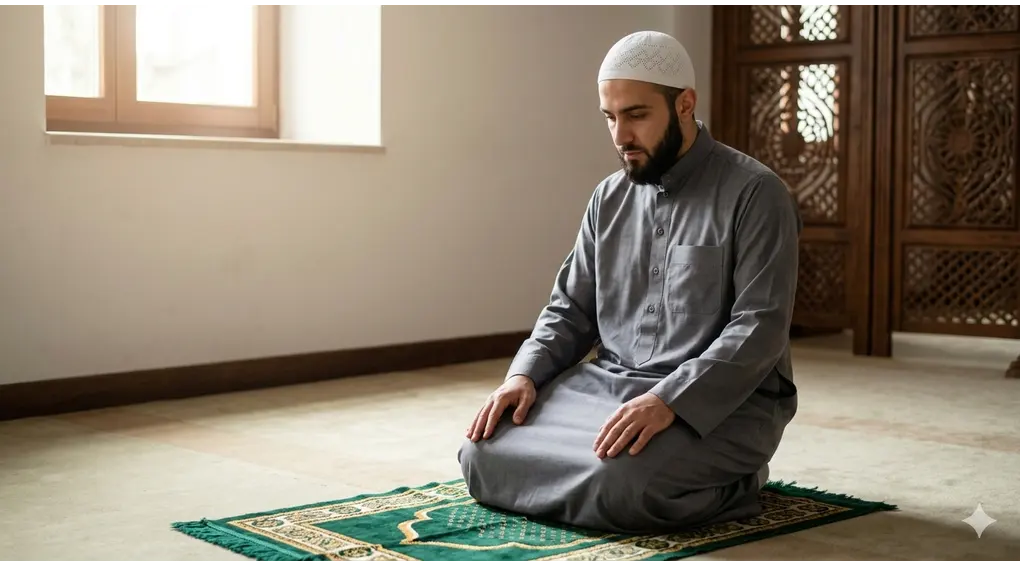
Serene Muslim man standing upright in perfect I'tidal posture with arms resting naturally during prayer inside a dimly lit mosque.

Have you ever felt doubtful during your prayer, wondering if your movement rising from bowing was calm enough? Or perhaps you have frequently asked yourself whether the congregation (ma’mum) should also recite “Sami’allahu liman hamidah”, or simply remain silent and listen to the imam? A profound understanding of the meaning of prayer (Salah) requires us … Read more
Understanding the Levels of Niyyah in Salah: A Shafi’i Fiqh Guide

Illustration representing the levels of intention in prayer based on the classical fiqh books Safinatun Naja and Nailur Raja.

Have you ever experienced doubt during your opening takbir? Wondering if your heart’s intention is correct and if your prayer is truly valid? These questions frequently arise among Muslims because intention is the fundamental foundation of worship. Without the proper intention, the physical movements of prayer are merely routine exercise. In the study of Shafi’i … Read more

Ruling on Paying a Muezzin: A Comprehensive Fiqh Analysis from Asna al-Matalib

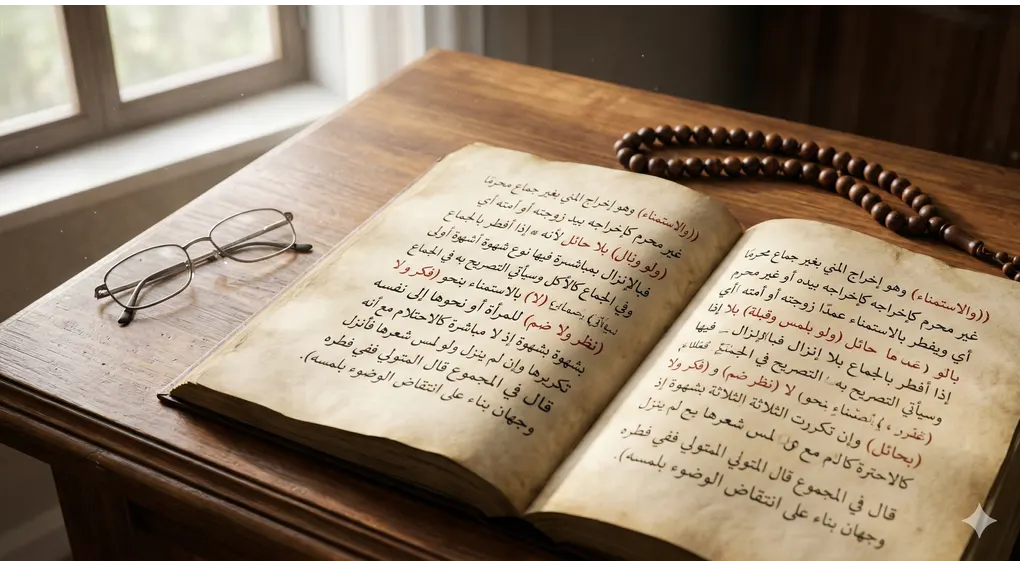
Open classical Arabic fiqh manuscript next to a mosque financial ledger, tasbih, and kufi on a wooden desk.

The issue of providing a salary or financial compensation for a muezzin (the one who calls to prayer) frequently becomes a heated topic during mosque committee (DKM) meetings. On one hand, there is a strong desire to have someone who performs the adhan sincerely, seeking only the pleasure of Allah. On the other hand, a … Read more

Complete Guide to Salat al-Tawbah Nasuha: Evidence, Procedure, and Supplications According to Kitab Al-Bujairimi

A Muslim man or woman in modest attire (hijab and covering the aurat) sitting in a quiet, sunlit corner of a mosque or prayer room. They are in a state of deep reflection or holding their hands in a quiet dua.

Every human being is susceptible to error. In the framework of Islamic jurisprudence (fiqh), it is understood that no one is immune to sin, whether committed intentionally or inadvertently. However, the hallmark of a true believer is the immediate return to Allah’s grace after a transgression. The doors of Divine forgiveness are perpetually open, and … Read more

Emission of Semen Without Touch While Fasting: An Analysis of Asna al-Matalib

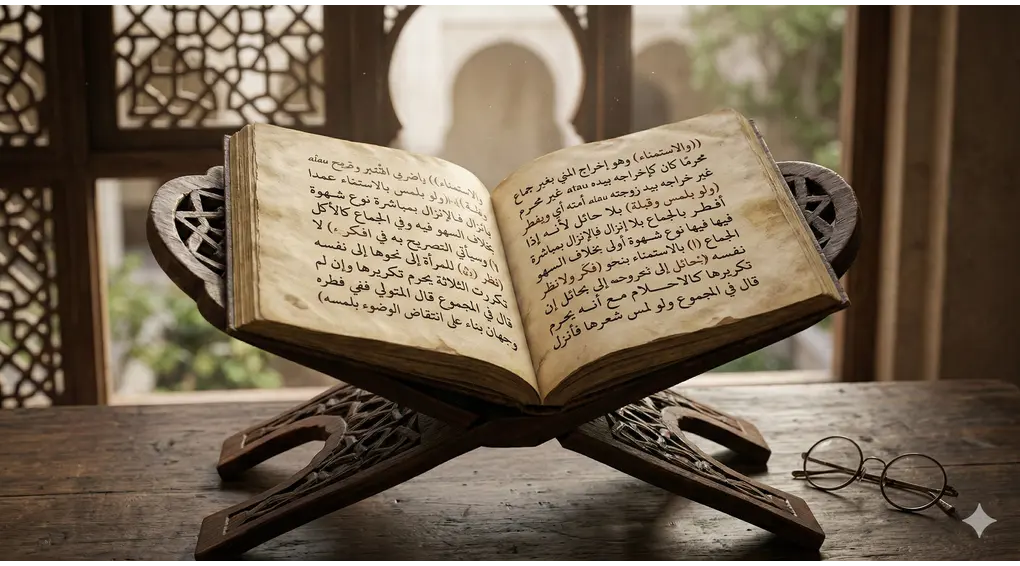
Open classical Arabic Fiqh manuscript on a carved wooden book stand with reading glasses and wooden prayer beads on a clean wooden desk. Natural daylight window in the background.

In performing the worship of fasting (al-ṣawm) during the holy month of Ramadan, a believer is tested not only by enduring hunger and thirst but also by controlling the surges of biological desires. The very essence of fasting is al-imsāk, a total effort of restraining oneself from all invalidators from the break of dawn until … Read more

The Islamic Ruling on Cat Hair: Is It Najis During Prayer?

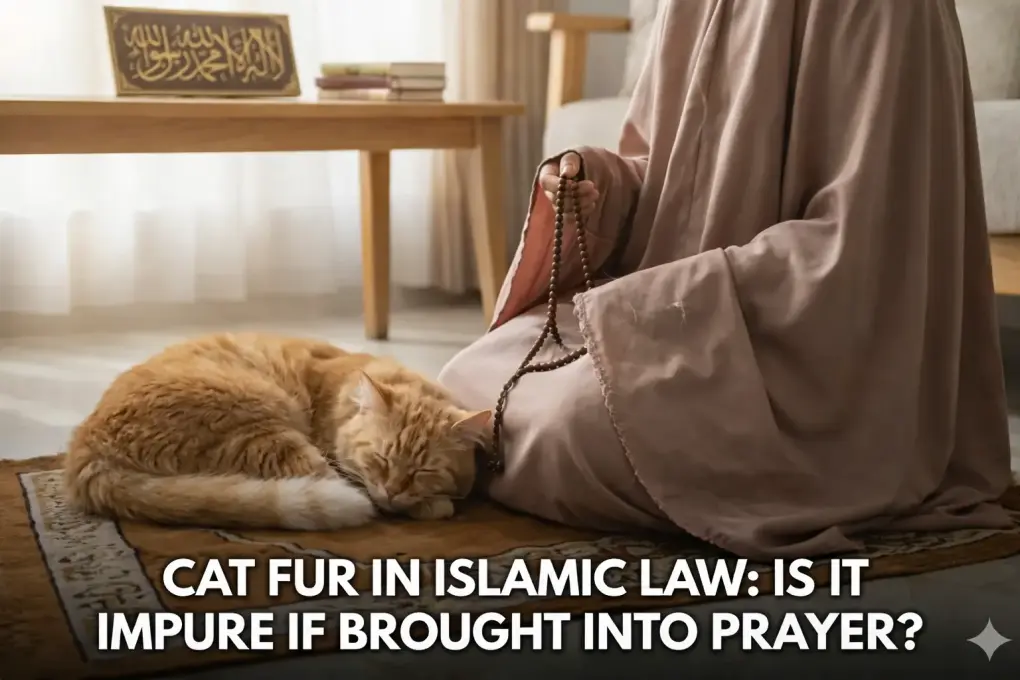
Illustration discussing the ruling of cat fur in Islamic law and whether it affects the validity of prayer.

For cat lovers or “paw parents,” playing with beloved pets is a moment of immense joy. However, there is one classic problem that frequently causes concern: shedding hair everywhere. You find it on the sofa, the bed, and often clinging to the clothes you intend to wear for worship. This condition naturally raises a significant … Read more

Understanding Najis Mukhaffafah: How to Purify Baby Boy Urine in Shafi’i Fiqh

Illustration explaining how to purify baby boy urine according to Islamic jurisprudence (najis mukhaffafah).

Najis mukhaffafah is an impurity for which Shafi’i fiqh gives a lighter purification method. Its central example is the urine of a baby boy, but only when all of the stated conditions are met. This concession does not mean that the urine is pure before it is cleaned. It only changes the method of purification: … Read more

The Jurisprudential Ruling on Masturbation While Fasting and Limits of Physical Contact

An open antique Arabic fiqh manuscript resting on a wooden rehal stand, positioned in front of a mashrabiya patterned window with natural daylight. Classic calligraphy fills the pages.

In the rigorous performance of the fast (al-Ṣawm), a believer is summoned not merely to endure hunger and thirst but to exert profound discipline over their base desires. The spiritual essence of fasting lies in al-Imsāk—a mechanism of comprehensive self-restraint from everything that invalidates the fast, extending from the precise moment of dawn until sunset. … Read more

5 Conditions for a Valid Prayer According to Fathul Qarib: A Complete Guide

Illustration showing the five conditions for valid prayer according to the classical fiqh book Fathul Qarib.

Have you ever felt doubtful after completing your worship, wondering, “Was my prayer valid?” or “Are my clothes truly pure?” These questions naturally arise because every Muslim profoundly desires their worship to be accepted by Allah SWT. Prayer (Salah) is not merely a sequence of standing, bowing, and prostrating. There is an essential “entry ticket” … Read more

The Complete Guide to Proper Sujud: Posture and Supplications in Prayer

Muslim man performing sujud in prayer illustrating the proper method and recitation according to the Shafi‘i school of Islamic jurisprudence.

Prostration (Sujud) is not merely the physical act of placing one’s forehead on the floor. Within Islamic prayer, it represents the most sacred moment where a servant is intimately close to their Lord. However, we often find ourselves wondering: are we performing a proper Sujud? Are the supplications we recite accurate? Understanding the correct methodology … Read more