

Understanding the limits of the prohibited times for prayer is highly essential for every Muslim so that the prayers established are valid and rewarding. Often, we feel enthusiastic about multiplying our worship, but religion has regulated time discipline in great detail.
For those of you who want to understand its complete structure from the beginning, it is highly recommended to refer to our article on the Complete Guide to Fardhu Prayers in the Shafi’i Madhhab: Rulings, Times, Conditions, and Validity Requirements.
Understanding Makruh Tahrim Times in Prayer
In the fiqh literature of the Shafi’i madhhab, there is a specific division of times when certain prayer rituals are actually forbidden to be performed. This prohibition holds the status of makruh tahrim, which practically means haram (forbidden), and the worship is invalid if violated without a reason justified by the sharia.
This is based on authoritative fiqh texts, as explicitly stated in the book Asna al-Mathalib by Shaykh al-Islam Zakariyya al-Anshari:
…..فصل: في أوقات الكراهة وهي خمسة (وتكره تحريما الصلاة في ثلاثة أوقات…
Translation: “(Chapter) Regarding the times of karahah (disliked/prohibited) for prayer, and these times are five. And it is disliked with tahrim (strictly prohibited) to perform prayers at three times (which are related to the movement of the sun)…”[1]
What Are the 5 Prohibited Times for Prayer?
Many Muslims ask, what exact times are meant by this fiqh ruling? In detail, the Shafi’i madhhab divides it into five time conditions, where three times are closely related to the sun’s movement, and the other two times are related to fardhu prayer activities that have just been completed.
1. When the Sun Rises Until It Reaches the Height of a Spear
The first prohibited time begins exactly from the appearance of the sun’s disk on the eastern horizon. This prohibition lasts until the sun rises to the height of one spear, or in modern calculations, is known as the entry of Syuruq/Isyraq time. In the fiqh text, it is mentioned:
عند طلوع الشمس حتى ترتفع رمحا
Translation: “…when the sun rises until it ascends to the height of a spear.”[2]
2. During Istiwa (Sun at its Zenith) Until It Declines
The duration of this second time is very short. The istiwa time occurs when the sun is exactly at its peak in the middle of the sky. This prohibition applies until the sun begins to decline (zawal) even slightly to the west, which signifies the entry of the Dzuhur time. The book Asna al-Mathalib explains it with the phrase:
و عند استوائها حتى تزول
Translation: “…and during its istiwa (the sun at its zenith) until it declines.”[3]
3. When the Sun Turns Yellow Until It Sets



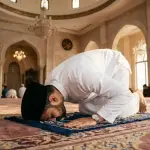
Next is the makruh time for prayer in the late afternoon before the entry of Maghrib time. This point of prohibition is calculated from when the sunlight begins to lose its heat and turns yellow, until the sun’s disk perfectly sets on the western horizon. The Arabic reference text states:
و عند اصفرارها حتى تغرب
Translation: “…and when it (the sun) turns yellow until it sets.”[4]
4. After Performing the Subuh Prayer (Ada’)
This fourth time is bound by the action of the mushalli (the person praying). For anyone who has finished performing the post-Subuh prayer (has said salam from the fardhu Subuh prayer as ada’ or on time), they are forbidden to perform absolute sunnah (mutlaq) prayers. This prohibition extends until the sun rises on the eastern horizon. This is based on the text:
وبعد صلاة الصبح أداء إلى الطلوع
Translation: “…and after (performing) the Subuh prayer as ada’ until the rising (of the sun).”[5]
5. After Performing the Ashar Prayer (Ada’)
Similar to the prohibition during the Subuh time, this fifth time applies after someone has performed the post-Ashar prayer as ada’. This prohibition remains strictly in effect, even if the Ashar prayer is performed earlier during the Dzuhur time because of jama’ taqdim (combined early). The absence of permissibility for this sunnah prayer extends until the sun sets. Shaykh al-Islam Zakariyya al-Anshari clarifies it as follows:
وبعد فعلين بعد صلاة العصر أداء لمن صلاها ولو قدمها… إلى الغروب
Translation: “…and after two actions (of prayer); namely after the Ashar prayer as ada’ for the person who has performed it, even if they advanced it (with jama’ taqdim)… until the sun sets.”[6]
Types of Prayers That Remain Valid During Prohibited Times
Even though the sharia strictly prohibits the execution of prayers at the five times above, the prohibition is not absolute for all types of prayers. The makruh tahrim prohibition only applies to absolute sunnah prayers that do not have a specific cause.
As for prayers established due to a specific cause, their ruling remains valid and permissible to perform. In the fiqh concept of the Shafi’i madhhab, these types of prayers are divided into two main groups:
Prayers with a Preceding Cause (Mutaqaddim)
The first group is prayers that have a cause or motive that precedes (exists before) the prayer itself is established. This type of prayer is exempt from the status of the prohibited prayer time. Shaykh al-Islam Zakariyya al-Anshari outlines the details in the book Asna al-Mathalib:
قوله: (ولا) تكره (ما) أي صلاة (لها سبب متقدم أو مقارن كالجنازة والمنذورة) والمعادة كصلاة منفرد ومتيمم (والقضاء) بمعنى المقضية (حتى) مقضية النوافل (التي اتخذها وردا)
Translation: “And it is not disliked (to perform) a prayer that has a preceding cause (mutaqaddim) or a coinciding cause (muqarin), such as the funeral prayer, the vowed prayer (manzhurah), the repeated prayer (mu’adah)—like the prayer of someone who prayed alone and then found a congregation—the prayer of someone who performed tayammum, and the make-up prayer (qadha) (including the qadha of sunnah prayers that have been taken as a daily wird).”[7]
Based on the explanation above, here are some concrete examples of prayers with a preceding cause:
- Funeral Prayer (Salat al-Janazah): The cause is someone’s death that occurred before the prayer is performed. You can read an in-depth review of the legal rulings on performing funeral prayers during makruh times in our dedicated article.
- Make-up Prayer (Qadha): Whether making up missed fardhu prayers or making up rawatib sunnah prayers that have become a daily routine.
- Sunnah Wudhu Prayer: Performed because someone has just finished purifying themselves from hadats (minor impurity).
- Sunnah Tawaf Prayer: Performed after someone completes the tawaf ritual at the Baitullah.
- Sujud Tilawah and Sujud Syukur: Both of these prostrations hold the same ruling as prayers with a preceding cause, so they are permissible to be performed during makruh times.
Prayers with a Coinciding Cause (Muqarin)
The second group is prayers whose cause for execution appears and occurs simultaneously (muqarin) with the prayer ritual. This prayer is also excluded from the ruling of makruh tahrim. In the reference text, it is briefly mentioned:
وبعضها له سبب مقارن كصلاة الاستسقاء والكسوف
Translation: “And some of those prayers have a coinciding cause (muqarin), such as صلاة الاستسقاء (the prayer for rain) and الكسوف (the eclipse prayer).”[8]
When natural phenomena such as a solar eclipse coincide with the istiwa time, a Muslim is commanded to immediately establish the eclipse prayer. The existence of this ongoing cause nullifies the dislike (makruh) status of the time, because its execution is based on a situational sharia command, not an intentional disregard for the prohibited time.
Prayers That Are Invalid or Remain Prohibited During Makruh Times
After knowing that there are excluded types of worship, we must also be careful with acts of worship where the prohibition is not lifted. If a prayer is not classified into the group with a preceding or coinciding cause, then it remains forbidden at the five prohibited times for prayer.
The scholars of the Shafi’i madhhab have set strict parameters regarding sunnah acts of worship that fall into this prohibited category. There are at least two main conditions that make the prayer invalid or carry a makruh tahrim status.
Prayers with a Subsequent Cause (Muta’akhkhir)
The first condition is the type of prayer that has a cause at the end or muta’akhkhir. This means someone performs the prayer first, and only then the main cause or intention is carried out after the worship is complete. Shaykh al-Islam Zakariyya al-Anshari explains the ruling of muta’akhkhir prayers explicitly:
قوله: (وتكره ركعتا الاستخارة والإحرام فيها) أي في أوقات الكراهة لأن سببهما وهو الاستخارة والإحرام متأخر عنهما
Translation: “And it is disliked (with tahrim) to perform the two rak’ahs of Istikharah prayer and Ihram prayer in them, meaning in the times of karahah (makruh). Because indeed, the cause for both of them—namely the istikharah process and ihram—comes later (after the prayer).”[9]
Based on the evidence above, examples of absolute sunnah prayers that are forbidden to be performed during makruh times include:
- Sunnah Istikharah Prayer: This prayer is forbidden because the essence of seeking a choice (istikharah) and its determining prayer are recited after the prayer is over.
- Sunnah Ihram Prayer: The two rak’ah prayer before the intention of ihram is forbidden to be performed at a makruh time, because the process of entering the ihram intention (talbiyah) is done after the prayer.
Intentionally Delaying Prayer or Entering the Mosque Without Purpose
The second condition that causes a prayer to be invalid is the element of intention to “collide” with the time prohibition. An example case is someone entering the mosque at a makruh time without having another legitimate purpose of worship, but purely and solely wanting to perform the Tahiyatul Masjid prayer.
If this is done, you can read the details of the ruling of its invalidity in our dedicated article regarding the Ruling of Tahiyatul Masjid prayer at makruh times. Similarly, a person who intentionally delays a make-up (qadha) prayer (which they could have done earlier) just to place it in a prohibited time. This is emphasized in the book Asna al-Mathalib:
قوله: (ولو دخل المسجد) فيها (لا لغرض سوى استحبابها) أي تحية المسجد (لم تصح كمن أخر فائتة) عليه (ليقضيها وقت الكراهة) فإنها لا تصح للأخبار الصحيحة كخبر «لا تحروا بصلاتكم طلوع الشمس ولا غروبها»
Translation: “(And if someone enters the mosque) at a makruh time (without any other purpose besides the recommendation of that prayer), namely the Tahiyatul Masjid prayer, (then their prayer is not valid). (This ruling is the same as someone who delays a missed prayer) which is their obligation (to make it up exactly at the time of karahah). So indeed, the prayer is not valid based on authentic hadiths, such as the hadith: ‘Do not intentionally seek out times for your prayers at the rising of the sun and at its setting.'”[10]
This text asserts that the sharia closes the loophole (sadd al-dzari’ah) for anyone who consciously plays with the time provisions for worship. A wrong intention can invalidate the legitimacy of a deed even if the act of worship is fundamentally a good deed.
Exceptions of Place and Time (Makruh Does Not Apply)
Even though the previous five times have been generally forbidden for absolute sunnah worship, the Islamic sharia provides concessions (rukhsah). There are specific place and time conditions that exempt the makruh status.
Under these exception conditions, a person is free to perform any act of worship. The prohibition regarding the makruh times for prayer does not apply, so we still attain the full virtue of the worship without sin.
Exception in Makkah and the Entire Haram Territory
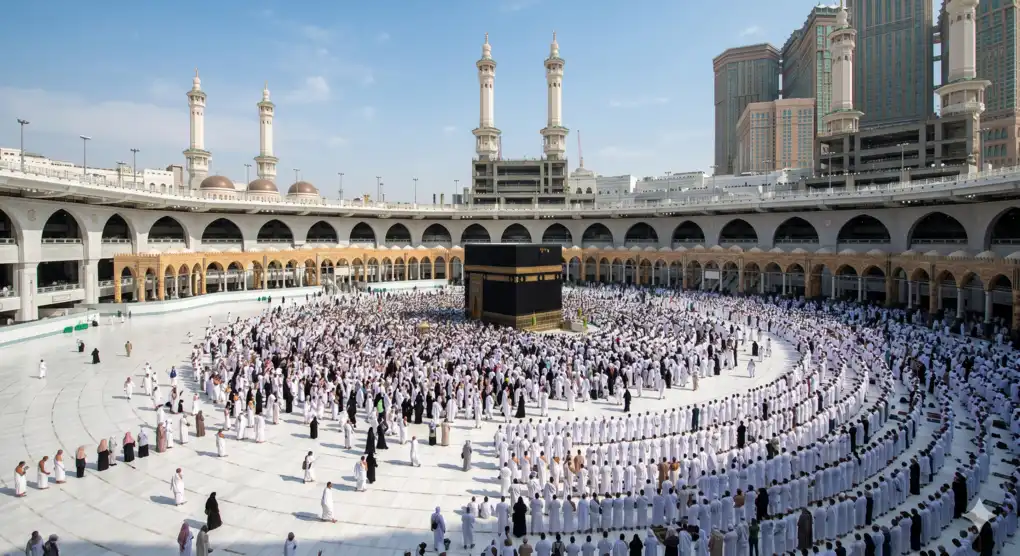
The grand and spiritual atmosphere of Muslim congregations performing the tawaf worship in the Masjid al-Haram at the time of istiwa.
The Shafi’i scholars agree that the prohibition of prayer at any time, including the five prohibited times, is totally lifted if the worship is performed in Makkah. This legal provision applies comprehensively to all areas included within the boundaries of the Haram Territory. Shaykh al-Islam Zakariyya al-Anshari wrote the evidence for this permissibility in the book Asna al-Mathalib:
قوله: (ولا تكره) الصلاة (في شيء من ذلك) أي من الأوقات الخمسة (بمكة وسائر الحرم) لخبر «يا بني عبد مناف لا تمنعوا أحدا طاف بهذا البيت وصلى أية ساعة شاء من ليل أو نهار»
Translation: “(And it is not disliked) to perform prayers (in any of those), meaning from the five prohibited times, (if performed in Makkah and all areas of the Haram Territory). This is based on the hadith: ‘O Bani Abd Manaf, do not prevent anyone who performs tawaf at this House and prays at whatever hour they wish, whether night or day.'”[11]
This exception is granted solely due to the majesty of the Baitullah and the virtue of worshipping within it. To understand more specifically about the territorial coverage and detailed rulings, you can direct your reading to our article cluster on Praying in the Masjid al-Haram and the Haram territory: there are no makruh times.
Exception of Istiwa Time on Friday
The second exception condition relates directly to the position of the sun when it is exactly at the zenith of the sky or istiwa time. Exclusively on Friday, the prohibition of prayer at this point in time is completely abolished.
The legal details of this exception cover several conditions of the mukallaf (accountable person):
- It applies absolutely to Muslim male congregants who are present in the mosque to perform the Friday prayer.
- It also applies to those who have an excuse (uzur) or are not obligated to attend the Friday prayer (such as women praying at home).
This means you are still allowed to perform absolute sunnah prayers when the istiwa time occurs on a Friday. The evidence regarding this is delivered very clearly:
قوله: (ولا) تكره (عند الاستواء يوم الجمعة) لأحد (وإن لم يحضرها) لخبر أبي داود وغيره في ذلك
Translation: “(And it is not) disliked (to perform prayers during istiwa on Friday) for anyone, (even if they do not attend the Friday prayer). This is based on the hadith narration by Abu Dawud and others regarding this matter.”[12]
This concession is given because Friday is encouraged to be filled with as many sunnah deeds as possible. If you want to see a hadith review and the complete views of scholars on this matter, please read the discussion Istiwa on Friday: is it excluded from the prayer prohibition?.
Conclusion: The Importance of Safeguarding Prayer Times
Knowing the five makruh times for prayer is a form of caution (ihtiyat) for a Believer in establishing worship. This prohibition educates us to be disciplined with time and understand the boundaries of the sharia so that the worship performed is valid and blessed by Allah ﷻ.
As a reminder, make sure you avoid performing absolute sunnah prayers at these critical moments:
- When the sun rises.
- During the istiwa time (sun exactly at the zenith).
- When the sun turns yellow until it sets.
- After performing the post-Subuh prayer.
- After performing the post-Ashar prayer.
To avoid doubt and the risk of crashing into prohibited prayer times, scholars highly recommend that we prioritize the execution of fardhu prayers at the beginning of their time. Shaykh al-Islam Zakariyya al-Anshari explains this recommendation of virtue:
فصل: (وتعجيلها) أي الصلاة أول الوقت (أفضل ولو عشاء) لقوله تعالى {حافظوا على الصلوات}
Translation: “(Chapter: And hastening it), meaning hastening the prayer at the beginning of the time (is better even for Isha prayer), based on the word of Allah the Exalted: {Guard strictly (all) your prayers}.”[13]
The attitude of guarding the prayers (muhafazhah ‘ala al-shalawat) is proven by not delaying obligatory worship, let alone entering a makruh time area without a shar’i excuse.
FAQ (Frequently Asked Questions)

1. What times are the prayers prohibited if converted to standard clock times?
The sharia does not fix them to analog clocks, but rather the visual movement of the sun. Generally, the prohibitions fall in the range of syuruq (sunrise), exactly noon before Dzuhur, late afternoon approaching Maghrib, the range after Subuh prayer until sunrise, and the range after Ashar prayer until sunset.
2. Is it a sin if I still perform absolute sunnah prayers at makruh times?
In the Shafi’i madhhab, the ruling is makruh tahrim, which means haram (forbidden). If you intentionally do it without a justified cause (mutaqaddim or muqarin), then the prayer is invalid (void) and you sin for violating the time prohibition.
3. Is the Tahiyatul Masjid prayer permissible during these times?
It is permissible and valid, provided your main intention for entering the mosque is not solely to seek out those makruh times to perform the Tahiyatul Masjid prayer. If you enter the mosque for another purpose (e.g., sitting to wait for Maghrib time, joining a study circle, etc.), then the Tahiyatul Masjid prayer holds the status of having a “preceding cause” and is permissible to perform.
Footnotes:
Reference:
Zakariyā al-Anṣārī, Asnā al-Maṭālib fī Sharḥ Rawḍ al-Ṭālib, with ḥāshiyah by Aḥmad al-Ramlī, edited by Muḥammad az-Zuhrī al-Ghamrāwī (Cairo: al-Maṭbaʿah al-Maymānīyah, 1313 H; repr. Dār al-Kitāb al-Islāmī), Vol. 1, pp. 119-124.


