
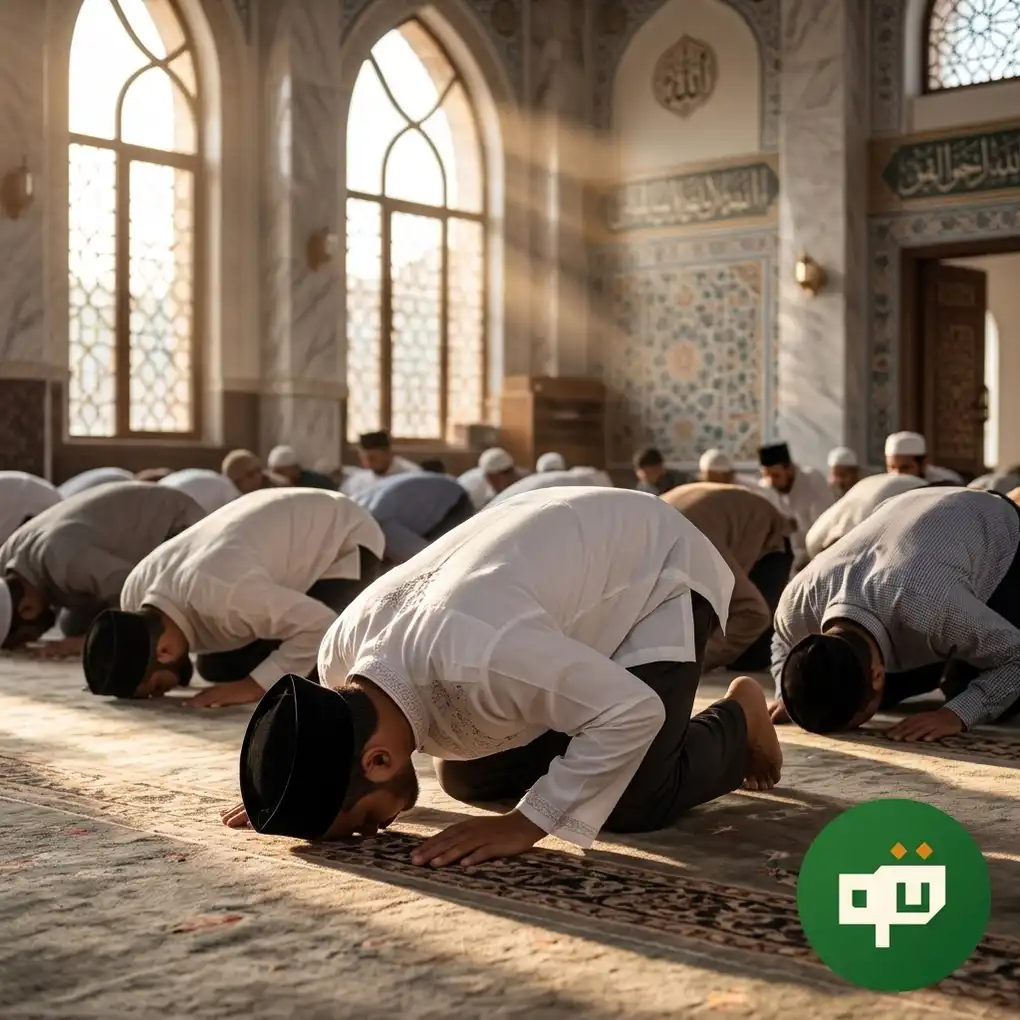
Have you ever forgotten to sit for the first tashahhud and then wondered what to do? Or been unsure whether you had prayed three rak’ahs or four? Almost everyone who prays regularly has been there.
The Shari’ah has already prepared the way out: sujud sahwi, the prostration of forgetfulness. This article is the gateway to all our discussions of sujud sahwi on fiqh.biz.id, and it relies on three books of the Shafi’i school: Kashifat al-Saja by Shaykh Nawawi al-Jawi, Fath al-Jawad by Ibn Hajar al-Haytami, and Tarshih al-Mustafidin by Sayyid Alawi al-Saqqaf.
If you would like an overall picture of the obligatory prayer first, read our complete guide to obligatory prayer in the Shafi’i madhhab. After that, let us start with the meaning of sujud sahwi.
The Meaning of Sujud Sahwi
The word sahw (السَّهْوُ) is often translated as “forgetting”. That is not wrong, but in this chapter its meaning is wider than simple forgetfulness.
Shaykh Nawawi al-Jawi explains it from two angles: language and Shari’ah terminology.
The Linguistic and Technical Meaning of Sahw
Shaykh Nawawi al-Jawi writes:
وَالسَّهْوُ لُغَةً : نِسْيَانُ الشَّيْءِ وَالْغَفْلَةُ عَنْهُ ؛ وَشَرْعًا : نِسْيَانُ شَيْءٍ مَخْصُوْصٍ مِنَ الصَّلَاةِ ، كَأَبْعَاضِهَا غَالِبًا
“Sahw linguistically means forgetting something and being heedless of it. In the Shari’ah it means forgetting something specific in the prayer, which is usually one of its ab’adh.”[1]
This definition has two layers:
- Linguistic meaning: forgetting or being heedless of anything at all.
- Technical meaning: forgetfulness that happens inside the prayer and concerns a specific part of it.
The word ghaliban (usually) shows that the most common reason for this prostration is leaving one of the sunnah ab’adh, such as the first tashahhud or the qunut of Fajr. The full list is discussed in our article on the sunnah ab’adh of prayer.
Shaykh Nawawi then adds that apart from the ab’adh, sujud sahwi can have other causes:
وَمِنْ غَيْرِ الْغَالِبِ قَدْ يَكُوْنُ لِغَيْرِ ذَلِكَ ، كَتَطْوِيْلِ الرُّكْنِ الْقَصِيْرِ ، وَتَكْرِيْرِ الرُّكْنِ سَهْوًا
“Outside the usual case, it may be done for other reasons, such as lengthening a short pillar or repeating a pillar out of forgetfulness.”[2]
Examples of a short pillar here are i’tidal and the sitting between the two prostrations. The details are in the section on the causes of sujud sahwi below.
Sahw Also Covers Deliberate Mistakes
This part often surprises people. In the chapter of sujud sahwi, sahw does not only mean forgetting. It means any defect that occurs in the prayer, whether deliberate or not.
Shaykh Nawawi al-Jawi states:
وَالْمُرَادُ بِالسَّهْوِ هُنَا : مُطْلَقُ الْخَلَلِ الْوَاقِعِ فِيْ الصَّلَاةِ ، سَوَاءٌ كَانَ عَمْدًا أَوْ سَهْوًا
“What is meant by sahw here is any defect that occurs in the prayer, whether deliberately or through forgetfulness.”[2]
Sayyid Alawi al-Saqqaf explains why the scholars still use the name “sahw”:
واقتصروا على تقييده بالسَّهو للغالب؛ وإلَّا فيكون – أيضًا – للعمد كما يأتي
“The scholars only mention sahw because it is what happens most often. Otherwise, this prostration also applies to deliberate mistakes, as will be explained.”[3]
So a person who deliberately leaves the first tashahhud is still recommended to perform sujud sahwi. The name is “sahw”, but its job is to mend shortcomings in the prayer in general.
Even so, sujud sahwi does not apply to every mistake. Leaving a pillar, for example, cannot be mended by sujud sahwi; the pillar itself must be made up. You can read about the pillars of prayer in a separate article.
The Ruling and Wisdom of Sujud Sahwi
Once the meaning is clear, the next question is: is it obligatory or sunnah? The three books agree that sujud sahwi is sunnah, with one exception for the follower in congregation.
Sunnah, Not Obligatory Like the Compensation in Hajj
Ibn Hajar al-Haytami writes in Fath al-Jawad:
وشرع الأول لجبر السهو أو إرغام الشيطان : أي لقصد أحد هذين وإن لزمه الآخر ( سن ) سجدتان كما يأتي في الفرض والنفل ما عدا صلاة الجنازة للأمر به في خبر مسلم وغيره ولم يجب كجبر الحج لأنه لم يشرع لترك واجب بخلاف جبر الحج
“The first (sujud sahwi) was prescribed to mend forgetfulness or to humiliate Shaytan, that is, with the intention of one of these two even if the other follows from it. Two prostrations are recommended, as will be explained, in obligatory and voluntary prayers other than the funeral prayer, because of the command in the hadith narrated by Muslim and others. It is not obligatory, unlike the compensation in Hajj, because it was not prescribed for leaving an obligation, unlike the compensation in Hajj.”[4]
From this text we can take several legal points:
- It is sunnah, based on the command in the hadith narrated by Muslim.
- It applies in obligatory and voluntary prayers. So if you forget something in a rawatib or Duha prayer, sujud sahwi is still recommended. You can read more about voluntary prayers in our article on sunnah prayers in Shafi’i fiqh.
- It does not apply to the funeral prayer.
- It is not obligatory, unlike the dam (jabr) in Hajj.
Why the contrast with Hajj? The dam in Hajj makes up for an obligation that was left. Sujud sahwi makes up for a sunnah, so its ruling is not heavier than what it mends.
Sayyid Alawi al-Saqqaf confirms this and adds that it is a mu’akkad (strongly emphasised) sunnah:
قوله: ( تُسَنُّ) أي: متأكِّدًا، للخلل الواقع في الصَّلاة – غير الجنازة -، وفي سجدة تلاوة وشكر
“(The author’s words: it is recommended) meaning a strongly emphasised sunnah, because of a defect that occurs in the prayer other than the funeral prayer, and also in the prostration of recitation and the prostration of thanks.”[5]
One point from this text: according to Tarshih, sujud sahwi is also recommended for a defect that occurs within sujud tilawah and sujud shukr, not only within the prayer. Those two prostrations are explained in our article on sujud tilawah and sujud shukr.
Sayyid Alawi also quotes the same reason given in Fath al-Jawad:
ولم يجب؛ لأنَّه لم ينب عن واجب، بخلاف جبران الحجِّ
“Sujud sahwi is not obligatory because it does not stand in for an obligation, unlike the compensation in Hajj.”[6]
Still Recommended for an Imam Leading a Large Congregation
A practical question: what if the imam of a large mosque fears the congregation will be confused? According to Tarshih, sujud sahwi is still recommended.
ويسنُّ سجود السَّهو ولو لإمام جَمْعٍ كثير يخشى منه التَّشوُّش عليهم، ويفرَّق بينه وبين سجود التِّلاوة: بأنَّه آكد منها
“Sujud sahwi is still recommended even for the imam of a large congregation who fears confusing them. The difference with the prostration of recitation is that sujud sahwi is more strongly emphasised.”[7]
In the same passage, Sayyid Alawi points out that some authors of hashiyahs misquoted al-I’ab so that its meaning was reversed. The position he settles on is the one above: sujud sahwi is more emphasised than sujud tilawah.
To Mend Shortcomings and to Humiliate Shaytan
The wisdom of sujud sahwi is stated clearly in Fath al-Jawad: jabr al-sahw (mending the shortcoming) and irgham al-shaytan (humiliating Shaytan).
Ibn Hajar explains this wisdom when discussing a person unsure of the number of rak’ahs, citing the words of the Prophet ﷺ:
«فإن كان صلى خمساً شفعن» أي السجدتان وما اشتملتا عليه له صلاته : أي رددتها إلى الأربع وحذفت الزيادة لجبرهما خللها كالنقص وإن كان صلى إتماماً لأربع كانتا ترغيماً للشيطان
“‘If he has prayed five, they make his prayer even.’ That is, the two prostrations return it to four and cancel the extra, because they mend its defect just as they mend a deficiency. And if he has prayed exactly four, they are a humiliation for Shaytan.”[8]
So sujud sahwi is never wasted. If there was a shortcoming, it mends it. If there was none, it still counts as resistance against Shaytan, who whispered the doubt.
Obligatory for the Follower When the Imam Prostrates
The sunnah ruling above applies to the imam and to the person praying alone. For the follower there is an exception.
Sayyid Alawi al-Saqqaf quotes al-Bujayrimi:
قال الْبُجَيْرِمِيُّ: نعم، يجب على المأموم بسجود إمامه تَبَعًا له
“Al-Bujayrimi said: Yes, it becomes obligatory for the follower when his imam prostrates, in order to follow him.”[9]
This means that when the imam performs sujud sahwi, the follower must prostrate with him. The obligation comes from the duty to follow the imam, not from sujud sahwi itself.
What if the follower does not know what the imam forgot? What about the masbuq, who joined late? All of that is covered in our article on sujud sahwi for the imam, follower and masbuq.
Now we come to the heart of this chapter: which causes make sujud sahwi recommended.
The Causes of Sujud Sahwi
We already know that sujud sahwi mends defects in the prayer. The question is, which defects? Not every slip in the prayer calls for sujud sahwi, and prostrating without a valid cause can actually invalidate the prayer.
Shaykh Nawawi al-Jawi opens this discussion by stating the number of causes:
أَسْبَابُ سُجُوْدِ السَّهْوِ فِيْ الصَّلَاةِ ، فَرْضًا أَوْ نَفْلًا ، أَرْبَعَةٌ
“The causes of sujud sahwi in the prayer, obligatory or voluntary, are four.”[10]
Here they are one by one, with explanations from Fath al-Jawad and Tarshih al-Mustafidin.
1. Leaving a Ba’d or Part of One
The first and most common cause is leaving one of the sunnah ab’adh, such as the first tashahhud or the qunut of Fajr.
اَلْأَوَّلُ : تَرْكُ بَعْضٍ ، أَيْ : وَاحِدٍ يَقِيْنًا وَلَوْ عَمْدًا ، مِنْ أَبْعَاضِ الصَّلَاةِ ، أَيْ : أَبْعَاضِهَا السَّبْعَةِ الْآتِيْ بَيَانُهَا فِيْ كَلَامِ الْمُصَنِّفِ
“The first: leaving one ba’d with certainty, even deliberately, from the ab’adh of the prayer, namely the seven ab’adh that will be explained in the author’s words.”[11]
There are three key words in this text:
- Wahid (one): a single ba’d is enough to be a cause.
- Yaqinan (with certainty): he truly knows the ba’d was left. If he is only unsure, the ruling is discussed under the fifth cause below.
- Wa law ‘amdan (even deliberately): sujud sahwi is still recommended even if the ba’d was left on purpose.
It does not have to be the whole ba’d. Even part of a single ba’d is a cause:
أَوْ بَعْضِ الْبَعْضِ ، أَيْ : أَوْ تَرَكْ بَعْضًا مِنَ الْبَعْضِ الْوَاحِدِ ، كَتَرْكِ الْكَلِمَةِ مِنَ الْقُنُوْتِ الَّتِيْ ثَبَتَ عَنِ النَّبِيِّ صلى الله عليه وسلم ، وَكَذَا إِبْدَالُ حَرْفٍ بِآخَرَ
“Or part of a ba’d, meaning he left part of a single ba’d, such as leaving a word of the qunut that is authentically reported from the Prophet ﷺ. Likewise replacing one letter with another.”[11]
On the other hand, prostrating for leaving a sunnah that is not a ba’d, deliberately and knowing the ruling, can invalidate the prayer. Ibn Hajar al-Haytami states:
فإن سجد لترك غير بعض عالماً عامداً بطلت صلاته
“If he prostrates for leaving something that is not a ba’d, knowingly and deliberately, his prayer is invalid.”[12]
The list of ab’adh and how the scholars count them are set out in our article on the sunnah ab’adh of prayer.
2. Forgetfully Doing Something That Invalidates the Prayer If Done on Purpose
The second cause is doing something that invalidates the prayer if done deliberately but does not invalidate it if done forgetfully.
اَلثَّانِيْ : فِعْلُ مَا يُبْطِلُ عَمْدُهُ وَلَا يُبْطِلُ سَهْوُهُ إِذَا فَعَلَهُ نَاسِيًا ، سَوَاءٌ حَصَلَ مَعَهُ زِيَادَةٌ بِتَدَارُكِ رُكْنٍ أَمْ لَا ، وَذَلِكَ كَتَطْوِيْلِ رُكْنٍ قَصِيْرٍ وَهُوَ اعْتِدَالٌ لَمْ يُطْلَبْ تَطْوِيْلُهُ وَجُلُوْسٌ بَيْنَ السَّجْدَتَيْنِ كَذَلِكَ ، وَكَقَلِيْلِ كَلَامٍ وَأَكْلٍ وَزِيَادَةِ رَكْعَةٍ ، وَمِثْلُهُ سَلَامُ نَاسِيًا فِيْ مَحَلِّهِ
“The second: doing something whose deliberate commission invalidates the prayer but whose forgetful commission does not, when he does it forgetfully. This is so whether or not it involves an addition through making up a pillar. Examples are lengthening a short pillar, namely an i’tidal that is not meant to be lengthened and the sitting between the two prostrations, as well as a little speech, eating, and adding a rak’ah. Similar to this is giving salam forgetfully in its place.”[13]
The most common examples:
- Lengthening the i’tidal or the sitting between the two prostrations beyond its measure.
- Speaking a little after forgetting that one is in prayer.
- Eating a little out of forgetfulness.
- Adding a rak’ah, for example praying Zuhr as five rak’ahs.
The proof is the practice of the Prophet ﷺ himself. Ibn Hajar explains it and sets its limits:
قوله: (سهو يبطل عمده لا هو ) ككلام أو أكل قليل وزيادة ركن فعلي لأنه صلى الله عليه وسلم صلى الظهر خمساً وسجد للسهو وقيس به غيره بخلاف ما يبطل سهوه أيضاً ككلام كثير لأنه ليس في صلاة وما لا يبطل عمده كالفعل القليل فلا يسجد لسهوه ولا لعمده على المعتمد
“(It is also recommended because of) forgetfully doing something whose deliberate commission invalidates the prayer while its forgetful commission does not, such as a little speech or eating and adding a physical pillar. This is because the Prophet ﷺ prayed Zuhr as five rak’ahs and then performed sujud sahwi, and other cases are analogised to it. This differs from what invalidates even when done forgetfully, such as a lot of speech, because that is no longer prayer. It also differs from what does not invalidate even when done deliberately, such as a small movement: no prostration is made for it, whether forgetful or deliberate, according to the relied-upon position (mu’tamad).”[14]
So there are three groups of actions:
- Invalidating if deliberate, not if forgetful: sujud sahwi is recommended.
- Invalidating even if forgetful (such as a lot of speech): the prayer is invalid, and prostration is not enough.
- Not invalidating even if deliberate (such as a small movement): no sujud sahwi is needed.
3. Moving a Spoken Pillar to Another Place
The third cause concerns recitation (spoken pillars), not movement.
اَلثَّالِثُ : نَقْلُ رُكْنٍ أَوْ غَيْرِهِ ، قَوْلِيٍّ أَوْ بَعْضِهِ ، وَلَوْ عَمْدًا غَيْرَ مُبْطِلٍ ، نَقَلَهُ إِلَى غَيْرِ مَحَلِّهِ ، كَقِرَاءَةِ الْفَاتِحَةِ أَوْ سُوْرَةِ الْإِخْلَاصِ أَوْ بَعْضِهَا فِيْ الْقُعُوْدِ بِنِيَّتِهَا
“The third: moving a pillar or something else that is spoken, or part of it, even deliberately as long as it does not invalidate the prayer, to a place other than its own. An example is reciting al-Fatihah or Surat al-Ikhlas, or part of them, while sitting, with the intention of reciting it.”[15]
For example, while sitting for tashahhud, a person recites al-Fatihah intending it as al-Fatihah. Or he recites the tashahhud while standing.
What about the surah after al-Fatihah? Ibn Hajar treats it the same way:
قوله: (أو ) نقل ( قراءة ) مندوبة وهي السورة إلى غير القيام
“Or moving a recommended recitation, namely the surah, to a position other than standing.”[16]
Tasbih, however, is an exception. Shaykh Nawawi explains why:
نَعَمْ ، يُسْتَثْنَى مِنْ ذَلِكَ التَّسْبِيْحَاتُ فَلَا يَسْجُدُ لِنَقْلِهَا عَلَى الْمُعْتَمَدِ ، وَإِنْ قَصَدَهَا ؛ لِأَنَّ جَمِيْعَ الصَّلَاةِ قَابِلَةٌ لَهَا إِذْ لَمْ يُنْهَ عَنِ التَّسْبِيْحِ فِيْ شَيْءٍ مِنْهَا ؛ بِخِلَافِ الْقِرَاءَةِ ، فَإِنَّهَا مَنْهِيٌّ عَنْهَا فِيْ غَيْرِ مَحَلِّهَا
“Yes, tasbih is excluded from this. There is no prostration for moving it, according to the relied-upon position, even if he does it on purpose. This is because every part of the prayer can take tasbih, since tasbih is not forbidden in any part of it. Recitation of the Qur’an is different, because it is forbidden outside its place.”[17]
⚠️ Author’s note (a comparison between the books, not a quotation from them): this exception for tasbih is the view of Shaykh Nawawi in Kashifat al-Saja. Ibn Hajar in Fath al-Jawad instead treats a dhikr specific to one place, such as the tasbih of ruku’, like a spoken pillar, so moving it still calls for prostration if it is said with the intention of that dhikr[18]. Sayyid Alawi al-Saqqaf in Tarshih al-Mustafidin explains that this is a genuine difference between Ibn Hajar and Imam al-Ramli[19].
As for deliberately moving a movement (physical pillar), such as bowing twice, it invalidates the prayer. So do the salam and the opening takbir when intended outside their places[20].
4. Doing a Movement That May Be an Addition
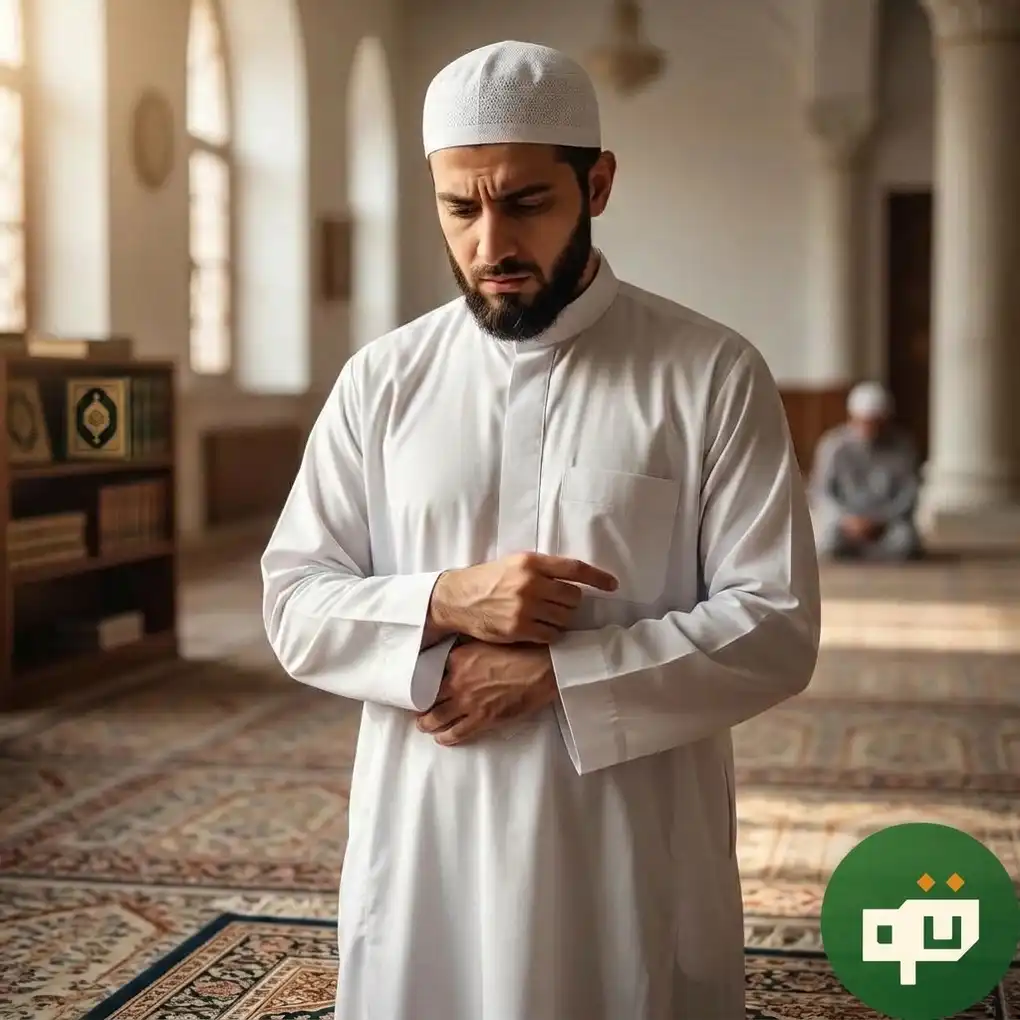
An illustration of doubt about the number of rak’ahs while standing in prayer, a case in which sujud sahwi is recommended.
The fourth cause according to Kashifat al-Saja concerns doubt about the number of rak’ahs.
اَلرَّابِعُ : إِيْقَاعُ رُكْنٍ فِعْلِيٍّ مَعَ احْتِمَالِ الزِّيَادَةِ ، أَيْ : مَعَ التَّرَدُّدِ فِيْ زِيَادَتِهِ ، بِأَنْ شَكَّ فِيْ رَكْعَةٍ مِنَ الرُّبَاعِيَّةِ هَلْ صُلِّيَتْ ثَلَاثًا ؟ وَهَذِهِ الَّتِيْ أُرِيْدَ الْإِتْيَانُ بِهَا رَابِعَةً أَمْ أَرْبَعَةً وَهِيَ خَامِسَةٌ ، فَبَنَى عَلَى الْيَقِيْنِ وَانْتَصَبَ لِلْإِتْيَانِ بِرَكْعَةٍ ، ثُمَّ بَعْدَ انْتِصَابِهِ تَذَكَّرَ فِيْ أَثْنَائِهَا وَقَبْلَ السَّلَامِ أَنَّهَا رَابِعَةٌ ، فَيُسَنُّ السُّجُوْدُ
“The fourth: performing a physical pillar that may be an addition, that is, with doubt about whether it is extra. For example, in a four-rak’ah prayer he doubts whether he has prayed three, so that the rak’ah he is about to pray is the fourth, or four, so that it is the fifth. He builds on what is certain and stands for a rak’ah. After standing, he remembers during that rak’ah and before salam that it is the fourth. Then prostration is recommended.”[20]
Why prostrate when the rak’ahs turn out to be exactly four? Because when he stood up in a state of doubt, that movement might have been an addition. That doubt is what makes the prostration recommended.
Sayyid Alawi al-Saqqaf explains the opposite case, when doubt does not lead to prostration:
وَأَمَّا مَا لاَ يَحْتَمِلُ زِيَادَةً؛ كَأَنْ شَكَّ فِي رَكْعَةٍ مِنْ رُبَاعِيَّةٍ أَهِيَ ثَالِثَةٌ أَمْ رَابِعَةٌ فَتَذَكَّرَ قَبْلَ الْقِيَامِ لِلرَّابِعَةِ أَنَّهَا ثَالِثَةٌ: فَلاَ يَسْجُدُ؛ لأَنَّ مَا فَعَلَهُ مِنْهَا مَعَ التَّرَدُّدِ لاَ بُدَّ مِنْهُ بِكُلِّ تَقْدِيْرٍ، فَإِنْ تَذَكَّرَ بَعْدَ الْقِيَامِ لَهَا: سَجَدَ؛ لِتَرَدُّدِهِ حَالَ الْقِيَامِ إِلَيْهَا فِي زِيَادَتِهَا
“As for what cannot be an addition, such as when he doubts about a rak’ah of a four-rak’ah prayer, whether it is the third or the fourth, and then remembers before standing for the fourth that it is indeed the third, he does not prostrate. This is because what he did while doubting had to be done in any case. But if he remembers only after standing for the next rak’ah, he prostrates, because while standing he was unsure whether it was extra.”[21]
The key is the moment of standing up. If the doubt is gone before he stands for the next rak’ah, there is no movement that might be extra, so there is no need to prostrate.
5. Doubting Whether a Particular Ba’d Was Done
This fifth cause is stated clearly in Fath al-Jawad and in the matn that Tarshih comments on.
قوله: (وَلِشَكٍّ فِيْهِ) أَيْ: فِي تَرْكِ بَعْضٍ مِمَّا مَرَّ مُعَيَّنٍ كَالْقُنُوْتِ هَلْ فَعَلَهُ؟ لأَنَّ الأَصْلَ عَدَمُ فِعْلِهِ
“(And because of doubt about it), meaning doubt about leaving a specific ba’d from those mentioned, such as the qunut: did he do it? This is because the default is that he did not do it.”[22]
Ibn Hajar distinguishes two kinds of doubt:
قوله: (و ) سنّ لسجود أيضاً ( بـ)ـسبب ( شك ) مفصل : أي تردد برجحان أو من مساواة ( فيه ) أي في ترك بعض مما مر بعينه كالقنوت هل فعله … ( لا ) بسبب شك ( مجمل ) في ترك بعض بأن لم يدر هل ترك بعضاً أو غيره لضعفه بالإبهام وكذا لو شك هل سها أو هل تكلم ناسياً أو وهو في التشهد الأخير هل زاد ركعة لان الأصل عدم ذلك
“Prostration is also recommended because of a detailed doubt, whether leaning to one side or evenly balanced, about leaving a specific ba’d, such as the qunut: did he recite it? … It is not recommended because of a general doubt about leaving a ba’d, meaning he does not know whether he left a ba’d or something else, because of the weakness of a vague doubt. The same applies if he doubts whether he forgot at all, whether he spoke forgetfully, or, while in the final tashahhud, whether he added a rak’ah, because the default is that none of this happened.”[23]
So:
- Detailed doubt (“Did I recite the qunut just now?”): sujud sahwi is recommended.
- General doubt (“I feel I missed something, but I don’t know what”): no prostration.
Four or Five? How Kashifat al-Saja and Tarshih al-Mustafidin Count Differently
Kashifat al-Saja mentions four causes[24], while Sayyid Alawi al-Saqqaf mentions five:
وهذا أحد أسباب خمسة لسنِّ سجود السَّهو، ثانيها: نقل قوليٍّ غير مبطل، ثالثها: زيادة فعل يبطل عمده فقط، رابعها: الشَّكُّ في ترك بعض، خامسها: إيقاع فعل مع التَّردُّد في زيادته
“This is one of five causes for which sujud sahwi is recommended. The second: moving a spoken element that does not invalidate the prayer. The third: adding an action that invalidates only if done deliberately. The fourth: doubt about leaving a ba’d. The fifth: performing an action while unsure whether it is extra.”[25]
The difference in numbers is only a matter of counting. Tarshih al-Mustafidin and Fath al-Jawad separate doubt about leaving a specific ba’d as a cause of its own, while the other four causes are the same.
When Sujud Sahwi Is Not Needed
Knowing what does not call for prostration matters just as much, because prostrating without a cause can invalidate the prayer for someone who knows the ruling.
Leaving a Sunnah Hay’ah
Sunnahs of the prayer that are not ab’adh are called sunnah hay’at. Leaving them is not mended by sujud sahwi.
تَذْيِيْلٌ : وَهَيْآتُ الصَّلَاةِ كَثِيْرَةٌ ، وَلَا يُجْبَرُ تَرْكُهَا بِسُجُوْدِ السَّهْوِ
“Addendum: the hay’at of the prayer are many, and leaving them is not mended by sujud sahwi.”[26]
Examples given by Kashifat al-Saja afterwards include placing the right hand over the left, the sitting of rest, pushing up with the palms when rising, and placing the hands on the thighs while sitting[27].
General Doubt, or Doubt After Salam
General doubt was covered under the fifth cause: no prostration[28]. What if the doubt arises after salam?
لَوْ شَكَّ بَعْدَ سَلَامِهِ فِيْ تَرْكِ فَرْضٍ غَيْرِ نِيَّةٍ وَتَكْبِيْرَةِ الْإِحْرَامِ لَمْ يُؤَثِّرْ ، لِأَنَّ الظَّاهِرَ وُقُوْعُ الصَّلَاةِ عَنْ تَمَامٍ
“If he doubts after his salam about having left an obligatory element other than the intention and the opening takbir, the doubt has no effect, because the apparent state is that the prayer was completed in full.”[29]
The same position is found in Fath al-Jawad[30] and Tarshih[31]. The only exceptions are the intention and the opening takbir: doubt about these after salam still has an effect according to the relied-upon position, so the prayer must be repeated[32].
It is different if after salam he is certain that a pillar was left. He must continue his prayer as long as the gap is not long by customary measure (‘urf)[33]. This measure of the gap comes up again in the section on forgetting sujud sahwi until after salam.
How to Perform Sujud Sahwi
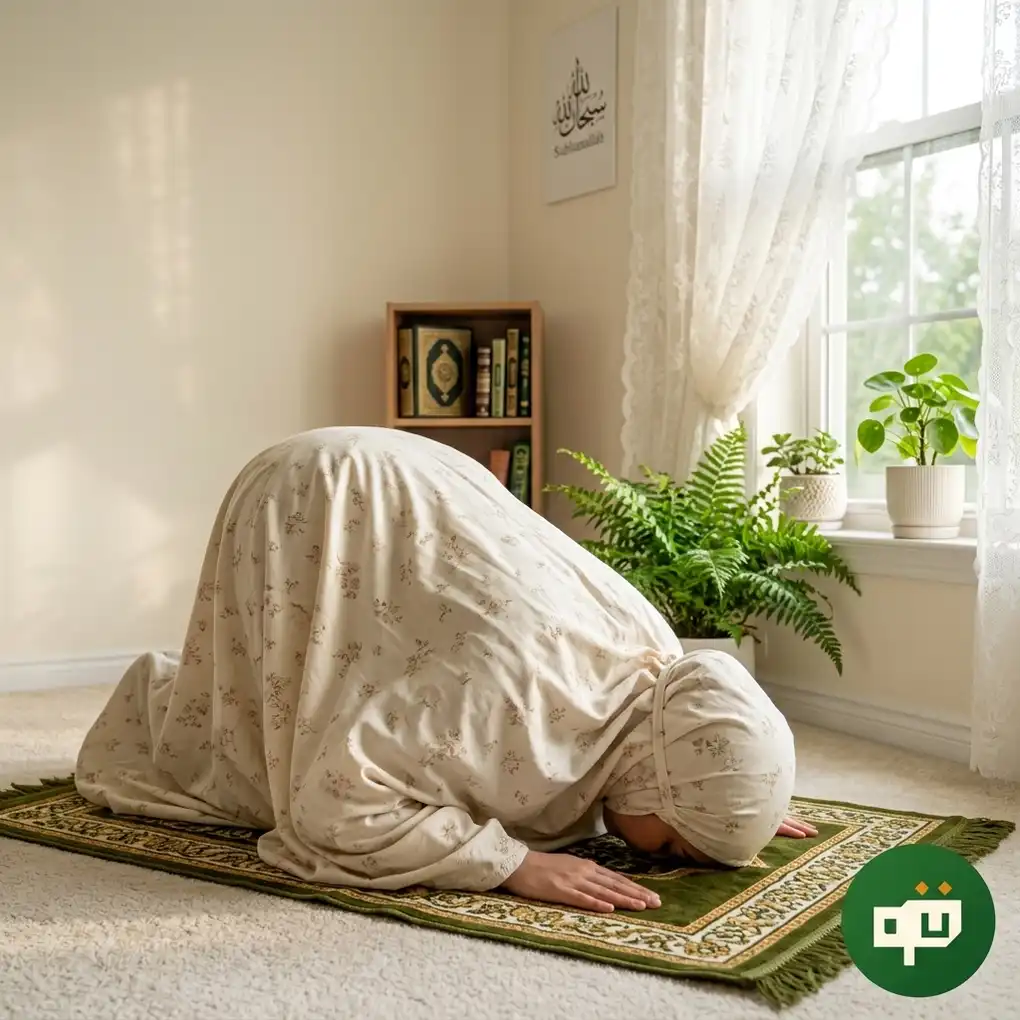
Sujud sahwi is also recommended when praying alone (munfarid) at home.
Now that the causes are clear, here is the part people ask about most: how is it done?
The good news is that it is simple. The movement is the same as an ordinary prostration. There are only a few rules about the number, the intention, the dhikr, and the timing.
Two Prostrations, However Many Times You Forgot
Shaykh Nawawi al-Jawi writes:
وَسُجُوْدُ السَّهْوِ وَإِنْ كَثُرَ السَّهْوُ سَجْدَتَانِ بِنِيَّةِ سُجُوْدِ السَّهْوِ مِنْ غَيْرِ تَلَفُّظٍ بِهَا ، فَلَوْ سَجَدَ بِلَا نِيَّةٍ أَوْ تَلَفَّظَ بِهَا بَطَلَتْ صَلَاتُهُ ؛ نَعَمْ ، اَلْمَأْمُوْمُ لَا يَحْتَاجُ إِلَى نِيَّةٍ لِتَبَعِيَّتِهِ لِلْإِمَامِ
“Sujud sahwi, even if the forgetfulness is frequent, is two prostrations with the intention of sujud sahwi, without pronouncing it. If he prostrates without an intention, or pronounces his intention, his prayer is invalid. Yes, the follower does not need an intention, because he is following the imam.”[34]
So forgetting three times in one prayer does not make it six prostrations. Two prostrations are enough. Ibn Hajar explains why:
ولا يسن للسهو أكثر من سجدتين ( وإن تكرر ) مقتضى السجود ولو عمداً من نوع أو أكثر لأنه صلى الله عليه وسلم سلم من ركعتين وتكلم واستدبر ومشى واقتصر على سجدتين وتكفيانه ولو عن سهو بعدهما وإلا لم يأمن حدوث سهو آخر وتسلسل وهما جبر للكل ما لم يخصهما بشيء معين
“More than two prostrations are not recommended for sahw even if its cause is repeated, even deliberately, whether of one kind or more. This is because the Prophet ﷺ gave salam after two rak’ahs, spoke, turned his back to the qiblah and walked, and then made only two prostrations. The two are enough, even for forgetfulness that happens after them. Otherwise he would never be safe from new forgetfulness, and it would go on endlessly. The two mend everything, as long as he does not assign them to one specific thing.”[35]
What if he prostrates only once? According to Fath al-Jawad:
فإن سجد واحدة لم تبطل صلاته إلا إن قصد الاقتصار عليها ابتداء
“If he prostrates only once, his prayer is not invalid, unless from the start he intended to limit himself to one.”[36]
Intention in the Heart, Not Spoken
From the Kashifat al-Saja quote above, there are three rulings to hold on to:
- The imam and the person praying alone must intend sujud sahwi.
- The intention is in the heart. Saying it aloud actually invalidates the prayer, because it counts as speaking in the prayer.
- The follower does not need an intention, because his prostration follows the imam.
The timing of the intention is explained in the matn that Tarshih comments on:
وَتَجِبُ نِيَّةُ سُجُودِ السَّهْوِ بِأَنْ يَقْصِدَهُ عَنِ السَّهْوِ عِنْدَ شُرُوعِهِ فِيهِ
“The intention of sujud sahwi is obligatory, meaning he intends the prostration for sahw when he begins it.”[37]
What to Recite in Sujud Sahwi
There is no special obligatory recitation. Shaykh Nawawi quotes Fath al-Mu’in:
وَهُمَا وَالْجُلُوْسُ بَيْنَهُمَا كَسُجُوْدِ الصَّلَاةِ وَالْجُلُوْسِ بَيْنَ سَجْدَتَيْهَا فِيْ وَاجِبَاتِهَا [ الثَّلَاثَةِ ] وَمَنْدُوْبَاتِهَا [ السَّابِقَةِ ] كَالذِّكْرِ فِيْهَا
“The two prostrations and the sitting between them are like the prostration of the prayer and the sitting between its two prostrations, in their three obligatory elements and their previously mentioned recommended acts, such as the dhikr in them.”[38]
This means the dhikr of sujud sahwi is the same as that of an ordinary prostration, and the same goes for the sitting between the two prostrations. The correct way to prostrate is covered in our article on the correct way to perform sujud.
Some scholars also mention a specific phrase. The matn of Tarshih introduces it with qila (it has been said):
وَقِيلَ: يَقُولُ فِيهِمَا: سُبْحَانَ مَنْ لَا يَنَامُ وَلَا يَسْهُو؛ وَهُوَ لَائِقٌ بِالْحَالِ
“It has been said: he says in both prostrations, ‘Subhana man la yanamu wa la yashu’ (Glory be to the One who neither sleeps nor forgets). This suits his situation.”[39]
Sayyid Alawi al-Saqqaf then limits it:
أي: حال السَّاهي، هذا إن سها لا إن تعمَّد؛ لأنَّ اللَّائق حينئذ الاستغفار
“Meaning the situation of the one who forgot. This is if he forgot, not if he did it deliberately, because what suits the deliberate case is seeking forgiveness (istighfar).”[40]
So:
- Main dhikr: the same as the dhikr of prostration in prayer.
- “Subhana man la yanamu wa la yashu”: the view of some scholars, suitable for someone who truly forgot.
- Istighfar: more suitable for someone who left a ba’d deliberately.
Is There a Tashahhud After Sujud Sahwi?
Some people recite the tashahhud again after sujud sahwi. Ibn Hajar in Fath al-Jawad states that this is not recommended:
قوله: (قبيل سلامه ) بحيث لا يتخلل بينهما بعض أفعال الصلاة فلا يندب بعدهما تخلل بتشهد ولا بسكوت
“(Its place is) just before salam, such that no part of the prayer’s actions comes between them. So it is not recommended to insert a tashahhud after them, nor a silence.”[41]
This statement is made in Fath al-Jawad. So after the second prostration, sit up and then give salam.
When to Perform Sujud Sahwi: Before Salam
In the Shafi’i school, sujud sahwi is performed before salam, whether it is for something missing or something added.
وَمَحَلُّهُ قُبَيْلَ السَّلَامِ سَوَاءٌ فِيْ ذَلِكَ السَّهْوُ بِزِيَادَةٍ أَوْ بِنَقْصٍ أَمْ بِهِمَا
“Its place is just before salam, whether the sahw is an addition, a deficiency, or both.”[42]
Ibn Hajar gives the proof:
لأنه صلى الله عليه وسلم سجد للنقص قبيله وأمر به قبيله مع التعرض للزيادة
“Because the Prophet ﷺ prostrated for a deficiency just before salam, and commanded it just before salam while also referring to an addition.”[43]
The order is roughly as follows:
- Complete the final tashahhud, the salawat, and the supplication before salam as usual.
- Make the intention of sujud sahwi in your heart (for the imam or the person praying alone).
- Prostrate like an ordinary prostration of prayer, with the dhikr of prostration.
- Sit between the two prostrations, then make the second prostration.
- Sit up, then give salam.
The supplications commonly recited before salam are covered in our article on recitations before salam.
Forgetting Sujud Sahwi Until After Salam
This happens very often: you only remember something was missed after giving salam. What should you do?
You May Still Prostrate If the Gap Is Short
Ibn Hajar explains:
قوله: (فإن ) وجد منه سهو ( ونسي ) أن يسجد له قبل السلام أو جهل أن محله قبله وأراده ( فعقيبه ) أي السلام يسجد للسهو تداركاً له
“If forgetfulness occurred and he forgot to prostrate for it before salam, or did not know that its place is before salam, and he wants to prostrate, then after the salam he performs sujud sahwi to make it up.”[44]
There are conditions. Shaykh Nawawi writes:
فَإِنْ سَلَّمَ عَمْدًا مُطْلَقًا أَوْ سَهْوًا وَطَالَ فَصْلٌ عُرْفًا فَاتَ السُّجُوْدُ ، وَإِلَّا سَجَدَ ، وَإِذَا أَرَادَ مَنْ سَلَّمَ سَاهِيًا السُّجُوْدَ صَارَ عَائِدًا إِلَى الصَّلَاةِ ، فَيَجِبُ أَنْ يُعِيْدَ السَّلَامَ
“If he gave salam deliberately, in any case, or forgetfully but the gap became long by custom (‘urf), the prostration is missed. Otherwise he prostrates. When the one who gave salam forgetfully wants to prostrate, he returns to the prayer, so he must repeat the salam.”[45]
So the conditions are:
- The salam was given forgetfully, not deliberately.
- The gap is not yet long by customary measure (‘urf).
- He actually wants to prostrate. Ibn Hajar notes that if he does not want to, there is no prostration[46].
Sayyid Alawi confirms that whether the gap is long or short is judged by custom:
وَالْمَرْجِعُ فِي طُوْلِ الْفَصْلِ وَقِصَرِهِ إِلَى الْعُرْفِ
“The measure of a long or short gap is referred to custom (‘urf).”[47]
What Returning to the Prayer Means
Once he prostrates, he is considered to have returned to the prayer. Shaykh Nawawi mentions several consequences:
وَإِذَا أَحْدَثَ بَطَلَتْ صَلَاتُهُ ؛ وَإِذَا خَرَجَ وَقْتُ الظُّهْرِ فِيْهِ فَاتَتِ الْجُمُعَةُ ، وَإِذَا تَذَكَّرَ تَرْكَ رُكْنٍ أَوْ شَكَّ فِيْهِ لَزِمَهُ تَدَارُكُهُ قَبْلَ سُجُوْدِهِ
“If he then loses his wudu, his prayer is invalid. If the time of Zuhr ends during it, the Jumu’ah is lost. If he remembers leaving a pillar or doubts about it, he must make it up before his prostration.”[48]
In short:
- He must give salam again after the prostration.
- Losing wudu after returning invalidates the prayer.
- A missed pillar must be made up first, before sujud sahwi.
Sujud sahwi for a follower whose imam forgot, gave salam, and then returned to prostrate is discussed in our article on sujud sahwi for the imam, follower and masbuq.
The Rule of Doubt: What Is Doubted Is Treated as Non-Existent
Many issues in sujud sahwi rest on one principle. Ibn Hajar calls it a general rule:
وهو أن ما شك في تغيره عن أصله رجع به إليه وجوداً كان أو عدماً وطرح الشك فحينئذ ( كمعدوم مشكوك فيه ) فلو شك هل سجد للسهو سجدتين سجدهما أو هل سجد الثانية سجد واحدة عملاً بأصل العدم أو هل صلى ثلاثاً أو أربعاً بنى على الأقل لأنه المتيقن
“It is that whatever is doubted as having changed from its original state is returned to that original state, whether the original is existence or non-existence, and the doubt is discarded. So something doubted is like something non-existent. If he doubts whether he made the two prostrations of sahw, he makes them. If he doubts whether he made the second, he makes one, acting on the default of non-existence. If he doubts whether he prayed three or four, he builds on the lesser, because that is what is certain.”[49]
What if someone tells him how many rak’ahs he prayed? The matn of Tarshih answers:
وَلاَ يَرْجِعُ فِي فِعْلِهَا إِلَى ظَنِّهِ وَلاَ إِلَى قَوْلِ غَيْرِهِ أَوْ فِعْلِهِ وَإِنْ كَانُوْا جَمْعًا كَثِيْرًا، مَا لَمْ يَبْلُغُوْا عَدَدَ التَّوَاتُرِ
“He does not rely on his own assumption in doing it, nor on the words or actions of others, even if they are many, as long as they do not reach the number of mass transmission (tawatur).”[50]
Examples of applying it:
- Unsure whether three or four rak’ahs: treat it as three, add one rak’ah, then perform sujud sahwi[50].
- Unsure whether you recited the qunut: treat it as not done, then perform sujud sahwi[51].
- Unsure whether you performed sujud sahwi: treat it as not done, then prostrate[52].
If you would also like to learn about other prostrations that are often confused with this one, read our article on sujud tilawah and sujud shukr. May our prayers become calmer and more orderly.
FAQ About Sujud Sahwi
What is the ruling of sujud sahwi?
Is sujud sahwi performed before or after salam?
What do you recite in sujud sahwi?
How many prostrations if you forgot more than once?
Still two prostrations, because the two mend all forgetfulness in one prayer[59].
Do you perform sujud sahwi if you forget the first tashahhud?
What if you are unsure whether you prayed three or four rak’ahs?
Take the lesser number, which is three.
Add one rak’ah.
Perform sujud sahwi before salam[62].
Do you recite the tashahhud again after sujud sahwi?
According to Fath al-Jawad, it is not recommended to put a tashahhud between sujud sahwi and salam[63]. After the second prostration, sit up and give salam.
Footnotes
1 : Nawawi al-Jawi, Kashifat al-Saja, Vol. 1, p. 284–285. ↩
2 : Ibid., p. 285. ↩
3 : Alawi al-Saqqaf, Tarshih al-Mustafidin, Vol. 1, p. 327. ↩
4 : Ibn Hajar al-Haytami, Fath al-Jawad, Vol. 1, p. 234. ↩
5 : Alawi al-Saqqaf, Tarshih al-Mustafidin, Vol. 1, p. 327–328. ↩
6 : Ibid., p. 328 (citing Bushra al-Karim). ↩
7 : Ibid., p. 328. ↩
8 : Ibn Hajar al-Haytami, Fath al-Jawad, Vol. 1, p. 237. ↩
9 : Alawi al-Saqqaf, Tarshih al-Mustafidin, Vol. 1, p. 328. ↩
10 : Nawawi al-Jawi, Kashifat al-Saja, Vol. 1, p. 284. ↩
11 : Ibid., p. 285. ↩
12 : Ibn Hajar al-Haytami, Fath al-Jawad, Vol. 1, p. 234. ↩
13 : Nawawi al-Jawi, Kashifat al-Saja, Vol. 1, p. 285. ↩
14 : Ibn Hajar al-Haytami, Fath al-Jawad, Vol. 1, p. 235. ↩
15 : Nawawi al-Jawi, Kashifat al-Saja, Vol. 1, p. 286. ↩
16 : Ibn Hajar al-Haytami, Fath al-Jawad, Vol. 1, p. 236. ↩
17 : Nawawi al-Jawi, Kashifat al-Saja, Vol. 1, p. 286. ↩
18 : Ibn Hajar al-Haytami, Fath al-Jawad, Vol. 1, p. 236. ↩
19 : Alawi al-Saqqaf, Tarshih al-Mustafidin, Vol. 1, p. 338. ↩
20 : Nawawi al-Jawi, Kashifat al-Saja, Vol. 1, p. 286. ↩
21 : Alawi al-Saqqaf, Tarshih al-Mustafidin, Vol. 1, p. 341. ↩
22 : Ibid., p. 334. ↩
23 : Ibn Hajar al-Haytami, Fath al-Jawad, Vol. 1, p. 235. ↩
24 : Nawawi al-Jawi, Kashifat al-Saja, Vol. 1, p. 284. ↩
25 : Alawi al-Saqqaf, Tarshih al-Mustafidin, Vol. 1, p. 330 (citing Bushra al-Karim). ↩
26 : Nawawi al-Jawi, Kashifat al-Saja, Vol. 1, p. 295. ↩
27 : Ibid., p. 296–297. ↩
28 : Ibn Hajar al-Haytami, Fath al-Jawad, Vol. 1, p. 235. ↩
29 : Nawawi al-Jawi, Kashifat al-Saja, Vol. 1, p. 287. ↩
30 : Ibn Hajar al-Haytami, Fath al-Jawad, Vol. 1, p. 238. ↩
31 : Alawi al-Saqqaf, Tarshih al-Mustafidin, Vol. 1, p. 344. ↩
32 : Ibn Hajar al-Haytami, Fath al-Jawad, Vol. 1, p. 238; Alawi al-Saqqaf, Tarshih al-Mustafidin, Vol. 1, p. 344. ↩
33 : Alawi al-Saqqaf, Tarshih al-Mustafidin, Vol. 1, p. 344. ↩
34 : Nawawi al-Jawi, Kashifat al-Saja, Vol. 1, p. 288. ↩
35 : Ibn Hajar al-Haytami, Fath al-Jawad, Vol. 1, p. 237. ↩
36 : Ibid., p. 236. ↩
37 : Alawi al-Saqqaf, Tarshih al-Mustafidin, Vol. 1, p. 330. ↩
38 : Nawawi al-Jawi, Kashifat al-Saja, Vol. 1, p. 288 (citing Fath al-Mu’in). ↩
39 : Alawi al-Saqqaf, Tarshih al-Mustafidin, Vol. 1, p. 329. ↩
40 : Ibid., p. 329 (citing al-Tuhfah). ↩
41 : Ibn Hajar al-Haytami, Fath al-Jawad, Vol. 1, p. 236. ↩
42 : Nawawi al-Jawi, Kashifat al-Saja, Vol. 1, p. 288. ↩
43 : Ibn Hajar al-Haytami, Fath al-Jawad, Vol. 1, p. 236. ↩
44 : Ibid., p. 237. ↩
45 : Nawawi al-Jawi, Kashifat al-Saja, Vol. 1, p. 289. ↩
46 : Ibn Hajar al-Haytami, Fath al-Jawad, Vol. 1, p. 237. ↩
47 : Alawi al-Saqqaf, Tarshih al-Mustafidin, Vol. 1, p. 344. ↩
48 : Nawawi al-Jawi, Kashifat al-Saja, Vol. 1, p. 289. ↩
49 : Ibn Hajar al-Haytami, Fath al-Jawad, Vol. 1, p. 237. ↩
50 : Alawi al-Saqqaf, Tarshih al-Mustafidin, Vol. 1, p. 340. ↩
51 : Ibid., p. 334. ↩
52 : Ibn Hajar al-Haytami, Fath al-Jawad, Vol. 1, p. 237. ↩
53 : Ibn Hajar al-Haytami, Fath al-Jawad, Vol. 1, p. 234; Alawi al-Saqqaf, Tarshih al-Mustafidin, Vol. 1, p. 327–328. ↩
54 : Alawi al-Saqqaf, Tarshih al-Mustafidin, Vol. 1, p. 328. ↩
55 : Nawawi al-Jawi, Kashifat al-Saja, Vol. 1, p. 288; Ibn Hajar al-Haytami, Fath al-Jawad, Vol. 1, p. 236. ↩
56 : Nawawi al-Jawi, Kashifat al-Saja, Vol. 1, p. 289. ↩
57 : Nawawi al-Jawi, Kashifat al-Saja, Vol. 1, p. 288; Alawi al-Saqqaf, Tarshih al-Mustafidin, Vol. 1, p. 329. ↩
58 : Alawi al-Saqqaf, Tarshih al-Mustafidin, Vol. 1, p. 329. ↩
59 : Nawawi al-Jawi, Kashifat al-Saja, Vol. 1, p. 288; Ibn Hajar al-Haytami, Fath al-Jawad, Vol. 1, p. 237. ↩
60 : Nawawi al-Jawi, Kashifat al-Saja, Vol. 1, p. 290; Ibn Hajar al-Haytami, Fath al-Jawad, Vol. 1, p. 234. ↩
61 : Nawawi al-Jawi, Kashifat al-Saja, Vol. 1, p. 285. ↩
62 : Ibn Hajar al-Haytami, Fath al-Jawad, Vol. 1, p. 237; Alawi al-Saqqaf, Tarshih al-Mustafidin, Vol. 1, p. 340. ↩
63 : Ibn Hajar al-Haytami, Fath al-Jawad, Vol. 1, p. 236. ↩
- Ibn Ḥajar al-Haytamī, Shihāb al-Dīn Abū al-ʿAbbās Aḥmad ibn Muḥammad ibn ʿAlī. Fatḥ al-Jawwād bi-Sharḥ al-Irshād ʿalā Matn al-Irshād. Edited by ʿAbd al-Laṭīf Ḥasan ʿAbd al-Raḥmān. Beirut: Dār al-Kutub al-ʿIlmiyyah, 1st ed., 1426 AH/2005 CE. 3 vols.
- Al-Bantanī, Muḥammad Nawawī ibn ʿUmar al-Jāwī al-Shāfiʿī. Kāshifat al-Sajā Sharḥ Safīnat al-Najā fīmā Yajibu ʿalā al-ʿAbd li-Mawlāhu ʿalā Madhhab al-Imām al-Shāfiʿī. Edited by Bassām ʿAbd al-Wahhāb al-Jābī. Beirut: Dār al-Jaffān wa al-Jābī and Dār Ibn Ḥazm, 1st ed., 1432 AH/2011 CE.
- Al-Saqqāf, ʿAlawī ibn Aḥmad. Tarshīḥ al-Mustafīdīn ʿalā Fatḥ al-Muʿīn bi-Sharḥ Qurrat al-ʿAyn bi-Muhimmāt al-Dīn. Edited by ʿAmmār Bassām Saḥātī. Damascus: Dār al-Baṣāʾir al-Dimashqiyyah and Dār al-Miʿrāj, n.d.


