
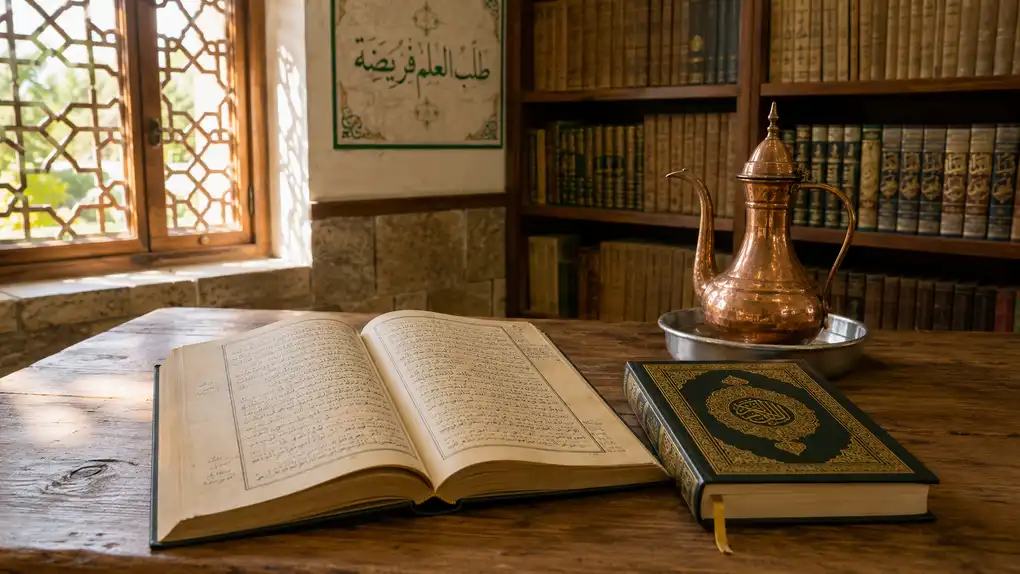
Thaharah means purification according to Islamic law. It is not merely physical cleanliness, a pleasant smell, or tidy clothing. In fiqh, thaharah is the state of ritual purity needed for acts of worship, especially prayer.
The scriptural proofs of thaharah come from the Qur’an and the Hadith of the Prophet ﷺ. These proofs explain wudu, ghusl, tayammum, mutlaq water, and the removal of najasah.
For the parent topic, see the complete guide to thaharah.
What Is Scriptural Evidence in the Topic of Thaharah?
Scriptural evidence means evidence transmitted from revelation: the Qur’an and the Sunnah. In thaharah, these texts show when purification is required, what tools may be used, and how hadath or najasah is removed.
In Asna al-Mathalib, Shaykh Zakariyya al-Anshari defines thaharah linguistically:
وَهِيَ لُغَةً النَّظَافَةُ، وَالْخُلُوصُ مِنَ الْأَدْنَاسِ حِسِّيَّةً كَالْأَنْجَاسِ أَوْ مَعْنَوِيَّةً كَالْعُيُوبِ
“Linguistically, thaharah is cleanliness and freedom from impurities, whether physical impurities such as najasah or inward impurities such as defects.”[1]
He then defines it legally:
وَشَرْعًا رَفْعُ حَدَثٍ أَوْ إِزَالَةُ نَجَسٍ أَوْ مَا فِي مَعْنَاهُمَا، وَعَلَى صُورَتِهِمَا
“Legally, thaharah is removing hadath, removing najasah, or what carries the same meaning and follows the same form.”[1]
So the meaning of thaharah is more precise than ordinary cleanliness. A person may look clean yet still be in a state of hadath. A person may have performed wudu while his clothes still carry najasah that must be removed.
For a focused explanation, see the definition of thaharah in fiqh.
Why Is Thaharah Studied Before Prayer?
Many fiqh books begin worship with Kitab al-Thaharah because prayer is not valid without purification from hadath and najasah.
Before studying the pillars of prayer, recitations, or congregational prayer, a Muslim needs to understand wudu, ghusl, tayammum, and the removal of najasah. Without thaharah, an outwardly correct prayer may still be invalid.
In fiqh, thaharah covers three main areas:
- Removing minor hadath, such as through wudu.
- Removing major hadath, such as through ghusl.
- Removing najasah, such as washing the body, clothes, or place of prayer.
This is why the legal basis of thaharah is practical, not merely theoretical.
Qur’anic Proofs of Thaharah
The Qur’an contains several central verses on thaharah. Some verses speak about the virtue of purification. Others give the rulings of wudu, ghusl, tayammum, and water as a means of purification.
For the broader categories, see types of thaharah.
Al-Baqarah 2:222: Allah Loves Those Who Purify Themselves
Allah says:
إِنَّ اللَّهَ يُحِبُّ التَّوَّابِينَ وَيُحِبُّ الْمُتَطَهِّرِينَ
“Indeed, Allah loves those who constantly repent and loves those who purify themselves.”
This verse shows the honor of purification. Repentance purifies the inward state, while thaharah preserves the outward and legal state needed for worship.
Al-Ma’idah 5:6: The Proof for Wudu, Ghusl, and Tayammum
The clearest verse on wudu is in Al-Ma’idah 5:6:
يَا أَيُّهَا الَّذِينَ آمَنُوا إِذَا قُمْتُمْ إِلَى الصَّلَاةِ فَاغْسِلُوا وُجُوهَكُمْ وَأَيْدِيَكُمْ إِلَى الْمَرَافِقِ وَامْسَحُوا بِرُءُوسِكُمْ وَأَرْجُلَكُمْ إِلَى الْكَعْبَيْنِ
“O believers, when you rise for prayer, wash your faces and your hands up to the elbows, wipe your heads, and wash your feet up to the ankles.”
This is the main proof of wudu in Al-Ma’idah verse 6. It names the key limbs of wudu: the face, hands, head, and feet.
The same verse also mentions ghusl:
وَإِنْ كُنْتُمْ جُنُبًا فَاطَّهَّرُوا
“And if you are in a state of janabah, then purify yourselves.”
Then it mentions tayammum:
فَلَمْ تَجِدُوا مَاءً فَتَيَمَّمُوا صَعِيدًا طَيِّبًا
“If you do not find water, then perform tayammum with pure earth.”
One verse therefore contains three major topics: wudu, ghusl, and tayammum.
Al-Nisa’ 4:43: Prayer Is Not Performed in Janabah


Allah says:
وَلَا جُنُبًا إِلَّا عَابِرِي سَبِيلٍ حَتَّى تَغْتَسِلُوا
“Nor while you are in a state of janabah, except when merely passing through, until you wash yourselves.”
This shows that a person in janabah does not pray until performing ghusl. The verse then mentions tayammum when water is not found:
فَلَمْ تَجِدُوا مَاءً فَتَيَمَّمُوا صَعِيدًا طَيِّبًا
“If you do not find water, then perform tayammum with pure earth.”
Asna al-Mathalib cites فلم تجدوا ماء فتيمموا as evidence for moving from water to tayammum when water is not found.[2]
Al-Anfal 8:11: Rainwater as a Means of Purification
Allah says:
وَيُنَزِّلُ عَلَيْكُمْ مِنَ السَّمَاءِ مَاءً لِيُطَهِّرَكُمْ بِهِ
“And He sends down upon you water from the sky to purify you with it.”
Shaykh Zakariyya al-Anshari cites this verse at the beginning of the discussion on water:
قَالَ اللهُ تَعَالَى: وَيُنَزِّلُ عَلَيْكُمْ مِنَ السَّمَاءِ مَاءً لِيُطَهِّرَكُمْ بِهِ
“Allah Most High says: ‘And He sends down upon you water from the sky to purify you with it.’”[2]
This verse shows that water is not only a normal cleaning agent. It is also a means of purification in Islamic law.
Al-Furqan 25:48: Water That Is Pure and Purifying
Allah says:
وَأَنْزَلْنَا مِنَ السَّمَاءِ مَاءً طَهُورًا
“And We sent down from the sky water that is pure and purifying.”
In fiqh, the word طَهُورًا indicates water that is pure in itself and purifies other things. Asna al-Mathalib notes that Al-Anfal 8:11 is even clearer for the function of purification because it uses لِيُطَهِّرَكُمْ بِهِ, “to purify you with it.”[2]
Al-A’raf 7:82: Purification from Defect
Allah says:
إِنَّهُمْ أُنَاسٌ يَتَطَهَّرُونَ
“Indeed, they are people who purify themselves.”
Asna al-Mathalib uses this verse to explain the linguistic sense of thaharah:
يُقَالُ تَطَهَّرْتُ بِالْمَاءِ، وَهُمْ قَوْمٌ يَتَطَهَّرُونَ أَيْ يَتَنَزَّهُونَ عَنْ الْعَيْبِ
“It is said: ‘I purified myself with water.’ It is also said: ‘They are people who purify themselves,’ meaning that they keep away from defect.”[1]
Not every Qur’anic use of purification means wudu or ghusl. Some verses point to inward purity, while others establish technical fiqh rulings.
Hadith Proofs for Water as the Main Tool of Purification
The Sunnah explains how the Qur’anic proofs are practiced. Two key hadiths in the topic of water are the hadith of the Bedouin who urinated in the mosque and the hadith of seawater.
The Hadith of the Bedouin Who Urinated in the Mosque
Asna al-Mathalib states:
وَقَوْلُهُ صَلَّى اللهُ عَلَيْهِ وَسَلَّمَ فِي خَبَرِ الصَّحِيحَيْنِ حِينَ بَالَ الْأَعْرَابِيُّ فِي الْمَسْجِدِ: صُبُّوا عَلَيْهِ ذَنُوبًا مِنْ مَاءٍ، وَالذَّنُوبُ الدَّلْوُ الْمُمْتَلِئَةُ مَاءً
“And the statement of the Prophet ﷺ in the report of the two Sahih collections, when the Bedouin urinated in the mosque: ‘Pour over it a full bucket of water.’ A dhanub is a bucket full of water.”[2]
This hadith proves that najasah on a place can be purified with water. The Prophet ﷺ did not command perfume or concealment; he commanded water.
The Hadith of Seawater
Asna al-Mathalib cites the hadith:
هُوَ الطَّهُورُ مَاؤُهُ، الْحِلُّ مَيْتَتُهُ
“Its water is pure and purifying, and its dead creatures are lawful.”[3]
This shows that seawater may be used for purification. Its salty taste does not remove it from being mutlaq water, because that taste belongs to its original nature.
For more detail, see mutlaq water for purification.
Mutlaq Water as the Original Tool of Thaharah
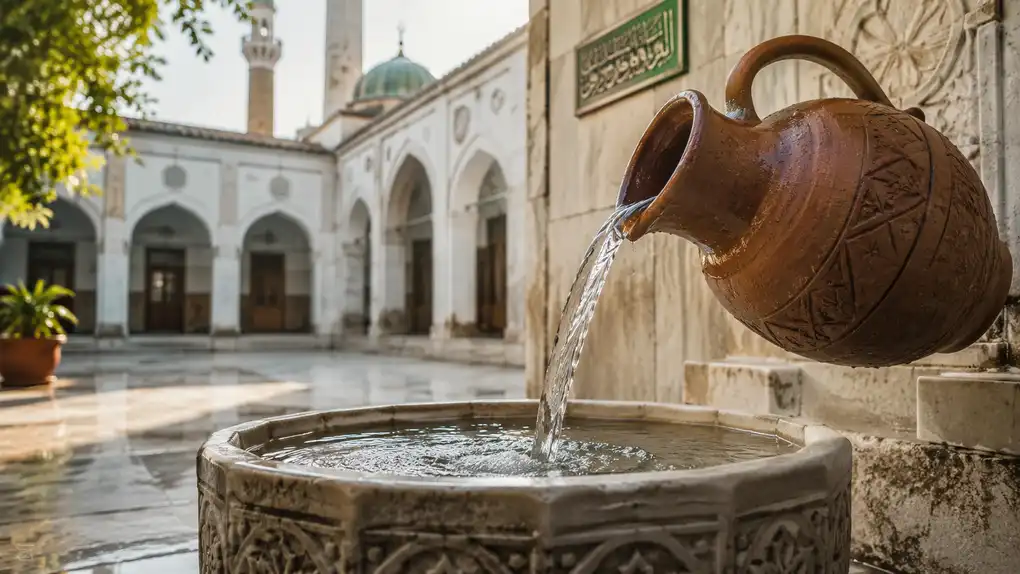
In Shafi‘i fiqh, the original tool for removing hadath and najasah is mutlaq water. Shaykh Zakariyya al-Anshari writes:
لَا يَجُوزُ رَفْعُ حَدَثٍ، وَلَا إِزَالَةُ نَجَسٍ إِلَّا بِالْمَاءِ الْمُطْلَقِ
“It is not valid to remove hadath or remove najasah except with mutlaq water.”[2]
This means that not every liquid can be used for thaharah. Tea, rosewater, soup, coffee, or a liquid that has gained another fixed name is not the original tool for lifting hadath.
Soap may be used to clean the body or clothes. The legal status of thaharah, however, returns to water that is valid in fiqh.
Tayammum as a Substitute for Water
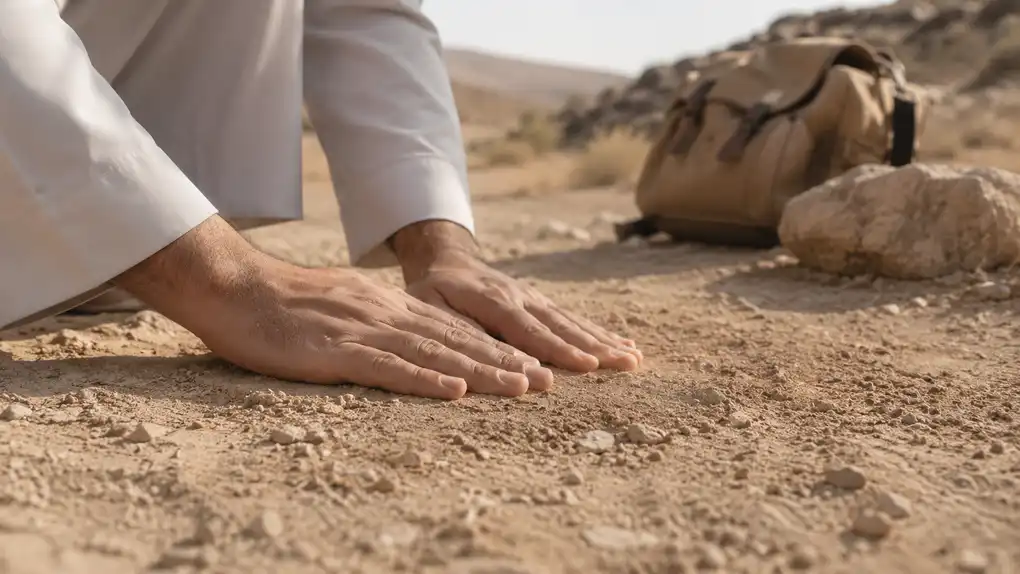
Tayammum is a concession when a person cannot use water. It is not an empty symbol. It is a form of thaharah established by revelation.
Asna al-Mathalib defines tayammum:
وَشَرْعًا إِيصَالُ التُّرَابِ إِلَى الْوَجْهِ وَالْيَدَيْنِ بِشَرَائِطَ مَخْصُوصَةٍ
“Legally, tayammum is conveying dust to the face and the two hands with specific conditions.”[4]
Its Qur’anic proof is:
فَتَيَمَّمُوا صَعِيدًا طَيِّبًا
“Then perform tayammum with pure earth.”
The book explains صَعِيدًا طَيِّبًا as تُرَابًا طَاهِرًا, pure dust or earth.[4]
The hadith proof is:
جُعِلَتْ لَنَا الْأَرْضُ كُلُّهَا مَسْجِدًا وَتُرْبَتُهَا طَهُورًا
“The whole earth has been made a mosque for us, and its soil has been made a means of purification.”[4]
In Shafi‘i fiqh, the medium of tayammum is pure and unmixed dust. The book says:
الْأَوَّلُ مِنَ السَّبْعَةِ التُّرَابُ الطَّاهِرُ الْخَالِصُ
“The first of the seven matters is pure, unmixed dust.”[5]
Tayammum is used when water is absent, difficult to use, or harmful for a sick person. The book states:
وَهُوَ الْعَجْزُ عَنْ اسْتِعْمَالِ الْمَاءِ بِتَعَذُّرِهِ أَوْ تَعَسُّرِهِ لِخَوْفِ ضَرَرٍ ظَاهِرٍ
“Its cause is inability to use water, either because it is unavailable, difficult, or because of fear of clear harm.”[4]
For practice, see the guide to tayammum when water is unavailable.
How the Proofs of Thaharah Apply in Worship
The proofs of thaharah appear clearly in wudu, ghusl, and the removal of najasah.
Wudu
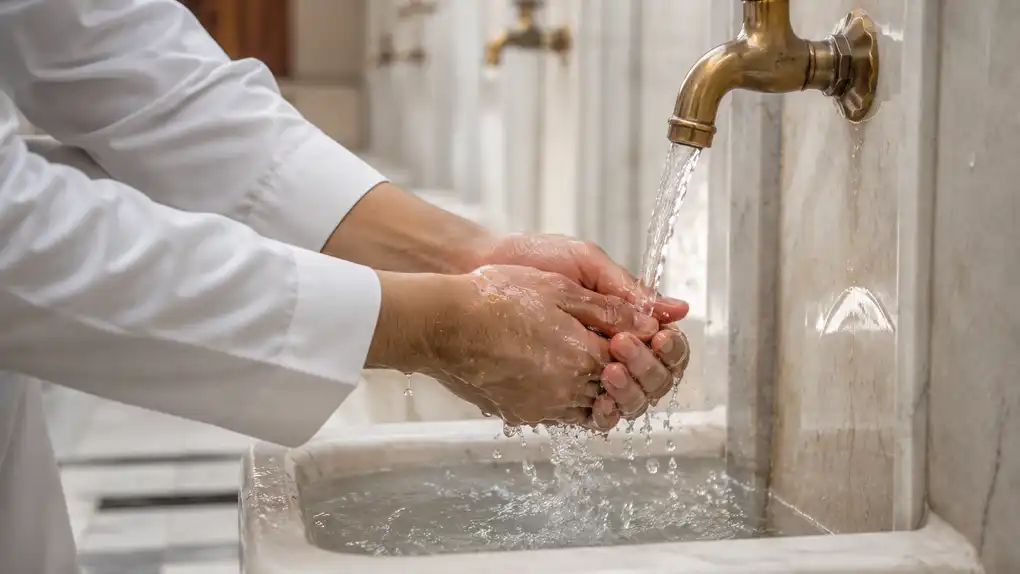
Asna al-Mathalib defines wudu legally:
وَفِي الشَّرْعِ اسْتِعْمَالُ الْمَاءِ فِي أَعْضَاءٍ مَخْصُوصَةٍ مُفْتَتَحًا بِنِيَّةٍ
“Legally, wudu is using water on specific limbs, beginning with intention.”[8]
The obligatory elements of wudu are six:
وَفُرُوضُهُ سِتَّةٌ: النِّيَّةُ، غَسْلُ الْوَجْهِ، غَسْلُ الْيَدَيْنِ، مَسْحُ الرَّأْسِ، غَسْلُ الرِّجْلَيْنِ، التَّرْتِيبُ
“Its obligations are six: intention, washing the face, washing the two hands, wiping the head, washing the two feet, and order.”[8]
The Prophet ﷺ said:
لَا يَقْبَلُ اللهُ صَلَاةَ أَحَدِكُمْ إِذَا أَحْدَثَ حَتَّى يَتَوَضَّأَ
“Allah does not accept the prayer of one of you when he has hadath until he performs wudu.”[9]
For details, see the complete guide to wudu.
Ghusl
Ghusl is purification from major hadath. Allah says:
وَإِنْ كُنْتُمْ جُنُبًا فَاطَّهَّرُوا
“If you are in a state of janabah, then purify yourselves.”
The book defines ghusl:
وَشَرْعًا سَيَلَانُهُ عَلَى جَمِيعِ الْبَدَنِ
“Legally, it is the flowing of water over the whole body.”[10]
The minimum ghusl includes intention and making water reach the whole body. The book says:
وَأَقَلُّ الْغُسْلِ شَيْئَانِ أَحَدُهُمَا نِيَّةُ رَفْعِ الْجَنَابَةِ
“The minimum ghusl consists of two matters. The first is the intention to lift janabah.”[11]
For details, see the guide to obligatory ghusl.
Removing Najasah
Najasah must be removed from the body, clothing, and place of prayer. The book states:
تَجِبُ إِزَالَتُهَا لِلصَّلَاةِ وَنَحْوِهَا
“It is obligatory to remove it for prayer and similar acts.”[12]
Unlike wudu and ghusl, removing najasah does not require intention:
وَلَا يُشْتَرَطُ فِيهَا النِّيَّةُ لِأَنَّهَا تَرْكٌ
“Intention is not required for it, because it is a removal.”[12]
If a small amount of water is enough only for najasah or for hadath, it is used for najasah first. The book explains:
لِأَنَّ إِزَالَتَهَا لَا بَدَلَ لَهَا بِخِلَافِ الْوُضُوءِ وَالْغُسْلِ
“Because removing it has no substitute, unlike wudu and ghusl.”[13]
For more, see types of najasah and the difference between hadath and najasah.
Thaharah and Cleanliness: Are They the Same?
Hadiths about cleanliness and proofs of thaharah are related, but they are not always the same. Cleanliness is a broad meaning. Thaharah is a legal fiqh ruling.
A pleasant-smelling body may still be in hadath. A clean-looking garment may still carry najasah. A fragrant place may still be invalid for prayer if its najasah has not been purified.
So general cleanliness cannot replace the rulings of thaharah. In worship, the questions are: has hadath been lifted, and has najasah been removed?
For the wisdom behind the topic, see the wisdom of purification in Islam.
Common Mistakes in Understanding the Proofs of Thaharah
Several mistakes appear often in discussions of thaharah.
First, some people think thaharah only means wudu or ghusl. It also includes removing najasah and tayammum.
Second, some people treat all cleanliness as legal thaharah. A garment that smells good is not necessarily pure if it carries najasah.
Third, some people think every liquid can be used for purification. The original tool is mutlaq water.
Fourth, some people confuse hadath and najasah. Hadath is a legal state removed by wudu, ghusl, or tayammum. Najasah is a substance or legal impurity that must be removed from the body, clothes, or place.
The book explains hadath as that which obligates wudu or ghusl:
وَيُطْلَقُ … عَلَى مَا يُوجِبُ الْوُضُوءَ وَعَلَى مَا يُوجِبُ الْغُسْلَ فَيُقَالُ: حَدَثٌ أَصْغَرُ وَحَدَثٌ أَكْبَرُ
“Hadath is used for what obligates wudu and what obligates ghusl. Thus it is said: minor hadath and major hadath.”[14]
Fifth, some people think tayammum can replace the removal of najasah. It cannot. Tayammum substitutes for wudu or ghusl during an excuse, not for washing najasah.
Sixth, some people follow waswas. Fiqh is not built on panic. If a person purified himself correctly, he should not follow unsupported doubt.
Quick Table of Qur’anic Proofs
| Verse | Arabic Text | Theme | Fiqh Topic |
|---|---|---|---|
| Al-Baqarah 2:222 | إِنَّ اللَّهَ يُحِبُّ التَّوَّابِينَ وَيُحِبُّ الْمُتَطَهِّرِينَ | Allah loves those who purify themselves | Virtue of thaharah |
| Al-Ma’idah 5:6 | فَاغْسِلُوا وُجُوهَكُمْ… | Wudu | Obligatory limbs |
| Al-Ma’idah 5:6 | وَإِنْ كُنْتُمْ جُنُبًا فَاطَّهَّرُوا | Ghusl | Major purification |
| Al-Nisa’ 4:43 | فَتَيَمَّمُوا صَعِيدًا طَيِّبًا | Tayammum | Substitute when water cannot be used |
| Al-Anfal 8:11 | مَاءً لِيُطَهِّرَكُمْ بِهِ | Rainwater | Water as purifier |
| Al-Furqan 25:48 | مَاءً طَهُورًا | Pure and purifying water | Mutlaq water |
| Al-A’raf 7:82 | إِنَّهُمْ أُنَاسٌ يَتَطَهَّرُونَ | Purifying oneself | Linguistic meaning |
Quick Table of Hadiths on Thaharah
| No. | Hadith | Theme | Function |
|---|---|---|---|
| 1 | لَا يَقْبَلُ اللهُ صَلَاةَ أَحَدِكُمْ إِذَا أَحْدَثَ حَتَّى يَتَوَضَّأَ | Wudu | Prayer is invalid with hadath until wudu |
| 2 | صُبُّوا عَلَيْهِ ذَنُوبًا مِنْ مَاءٍ | Najasah | Najasah on a place is purified with water |
| 3 | هُوَ الطَّهُورُ مَاؤُهُ، الْحِلُّ مَيْتَتُهُ | Seawater | Seawater is pure and purifying |
| 4 | جُعِلَتْ لَنَا الْأَرْضُ كُلُّهَا مَسْجِدًا وَتُرْبَتُهَا طَهُورًا | Tayammum | Earth is a place of prayer and soil is a purifier |
| 5 | إِذَا وَلَغَ الْكَلْبُ فِي الْإِنَاءِ فَاغْسِلُوهُ سَبْعَ مَرَّاتٍ | Heavy najasah | Dog licking is washed seven times |
| 6 | إِذَا أَقْبَلَتْ الْحَيْضَةُ فَدَعِي الصَّلَاةَ | Menstruation | A menstruating woman leaves prayer until purity |
| 7 | لَوْلَا أَنْ أَشُقَّ عَلَى أُمَّتِي لَأَمَرْتُهُمْ بِالسِّوَاكِ عِنْدَ كُلِّ وُضُوءٍ | Siwak | Oral cleanliness with wudu |
| 8 | تَوَضَّئُوا بِسْمِ اللهِ | Wudu | Saying the basmalah |
| 9 | كُنْتُ أَغْتَسِلُ أَنَا وَالنَّبِيُّ ﷺ مِنَ الْجَنَابَةِ مِنْ إِنَاءٍ وَاحِدٍ | Ghusl | Remaining water from ghusl is pure |
| 10 | حَتَّى يَسْمَعَ صَوْتًا أَوْ يَجِدَ رِيحًا | Doubt about hadath | Certainty is not removed by doubt |
FAQ on Scriptural Proofs of Thaharah
What does thaharah mean?
Linguistically, thaharah means cleanliness and freedom from impurities. Legally, it means removing hadath or removing najasah.[1]
What is the proof for purification before prayer?
The proof is Al-Ma’idah 5:6 about wudu. The Prophet ﷺ also said that Allah does not accept the prayer of a person in hadath until he performs wudu.[9]
Can every type of water be used for thaharah?
No. The original tool is mutlaq water. Liquids that have gained another fixed name, such as tea or soup, are not used to lift hadath.[2]
Is tayammum proven by revelation?
Yes. Its proofs include Al-Nisa’ 4:43, Al-Ma’idah 5:6, and the hadith that the earth was made a mosque and its soil a means of purification.[4]
Can tayammum replace washing najasah?
No. Tayammum substitutes for wudu or ghusl during an excuse. Najasah must still be removed when possible, because removing najasah has no substitute.[13]
What is the difference between hadath and najasah?What is the difference between hadath and najasah?
Hadath is a legal state that requires wudu or ghusl. Najasah is an impurity that must be removed from the body, clothing, or place.[14]
Are hadiths about cleanliness the same as proofs of thaharah?
Not always. Hadiths about cleanliness may speak about general etiquette. Proofs of thaharah speak about valid purification from hadath and najasah.
Closing
The scriptural proofs of thaharah show that purification is a core part of worship. The Qur’an establishes wudu, ghusl, tayammum, and water as a purifier. The Hadith shows how these rulings are practiced, such as purifying najasah with water and using seawater for purification.
In Shafi‘i fiqh, thaharah is not merely ordinary cleanliness. It is the removal of hadath and najasah according to the guidance of Islamic law.
Reference
Zakariyā al-Anṣārī, Asnā al-Maṭālib fī Sharḥ Rawḍ al-Ṭālib, with ḥāsyiyah by Aḥmad al-Ramlī, edited by Muḥammad az-Zuhrī al-Ghamrāwī (Cairo: al-Maṭbaʿah al-Maymānīyah, 1313 H; repr. Dār al-Kitāb al-Islāmī), juz 1, p. 4-86.


