Have you ever realized that no matter how clean you wash yourself with the most expensive soap, it does not necessarily make you legally fit to perform prayer? In Islam, there is a very clear and rigid dividing line between simply being ‘clean’ and being ‘spiritually pure’ (suci). The key to this dividing line is called Thaharah.
Core Concepts and Understanding of Thaharah
The Definition of Thaharah in Islamic Fiqh
Many Muslims ask, what is thaharah and how is it practiced in daily life? Understanding the chapter of thaharah is extremely important because it is the primary prerequisite for the validity of our ritual worship. If you are asked to explain the definition of thaharah, the most accurate answer centers on the effort to remove impurities, both physical and ritual.
Fundamentally, thaharah is the initial foundation taught in the study of fiqh. Scholars of the Shafi’i school of thought formulated this definition strictly to avoid any ambiguity. Let us break down the definition of thaharah according to language (etymology) and Islamic terminology.
Definition of Thaharah According to Language (Etymology)
In the structure of the Arabic language, the meaning of thaharah refers to absolute cleanliness. Imam Zakariyya al-Anshari explains this definition very clearly:
وهي لغة النظافة، والخلوص من الأدناس حسية كالأنجاس أو معنوية كالعيوب
“Thaharah linguistically means cleanliness and freedom from filth, whether physical (sensory) like impure substances, or abstract (spiritual) like faults or blemishes.” [1]
This definition shows that the concept of thaharah does not only touch upon external physical aspects. The cleanliness of the soul from blameworthy traits is also the original reference for this vocabulary.
Definition of Thaharah According to Shariah Terminology (Fiqh Terminology)


From the perspective of terminology, thaharah has a technical function related to the legal validity of a person’s worship.
وشرعا رفع حدث أو إزالة نجس أو ما في معناهما، وعلى صورتهما كالتيمم، والأغسال المسنونة، وتجديد الوضوء، والغسلة الثانية، والثالثة
“And Islamically (Shariah), it is the lifting of ritual impurity (hadath) or the removal of filth (najis), or whatever is equivalent to them in meaning and follows their form, such as tayammum, sunnah baths, renewing wudhu, as well as the second and third washings.” [2]
Based on the text above, thaharah centers on two main axes:
- The Meaning of Raf’ul Hadath (Lifting Ritual Impurity): The process of removing ritual barriers from the body (minor or major impurity) through wudhu or the obligatory bath (ghusl).
- The Meaning of Izalatun Najasah (Removing Filth): The effort to clean the physical manifestation of filth from the body, clothing, or place of worship using absolute water. You can refer to the guide on the types of thaharah to know its various technical aspects.
Essential Difference Between the Words “Thaharah” and “Cleaning”
We often equate the word thaharah with ordinary ‘cleaning’ or ‘washing’ in daily conversation. Although similar, thaharah carries strict ritual weight. Simply washing hands from dust or mud is conventionally called ordinary cleaning.
On the contrary, thaharah demands specific rules and intentions in accordance with Islamic provisions. Shariah restricts the types of its cleaning media, so not just any clean water or object can be used for this ritual.
Evidences and Legal Basis of Thaharah
The practice of this worship is based on a strong foundation from divine revelation. Let us look at the legal basis of thaharah referenced by Shafi’i scholars.
Quranic Foundations Regarding the Command of Purification
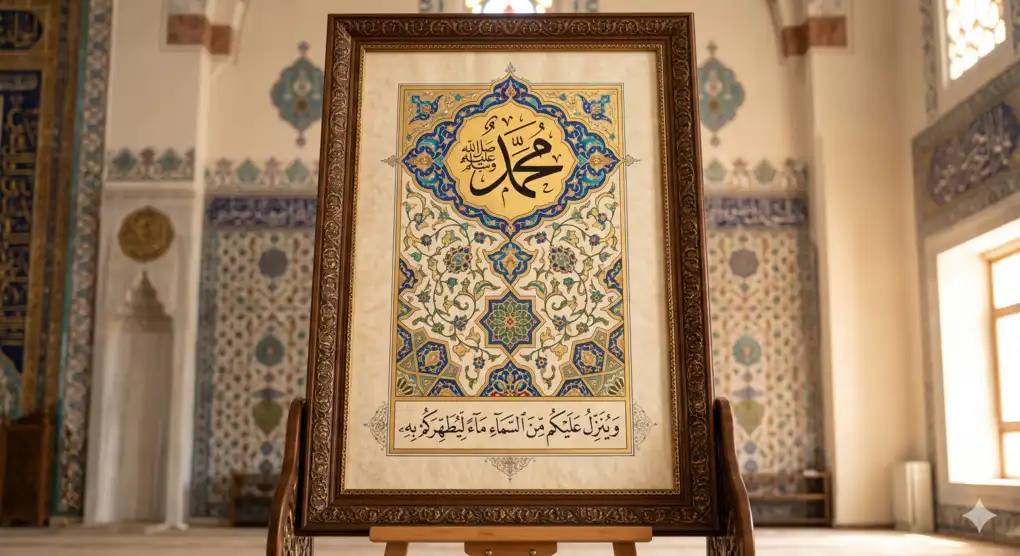
The Quran contains several verses about thaharah that establish the position of water as the primary means. One crucial evidence of thaharah is the word of Allah ﷻ:
قال الله تعالى {وينزل عليكم من السماء ماء ليطهركم به} [الأنفال: 11]
Allah Ta’ala said: “And He caused rain to descend on you from the heaven to purify you thereby.” (QS. Al-Anfal: 11) [3]
Furthermore, another textual evidence (dalil naqli) for thaharah emphasizes the special attribute of water in shariah:
{وأنزلنا من السماء ماء طهورا} [الفرقان: 48]
“And We send down pure water from the sky.” (QS. Al-Furqan: 48) [4]
These two verses prove that shariah demands the use of pure and purifying water as the standard to lift ritual impurity and banish filth.
The Prophetic Hadith as the Basis of Fiqh Thaharah
The example of Prophet Muhammad ﷺ clarifies the technical and legal implementation of thaharah in practice. The main reference is clearly seen when he ﷺ responded to an incident within the boundaries of the place of worship.
وقوله صلى الله عليه وسلم في خبر الصحيحين حين بال الأعرابي في المسجد: صبوا عليه ذنوبا من ماء
And the saying of the Prophet ﷺ in the narration of the Sahihayn (Bukhari-Muslim), when a Bedouin urinated in the mosque: “Pour a bucket of water over it.” [5]
This instruction obligates Muslims to thoroughly clean filth using water completely. The worship of prayer highly depends on the condition of the area and physical body being entirely free from stains.
Classification of the Types of Thaharah
The study of fiqh thaharah has very strict and precise details in the authoritative references of the Shafi’i school. Broadly speaking, the division of thaharah does not solely focus on what is visible to the physical eye. Scholars divide it systematically so that Muslims can understand the essence of complete cleanliness. Let us examine these types of thaharah based on classical texts.
Thaharah Hissiyah (Physical Purification) and Thaharah Ma’nawiyah (Spiritual Purification)
The dimension of purification has two main layers that must not be separated by a Muslim. The first layer is thaharah hissiyah (physical cleanliness), while the second layer is thaharah ma’nawiyah (spiritual cleanliness). Imam Zakariyya al-Anshari explains this detail when dissecting the essence of cleanliness linguistically:
والخلوص من الأدناس حسية كالأنجاس أو معنوية كالعيوب
“And freedom from filth, whether physical (sensory) like impure substances, or abstract (spiritual) like faults or blemishes.” [6]
From this textual elaboration, we understand that the types of thaharah actually include spiritual efforts to cleanse the heart from bad traits and polytheism (shirk). This purification of the soul must always go hand in hand with physical activities such as washing the body, clothes, and the environment.
Thaharah from Hadath (Minor and Major Impurity)
The central focus of fiqh texts always rests on ritual legal cleaning. The invisible barrier that prevents worship inside the body is known as hadath. The effort to lift this barrier and purify from ritual impurities and filth is called thaharah in an absolute sense in the view of shariah.
To banish hadath, Allah ﷻ has established two main forms of cleaning. Shariah divides them specifically depending on the level of impurity affecting a person:
- Minor Impurity (Hadath Asghar): Removed through a valid wudhu. If you want to read details about things that invalidate wudhu, please study the page explaining hadath.
- Major Impurity (Hadath Akbar): Completely removed through the obligatory bath (ghusl janabah). Its absolute condition demands spreading water over every single strand of hair and the skin surface without exception.
Thaharah from Najis (Mukhaffafah, Mutawassithah, Mughallazhah)
In addition to focusing on hadath, discussions about the 4 types of thaharah (wudhu, ghusl, tayammum, and istinja) are always accompanied by the practice of izalatun najasah (removing physical filth). Najis is filthy matter that falls and adheres to our body, clothes, or daily place of prostration.
Fiqh rules classify impure substances into three levels so that the community can easily clean them:
- Najis Mukhaffafah (Light Filth): For example, the urine of a baby boy who has not consumed any food other than breast milk. Shariah simply requires sprinkling water over the affected area.
- Najis Mutawassithah (Medium Filth): The main examples are blood, pus, and animal or human excrement. It must be washed using pure water until its color, smell, and taste completely disappear.
- Najis Mughallazhah (Heavy Filth): Impure substances originating from dogs, pigs, or their offspring. The method of purifying it is very strict; it must be washed seven times, and one of the washings must be mixed with pure earth/dust.
Sunnah Practices of Thaharah (e.g., Tajdid Wudhu, Second & Third Washings)
One thing that often escapes attention is that shariah also includes several additional acts of worship into the scope of thaharah. These activities are fundamentally not obligated as determinants of the validity of prayer.
أو ما في معناهما، وعلى صورتهما كالتيمم، والأغسال المسنونة، وتجديد الوضوء، والغسلة الثانية، والثالثة
“Or whatever is equivalent to them in meaning and follows their form, such as tayammum, sunnah baths, renewing wudhu, as well as the second and third washings.” [7]
Based on the text above, the act of renewing wudhu (tajdidul wudhu) is still included within the framework of thaharah. The same applies to the recommendation of sunnah baths before Friday prayers or Eid prayers. Although they do not lift hadath, these practices are valid and bring abundant rewards to those who practice them.
Primary Media and Tools for Purification
Water as the Main Media of Purification (Absolute Water)
Water is the core and most primary media in Islamic shariah to remove both hadath and najis. Scholars of the Shafi’i school have compiled strict criteria regarding water that can be used for purification so that our worship is valid.
The water eligible for this mandatory ritual is called absolute water. The status of absolute water means that the water is still pure according to its original creation, without any mixture of substances that dominantly changes its name. To understand this deeply, you can read about the essence of absolute water.
Syaikhul Islam Zakariyya al-Anshari explains the position of absolute water and other tools through the following definition:
قوله: (الماء المطلق) أي لا غيره من تراب تيمم، وحجر استنجاء، وأدوية دباغ… (وهو العاري عن إضافة لازمة)
“Absolute water, meaning nothing else like the dust of tayammum, the stone of istinja, or tanning ingredients… it is water that is free from any binding prefix/suffix (fixed designation).” [8]
7 Natural Water Sources Valid for Purification
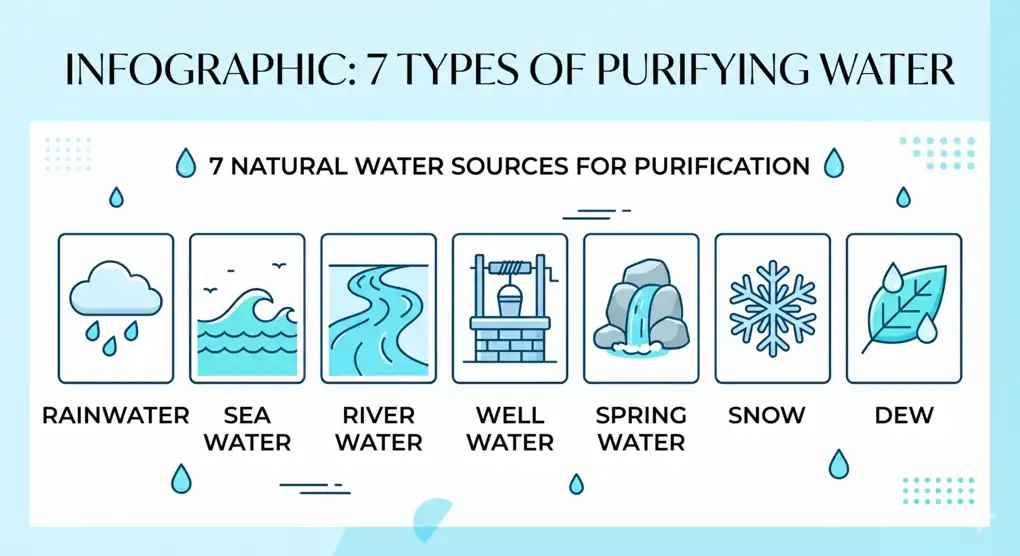
In basic fiqh studies, the types of water used for purification come from natural sources sent down from the sky or gushing from the earth. Scholars break them down into 7 types of water for purification that are halal and valid for us to use at any time.
The seven types of water in Islam and their uses include rain water, sea water, river water, well water, spring water, snow (ice) water, and dew water.
Legal Status of Musta’mal Water and Mutanajis Water
Sometimes we encounter water that is pure but not purifying in daily life. This category of water is pure if it touches the skin or is drunk, but shariah forbids us from using it for wudhu or ghusl janabah.
A frequently asked question is, what is water that has already been used for purification called? In fiqh, those remaining water droplets are called musta’mal water. If the volume of water is small (less than two qullahs), its purifying status is dropped.
قوله: (لا قليل) مستعمل في فرض من رفع حدث أو خبث فلا يطهر شيئا
“Not valid is a small amount of water that is musta’mal (already used) for an obligatory lifting of hadath or filth, so it cannot purify anything.” [9]
The clearest example of pure but non-purifying water is the droplets of water from wudhu collected back into a small container. Meanwhile, mutanajis water is a small amount of water into which an impure substance has accidentally fallen, making it absolutely forbidden to be used as a tool for purification.
Non-Water Purification Tools in Emergencies
The religion of Islam always eases things for its followers when facing emergency conditions. In legal theory, purification tools are divided into two large groups: water as the primary media and several solid objects as secondary substitute tools.
If water is completely unavailable, or if it is harmful to the sick skin, we are commanded to use media that can be used for purification according to its role.
Pure Soil/Dust for Tayammum
One of the most famous purification tools besides water is pure dust or soil. This media is very crucial as a savior for the validity of the prayer of a sick person or a traveler who has run out of water supply.
Technically, tayammum is purification using pure dust that adheres thinly to the surface of the ground or rocks. To know how to use it correctly, you must refer to the article on tayammum with dust.
Use of Clean Stones for Istinja (Istijmar)
Besides dust, other solid objects are also functioned as tools for thaharah, especially for removing filth after answering the call of nature. Shariah names this wiping medium as the stone of istinja.
Scholars permit the use of hard, clean, and abrasive stones to clean remaining filth from the private parts. This is explicitly written in the reference book Asna al-Mathalib:
قوله: (ويجزئ الحجر) في الخارج من المعتاد لا من منفتح آخر
“And a stone is sufficient for what comes out normally (from the front or back passage), not from another opened passage.” [10]
Tanning Agents (Dabbagh) for Purifying the Hide of Carrion
Solid objects or astringent liquids are also classified as cleansing tools recognized by shariah in the chapter of skin tanning (dabbagh). Tanning agents such as alum, pigeon droppings, or pomegranate skin are able to remove moisture and foul odors from the hide of animal carrion.
This chemical tanning process is capable of changing the legal status of animal hide from originally impure to entirely pure, except for pigs and dogs.
قوله: (والدباغ ولو بإلقاء الريح)… (بحريف) نازع للفضول بحيث لا يفسده… (يطهر) جلد غير كلب، وخنزير
“And tanning, even if by the casting of wind… with an astringent substance that extracts impurities in a way that does not ruin it… purifies the hide of other than a dog and a pig.” [11]
Practical Procedures and Wisdom of Purification
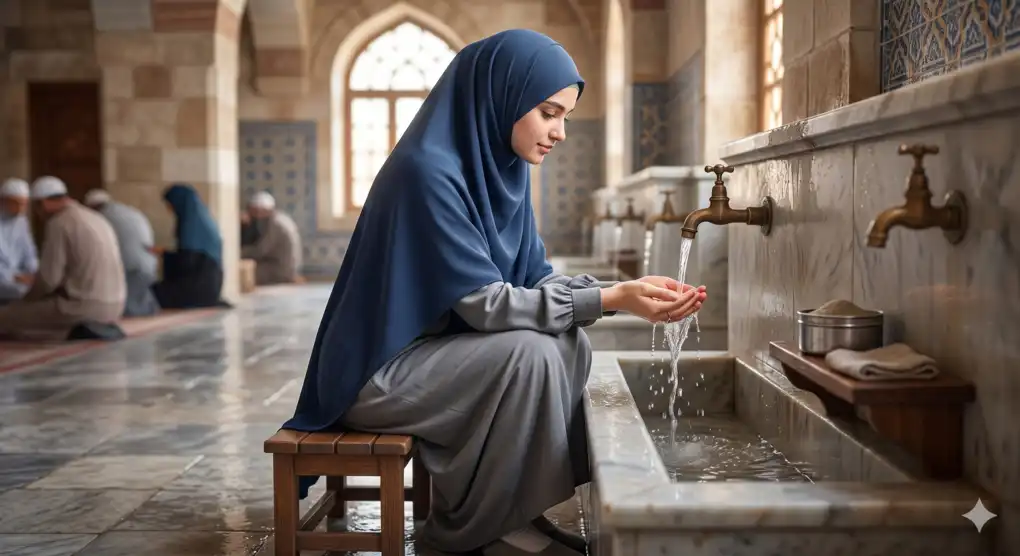
Guide on the Procedures of Purification from Hadath and Najis
In practicing shariah, we must comply with the correct sequence of purification procedures so that our worship is valid in the eyes of Allah ﷻ. Broadly speaking, the procedures for purifying from hadath and najis have strict technical regulations. Below are the details of thaharah practices extracted from the guidance of Shafi’i scholars.
Summary of Procedures for Purifying from Minor Hadath (Wudhu)
If a person is in a state of minor ritual impurity, then the way to purify from minor hadath is by performing wudhu. Imam Zakariyya al-Anshari emphasizes that there are six pillars that must absolutely be fulfilled.
قوله: (وفروضه ستة الأول النية)… (الثاني غسل الوجه)… (الثالث غسل اليدين مع المرفقين)… (الرابع مسح الرأس)… (الفرض الخامس غسل الرجلين مع الكعبين)… (السادس الترتيب)
“The obligatory components (pillars) of wudhu are six: first is the intention… second is washing the face… third is washing both hands up to the elbows… fourth is wiping the head… fifth obligatory component is washing both feet up to the ankles… sixth is the order (sequence).” [12]
All of these pillars must be performed without breaking the flow. If you want to study in detail, please check the comprehensive wudhu guide, the definition of wudhu by language and terms, as well as the obligatory acts of wudhu.
Summary of Procedures for Purifying from Major Hadath (Obligatory Bath / Ghusl)
The conditions of junub (sexual impurity), menstruation, or post-natal bleeding cause a person to bear major impurity. The rules on how to purify from major hadath obligate spreading water over all parts of the body.
قوله: (وأقل الغسل) شيئان أحدهما (نية رفع الجنابة) أو نية رفع الحدث… (و) الشيء الثاني (تعميم البدن بالماء شعرا) وإن كثف (وبشرا)
“The minimum of ghusl (bath) consists of two things: one of them is the intention to lift janabah or the intention to lift ritual impurity… and the second thing is spreading water over the entire body, including hair even if thick, and the skin.” [13]
Inilah patokan dasar tata cara bersuci untuk hadats akbar. Seluruh lipatan tubuh, celah rambut, hingga bagian luar kuku mutlak terkena basuhan air suci.
Precise Procedures for Purifying Filth (Najis) Based on Its Level
The implementation of thaharah procedures also manages the technical cleaning of physical stains. The washing method is adjusted according to the severity of the filth:
- Najis Mukhaffafah: Filth from the urine of a male infant who only consumes breast milk. Sprinkling enough water over the stained area is sufficient.
- Najis Mutawassithah: Includes blood, pus, and excrement. It must be washed with clean water until the attributes of color, smell, and taste are completely gone.
- Najis Mughallazhah: Filth from dogs and pigs. The rules on how to purify from dog filth demand seven washings, where one of the washings must use a mixture of pure soil/earth.
فصل: (لا يطهر متنجس بكلب، وخنزير… إلا بسبع) من الغسلات بالماء (إحداهن بالتراب)
“Section: Something contaminated by a dog or a pig does not become pure… except with seven washings of water, one of which is with dust.” [14]
Wisdom, Purpose, and Essence of Thaharah in Islam
As the conclusion of the material on thaharah, we need to deepen our understanding of the spirit behind this physical worship. The core meaning of purification requires the totality of bodily and spiritual cleanliness. The practice of total cleansing or purification in Islam is called a direct manifestation of a servant’s piety. Prophet Muhammad ﷺ himself emphasized that purification is half of faith.
Physical Cleanliness and Environmental Health
The structure of fiqh that regulates water and filth removal highly upholds the maintenance of a healthy environment. The external function of thaharah protects our bodies from bacteria and disease agents. The physical wisdom of purification makes Muslims always clean, fragrant, and healthy in social interactions. You can explore the urgency of this physical cleanliness in the filth guidance column.
Prerequisites for Validity of Worship and Spiritual Elevation
If we trace the thaharah material carefully, Allah ﷻ demands cleanliness as a form of etiquette when communing with Him. We purify ourselves so that the mind and soul are also cleansed of sins as water drips from the body. When the physical form is freed from ritual impurity, the soul becomes serene, and the focus (khushu’) of prayer is more easily attained.
FAQ Section
Is it valid to purify using water that has already been used (musta’mal water) to lift ritual impurity previously?
It is not valid. Water that has been used for an obligatory purification routine—whether for purifying from major hadath or minor hadath—has lost its purifying ability, although its status remains pure if it touches the skin. Here are the rules regarding what is meant by thaharah using musta’mal water:
- Water that separates from the washed parts in the first washing of wudhu is no longer purifying.
- Exception: If the water collected from the remnants of wudhu/ghusl is combined until it reaches two qullahs (without changing its color, smell, or taste), then it returns to being absolute water (pure and purifying). [15]
Can we purify using coffee, tea, or rose water?
No, you cannot. Rose water, coffee, and tea fall into the category of mutaghayyir water (water that has changed). The dominant change in the properties of water due to a pure substance (such as coffee or rose extract) causes it to lose its status as ‘absolute water’. If you want to know what is meant by thaharah, the condition is very clear: the medium used must not be bound to a conventional additional name. Rose water cannot be used for obligatory ritual thaharah procedures. [16]
What should a Muslim do if they cannot find any water for purification at all?
When the time for prayer enters but water that can be used for purification is not available—or is harmful to the body due to illness or a wet wound—then shariah provides a rukhshah (concession). Islam regulates one of the purification tools besides water for this condition:
- Use pure and unadulterated dust (tayammum).
Tayammum is purification using the wiping of dust on the face and both hands up to the elbows. You must refer to the guide on the definition of thaharah regarding the position of tayammum as a temporary substitute. [17]
What is the ruling on performing wudhu or the obligatory bath using water heated by the sun in a metal container (musyammas water)?
The original ruling is makruh tanzih (disliked but valid to use). Syaikhul Islam Zakariyya al-Anshari explains that the heat of the sun can release chemical residues (rust) from the metal, which potentially triggers skin diseases (leprosy). However, there are three criteria for musyammas water to be disliked:
- Stored in a metal container that is hammered/forged (except gold and silver).
- Located in a country with a very hot climate.
- Used while the temperature of the water is still hot (some scholars state it remains makruh even after cooling down). [18]
Is it permissible to purify using stagnant water whose volume is less than two qullahs?
Stagnant water that is less than two qullahs is highly vulnerable to becoming impure (najis). In the guide of fiqh thaharah, if a small amount of water (less than two qullahs) comes into contact with an impure substance, it automatically becomes mutanajis water (forbidden to use) even if its color, smell, or taste does not change at all. [19] If you still have other questions about thaharah, please explore deeper into the pillar articles of fiqh.biz.id to ensure the quality of your daily thaharah practices.
Footnotes
Reference
Zakariyā al-Anṣārī, Asnā al-Maṭālib fī Sharḥ Rawḍ al-Ṭālib, dengan ḥāsyiyah oleh Aḥmad al-Ramlī, disunting oleh Muḥammad az-Zuhrī al-Ghamrāwī (Kairo: al-Maṭbaʿah al-Maymānīyah, 1313 H; repr. Dār al-Kitāb al-Islāmī), vol 1, pp. 4-83.


