
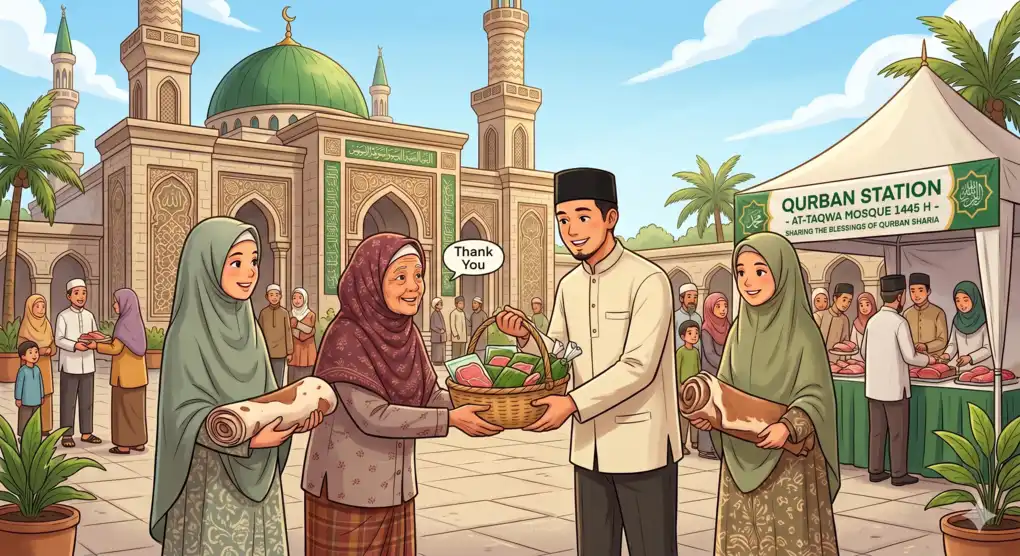
Have you ever seen piles of sacrificial animal hides in the mosque area and thought, “Instead of letting them go to waste, why not sell them for the mosque’s fund?” Or perhaps you received an overwhelming portion of Qurban meat and considered turning it into cash?
While the intention might be noble, there are very strict jurisprudential (fiqh) boundaries when it comes to the ritual of Qurban. A single misstep can cause a technically valid sacrifice to lose its spiritual rewards and meaning. Before making any decisions regarding the utilization of the remaining parts of this year’s sacrificial animal, let us fully comprehend the rules in the following discussion.
Introduction & Fundamental Law on Selling Sacrificial Animal Parts
The ritual of Qurban (sacrifice) is one of the highly emphasized Islamic traditions performed during the month of Dhu al-Hijjah. For those who wish to study its implementation in its entirety, please read the complete guide to Qurban according to the Shafi’i school. Amid the vibrant execution of this worship, various fiqh issues frequently arise in society, one of which concerns the legal ruling on selling the hides of sacrificial animals.
Prohibition of Selling the Hide, Meat, and Horns of the Sacrificial Animal
Islamic law establishes very rigid rules regarding the transfer of ownership of an animal slaughtered for the sake of Allah. When someone intends to sacrifice an animal as an act of worship, the entire body of the animal attains the status of property dedicated solely to the path of righteousness. Therefore, Shafi’i scholars absolutely prohibit selling the Qurban meat, hides, and even its horns.
Evidences Prohibiting the Sale of Qurban Body Parts
Let us examine the evidence for the prohibition of selling Qurban hides by referring to the book Asna al-Mathalib. Sheikh Zakariyya al-Anshari explains this ruling by quoting a very clear prophetic tradition (hadith) narrated by Al-Hakim regarding selling Qurban hides.
قوله: (و) لا (بيعه) لخبر الحاكم وصححه من يبيع جلد أضحيته فلا أضحية له
Meaning: “And it is not permissible (to sell its hide) due to the report of Al-Hakim—which he graded as authentic (sahih)—(that the Prophet ﷺ said): ‘Whoever sells the skin of his sacrificial animal, there is no (reward of) Qurban for him.'”[1]
The primary reason this transaction is forbidden is that the Qurban animal is an instrument of pure devotion (taqarrub) to Allah. Ownership over the physical manifestation of the animal has been relinquished and reallocated. Thus, that right of ownership cannot be reclaimed in the form of money or any other exchange value.
وإنما أخرج ذلك قربة فلا يجوز أن يرجع إليه إلا ما رخص له فيه
Meaning: “Verily, the animal was offered as an act of devotion (qurbah), so it is not permissible for its transactional benefits to return to him, except for what has been exempted for him (such as eating from it).”[2]
Is the Sacrificer Allowed to Sell the Qurban Meat?
Another question that frequently arises is whether it is permissible to sell Qurban meat if the portion received is too abundant? The answer remains that it is strictly impermissible. Selling the meat and hides of the Qurban animal by the person offering the sacrifice is haram (forbidden) without exception. This provision is firmly binding, particularly on the law of voluntary (tathawwu’) Qurban (let alone a vowed/nadzar Qurban).
قوله: (ويحرم الإتلاف والبيع) لشيء من أجزاء أضحية التطوع
Meaning: “And it is forbidden to destroy or sell any part of the voluntary (tathawwu’) Qurban animal…”[3]
To avoid falling into errors in worship, here are the key points that must be observed regarding the body parts of the Qurban animal:
- Qurban meat can absolutely never be exchanged for money, whether retail or in bulk.
- It is forbidden to sell the hide of the animal, whether to hide collectors or to individuals.
- Horns, bones, and wool/hair share the exact same legal status; it is invalid to buy or sell them.
The Ruling on Selling Qurban Hides by the Committee and Mosque Management
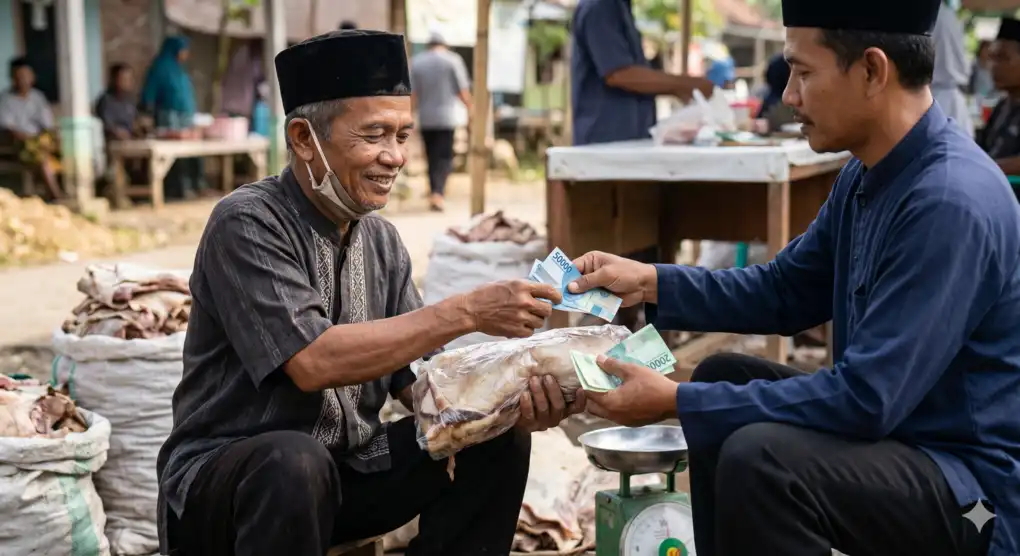
In our society, the management of Qurban animals is generally handed over to a mosque committee (panitia). Often, the committee collects all the animal hides to sell them in bulk. So, what is the actual ruling on selling Qurban hides by the committee from the perspective of fiqh? To answer this, we must clarify the legal status of the committee under Sharia.
The Status of the Committee as an Agent (Wakalah) of the Sacrificer
In the rules of fiqh, the position of the committee is that of an agent (wakil) or an extension of the shahibul qurban (the person offering the sacrifice). As agents, their sole duty is to execute the intention and fulfill the trust of the animal owner. Every rule that binds the owner of the animal automatically binds the committee.
In the guide for the Shafi’i Qurban committee, since the owner of the animal is forbidden from selling its hide, their agent is likewise prohibited from engaging in such transactions. Sheikh Zakariyya al-Anshari explains the validity of this agency system (wakalah) in the book Asna al-Mathalib:
قوله: (ويجوز تفويضها إلى الوكيل المسلم) المميز كما يفوض إليه الذبح، وكما في الزكاة
Meaning: “And it is permissible to delegate (the matters of Qurban) to a discerning (mumayyiz) Muslim agent, just as it is permissible to delegate the slaughtering to him, and as is the case in the matters of Zakat.”[4]
Can Qurban Hides Be Sold for the Benefit of the Mosque?
Some administrators argue that the proceeds from selling the hides are allocated for the community’s benefit. The practice of selling Qurban hides for the benefit of mosques or foundations is often considered normal for the collective good. In reality, giving Qurban hides to the mosque by selling them directly through the committee is an act that cannot be justified.
Attempting to increase mosque funds from Qurban hides through a direct sales scheme undermines the very essence of Qurban. The Shafi’i school completely shuts the door on selling any part of the Qurban by either the sacrificer or their agent. This prohibition applies absolutely, even if the proceeds are used for the welfare of the mosque.
قوله: (ويحرم الإتلاف والبيع) لشيء من أجزاء أضحية التطوع، وهديه
Meaning: “And it is forbidden to destroy or sell any part of the voluntary (tathawwu’) Qurban animal or the hadyu (pilgrimage sacrifice).”[5]
Sharia-Compliant Solutions for Utilizing Qurban Hides Productively
Islam never makes things difficult for its followers. There is an easy solution so that the mosque or the poor can still gain economic benefits from the Qurban hides without violating the Sharia. The method is for the committee to distribute the actual hide in its raw state directly to the poor and needy. Once distributed, full ownership transfers completely to the recipient.
Scholars explain that the ownership status of the Qurban meat and hides given to the poor constitutes absolute ownership (tamlik). The poor who have received the raw hide are then fully permitted to sell it to a collector if they wish. To understand more deeply about the distribution ratios in accordance with the Sunnah, you can refer to the guidelines on the rules of one-third Qurban meat and its distribution.
بل (يملكه الفقراء) المسلمين (نيئا) ليتصرفوا فيه بما شاءوا من بيع وغيره
Meaning: “Rather, the poor among the Muslims own it in its raw state, so that they may dispose of it as they wish, whether through sale or otherwise.”[6]
Below is a summary of Sharia-compliant solutions so that the Qurban hide remains valid and beneficial:
- The committee distributes the animal hide in its original raw state directly to the poor.
- The poor receive the hide as their absolute property.
- The poor (not the committee) sell the hide to the collector independently.
- The money from selling the hide becomes the absolute right of the poor person to fulfill their needs.
The Ruling on Paying the Butcher’s Wages from the Sacrificial Animal
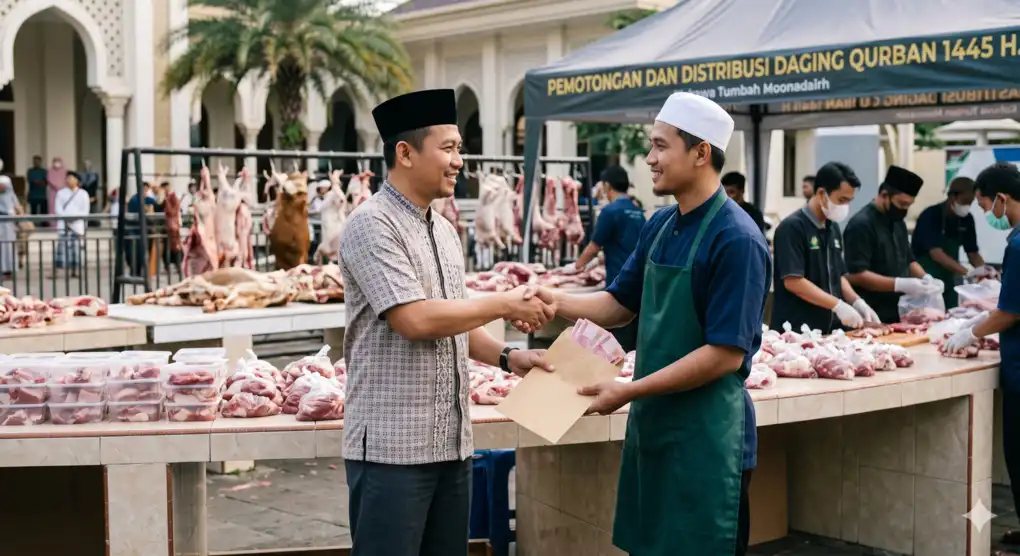
In society, the management of Qurban animals cannot be separated from the labor of butchers and the committee. However, there is a fatal mistake that often goes unnoticed. This mistake is using parts of the Qurban animal’s body as a means of payment for their services. The practice of making meat or hides the wage for the animal slaughtering committee is a violation of fiqh that can ruin the validity of the Qurban itself.
Prohibition of Giving the Cow’s Head or Hide as Wages


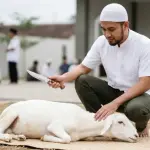
Some sacrificers occasionally intentionally set aside specific body parts to be given to the butcher. The custom of giving the head or the hide of the sacrificed cow as compensation for their exhaustion often arises. So, what is the ruling on giving the Qurban animal’s head to the butcher as a wage? The Shafi’i school strictly forbids this.
This prohibition stems from the very clear guidance of the Prophet ﷺ. Sheikh Zakariyya al-Anshari in Asna al-Mathalib includes the original text along with the evidence for its prohibition:
قوله: (ويحرم… إعطاء الجزار أجرة منه) بل هو على المضحي والمهدي كمؤنة الحصاد لخبر الصحيحين «عن علي رضي الله عنه قال أمرني رسول الله صلى الله عليه وسلم أن أقوم على بدنه فأقسم جلالها وجلودها وأمرني أن لا أعطي الجزار منها شيئا وقال نحن نعطيه من عندنا»
Meaning: “And it is forbidden to give the butcher any part of the Qurban as his wage. Rather, it is the responsibility of the sacrificer and the provider of the hadyu, just like the expenses of harvesting. This is based on the hadith in the Two Sahihs (Bukhari and Muslim) from Ali (may Allah be pleased with him), who said: ‘The Messenger of Allah ﷺ commanded me to take charge of his sacrificial camels, to distribute their meat and hides, and commanded me not to give anything from them to the butcher (as a wage). He said: We will give him his wage from our own wealth.'”[7]
The Qurban animal is a pure act of worship for Allah. Turning a part of that animal into labor wages means reclaiming the value of that worship for personal financial benefit.
Who is Obligated to Pay the Butcher’s Wages?
Based on the explanation above, all costs for slaughtering services or animal care are entirely the responsibility of the shahibul qurban (the person offering the sacrifice). The funds to pay for the butcher’s services and operational costs must be prepared from separate personal money. It must absolutely not be taken from the value of the meat.
This even applies to collective worship. If you refer to the legal provisions on sharing the cost of a Qurban cow, the seven participants sharing the cow are obligated to collect additional contributions in cash specifically to settle the slaughtering costs.
Then, who should receive the Qurban hide if it cannot be given to the butcher? The hide must be distributed purely to the poor as a form of social worship, not as compensation for work.
Are the Butcher and Committee Allowed to Receive Qurban Meat?
One thing that needs clarification: the above prohibition only applies if the giving is designated “as labor wages.” The butcher and the Qurban committee basically still have the right to receive Qurban meat or cooked dishes, provided it is purely intended as charity (sedekah) or a gift (hadiah).
For instance, giving charity meat to a cow butcher because he happens to be a low-income resident. If he is wealthy, the committee can still give him meat with the intention of a friendly gift. Sheikh Zakariyya al-Anshari explains this boundary very meticulously:
وخرج بأجره إعطاؤه منه لفقره وإطعامه منه إن كان غنيا فجائزان
Meaning: “Excluded from the term ‘as a wage’ (meaning it is permissible) is giving it to the butcher due to his poverty, or feeding him from it if he is wealthy. Both of these matters are permissible.”[8]
There are often questions regarding the ruling on cooking Qurban meat for the committee in various Islamic fiqh Q&A forums. Based on the reference from Asna al-Mathalib above, cooking meat for the committee’s consumption while they are working is permissible (mubah). The main condition: the meal must be intended as hospitality (it’am), not as a condition or a substitute for the agreed-upon wages for their hard work.
Below are the concise rules regarding the rights of the butcher and the committee:
- Haram: Receiving meat, hide, or the head as payment or salary for slaughtering the animal.
- Permissible: Receiving a portion of raw Qurban meat because he is a poor resident (intended as charity).
- Permissible: Enjoying dishes like satay or gulai at the committee site as hospitality/a gift, provided that their actual labor wage (in cash) is still paid in full.
Permissible Utilization of Qurban Hides, Horns, and Wool
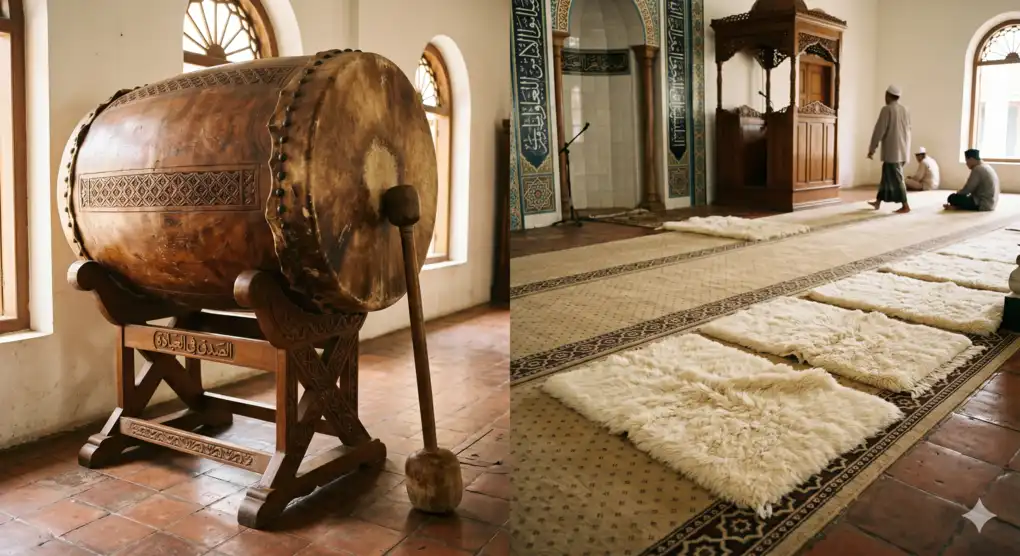
Since Qurban hides cannot be sold, how can we benefit from them? Islamic law never wastes wealth in vain. There are still many direct paths of utilization that are halal and recommended for the shahibul qurban (the sacrificer).
Some people might still be hesitant and ask: is it permissible to sell the Qurban hide and donate the proceeds according to the Shafi’i school? The answer is twofold: donating the hide itself is highly recommended, while selling it is haram. If it is not donated, we are allowed to utilize it for daily personal items.
Utilizing the Hide Directly (Intifa’)
The person offering a voluntary Qurban has the right to utilize the hide, horns, and bones of the animal for personal needs. The practice of deriving benefit from an item without selling it is known as intifa’.
You can transform the hide into crafts or functional goods. For example, it can be used as a water bucket (leather bucket), a sitting mat, shoes, or a skin cover for a mosque drum (bedug). Sheikh Zakariyya al-Anshari in Asna al-Mathalib elaborates on this permissibility based on the practices of the Prophet’s ﷺ companions:
قوله: (النوع الخامس الانتفاع) بالمتعين من أضحية أو هدي (فله الانتفاع بها) مطلقا (وبجلدها) إن حل له الأكل منها (كدلو ونحوه) كخف ونعل لفعل الصحابة
Meaning: “(The fifth category: Utilization) of a designated Qurban or hadyu animal; he is allowed to utilize it unconditionally, and (he may utilize) its hide if it is permissible for him to eat from its meat, (fashioned) like a water bucket and the like, or leather socks (khuf) and sandals, based on the actions of the Companions.”[9]
The Law of Loaning vs. Renting Qurban Hides
In addition to personal use, Qurban hides can be loaned to neighbors or friends in need. This practice of loaning (ariyah) the Qurban hide is permitted because it falls under the category of mutual assistance (irfaq) among Muslims, which brings spiritual rewards.
However, you must be careful not to rent it out. The legal status of leasing (ijarah) Qurban hides is absolutely haram. Renting out an item is effectively selling its benefits in exchange for money. This prohibition aligns with the principle of selling Qurban meat, which closes all loopholes for commercializing the ritual of Qurban.
قوله: (و) له (إعارته) أي جلدها؛ لأنها إرفاق كما يجوز ارتفاقه به (لا إجارته) ؛ لأنه بيع للمنافع
Meaning: “And it is permissible for him (the owner) to loan it—meaning its hide—because it is an act of mutual assistance (irfaq)… and he may not rent it out, because renting is effectively selling the benefits.”[10]
Shearing and Utilizing Qurban Wool (Suf)
What about animals with thick wool, such as sheep? You are permitted to take or shear the wool of the Qurban animal after it has been slaughtered. For utilizing Qurban sheep wool, you can spin it into thread, use it as a material for clothing, or make it into a sitting mat at home.
Even if the animal has not been slaughtered yet but its wool is so thick that it causes discomfort during the summer, shearing it is permissible due to necessity. Although you are allowed to utilize the wool yourself, the Shafi’i school considers giving it to the poor far more virtuous.
قوله: (له جز صوف عليها إن ترك إلى الذبح أضر بها) للضرورة، وإلا فلا يجزه إن كانت واجبة لانتفاع الحيوان في دفع الأذى عنه وانتفاع المساكين به عند الذبح (و) له (الانتفاع به، والتصدق به أفضل)
Meaning: “And he may shear its wool (while the animal is alive) if leaving it until the time of slaughter would harm it, due to necessity… And he is permitted to utilize that wool, but giving it in charity is more virtuous (than utilizing it himself).”[11]
Below is a brief guide to utilizing the body parts of a Qurban animal:
- It is permissible to tan and use it personally for bags, shoes, drum skins, or floor mats.
- It is permissible to loan it to others for free.
- It is haram to rent it out to others for money.
- Its wool can be taken for cloth or carpets, but donating it brings greater virtue.
FAQ Regarding the Law on Selling Qurban Hides and Butcher Wages
To help you easily grasp the conclusions of the above discussion, we have summarized the frequently asked questions about Qurban fiqh. This list is vital for clearing up misconceptions regarding the ruling on Qurban skins and other parts.
Is it permissible to sell Qurban meat?
Many laypeople ask whether Qurban meat can be sold if someone receives an excessive portion. The answer is that it is not allowed. The Shafi’i school explicitly states that selling Qurban meat is haram for the shahibul qurban (the sacrificer).
This applies absolutely, whether for voluntary (tathawwu’) or vowed (nadzar) Qurban. The entire physical body of the animal has become a means of worship to Allah, so its ownership cannot be converted back into money.
قوله: (ويحرم الإتلاف والبيع) لشيء من أجزاء أضحية التطوع، وهديه
Meaning: “And it is forbidden to destroy or sell any part of the voluntary (tathawwu’) Qurban animal or the hadyu.”[12]
Can Qurban hides be sold for the benefit of the mosque?
As a consequence of the fatwa prohibiting the sale of Qurban hides, the committee or mosque management is forbidden from selling the hides directly, even if the proceeds go to the mosque’s fund. The committee acts as an agent bound by the same rules that forbid the owner from selling the Qurban animal.
However, Islam provides a practical and valid solution so that the economic value of the hide is not wasted:
- The committee distributes the Qurban hide in its raw state directly to the poor.
- The poor receive the hide as absolute property (tamlik).
- The poor (not the committee) have the right to sell the hide independently.
- The proceeds from the sale belong to the poor person, and they are free to use it or donate it to the mosque.
بل (يملكه الفقراء) المسلمين (نيئا) ليتصرفوا فيه بما شاءوا من بيع وغيره
Meaning: “Rather, giving ownership (tamlik) to the poor among the Muslims in its raw state, so that they may dispose of it as they wish, whether through sale or otherwise.”[13]
Is a cow’s head allowed to be used as wages for the butcher?
Using the cow’s head, meat, hide, or legs of a Qurban animal as a fee or wage for the butcher is haram. Giving wages by cutting from the body parts of the sacrifice ruins the essence of devotion (taqarrub) to Allah.
All slaughtering and operational expenses are entirely the responsibility of the shahibul qurban. These wages must be paid using personal funds separate from the Qurban animal itself.
قوله: (ولا إعطاؤه الجزار أجرة) بل هو على المضحي والمهدي كمؤنة الحصاد
Meaning: “And it is forbidden to give the butcher any part as a wage. Rather, it is the responsibility of the sacrificer and the provider of hadyu, just like the expenses of harvesting.”[14]
If the butcher participates in the Qurban, can he receive a portion of the meat?
The butcher and the slaughtering committee retain the right to receive a portion of the Qurban meat. However, the distribution must meet the correct conditions and intentions according to Sharia:
- It must be given purely as charity (sedekah) if the butcher is poor or needy.
- It must be given purely as a gift or hospitality (hadiah/it’am) if the butcher is wealthy.
- The giving must absolutely not be intended as a condition of work or as a discount on the service fee.
وخرج بأجره إعطاؤه منه لفقره وإطعامه منه إن كان غنيا فجائزان
Meaning: “Excluded from the term ‘as a wage’ (meaning it is permissible) is giving it to the butcher due to his poverty, or feeding him from it if he is wealthy. Both of these matters are permissible.”[15]
FOOTNOTES
Reference
Zakariyā al-Anṣārī, Asnā al-Maṭālib fī Sharḥ Rawḍ al-Ṭālib, with ḥāshiyah by Aḥmad al-Ramlī, edited by Muḥammad az-Zuhrī al-Ghamrāwī (Cairo: al-Maṭbaʿah al-Maymānīyah, 1313 AH; repr. Dār al-Kitāb al-Islāmī), vol. 1, pp. 538-546.


