
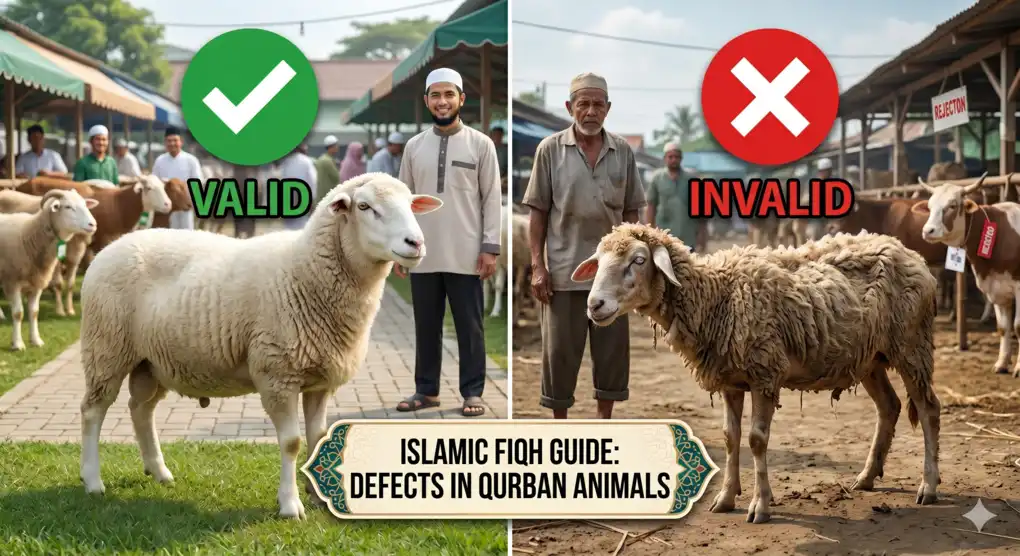
Knowing the criteria for defects in Qurban animals is an obligation for every Muslim intending to fulfill this sharia. Understanding the rulings on defective Qurban animals determines the validity of this annual act of worship. Therefore, we must always refer to the textual evidence (dalil) regarding Qurban defects based on the hadith and the explanations of the scholars.
To study the validity conditions of the udhiyah (Qurban) animal along with the intention and meat distribution procedures, you can refer to the complete guide to Qurban according to the Shafi’i school. Broadly speaking, the requirements for Qurban animals mandate that the livestock’s physical condition must be in its prime and free from flaws that ruin the quality of the meat.
Basic Principle: Qurban Animals Must Not Have Defects That Reduce Meat
The main principle in the Shafi’i school of fiqh states that a Qurban animal must not have a defect if that defect reduces the quantity and quality of the meat. Maintaining the physical perfection of livestock is a manifestation of our best adab (etiquette) in seeking nearness (taqarrub) to Allah ﷻ. Part of the conditions for Qurban animals is to offer the best wealth, not sickly animals.
Imam Zakariyya al-Anshari affirms this basic principle in the book Asna al-Mathalib:
ولأن البين من ذلك يؤثر في اللحم بخلاف اليسير
“Because a clear defect affects (reduces) the meat, unlike a minor defect.” [1]
Minor physical defects that do not reduce the meat’s weight can still be pardoned. However, flaws that cause the animal to lose meat, such as extreme thinness due to illness, automatically render the animal invalid for Qurban worship.
4 Animal Defects Strictly Forbidden for Qurban
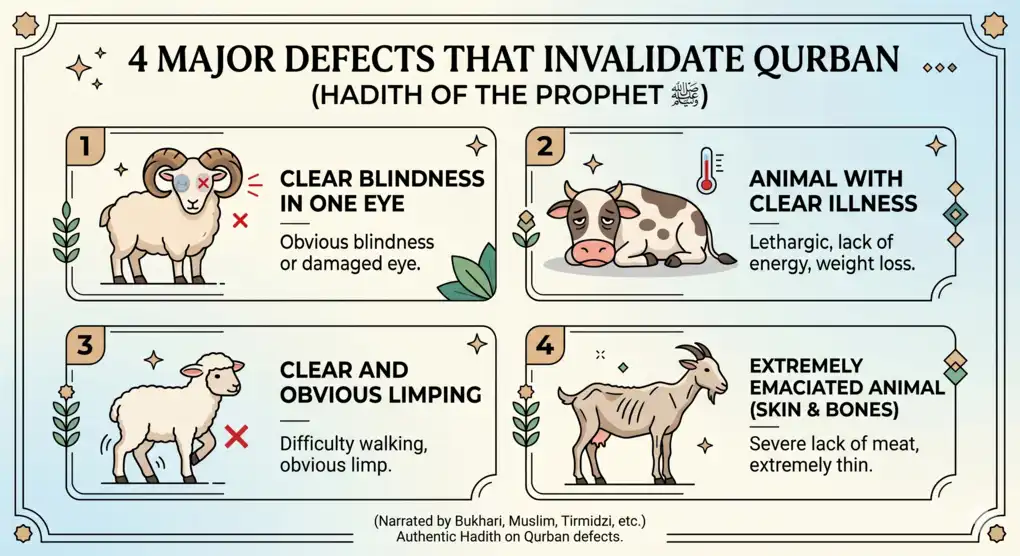
The Sharia has outlined 4 animal defects that are strictly forbidden for Qurban, as directly stated by Prophet Muhammad ﷺ. Knowing these 4 Qurban animal defects is urgent so that Muslims are not deceived when buying livestock in the market. Based on the narration of Tirmidhi regarding Qurban defects, these four criteria are absolute and non-negotiable.
The Prophet ﷺ said in a sahih hadith:
أربع لا تجزئ في الأضاحي: العوراء البين عورها والمريضة البين مرضها والعرجاء البين عرجها والعجفاء التي لا تنقي
“Four (defects) that are not valid for Qurban: One-eyed with clear blindness, sick with clear illness, limping with a clear limp, and extremely thin with no marrow (fat).” [2]
Here are the details so the valid conditions of the Qurban animal can be properly fulfilled:
- Clear blindness in one eye: The animal’s eye is damaged, totally blind, or covered so it cannot see grass and struggles to find food.
- Severe illness: A clearly visible disease that makes the animal weak, lose its appetite, and causes its meat to shrink.
- Limping: Severe limping (permanent/clear limp) that causes the animal to be left behind by its herd when pastured to graze.
- Extremely thin: A malnourished condition where the animal is practically skin and bones, having lost its fat or marrow.
What If the Qurban Animal Suddenly Limps Before Slaughter?

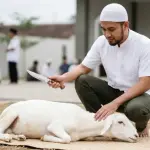
Sometimes accidents happen in the field. So, what is the ruling on slaughtering a defective Qurban animal if the incident occurs right before execution? For example, the committee ties the animal too roughly, causing its leg to be severely sprained or broken. If a defect appears while under the slaughtering knife or its leg breaks during slaughter, the ruling must be observed very carefully.
Shaykh al-Islam Zakariyya al-Anshari gives a firm view regarding this issue:
ولو حدث بها العرج تحت السكين فإنها لا تجزئ؛ لأنها عرجاء عند الذبح فأشبه ما لو انكسرت رجل شاة فبادر إلى التضحية بها
“And if a limping defect occurs under the slaughtering knife, the Qurban is invalid. Because it has the status of being a limping animal at the time of slaughter, it is similar to the case of a sheep whose leg breaks and one rushes to use it for Qurban.” [3]
The health status of the animal is assessed exactly at the moment the slaughter takes place. If a severe defect that invalidates the Qurban occurs before the animal dies, it fails to achieve the status of udhiyah and is only valued as regular slaughtered meat.
Categories of Qurban Animal Defects That Invalidate It
Besides the four main defects mentioned in the hadith, the Shafi’i scholars also formulated other categories of Qurban animal defects. These fall under fatal physical defects that definitely invalidate the udhiyah. Before making a choice at the livestock market, make sure you also understand the conditions for Qurban animals and their age requirements.
It is crucial to know what counts as a defect so our worship is accepted and not in vain. As a condition for the animal to be slaughtered, physical integrity is highly prioritized because it directly relates to the rights of the poor and needy who will receive the meat. This rule aligns perfectly with the requirements of Qurban animals in Islamic law, which demands perfection in the offering.
Scabies (Jarab) Even If Only a Little
One highly fatal defective condition is an animal suffering from scabies or jarab. Even if the scabies is only slightly visible on the skin’s surface, the animal remains forbidden for Qurban. This is because scabies can gradually damage the meat as a whole and reduce the livestock’s market value.
Shaykh al-Islam Zakariyya al-Anshari explains the ruling on this disease with a highly rational argument:
قوله: (ولا) يجزئ (ما بها جرب، وإن قل) أو رجي زواله؛ لأنه يفسد اللحم والودك وينقص القيمة
“And it is not valid (to perform Qurban) with an animal suffering from scabies, even if it is slight, or if its recovery is expected; because it ruins the meat and fat (wadak), and lowers its price.” [4]
Ear Defects: Cut Off or Congenitally Missing
A defect that makes an animal ineligible for Qurban is a permanent defect in its ears. If its earlobe is cut off, even by a very small amount, the Qurban becomes invalid. The same applies if the animal was born earless from the start.
The main reason behind this ruling is the severing or loss of an edible organ. The text in the book details it as follows:
قوله: (إلا إن أبين جزء منها، ولو يسيرا أو فقدت الأذن) منها (خلقا) لفوات جزء مأكول
“Except if a part of its ear is severed, even slightly, or it lost its ear from birth, due to the loss of a part (of the meat) that is typically eaten.” [5]
Loss of Tail, Tongue, or Udder Due to Severing
If you find an animal defective due to the severing of body parts like the tail, tongue, or udder, it is invalid for Qurban. Such cases are sometimes found as physical defects in goats on farms, whether due to accidents like getting caught in a fence or intentional acts. The loss of these vital organs directly cuts down the meat quantity.
Regarding the loss of organs due to severing, it is affirmed in the Shafi’i school reference:
قوله: (لا) إن كان الفقد لذلك (بقطع، ولو لبعض) منه (أو) بقطع (بعض لسانها) لحدوث ما يؤثر في نقص اللحم
“(It is invalid) if the loss of those organs (udder, buttocks, or tail) is due to severing, even partially, or if part of its tongue is severed, due to the occurrence of something that impacts the reduction of meat.” [6]
Mad Animals or Total Loss of Teeth
Fiqh books also mention animal defects forbidding them from Qurban in the form of mental disturbance (madness) or complete tooth loss. Mad animals usually refuse to graze, behave strangely, and do not respond to provided feed. Ultimately, this condition leads to fatal malnutrition.
On the other hand, total tooth loss also voids the animal’s eligibility. An entirely toothless animal cannot chew and ruminate its food perfectly.
قوله: (و) لا (مجنونة) ، وهي التي (قل رعيها) ؛ لأن ذلك يورث الهزال … (فلو ذهب الكل منع) ؛ لأنه يؤثر في ذلك
“And a mad animal is not valid, which is an animal that grazes very little, because that will inherit thinness… So if all its teeth are gone (fallen out), its validity is prevented, because it will affect (cause thinness).” [7]
Ruling on Pregnant Animals for Qurban in the Shafi’i School
Choosing an animal free from physical defects is an obligation that cannot be ignored. Understanding the conditions of Qurban animals and the procedures for slaughtering must go hand in hand so our worship is accepted by Allah ﷻ. If you have confirmed its health, make sure you also understand the slaughtering procedures and prayers according to the Prophet’s ﷺ sunnah.
One of the frequently asked questions in society is the ruling on slaughtering pregnant livestock. The scholars of the Shafi’i school have discussed this matter meticulously. An animal’s pregnancy status turns out to directly impact its validity as a Qurban offering.
The Relied-Upon Opinion Regarding Thinness Due to Pregnancy
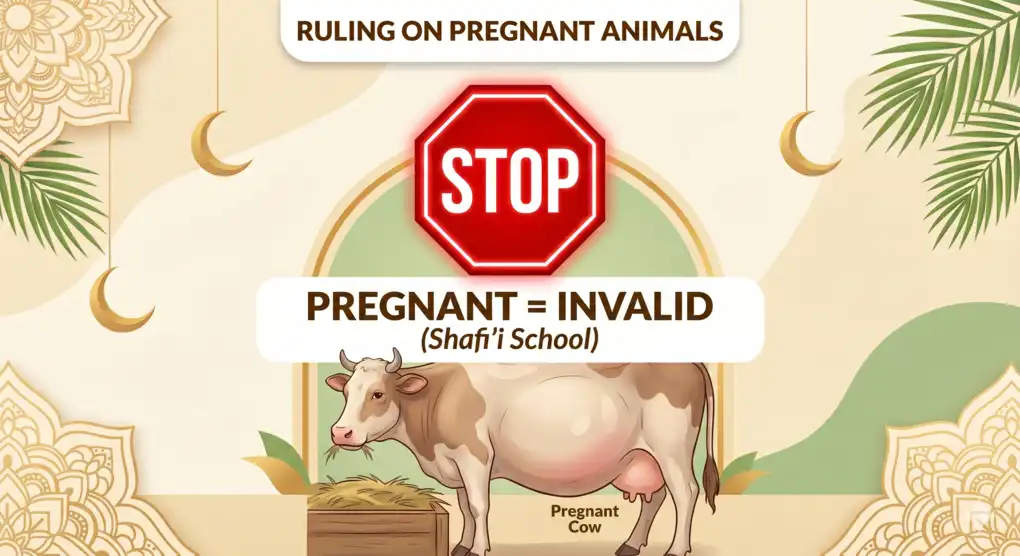
In Shafi’i fiqh, slaughtering a pregnant female animal is invalid. The main reason is that pregnancy makes the animal thin and drains nutrients that should have become meat. Here is the affirmation by Shaykh al-Islam Zakariyya al-Anshari regarding this:
قوله: (وولادتها) أي الأنثى، فلو كانت حاملا لم تجز؛ لأن الحمل يهزلها نقله النووي في مجموعه عن الأصحاب
“And (it is valid to sacrifice) a female that has given birth. But if it is pregnant, the Qurban is invalid; because pregnancy makes it thin. This was narrated by Imam Nawawi in the book Al-Majmu’ from the Ashab Asy-Syafi’iyah.” [8]
Based on the view of Imam Nawawi and the majority of scholars (Ashab Asy-Syafi’iyah), pregnant animals are invalid for udhiyah. Regarding the gender conditions of Qurban animals, a pregnant female is considered to have a flaw (defect) because of the loss of meat essence due to the pregnancy process.
There is indeed an opinion from Ibn Rif’ah stating that sacrificing a pregnant animal remains valid. He argued that the presence of the fetus could cover the shortage of the mother’s meat. However, this opinion is strictly rejected because the fetus is not necessarily edible (it might just be a blood clot or raw meat), and the extra meat of the fetus cannot patch up the “defect” of the mother’s thinness.
The Virtues of Qurban Animals Based on Type, Physicality, and Color
In the conditions for Qurban animals according to Islamic law, every Muslim is highly encouraged to give the most superior offering. Ranking the superiority of livestock quality starts with the animal type first. The most preferred order of animals for one person is: camel, then cow, then sheep, and finally goat (ma’iz).
This camel-cow-sheep-goat order is based on the quantity of meat that can be given as charity. After determining the animal type, laypeople are often confused about whether the Qurban animal must be male or if a female is allowed.
Males Are More Superior Than Females
Actually, there is no textual evidence stating that a Qurban animal must be male. Female animals are absolutely valid for Qurban as long as they are physically intact. However, scholars agree that males hold a much higher virtue value.
قوله: (والذكر أفضل) من الأنثى؛ لأن لحمه أطيب من لحمها (فإن كثر نزوانه فضلته) الأنثى (التي لم تلد) ؛ لأنها أطيب وأرطب لحما
“And males are more preferred than females; because their meat is more delicious than female meat. But if the male mates too often, then a female (that has not given birth) is preferred over him; because the meat of a female (that has not given birth) is more delicious and tender.” [9]
Males occupy the top position because their meat tastes better and its texture is more favored. But there is an exception: if the male mates with females too often (making its meat tough or hard), then a female that has never given birth actually becomes the more afdhal (superior) choice.
The Most Preferred Animal Colors According to Shafi’i Scholars
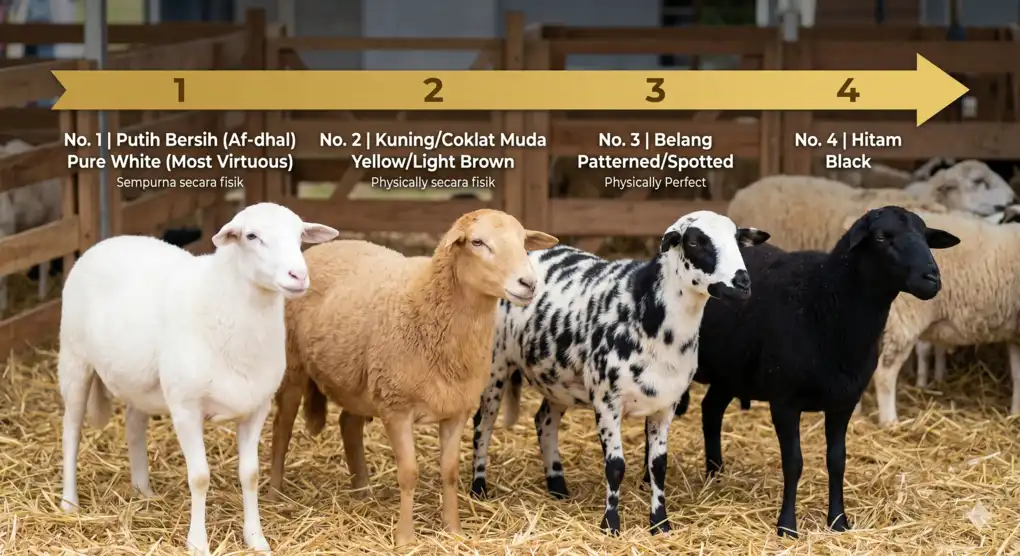
Choosing beautiful livestock fleece color is also part of the sunnah conditions for Qurban animals. This mimics the practice of the Prophet ﷺ, who always chose sheep with the best color combinations. Shaykh al-Islam Zakariyya al-Anshari details the most preferred color sequence:
قوله: (والبيضاء أفضل، ثم الصفراء) … (ثم العفراء) ، وهي التي لا يصفو بياضها، ثم البلقاء … (ثم السوداء)
“And the white color is more superior, then yellow… then afra’ (reddish-white whose white is not pure), then balqa’ (piebald/spotted)… then black.” [10]
Here are the details of the color virtues in order:
- Pure white (Baidha’): The most preferred choice because it has the cleanest and most radiant visual appearance.
- Yellow (Shafra’): Ranks second after pure white.
- Reddish-white (Afra’): A dull white color mixed with a little dust or red.
- Piebald (Balqa’): An animal with a combination of black and white colors.
- Pitch black (Sauda’): Takes the last place, although it remains valid and highly rewarding if slaughtered.
FAQ Regarding Qurban Animal Defects
Answering various questions and answers about Qurban in the Shafi’i school is very important to clear up public doubts in the field. Here is a summary of fiqh Q&A for Eid al-Adha concerning valid animal criteria and excusable defects. For those who still have doubts about the sharia of this worship in general, please read further about the rulings on performing qurban in our previous article.
What are the 4 strictly forbidden Qurban animal defects in the narration of Tirmidhi?
Based on the words of the Prophet ﷺ, there are 4 main Qurban animal defects that render the udhiyah slaughter invalid. These four physical flaws are agreed upon by scholars as severe defects that eliminate the animal’s eligibility to be offered to Allah ﷻ.
The details are as follows:
- Clear blindness in one eye: The eye is damaged, shattered, or totally non-functional.
- Clear illness: Severe physical illness that makes the animal weak and thin.
- Clear limp: A severe limp causing the animal to be left behind by its herd when grazing.
- Extremely thin: A malnourished animal that no longer has marrow in its bones. [11]
If a Qurban animal is defective, what should the vow-maker (pe-nadzar) do?
The issue of what a vow-maker should do if the Qurban animal is defective heavily depends on when the defect appeared. If someone has vowed to slaughter a specific goat, and then the animal becomes defective before they have the chance to slaughter it (before the Qurban time enters), then the Qurban is still considered valid.
قوله: (فإن حدث في) المعينة (المنذورة) … (قبل التمكن من الذبح أجزأته) … (وإن تعيبت بعد التمكن) من ذبحها (لم يجزه)
“If a defect occurs in a specific (animal) that was vowed… before being able to slaughter it, it remains valid for him. And if the animal becomes defective after he is able to slaughter it (because he delayed), it is not valid for him.” [12]
Conversely, if the animal becomes defective after the time of slaughter has entered due to the vow-maker’s negligence in delaying the execution, the animal is invalid for udhiyah. The vow-maker must bear the risk by buying a replacement animal with a perfect physical condition.
What is the ruling on a Qurban animal with an eye defect?
Many people are doubtful and ask, what is the ruling on a Qurban animal with a defective eye? The answer is always detailed based on the severity of the animal’s visual sense. If the animal is totally blind or clearly blind in one eye (al-Aura’), then the Qurban worship is void and invalid.
However, fiqh rulings provide concessions for certain minor defective conditions. Shaykh al-Islam Zakariyya al-Anshari details them:
قوله: (وتجزئ العمشاء) ، وهي ضعيفة البصر مع سيلان الدمع غالبا … (وكذا العشواء) ، وهي التي لا تبصر ليلا
“And it is valid to perform Qurban with an al-Amsya’ (an animal that is short-sighted or has weak vision and its eyes often water)… and similarly, it is valid with an al-Ashwa’ (an animal that cannot see clearly at night).” [13]
Is castrated livestock valid for Qurban?
The ruling on sacrificing castrated animals is valid, and scholars even consider it highly recommended. The act of castrating animal testicles (Mauju’ or Khashiy) brings great benefits, as the meat of castrated animals is proven to be much more tender, delicious, and heavier in weight.
This worship practice follows the exemplary conduct shown directly by Prophet Muhammad ﷺ.
قوله: (ويجزئ خصي وموجوء) … لأنه صلى الله عليه وسلم ضحى بكبشين موجوءين … ولأن ذلك يزيد اللحم طيبا
“And it is valid to sacrifice a khashiy and mauju’ animal (both mean castrated); because the Prophet ﷺ once sacrificed two castrated male rams… and because that increases the deliciousness of the meat.” [14]
Is it permissible to sacrifice a sheep or goat that has no horns?
Regarding the ruling on sacrificing hornless sheep, the udhiyah worship is valid and permissible. Animals that have no congenital horns from birth or whose horns break off midway (as long as it does not damage the meat part) do not violate the pillars and conditions of Qurban at all.
However, it should be underlined that choosing a male animal with a dashing physical appearance and perfect horns (Agran) is more virtuous (afdhal).
قوله: (ولا يضر عدم القرن و) لا (كسر) له (لم يعب اللحم) … (وغيرها) ، وهي ذات القرن (أولى)
“And the absence of horns does not harm (validity), nor does a broken horn, as long as it does not defect the meat… And animals other than that, namely animals that have horns, are more preferred.” [15]
Footnotes
Reference
Zakariyā al-Anṣārī, Asnā al-Maṭālib fī Sharḥ Rawḍ al-Ṭālib, with ḥāsyiyah by Aḥmad al-Ramlī, edited by Muḥammad az-Zuhrī al-Ghamrāwī (Cairo: al-Maṭbaʿah al-Maymānīyah, 1313 H; repr. Dār al-Kitāb al-Islāmī), juz 1, pp. 535-543.


