
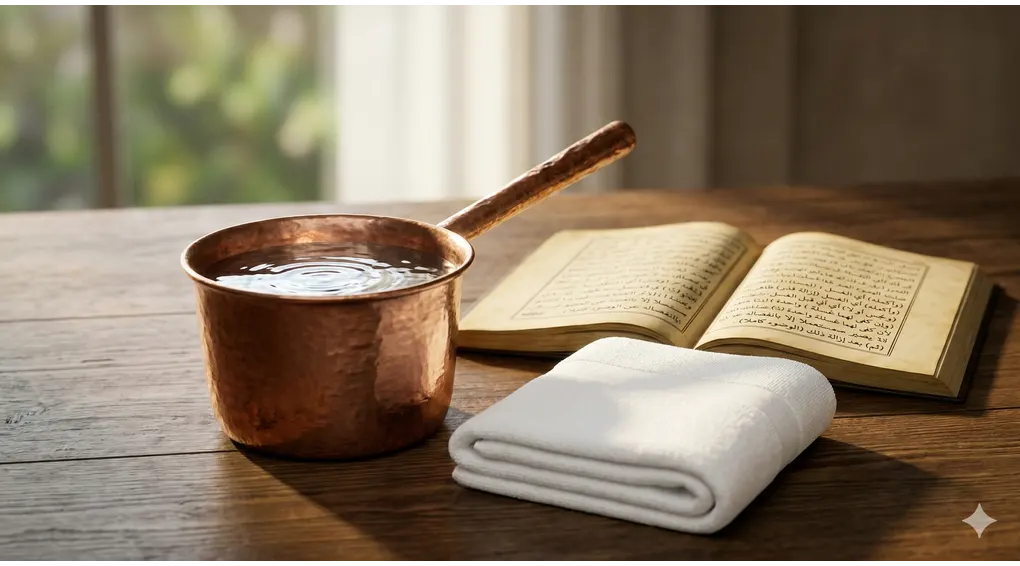
The performance of worship in Islam is not merely about discharging obligatory duties (fardh). A servant who desires a high spiritual station (Maqām) before Allah the Almighty always adorns their deeds with sunnah and proper etiquette (adab).
In the context of purification from major ritual impurity (Thaharah), fulfilling the pillars of the obligatory bath ensures the basic validity of worship. However, diligently practicing the sunnah of ghusl is a profound manifestation of sincerity (Ikhlāṣ) and love for the guidance of the Messenger of Allah ﷺ.
Perfect purification correlates closely with inner cleanliness. Just as a sinner cleanses their soul with sincere repentance (Tawbah Naṣūḥā), a Muslim in a state of impurity cleanses their physical body with noble etiquette to avoid spiritual lethargy (Futur). This article deeply explores the various sunnahs and etiquette of the major bath based on authoritative Shafi’i Fiqh literature, specifically the book Asna al-Matalib Syarh Rawdh ath-Thalib (Vol. 1, pp. 68-70) authored by Shaykh al-Islam Zakariyya al-Anshari.
The Urgency of Reviving the Sunnah in Thaharah
Classical fiqh practice always aligns the legal validity of an action with its virtuous value (fadhilah). Someone who only performs the bare minimum pillars of the bath (having the intention and ensuring water reaches all parts of the body) is indeed legally judged as pure.
However, abandoning the series of sunnahs means losing a massive reward and potentially degrading the quality of one’s spiritual state (Ḥāl) when establishing prayer.
Shaykh al-Islam Zakariyya al-Anshari details the most perfect sequence for the obligatory bath (akmaluhu). This complete guide to the procedures of the obligatory bath seamlessly integrates physical cleanliness, the ethics of water usage, and the precise sequence of washing taught by the Prophet ﷺ.
The Sequence of the Sunnah of Ghusl and Its Etiquette
Below are the details of the etiquette and recommended practices that every Muslim should observe when performing the major bath:
1. Removing Filth and Impurities First
Before initiating the core ritual of the obligatory bath, the very first recommended step is to clean physical dirt and impure substances from the body’s surface.
قوله: (وأكمله) أي الغسل (إزالة قذر) ظاهر كبصاق ومني (ونجس أولا)
Academic Translation: “And the most perfect (method of the obligatory bath) is to remove visible filth, such as saliva and semen, and to eliminate ritual impurities first.”
Cleaning the body from remnants of seminal fluid, menstrual blood, or other impurities is highly stressed. You can learn more about the various types of impurities in Islam to ensure your body is completely clean before officially starting the bath. If these impurities mix with the bathwater, there is a risk that the water flowing to other parts of the body might carry that impure status, especially if the volume of water used is limited.
2. Performing Ablution Before the Bath (Wudhu’ Kamilan)
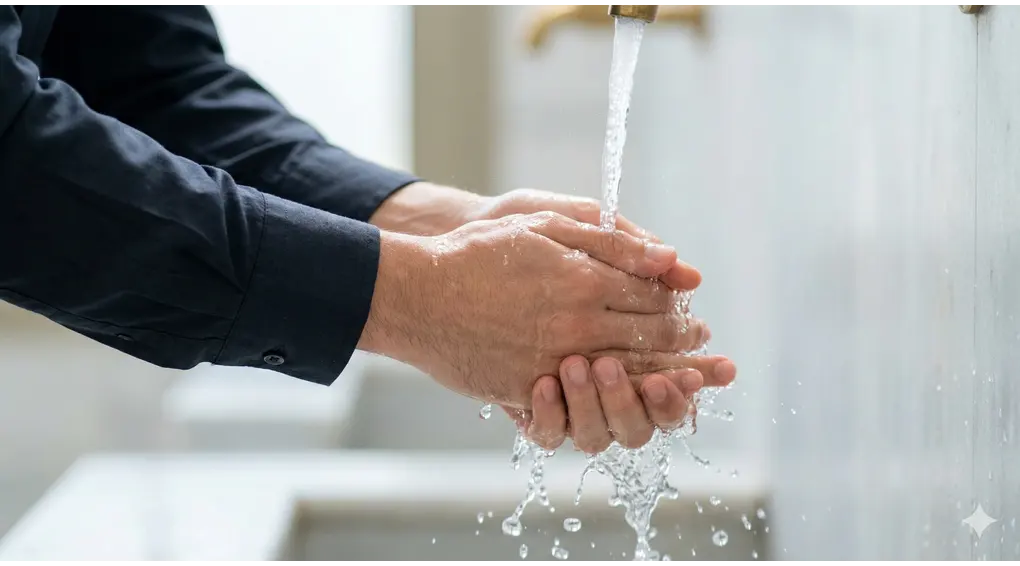
One of the magnificent etiquettes often neglected by Muslims in the modern era is performing a complete ablution (wudu) before pouring water over the entire body. The book Asna al-Matalib states:
قوله: (ثم الوضوء كاملا) للاتباع رواه الشيخان فهو أفضل من تأخير قدميه عن الغسل
Academic Translation: “Then (it is recommended) to perform a complete ablution following the guidance of the Prophet (Narrated by Al-Bukhari and Muslim). This is more virtuous than delaying the washing of his feet to the end of the bath.”
How is the intention for this ablution formulated? A person in a state of junub intends their ablution specifically as a sunnah of ghusl, not to lift minor ritual impurity. This is because minor impurity is automatically lifted along with the major impurity later on. Shaykh al-Islam explains:
قوله: (ينوي به سنة الغسل إن تجردت الجنابة) عن الحدث (وإلا) نوى به (رفع الحدث الأصغر وإن قلنا يندرج) في الغسل
Academic Translation: “He intends with that ablution the sunnah of the bath if his state of major impurity (janabah) is separate from minor impurity. Otherwise, he intends to lift the minor impurity, even though we opine that the minor impurity is automatically included (lifted) within the major bath.”
Performing ablution at the very beginning provides a refreshing stimulus to the most noble body parts and awakens inner readiness before water washes the rest of the physical body.
3. Pouring Water Over the Head and Prioritizing the Right Side (Tayammun)



After the complete ablution is done, it is time to wet the core areas. The ethics taught by the Shari’ah dictate paying close attention to the roots of the hair and prioritizing the top and the right side of the body (Tayammun). The fiqh text directs this action:
قوله: (ثم يفيض) الماء (على رأسه ثم شقه الأيمن ثم الأيسر بتثليث) لغسل جميع البدن
Academic Translation: “Then he pours water over his head, then over his right side, then his left side, repeating it three times to wash the entire body.”
There is authentic evidence that serves as the primary foundation for this recommendation, namely the historical record of the Prophet’s ﷺ action:
ثم يفيض على رأسه
Academic Translation: “Then he pours water over his head.”
This orderly sequence imparts a profound lesson in discipline. It begins with running wet fingers through the roots of the hair (ta’ahhud ushul sha’r), followed by pouring water over the head so that the pores of the scalp—which become tense after ejaculation or menstruation—return to a normal state. After that, the pouring is directed to the right shoulder down to the tip of the right foot, and then shifts to the left shoulder down to the left foot.
4. Repeating the Wash Three Times (Tatslits) and Rubbing the Body (Dalk)
In the worship of ablution, repeating the wash three times (Tatslits) is an emphasized sunnah (sunnah muakkadah). This exact concept applies identically in the execution of the major bath.
As the text above mentions the phrase bitatslits (with three washings), each pour on the right or left side should ideally be repeated three times. This aims to ensure the water truly absorbs and flows into every fold and crevice of the body.
Simultaneously with the pouring of water, it is highly recommended for the hands to rub the skin surface (dalk). While rubbing is not strictly obligatory in the Shafi’i School (unlike the Maliki School which mandates it), it represents the pinnacle of perfection. Rubbing ensures that no natural skin lubricants or oils obstruct the touch of pure water on the bodily pores.
Etiquette of Water Usage in Islamic Thaharah Fiqh
Islam is a religion that pays immense attention to the preservation of nature and resources. Environmental fiqh manifests clearly in the chapter of Thaharah, particularly regarding the ethics of water management and usage.
There are two primary guidelines in the etiquette of the obligatory bath regarding water:
1. Water Measurement: Sufficient with One Sa’ (Avoiding Extravagance)
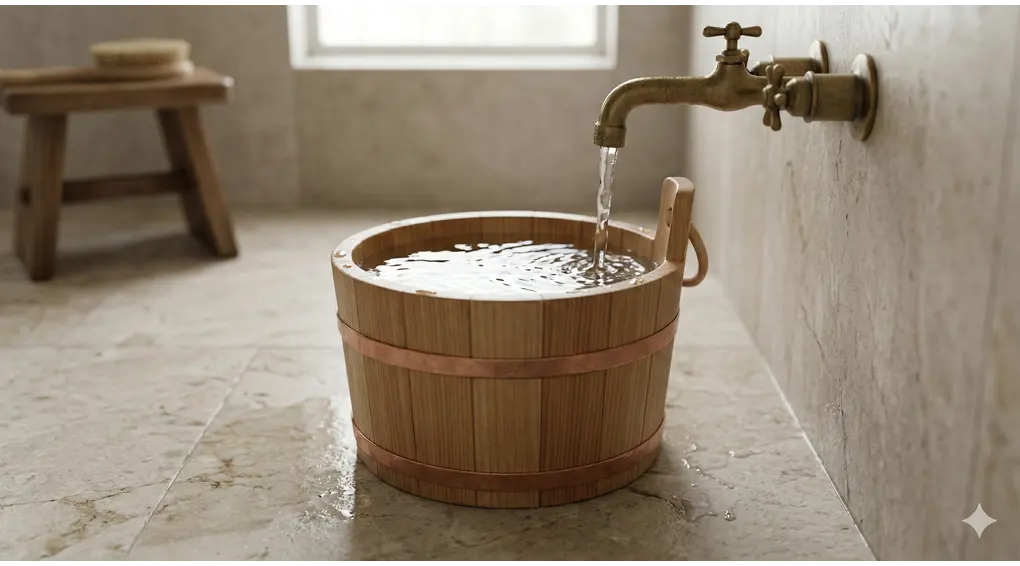
Nowadays, the ease of access to clean water through modern showers often makes Muslims complacent and wasteful (israf). In reality, the Prophet ﷺ exemplified highly measured and remarkably efficient water usage.
Shaykh al-Islam Zakariyya al-Anshari quotes this standard:
قوله: (وأن) لا (ينقص فيه) أي في الغسل (عن صاع) أي (أربعة أمداد وفي الوضوء عن مد) أي (رطل وثلث) بغدادي تقريبا … لخبر: كان النبي – صلى الله عليه وسلم – يغتسل بالصاع ويتوضأ بالمد
Academic Translation: “And it is recommended not to use less water for the bath than the measure of one Sa’, which is four Mudds. And for ablution, not less than one Mudd (approximately one and a third Baghdad Rithl)… this is based on the hadith: ‘The Prophet ﷺ used to bathe with one Sa’ and perform ablution with one Mudd‘.”
The magnificent evidence from the testimonies of the Companions serves as an eternal reference:
كان يغتسل بالصاع
Academic Translation: “He (the Prophet) used to bathe with one Sa‘.”
One Sa’ is equivalent to a volume of approximately 2.5 to 3 liters of water. This is indeed a very minimal volume compared to the daily habits of modern humans. Although this is not an absolute rigid limit (since human body sizes naturally vary), the underlying substance of this teaching strictly prohibits wasting water. Extravagance is a detestable act that ruins the value of sincerity (Ikhlāṣ) in worship.
2. Prohibition of Immersing in Stagnant Water (Ma’ Rakid)
The final crucial etiquette concerning public welfare and hygiene is the prohibition of performing the major bath by submerging oneself into stagnant water (Rakid), such as a small pool in a bathroom or a calm well.
قوله: (و) أن (لا يغتسل في) ماء (راكد) ولو كثيرا أو بئر معينة كما في المجموع بل يكره ذلك لخبر مسلم عن أبي هريرة قال النبي – صلى الله عليه وسلم – لا يغتسل أحدكم في الماء الدائم وهو جنب فقيل كيف يفعل يا أبا هريرة قال يتناوله تناولا
Academic Translation: “And he should not bathe in stagnant (still) water, even if it is abundant, or in a specific well as mentioned in Al-Majmu’; rather, it is disliked (makruh).”
This prohibition directly references the authoritative words of the Prophet ﷺ:
لا يغتسل في ماء راكد
Academic Translation: “He should not bathe in stagnant water.”
In a hadith narrated by Muslim from Abu Hurairah, the Prophet ﷺ said: “None of you should bathe in stagnant water while in a state of junub.” When the Tabi’in asked Abu Hurairah how a person should bathe, he replied: “He should take it with a dipper/hand (tanawul).”
The wisdom behind this prohibition is highly scientific and laden with communal ethics. The entry of a dirty and ritually impure body into stagnant water will ruin its clarity, leave behind filth, and make others feel disgusted to use it later.
If the volume of the water is less than two qullahs (approx. 216 liters), then there is a high legal certainty that its status will change into used water (Air Musta’mal). Consequently, it is no longer valid to be used for purification by others. Therefore, the method conforming to the sunnah is to scoop the water with a dipper or allow the water to flow from above (like a shower), so that the runoff water from the body flows away without ruining the supply of pure water in the container.
Summary Table of Etiquette and Sunnah of Ghusl
For a practical understanding, please refer to this summary of the etiquette and sunnahs of the major bath in the Shafi’i School:
| Action in Worship | Legal Status | Objective / Shari’ah Wisdom |
| Removing physical dirt/impurities. | Condition / Sunnah | Prevents pure water from mixing with impure substances. |
| Reciting the Basmalah. | Sunnah | Seeking Allah’s blessings at the start of a good deed. |
| Performing complete ablution. | Emphasized Sunnah | Prepares the spiritual condition of the primary body parts. |
| Pouring water over the head 3 times. | Sunnah | Calms brain nerves and opens hair pores. |
| Prioritizing the right side of the body. | Sunnah | Honoring the right side following the Prophet’s habit. |
| Rubbing the body (Dalk). | Sunnah | Helps water penetrate natural skin lubricants. |
| Bathing with one Sa’ of water. | Etiquette / Sunnah | Avoiding extravagance (israf / wasting water). |
| Scooping water with a dipper. | Etiquette (Obligatory if water is little) | Maintaining water purity so it doesn’t become Musta’mal. |
Conclusion
The concept of purification (thaharah) encompasses a broad spectrum of physical and spiritual cleanliness that forms the very lifeblood of Islamic teachings. Thaharah is a sacred procedure that not only fulfills the prerequisites for the validity of worship but also functions to maintain health, aesthetics, and the purity of the heart. By understanding the essence of these rulings and disciplining oneself in the application of the sunnah of ghusl, a Muslim will live in bodily cleanliness and spiritual tranquility beloved by Allah ﷻ.
FAQ: Common Questions on the Sunnah of Ghusl
If I forget to perform ablution (wudu) at the beginning of the obligatory bath, am I sinning?
No. Performing wudu at the beginning of the bath is a sunnah, not a pillar (rukun). Your bath remains fully valid, and your major impurity is lifted as long as the intention and the spreading of water over the entire body (ta’mim) are accomplished. However, you miss out on the sunnah reward of following the footsteps of the Messenger of Allah ﷺ.
Is it permissible to use soap and shampoo while executing the pillars of the bath?
It is permissible, but with an important caveat. The water used to purify the body must legally be absolute water (ma’ mutlaq / pure water). It is highly recommended to spread pure water first until the intention of the bath is fulfilled. After the pillars of the bath are completed, you may then apply soap and shampoo for additional cleanliness, and then rinse again. Ensure the pure water does not change color and smell due to soap before it has the chance to spread over the entire body
What is the meaning of the “Makruh” ruling for immersing oneself in a stagnant pool?
Makruh means an action that the Shari’ah recommends leaving in order to achieve perfection. If you submerge yourself in a small bathtub where the water is less than two qullahs while intending to lift janabah, that water transforms into Musta’mal (used) water. It can no longer be used by others for ritual purification, even though your own bath is valid under certain conditions. Therefore, it is always better to use a dipper or a flowing shower system.
References
Zakariyā al-Anṣārī, Asnā al-Maṭālib fī Sharḥ Rawḍ al-Ṭālib, with the ḥāshiyah by Aḥmad al-Ramlī, edited by Muḥammad az-Zuhrī al-Ghamrāwī (Cairo: al-Maṭbaʿah al-Maymānīyah, 1313 AH; repr. Dār al-Kitāb al-Islāmī), vol. 1, pp. 69-71.


