
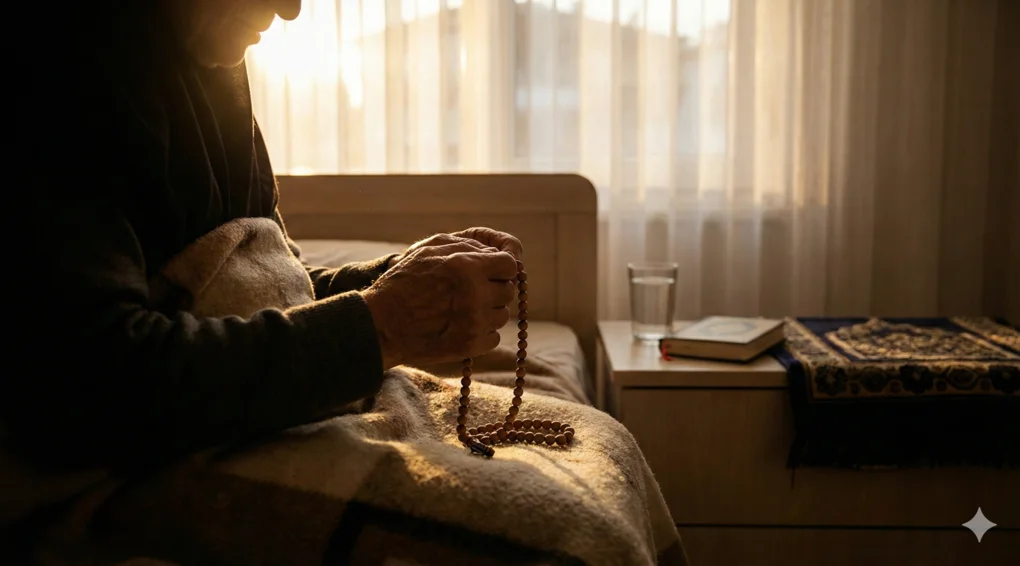
Illness frequently arrives without an invitation. For many individuals, sickness is merely a physical disruption that severely hinders daily activities. However, within the profound theological framework of Islam, illness is a “love letter” from Allah, simultaneously serving as a critical early warning for us to prepare for our ultimate destination.
When the physical body begins to weaken, the heart should theoretically become exponentially stronger in its remembrance of the Hereafter. The authoritative Shafi’i fiqh manual, Asna al-Matalib, provides meticulously detailed guidance regarding the etiquette of the sick in Islam. Sickness is absolutely not a time for relentless complaining; rather, it is a golden opportunity for intense spiritual purification before facing the Creator.
This article will comprehensively discuss the obligatory and recommended actions a Muslim must undertake when severely ill or when perceiving the approaching signs of death, drawing directly from classical scholarly texts.
Why is Sickness the Supreme Reminder of Death?
In the book Asna al-Matalib, Shaykh Zakariyya al-Ansari commences the chapter on Funerals (Jana’iz) not immediately with the technicalities of washing a corpse, but with the profound recommendation to continuously multiply the remembrance of death (dhikr al-mawt). He quotes:
(يستحب الإكثار من ذكر الموت)
“It is recommended to abundantly remember death.”
Why is this so crucial? Because the remembrance of death is the ultimate destroyer of worldly pleasures that frequently induce spiritual negligence. For a healthy individual, remembering death actively prevents them from committing sins. For a sick person, this practice is vastly more emphasized (a’kad). Sickness is the specific condition where the boundary separating us from death feels increasingly translucent.
Consequently, preparation for death must not be procrastinated until the soul reaches the throat. This vital preparation must commence while we still possess full consciousness on our sickbed.
The Urgent Obligation: Repentance and Restoring the Rights of Others

Many people erroneously believe that preparing for death revolves solely around purchasing a burial shroud (kafan). In reality, the most critical preparation is the purification of the soul (tazkiyat al-nafs). The text explicitly states:
(والاستعداد له بالتوبة ورد المظالم)
“And (it is recommended) to prepare for it through repentance and the restoration of unjustly taken properties (the rights of others).”
1. Sincere Repentance (Taubah Nasuha)
Do not tragically wait until “later when I am old.” Illness is a blaring alarm. Immediately repent from all major and minor sins. Profound remorse experienced during sickness can serve as an incredibly effective mechanism for the absolute obliteration of sins.
Before proceeding, you must understand the essence and definitions of Taubah Nasuha and actively practice the procedures of Salat al-Taubah.
2. Settling Interpersonal Obligations (Radd al-Madhalim)
This is a point that is tragically often neglected. Repenting to Allah is relatively straightforward; it merely requires sincere remorse and seeking His forgiveness. However, sins committed against fellow human beings will never be pardoned solely through istighfar (seeking forgiveness from Allah).
If you possess outstanding debts, borrowed items that remain unreturned, or have ever usurped the rights of another person, sickness is your absolute, non-negotiable deadline to resolve them. If you are entirely incapable of paying, you must urgently seek absolution (ridha or halal) from that specific individual. Never allow yourself to die carrying the heavy burden of debt or oppression, as it will severely complicate your journey in the realm of Barzakh.
The Etiquette of the Sick in Islam: Between Patience and Medical Treatment

What should our mental and spiritual disposition be while lying weak? Below are the core points of etiquette instructed in Asna al-Matalib:
Restraining from Complaining (Tark al-Shakwa)




It is entirely human to feel physical agony. However, Islam teaches a vastly superior etiquette:
(وترك الشكوى)
“And (it is recommended) to abandon complaining.”
The complaining that is strictly prohibited is that which carries a tone of rebellion against the divine decree of Allah, such as uttering, “Why must it be me?”, “This is totally unfair,” or excessive, impatient groaning (al-anin) that starkly displays a lack of patience.
However, if you accurately inform a doctor or your family about your physical pain for the sole purpose of diagnosis and treatment—not for the sake of lamentation—then it is entirely permissible and not disliked (makruh). Scholars meticulously distinguish between complaining to creation (which is blameworthy) and the legitimate effort to seek a cure (which is highly encouraged).
Medical Treatment (Tadawi) vs. Absolute Reliance (Tawakkal)
Is seeking medical treatment obligatory? The vast majority of Shafi’i scholars, as documented in this text, hold the position that seeking medical treatment is a Recommended Sunnah, not a strict Obligation.
قوله: (ويستحب) له (التداوي)
“And it is recommended for him (the sick person) to seek medical treatment.”
Allah never sends down a disease without simultaneously sending down its cure. However, there exists a significantly higher spiritual station for those whose faith is unshakeable. The text states:
فإن ترك التداوي توكلا ففضيلة
“If he abandons medical treatment due to Tawakkal (absolute reliance on Allah), then that is a virtue (fadilah).”
This is a profoundly personal choice. If abstaining from treatment causes you to complain incessantly and severely disrupts your obligatory worship, then you must seek treatment. That is undeniably better for the preservation of your religion.
Having Good Expectations of Allah (Husn al-Zan)
As the illness worsens and the shadow of death approaches, Satan frequently whispers intense fear and utter despair. This is precisely where the etiquette of the sick in Islam aggressively emphasizes the vital importance of Husn al-Zan (having good expectations of Allah).
Possess absolute certainty that this illness is an expiation for your sins. Be certain that Allah is the Most Forgiving. Do not allow the overwhelming fear of your past sins to plunge you into despair regarding His boundless mercy. The Prophet ﷺ explicitly commanded, “Let none of you die except while holding good expectations of Allah.”
The Role of the Family: Do Not Force Them to Eat
For the family members providing care, there is a specific etiquette that must be diligently observed. Frequently, out of deep love and concern, we forcefully coerce the patient into eating large quantities of food. However, in Asna al-Matalib it is explicitly stated:
قوله: (ويكره أن يكره) المريض (عليه) أي على التداوي
“And it is disliked (makruh) to force the sick person (upon it), meaning upon medical treatment (or eating).”
The sick person’s body is currently intensely occupied with fighting the disease. Forcing them to eat can actually overburden their physiological systems. Provide them with light foods they genuinely enjoy, and gently remind them to perform their prayers and dhikr to the best of their physical ability.
Summary: What is Recommended and What is Disliked?
To facilitate rapid comprehension, here is a summary table detailing the etiquette for a sick person:
| Category | Recommended Actions (Sunnah) | Actions to Strictly Avoid (Makruh/Haram) |
| State of Heart | Patience, Contentment (Ridha), Husn al-Zan towards Allah. | Complaining, bad expectations of Allah, despair. |
| Worship | Sincere repentance, restoring rights/debts, abundant dhikr. | Delaying repentance, neglecting prayer due to mild illness. |
| Physical | Seeking treatment (Tadawi), maintaining personal hygiene. | Excessive groaning (Anin), rejecting divine decree. |
| Interaction | Seeking forgiveness from others, drafting a will. | Arguing over worldly matters during critical moments. |
Frequently Asked Questions (FAQ) Regarding the Etiquette of the Sick
Is a sick person still obligated to perform the daily prayers?
Yes, the absolute obligation of prayer never falls as long as the intellect (‘aql) remains functional. If you are entirely unable to stand, you are permitted to sit. If you are unable to sit, you may lie down. The etiquette of the sick in Islam provides immense facilitation (rukhsah), but it absolutely never nullifies the core obligation. Ensure you understand the fundamental pillars of the Shahadah to keep your faith strong during illness.
Is it permissible to wish for death because of a seemingly incurable, agonizing illness?
The default ruling is that it is severely Disliked (Makruh). The Prophet ﷺ explicitly forbade us from wishing for death solely due to worldly afflictions. However, if a person genuinely fears their religion will be destroyed (e.g., they fear committing apostasy because they cannot endure the agonizing pain), then it is permissible to supplicate: “O Allah, keep me alive as long as life is good for me, and cause me to die if death is better for me.”
What should be done if the sick person struggles to speak during the throes of death?
The family is highly recommended to gently guide (talqin) them to utter “La ilaha illallah”. Do not pressure or shout at them. If they successfully articulate it once, leave them in peace. Do not engage them in any further worldly conversations, ensuring their absolute final utterance remains the declaration of Tawhid.
If the divine decree of Allah dictates that their time has arrived, the family must immediately commence the funeral preparations. For a comprehensive, step-by-step guide on the ensuing procedures, you can read our master article: The complete procedures for preparing the deceased (Tajhiz al-Janazah) according to the Sunnah.
Sickness is simultaneously a severe test and a profound warning. However, if the condition deteriorates and death rapidly approaches, the family must be thoroughly prepared to accompany them spiritually. Learn precisely what must be done next in our comprehensive guide on the signs of death and how to perform talqin.
It is imperative to understand that illness is Allah’s mechanism for purifying us before we inevitably meet Him. Let us utilize the moments of sickness as a profound means to draw closer to Him, rather than distancing ourselves through complaints. We pray that we are all granted a beautiful, righteous ending (Husn al-Khatimah).
Wallahu a’lam bish-shawab.
Reference
al-Anṣārī, Zakariyā. Asnā al-Maṭālib fī Sharḥ Rawḍ al-Ṭālib. ḥāshiyah by Aḥmad al-Ramlī. Edited by Muḥammad az-Zuhrī al-Ghamrāwī. Cairo: al-Maṭbaʿah al-Maymānīyah, 1313 H. Reprinted by Dār al-Kitāb al-Islāmī.


