
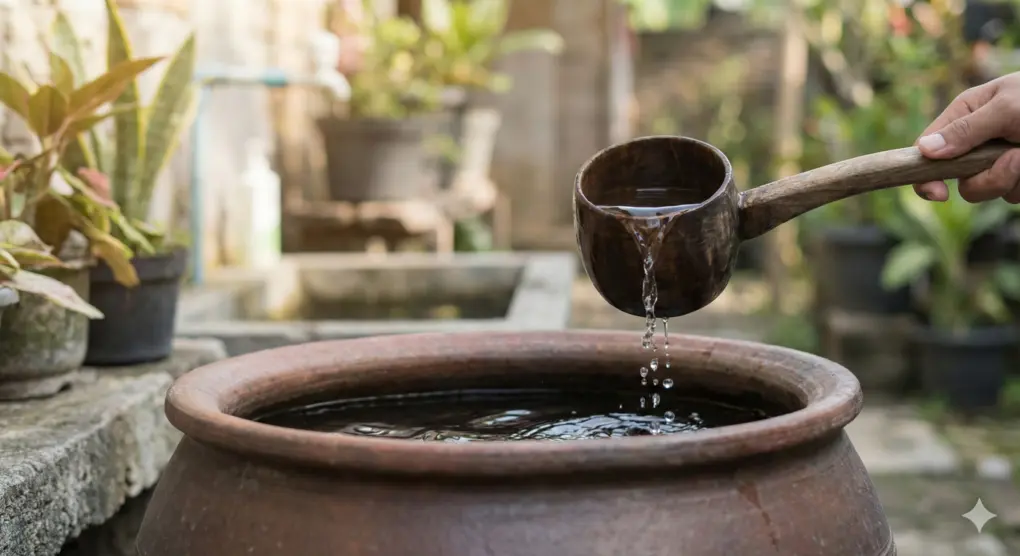
Musta’mal water is water that has already been used in an obligatory act of purification. As one of the core types of water for purification, in Shafi’i fiqh, it remains pure, but it is no longer purifying when its conditions are present.
Understanding this concept is essential within the broader definition of taharah, as this topic matters deeply in wudu, ghusl, and the removal of najasah. Many people think used ablution water is impure. That is not the Shafi’i ruling.
The issue is not impurity, but loss of purifying legal function. This article explains the definition, evidences, practical examples, and the relation between musta’mal water and the two-qullah rule.
What Is Musta’mal Water?
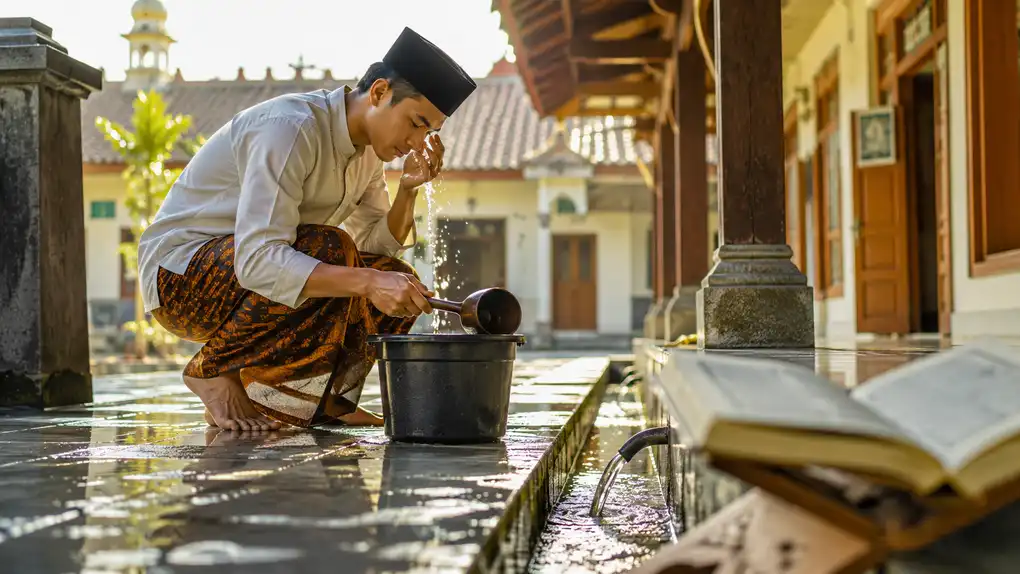
Linguistically, musta’mal means “used.” In the chapter of purification, it refers to water already used in a required purification act.
Not every water that touches the body becomes musta’mal. In Shafi’i fiqh, musta’mal water is a small quantity of water used in an obligatory purification, such as required wudu washing, required ghusl, or removing najasah. This distinction between minor ritual impurity (hadath) and physical impurity (khabath) is further detailed in our comprehensive najasah guide. Shaykh Zakariyya al-Ansari states:
Shaykh Zakariyya al-Ansari states:
لا ماء قليل مستعمل في فرض من رفع حدث أو خبث فلا يطهر شيئا
“A small amount of water used in an obligation, whether for lifting hadath or removing khabath, does not purify anything.”[1]
This text gives the core rule: musta’mal water is pure but not purifying.
Why Is It Pure but Not Purifying?
“Pure” means the water is not najis. It may be touched and used for ordinary needs.
“Not purifying” means it cannot be used for ritual purification. It cannot lift minor hadath through wudu. It cannot lift major hadath through ghusl. It cannot serve as the water used to remove najasah in a valid purification act.
So the phrase pure but not purifying water does not mean dirty water. It means the water has lost its ritual purifying function.
Musta’mal Water among the Types of Water
In Shafi’i fiqh, water is discussed by legal status, not only by physical cleanliness.
A simple map is:
| Type of Water | Legal Status | Valid for Wudu or Ghusl? |
|---|---|---|
| Mutlaq water | Pure and purifying | Yes |
| Musta’mal water | Pure but not purifying | No |
| Mutanajjis water | Impure | No |
Mutlaq water is water that is still simply called “water,” without a binding qualifier, serving as the absolute standard for pure and purifying water. As explained in the examples of types of water for purification, rainwater, seawater, river water, well water, and spring water fall into this category when they remain unchanged in a legally relevant way.
Musta’mal water is different. It is pure, but it is not used again for obligatory purification.
Water as the Basic Tool of Purification
The original tool for lifting hadath and removing najasah is mutlaq water, a principle heavily grounded in the evidences for taharah. Asna al-Matalib states:
لا يجوز رفع حدث ولا إزالة نجس إلا بالماء المطلق
“Hadath may not be lifted and najasah may not be removed except with mutlaq water.”[2]
Allah says:
وَيُنَزِّلُ عَلَيْكُمْ مِنَ السَّمَاءِ مَاءً لِيُطَهِّرَكُمْ بِهِ
“He sends down upon you water from the sky to purify you with it.”[3]
Allah also says:
وَأَنْزَلْنَا مِنَ السَّمَاءِ مَاءً طَهُورًا
“We sent down from the sky purifying water.”[4]
The word طهورا points to water that purifies. That is why the central question in this topic is whether the water remains purifying, or only remains pure.
The Shafi’i Basis for the Ruling
The key phrase is:
مستعمل في فرض
“Used in an obligation.”[1]
Here, “obligation” refers to a washing or act that is required for the validity of purification. Shaykh Zakariyya al-Ansari explains:
والمراد بالفرض ما لا بد منه أثم بتركه أم لا
“What is meant by obligation is something that must be done, whether leaving it is sinful or not.”[5]
This means water may become musta’mal even when used by a child for a purification needed for valid prayer. The test is not only sin. The test is whether the washing is required in the purification.
Conditions for Water to Become Musta’mal
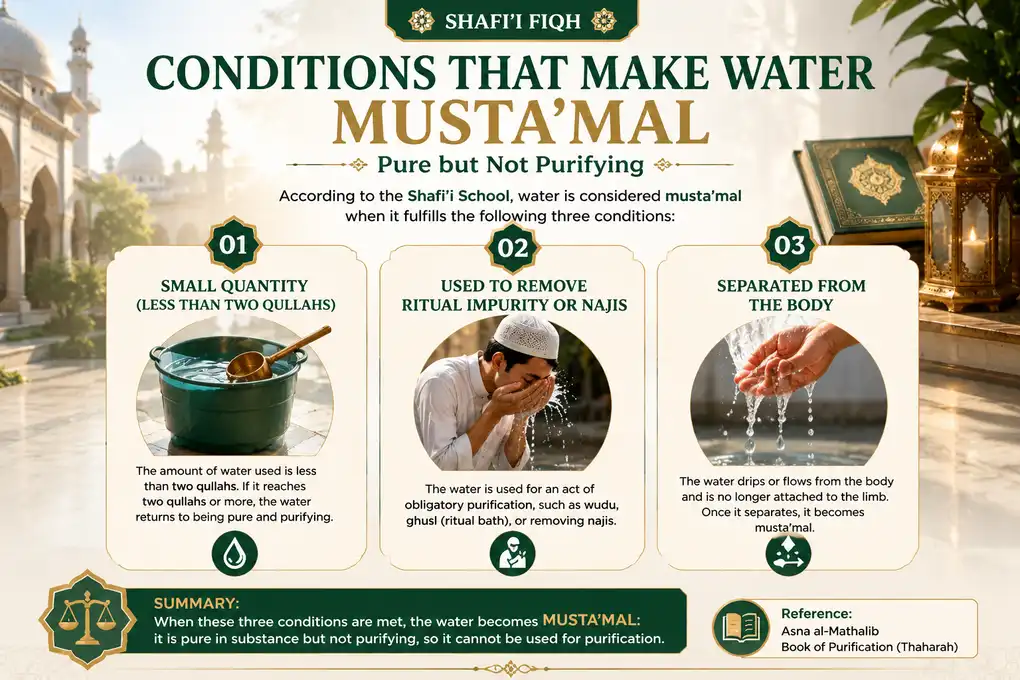
Water is not ruled musta’mal unless its conditions are present.
1. The Water Is a Small Quantity
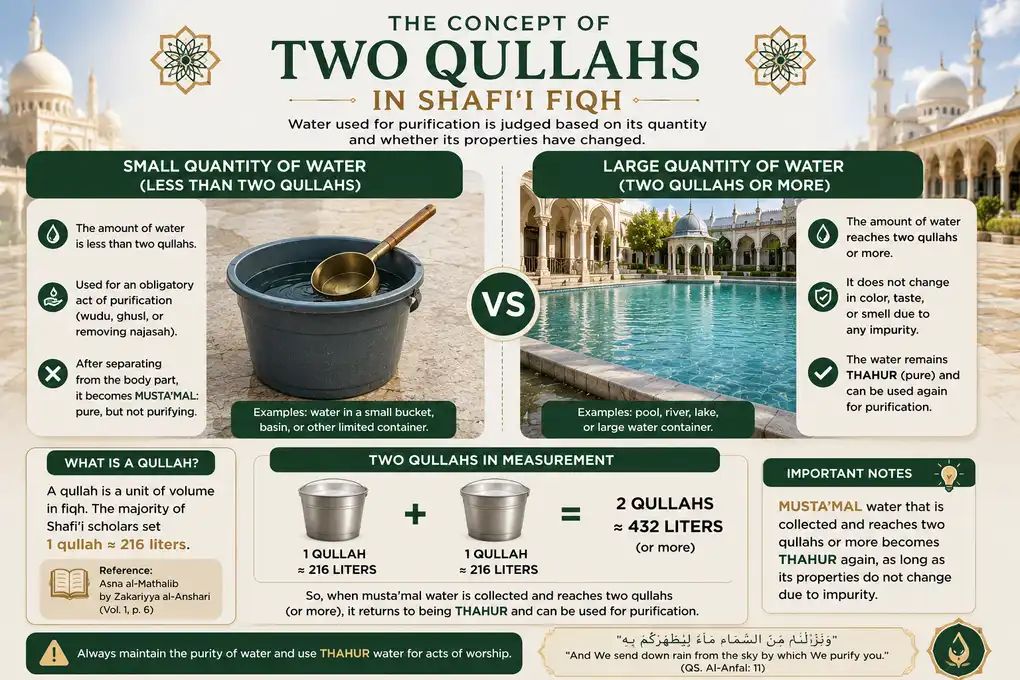
The first condition is that the water is a small amount, meaning less than two qullahs. If the water reaches this specific quantity threshold for large water and is not changed by najasah, its ruling is entirely different. This is why the two-qullah rule is closely tied to musta’mal water.
If the water reaches two qullahs and is not changed by najasah, its ruling is different. This is why the two-qullah rule is closely tied to musta’mal water.
2. It Is Used in an Obligatory Purification
Water becomes musta’mal when used in obligatory purification, such as:
- the first washing of the face in wudu,
- washing the arms up to the elbows,
- washing the feet up to the ankles,
- obligatory ghusl after janabah,
- obligatory ghusl after menstruation or nifas,
- removing najasah.
Water used for a recommended washing does not carry the same ruling. Asna al-Matalib states:
لا مستعمل في نفل فإنه طهور لعدم استعماله في فرض
“It is not musta’mal when used in a recommended act, because it was not used in an obligation.”[6]
Thus, the second and third washings in wudu are not like the first required washing.
3. The Water Has Separated from the Washed Limb


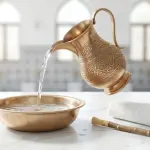
Water still moving over the limb during wudu is not yet ruled musta’mal. It is still part of the washing process.
Asna al-Matalib states:
الماء المتردد على عضو المتوضئ… طهور
“Water that is still moving over the limb of the person performing wudu is purifying.”[7]
But once it drips away and separates, the ruling changes:
فإن جرى الماء من عضو المتوضئ إلى عضوه… أو تقاطر من عضو… صار مستعملا
“If water flows from one limb of the person performing wudu to another limb, or drips from a limb, it becomes musta’mal.”[8]
The key is separation from the limb.
4. It Has Not Become Najis Water
Musta’mal water is strictly pure, so it is not the same as impure water. If najasah affects the water, transforming it into mutanajjis water, then the legal framework shifts completely. Musta’mal water is pure. If it becomes affected by najasah, it is no longer merely musta’mal.
Musta’mal water is pure. If it becomes affected by najasah, it is no longer merely musta’mal.
Is Used Ablution Water Musta’mal?
Yes, as discussed in the context of our complete wudu guide, used ablution water can become musta’mal if it comes from a required washing, the amount is small, and it has separated from the wudu limb.
For example, water from the first washing of the face falls into a small bowl. That water is pure, but it is not valid for another wudu.
Water still flowing on the face or arm during the washing is not yet musta’mal. It becomes musta’mal after separation.
So, can used ablution water be reused for wudu? No, if it truly became musta’mal.
Is Used Ghusl Water Musta’mal?
Yes, according to the principles outlined in our obligatory ghusl guide, used ghusl water is musta’mal if it is a small amount and has been specifically used to lift major hadath.
For example, someone performs ghusl after janabah, and the water running from the body gathers in a small container. The water remains pure, but it is not valid for another obligatory ghusl.
Asna al-Matalib mentions water dripping from the body of a person in janabah:
أو تقاطر من عضو ولو من عضو بدن الجنب صار مستعملا
“Or if water drips from a limb, even from the body of a person in janabah, it becomes musta’mal.”[8]
For this reason, one should not let used ghusl water return into a small water container still being used for purification.
Examples of Musta’mal Water
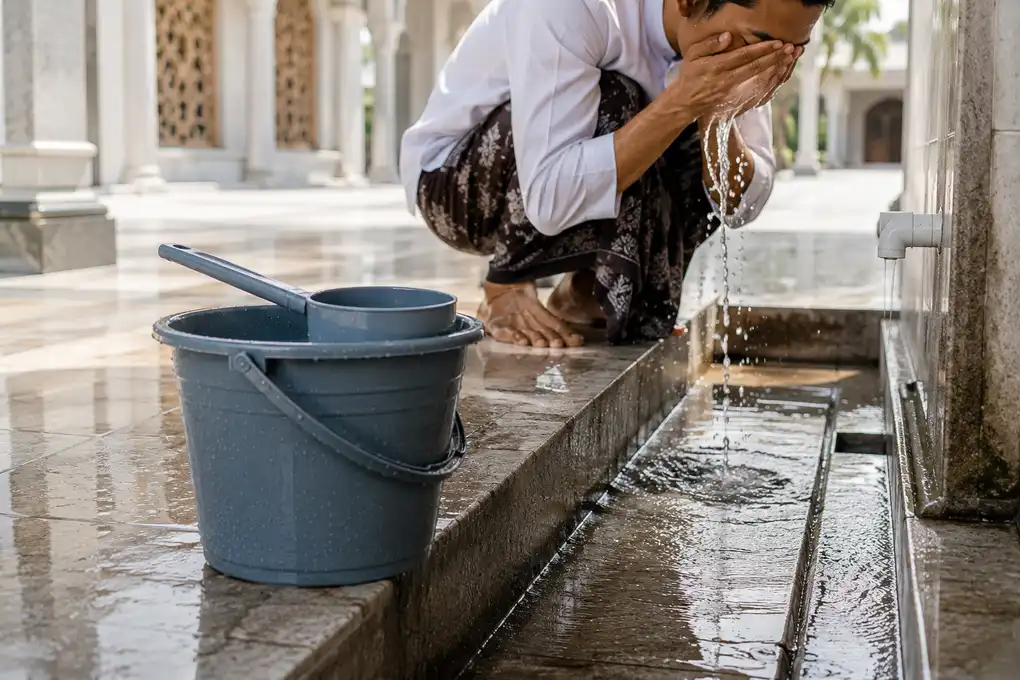
Common examples include:
- Water from the first required washing of the face in wudu, collected in a small bowl.
- Water from washing the arms in wudu, after it falls away from the limb.
- Water from an obligatory ghusl that gathers in a small container.
- A small amount of water used to remove najasah, provided it did not become impure in the process.
- Water from the required washing of the feet in wudu, collected and then considered for reuse.
These are examples of pure but not purifying water.
What Does Not Automatically Become Musta’mal?
River water used by many people does not automatically become musta’mal as long as it is abundant, flowing, and not changed by najasah.
Running tap water also is not musta’mal simply because someone performs wudu with it. The water coming from the tap is new water, not a small collected amount of required used washing.
Rainwater touching the body also does not automatically become musta’mal. It enters this topic only when used for obligatory purification and then separates from the washed limb.
Ruling on Wudu with Musta’mal Water
According to Shafi’i fiqh, wudu with musta’mal water is not valid.
A fundamental pillar among the validity conditions of wudu is that it requires water that is both pure and purifying. Musta’mal water, however, is only pure.
The text states:
فلا يطهر شيئا
“It does not purify anything.”[1]
If someone performed wudu with musta’mal water, the wudu must be repeated with valid water.
Ruling on Ghusl with Musta’mal Water
Ghusl with musta’mal water is also invalid. Obligatory ghusl lifts major hadath, and musta’mal water cannot lift hadath.
A common case is using a small bucket for ghusl while used water from the body returns to that bucket. A safer practice is to scoop water out and let the used water fall away.
When water is limited, use it carefully, but keep the used obligatory washing water from returning into the small clean-water container.
Putting the Hand into a Small Water Container
In daily life, a person may scoop water directly with the hand. The ruling depends on intention and circumstance.
Asna al-Matalib states:
ولو غرف بكفه جنب نوى… أو محدث بعد غسل وجهه… من ماء قليل، ولم ينو الاغتراف صار مستعملا بخلاف ما إذا نواه
“If a person in janabah scoops with his palm from a small amount of water while intending to lift janabah, or a person with hadath after washing his face scoops from a small amount of water and does not intend merely to scoop, then it becomes musta’mal. This is unlike when he intends to scoop.”[9]
The distinction is between scooping water and washing the limb for lifting hadath inside the container.
Using a ladle or scoop is the safer practice.
Can Musta’mal Water Still Be Used?
Yes. Because musta’mal water is pure, it may still be used for ordinary needs.
It may be used for:
- watering plants,
- rinsing a clean floor,
- washing objects that are not najis,
- cleaning a yard,
- washing sandals or tools that are already pure.
It may not be used for wudu, obligatory ghusl, or the legal purification of najasah.
Can Musta’mal Water Become Purifying Again?
Yes. In Shafi’i fiqh, musta’mal water gathered until it reaches two qullahs becomes purifying again.
Asna al-Matalib states:
فإن جمع المستعمل فبلغ قلتين صار طهورا
“If musta’mal water is gathered and reaches two qullahs, it becomes purifying.”[10]
This applies as long as the water has not changed due to najasah.
A small amount of musta’mal water is not used for wudu or ghusl. But if it reaches the quantity of large water, the ruling changes.
Table of Rulings
| Case | Water Status | Valid for Wudu? | Valid for Ghusl? |
|---|---|---|---|
| Used water from required wudu washing, collected in a small amount | Pure, not purifying | No | No |
| Used water from obligatory ghusl, collected in a small amount | Pure, not purifying | No | No |
| Musta’mal water gathered until two qullahs | Pure and purifying | Yes | Yes |
| Continuously running tap water | Mutlaq water | Yes | Yes |
| Abundant river water that is unchanged | Mutlaq water | Yes | Yes |
| Water changed by najasah | Mutanajjis | No | No |
Practical Ways to Avoid Musta’mal Water Issues
Use these simple steps:
- Scoop water with a ladle.
- Do not perform wudu directly above a small bucket.
- Do not let used required washing water return to the container.
- Separate clean water from the place where used water falls.
- Use running water when available.
- When scooping with the hand, intend to take water, not to wash the limb inside the container.
These habits keep wudu and ghusl clear from doubt.
FAQ about Musta’mal Water
What is musta’mal water?
Musta’mal water is a small amount of water already used in an obligatory purification, such as required wudu washing, obligatory ghusl, or removing najasah.
It is pure, but not purifying.
Is musta’mal water impure?
No. Musta’mal water is not impure unless najasah affects it.
It is only invalid for obligatory purification.
Can used ablution water be reused for wudu?
No, if it came from required washing, separated from the limb, and collected as a small amount.
If it has not become musta’mal, its ruling follows its actual condition.
Is used ghusl water musta’mal?
Yes, if it is a small amount and was used to lift major hadath.
It remains pure, but it is not valid for another obligatory ghusl.
What are examples of pure but not purifying water?
Examples include collected water from required wudu washing, collected used ghusl water, and a small amount of water already used in purification.
These are pure unless affected by najasah, but they are not used for obligatory purification.
If musta’mal water reaches two qullahs, can it purify again?
Yes. If gathered musta’mal water reaches two qullahs and is not changed by najasah, it becomes purifying.
Footnotes
Reference
Zakariyā al-Anṣārī, Asnā al-Maṭālib fī Sharḥ Rawḍ al-Ṭālib, with ḥāsyiyah by Aḥmad al-Ramlī, edited by Muḥammad az-Zuhrī al-Ghamrāwī (Cairo: al-Maṭbaʿah al-Maymānīyah, 1313 AH; repr. Dār al-Kitāb al-Islāmī), vol. 1, pp. 5-7.


